City Guide
Zadar
Croatie · Best time to visit: May-Oct.
Day-by-day plan
Choose your pace
Durée du voyage
09:00
Landmark
Begin at Foša Harbor and walk through the Land Gate (Kopnena Vrata) — a 1543 Renaissance arch built by Venetian master Sanmicheli, crowned by the winged lion of St. Mark. Pass through into the Old Town and you arrive at Five Wells Square (Trg Pet Bunara) within steps — five 16th-century cisterns that saved Zadar from thirst during the Ottoman sieges. Morning light hits the gate's eastern face perfectly at this hour, and the square sits nearly empty before the cruise crowds arrive after 10:30.
Tip: Photograph the Land Gate from the Foša Harbor side first — the south facade with the fishing boats in the foreground is the iconic shot, not the inner arch. At Five Wells, look directly down into the wellheads to see the 6m+ depth — most visitors walk right past without noticing.
Open in Google Maps →10:30
Landmark
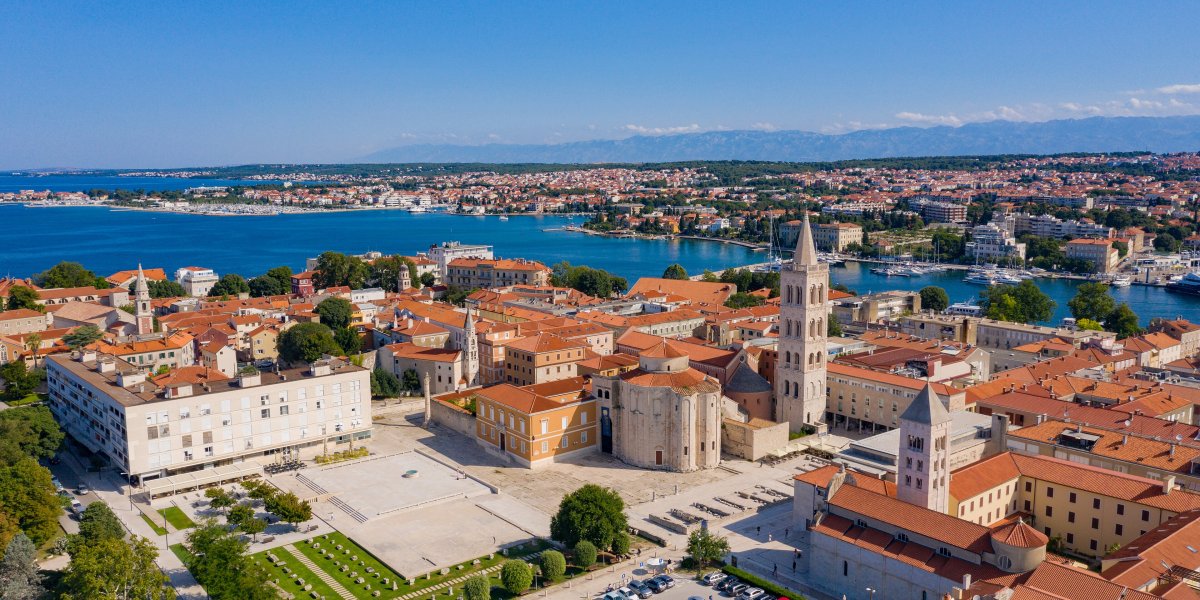
From Five Wells, cut west through the narrow lanes for about 5 minutes — you emerge in front of the 9th-century rotunda of the Church of St. Donatus, standing directly on a Roman Forum two thousand years older than the church above it. Walk counterclockwise around the rotunda and the Cathedral of St. Anastasia rises beside it, its 12th-century Romanesque facade and detached bell tower framed side by side. Morning sun lights the rotunda's curved walls in gold at this hour — the single best window of the day for photographs.
Tip: Don't miss the 'Pillar of Shame' — a Roman column with iron rings on the Forum's south edge where medieval wrongdoers were chained. If a choir is rehearsing inside St. Donatus, stop and listen from outside; the 1,200-year-old acoustics are world-famous, and visitors who only photograph the exterior never experience the most extraordinary thing about this building.
Open in Google Maps →13:00
Food
Walk 3 minutes east from the Cathedral along Široka ulica (Kalelarga) — Proto sits in the heart of the Old Town with sidewalk tables and a chalkboard menu of Dalmatian fast-casual. Order the tuna steak burger with rocket and tomato (€12) or the octopus salad with capers and white wine vinegar (€11) — both arrive in 15 minutes, both made from fish landed at Zadar's market that morning. This is where Zadar locals grab a working lunch, not where cruise groups eat.
Tip: Order at the counter and grab a seat on the small outdoor terrace — the indoor section is louder and slower. Skip bottled water and ask for tap (voda iz pipe) — Zadar's tap water flows from Lake Vrana and is among the cleanest in Croatia, often served without comment at local tables.
Open in Google Maps →14:00
Neighborhood
Step out of Proto onto Kalelarga — Zadar's oldest street, laid down as the Roman cardo two millennia ago — and walk it slowly toward People's Square (Narodni Trg). The square has been the city's gathering place since the 13th century; sit on the steps of the white-columned Loggia and watch the daily rhythm of locals crossing it. From the square, drop south to the Riva waterfront and follow it the full 1.5 km to the tip of the peninsula — open sea views, ferries crossing to Ugljan island, bell towers framing the water the whole way.
Tip: Aim to reach the tip of the peninsula by 17:00 — locals are already gathering for the sunset ritual by then. The stone steps at the Sea Organ fill up 90 minutes before sunset in summer; arrive now if you want a front-row seat with your feet hanging over the water.
Open in Google Maps →17:30
Landmark
You have already arrived — the Sea Organ is the white stone staircase descending into the Adriatic at the very tip of the peninsula, and the Sun Salutation is the 22-meter glass disc set into the pavement just behind it. Sit on the lower steps and let the waves push air through hidden tubes beneath the stone; every wave is a different chord, and no two minutes sound alike. Stay until full darkness — the Sun Salutation collects solar energy all day and releases it after sunset as a pulsing light show synchronized to the Organ's music, and Hitchcock filmed this exact view in 1964, declaring it the most beautiful sunset in the world.
Tip: Face northwest toward Ugljan island and watch ferry silhouettes cross the orange light — that is Hitchcock's exact angle. Skip the upper steps where the crowds gather; the lowest three steps are where the Organ sounds loudest, and you can dip your fingers in the water as it breathes. Bring a thin jacket — the Adriatic wind picks up the moment the sun drops below the horizon.
Open in Google Maps →20:00
Food
Walk 2 minutes east from the Sun Salutation — Bruschetta sits just off the Riva on Mihovila Pavlinovića, the most reliable seafood table within sight of the Sea Organ. Order the tuna tartare with capers and lemon (€16) to start, then the grilled tuna steak (€26) or the catch-of-the-day priced by the kilo (€40–60 for a whole fish, deboned tableside). The owner buys directly from Zadar's fish market each morning, and the wine list leans hard on Croatian Pošip from the Pelješac coast and Plavac Mali from the islands.
Tip: Book by phone or WhatsApp a day ahead — walk-ins after 20:30 in summer almost never get a table. Avoid the cluster of restaurants directly on the Riva with hosts standing outside calling to passersby in five languages — those mark up 30–40% and the fish has often been frozen; Bruschetta's entrance is a small wooden door off the side street, not on the waterfront itself.
Open in Google Maps →Aller au jour
09:00
Landmark
The largest Roman forum on the eastern Adriatic, framed by a perfectly preserved 9th-century round Byzantine church built from the very stones the Romans left behind. Arrive right at opening when the limestone glows pale gold and you'll have the 'Pillar of Shame' to yourself before tour groups appear around 10:30. Step inside St. Donatus and look up — the bare stone interior has the astonishing acoustics that host a famous summer music festival.
Tip: Buy the combined ticket at the St. Donatus door — it also covers the Permanent Exhibition of Religious Art (Gold and Silver of Zadar) across the square, one of Croatia's most jaw-dropping treasure rooms that most day-trippers miss entirely.
Open in Google Maps →10:30
Religious
A 90-second walk east through the Forum, past the cathedral's enormous Romanesque rose window. Climb the 180 narrow steps now while the air is still cool — the panorama from the top is the only spot in town that frames the whole peninsula in one glance: red rooftops, the Velebit mountains across the channel, and a perfect bird's-eye of the Forum you just left. The cathedral itself is free; only the bell tower climb is ticketed.
Tip: Climb now, not at noon — by 12:00 the metal handrails are scorching and the stair shaft becomes a chimney. The €3 ticket is cash-only at a small wooden booth inside the cathedral's north aisle; bring small notes, they rarely have change for €50.
Open in Google Maps →12:30
Food
Four-minute walk south through the alleys to a stone arcade right beside Five Wells Square. The kitchen refines Dalmatian classics with restraint — order the pašticada (€18, beef braised in prošek dessert wine over homemade gnocchi) and the octopus carpaccio (€14). The owners keep a tiny garden behind the kitchen; the tomatoes on your plate were picked this morning.
Tip: Reserve a courtyard table a day ahead via Instagram DM (they reply within hours). At lunchtime the kitchen runs a €15 daily set that locals quietly order — ask for the 'menu dana' even if it isn't on the printed card.
Open in Google Maps →14:30
Neighborhood
Step left out of the restaurant and onto Kalelarga — the marble main street polished to a mirror by 3,000 years of footsteps. Drift north past People's Square (Narodni trg), where the Renaissance loggia and the city clock tower face each other across the only true plaza inside the walls. Slip into the quiet cloister of St. Mary's Church to see the small but stunning Gold and Silver of Zadar exhibit — eight rooms of reliquaries that survived every empire that ever owned this coast.
Tip: Skip the gelato stalls on Kalelarga (€4 a scoop, mediocre) and walk one block west to Slastičarna Donat on Široka ulica — the same family has made homemade ice cream there since 1976, and the rose-and-pistachio is unforgettable for €2.
Open in Google Maps →17:30
Landmark
Follow the Riva north for eight minutes along the seawall — the city's evening promenade fills with locals walking children and licking ice cream. At the peninsula's tip the marble staircase descends straight into the Adriatic; sit on the third step from the bottom and let the waves play 35 hidden pipes beneath you. Hitchcock called this the most beautiful sunset in the world in 1964 — stay until the sky goes plum and the 300 solar discs of the Sun Salutation light up the pavement behind you in a slow, silent rainbow.
Tip: Wind matters: a light maestral (afternoon sea breeze) makes the organ sing in slow minor chords; flat-calm evenings produce only a faint hum. Avoid the kiosks selling 'cocktails in pineapples' on the Riva (€12 for warm rum) — the Garden Lounge bar one block inland pours a real Aperol spritz for half that, and the seafront restaurants north of the Sea Organ with laminated seven-language menus serve frozen fish at double price.
Open in Google Maps →20:00
Food
Three minutes south along the seafront, lit by lantern light. Bruschetta sits directly on the channel with a terrace that catches the last violet glow of the sky. Order the black cuttlefish risotto (€16) and the grilled John Dory (€28, priced by weight) — Dalmatian classics done with restraint. The Pošip white wine from nearby Korčula (€6 a glass) is exactly the right pairing.
Tip: When booking, ask for tables 1 to 6 on the water terrace — the back tables face the kitchen pass. The kitchen closes at 22:00 sharp, so a 20:00 seating gives you time without rush; arrive earlier and you'll be eating before the sky fully darkens, losing half the magic.
Open in Google Maps →09:00
Landmark
Enter the Old Town through Venice's 1543 masterpiece on the southern side — the most ornate city gate on the Adriatic, with a winged Lion of St. Mark chiseled above the arch the same year Suleiman the Magnificent's empire reached its peak. Walk the short wall promenade east along the small harbor for a perfect first photo of the entire bastion catching low morning light. Free, uncrowded at this hour, and you'll see the gate from both sides the way the locals do.
Tip: Stand directly under the arch and look up — there's a worn relief of St. Chrysogonus on horseback that 95% of visitors walk past. The walls were granted UNESCO status in 2017 as part of Venice's defensive works; bring a water bottle now, the wall path itself has no cafés.
Open in Google Maps →10:00
Landmark
Walk three minutes back through the Land Gate and up the slope — Five Wells Square opens up with its row of stone wellheads, dug by the Venetians in 1574 so the city could survive Ottoman sieges. Climb the few stairs behind it into Queen Jelena park, the highest point inside the walls, for a quiet bench under the pines and a view back over the rooftops you've just spent a day inside. Morning sun on the wells gives them their golden glow before the cruise crowds appear at eleven.
Tip: The five identical wellheads were each commissioned by a different patrician family. The third from the left still has fresh water below — drop a small coin and listen for the splash (about 5 seconds). The park's lone café Caffe Bar Park has the cheapest espresso inside the walls at €1.50.
Open in Google Maps →11:00
Neighborhood
Five-minute walk north along the inner street toward the cathedral, then one block east to the open square — this is where Zadar still does its actual shopping. Strawberries from Pag, paški sir cheese aged in stone, olives from Ugljan island across the channel. The covered fish market behind the produce stalls smells of the morning catch and shuts by 13:00 sharp, so come now.
Tip: Buy a 100g wedge of paški sir (€3-4) and a paper bag of dried figs from the grandmother at the third stall on the left — she's been there for forty years. Avoid the 'truffle products' aimed at cruise tourists; Zadar isn't a truffle region and the jars are imported and marked up four times over.
Open in Google Maps →13:00
Food
Two minutes from the market, on a quiet alley just behind People's Square. Konoba Skoblar serves what Dalmatian grandmothers actually cook — order the peka (€25, lamb or octopus slow-baked for hours under a bell of glowing embers, must be ordered two hours ahead) or, for a quicker meal, the brodet fish stew (€18) with polenta. The house red comes from the owner's village on Vir island.
Tip: If you didn't pre-order the peka, ask for the 'gregada' — a fisherman's white-wine fish stew not always on the menu, but the chef will make it whenever there's a fresh bass in the kitchen. Bread and a small carafe of local olive oil arrive free; don't be shy about mopping the plate, the staff expects it.
Open in Google Maps →15:00
Museum
Cross the small pedestrian footbridge over the harbor — eight minutes on foot, with a sweeping view back to the bell tower you climbed yesterday. The museum holds 5,000 pieces of Roman glass excavated from local graves, all displayed under low warm light inside a 19th-century waterfront palace. Afternoon is the right time: outside heat peaks now, and the upstairs studio runs a live glassblowing demonstration at 16:00 (included in the ticket).
Tip: Buy the small hand-blown perfume bottle at the museum shop (about €18) — it's blown on-site by resident master Vesna Mršić; the identical-looking ones at souvenir stalls inside the walls are machine-pressed imports from Murano sold at twice the price.
Open in Google Maps →19:30
Food
A twelve-minute walk south back through the Old Town and out the Land Gate brings you to Foša — the small old harbor of the same name, where wooden fishing boats still moor at dusk. The terrace sits directly over the water at the foot of the medieval walls; order the tuna tartare (€18) and the whole grilled dentex priced by weight (around €40 for two to share). Locals come here on anniversaries — it's the city's quiet farewell.
Tip: Request tables 2, 3, or 5 — water's edge, away from the kitchen pass. The biggest last-evening pitfall in Zadar: don't book one of the 'sunset boat cruise + dinner' packages sold from kiosks on the Riva (€60+ per person). The food is reheated, the boat circles the harbor twice in diesel fumes, and you miss exactly what makes Zadar's sunset magical — sitting still.
Open in Google Maps →
Trip builder
Plan this trip around Zadar
Turn this guide into a bookable rail itinerary with FlipEarth.
Keep exploring
Related cities
More in the same country
FAQ
Frequently asked questions
How many days do you need in Zadar?
Most travelers enjoy Zadar in 1 days, with enough time for headline sights and a slower meal or museum stop.
What's the best time to visit Zadar?
The easiest season for most travelers is May-Oct, especially if you want good weather and manageable crowds.
What's the daily budget for Zadar?
A practical starting point is about €90 per person per day before hotels, then adjust based on museums, dining, and transport.
What are the must-see attractions in Zadar?
A good first shortlist for Zadar includes Land Gate & Five Wells Square, Roman Forum, Church of St. Donatus & Cathedral of St. Anastasia, Sea Organ & Sun Salutation at Sunset.