City Guide
Korcula
Croatie · Best time to visit: May-Oct.
Day-by-day plan
Choose your pace
Durée du voyage
09:00
Landmark
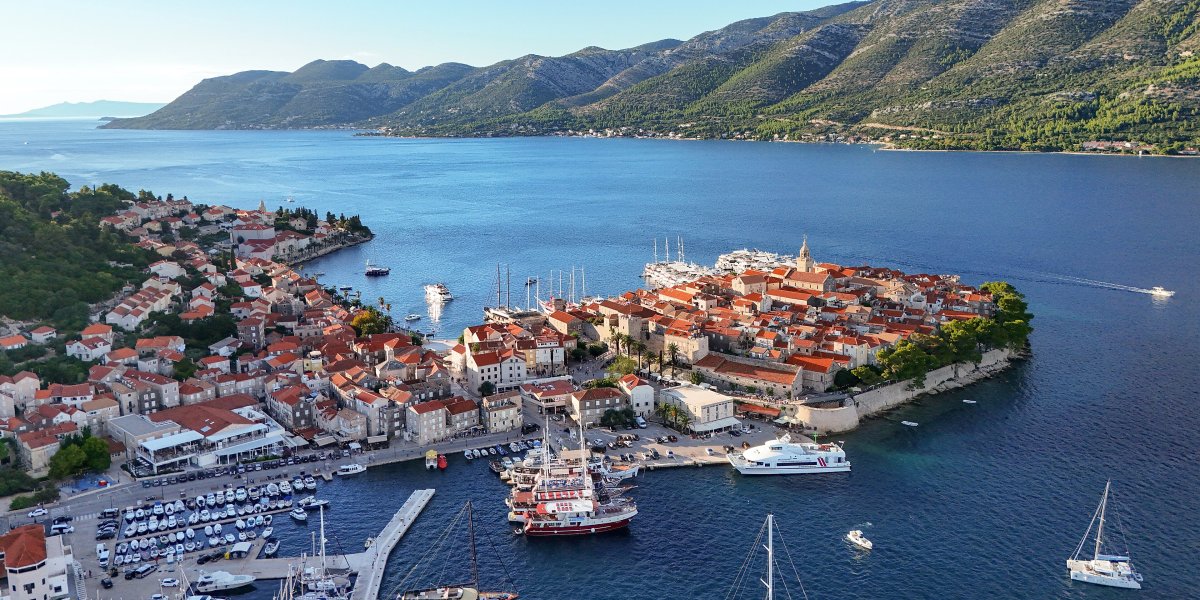
From the bus station beside the Old Town, walk south on Ulica 57 for about 1 km past the cemetery, then climb the worn limestone staircase guarded by 102 cypresses planted in the 17th century. The tiny pilgrimage chapel of St. Anthony at the top opens onto the postcard view of the island: Korcula's walled peninsula floating below, with Peljesac's vineyard ridge rising across the turquoise channel. Climb now, before the limestone steps turn into a furnace and the morning haze burns the angle out of the photograph.
Tip: Reach the chapel before 09:30 — the sun is behind you, lighting Korcula's white walls and the channel for the postcard shot. By 11 the haze burns off the angle and the fishbone of streets disappears into glare.
Open in Google Maps →11:30
Landmark
Retrace down the cypress staircase, then bear left along Put Sv. Antuna and follow the lanes north through fig and oleander gardens to the east-coast waterfront — about 20 minutes on foot. Banje's small pebble crescent holds the most-photographed angle of Korcula in the world: the entire walled town floating on the channel, with the cathedral bell tower dead-centered above the rooftops. Wade out to your waist if the day is warm — the water is glass-clear by mid-morning and you can see the seabed five metres down.
Tip: Walk all the way to the far (north) end of the pebble curve for the iconic frame — the closer concrete platform only shows you the side of the walls, but the end of the beach lines up the whole peninsula with the bell tower in the middle.
Open in Google Maps →13:00
Food
Walk west along the harbor promenade for six minutes, cross into the Old Town's southern edge, and duck into Ulica Hrvatske bratske zajednice — a tiny shopfront, blue shutters, no English menu in the window. Smiljana Sardelic has baked here since 1995, and her cukarini (twisted lemon-and-grappa cookies, €1.50 each), klasuni (walnut-and-almond pastries, €2), and amareta (bitter-almond domes) are what islanders carry as wedding gifts across the Adriatic. Order one of each with a small glass of homemade prosek dessert wine, and eat standing on the cobblestones outside — this is lunch the way locals do it on a power-walk day, around €10 a person.
Tip: Order the lumblija — a dense fig-spice-and-rosolio cake from neighboring Vela Luka, sold here by the slice for €2. Tourists miss it because there is no English label; ask Smiljana for it by name, it sits behind the counter on the right.
Open in Google Maps →14:00
Neighborhood
Step out of Cukarin and walk one minute north to the grand Land Gate, the only entrance through the medieval walls, and climb the wide ceremonial staircase added in 1863. Inside is Korcula's famous fishbone street plan: a single spine with ribs angled to catch the cooling maestral wind in summer and block the cold bura in winter — a piece of urban engineering older than most European cities have intact. Walk the spine to the cathedral square, circle the Romanesque-Gothic exterior of the Cathedral of St. Mark with its lion-flanked rose window, then duck down the side alley past the Marco Polo House (exterior only — the tower inside is a tourist trap), and loop back via the eastern lanes for the prettiest stone-and-shutter alleys.
Tip: Skip the €3 climb up the Marco Polo House tower — the wooden ladder is rickety, the view is partial and blocked by neighboring rooftops, and the Marco Polo connection was invented in the 19th century to draw visitors. The exterior photo and the legend on the plaque are the entire point.
Open in Google Maps →17:00
Landmark
Exit the Old Town at its northern tip and pick up Setaliste Petra Kanavelica, the narrow stone promenade hugging the outer face of the city walls. Walk it counterclockwise — wall on your left, open Adriatic on your right — and you will loop the entire fortified peninsula in 25 minutes; do it twice, slowly, with a sit on the rocks. Time it for the hour before sunset: the western stones turn honey-gold and Peljesac across the channel goes wine-red, while most visitors who did this walk in flat midday glare have already left.
Tip: Stop at Massimo Cocktail Bar inside the small round bastion at the western corner — you climb a vertical wooden ladder to the tower rooftop for 360° channel views, and drinks (€10–12) come up on a pulley. Only 12 seats; arrive at 18:00 in summer to claim one before the sunset rush.
Open in Google Maps →20:00
Food
From the western corner of the sea walls, re-enter the Old Town through the side gate and walk three minutes south on the spine to Ulica Sveti Roka — Adio Mare has served from a vaulted stone room one floor above the street since 1974. This is the konoba locals defend against the newer 'Dalmatian' tourist restaurants: charcoal-grilled fish weighed at the table (€70–90/kg), pasticada (slow-braised beef in prosek wine over hand-rolled gnocchi, €22), and the legendary peka — octopus or veal cooked under a cast-iron bell buried in embers (€45/person, two-person minimum, reserve 24 hours ahead). If you did not pre-order the peka, the pasticada is the same depth of flavor in twenty minutes; pair it with a glass of island Posip white (€5).
Tip: Reserve by phone (+385 20 711 253) the moment you reach Korcula — 18 tables, no walk-ins after 19:30 in summer. PITFALL: avoid the harbor-front terraces with English-only menus and waiters in starched white shirts — they triple the price of a fish from the same morning's catch as Adio Mare's, and the 'fresh' calamari is frozen and imported from Vietnam.
Open in Google Maps →Aller au jour
09:00
Landmark
Approach from the harbor car park: the curved stone staircase climbing to the Land Gate is the only land entrance to the old town, polished smooth by six centuries of footsteps. The Venetian winged lion above the arch catches morning sun, and the rooftop terrace opens onto the famous fishbone street plan, designed to deflect bora wind. Climb early — by 11 a.m. cruise excursions from Dubrovnik flood this single bottleneck.
Tip: The tower museum unlocks at 9:00 sharp — be at the foot of the stairs by 8:55 to claim the rooftop alone for the first ten minutes; this is the only place where you can frame the entire herringbone town from above.
Open in Google Maps →10:30
Religious
From the tower, walk straight up the central spine of the old town — three minutes through stone alleys before the cathedral square opens on your left. Late-morning light pours through the rose window onto Tintoretto's altarpiece of Three Saints, and the 122-step spiral bell tower climb is far cooler now than at noon. From the top, you understand why the streets curve: the western alleys catch sea breeze, the eastern alleys are shielded from north wind.
Tip: The bell tower sometimes closes for Saturday midday mass — confirm at the cathedral door before paying. The Tintoretto is on the main altar, not in the treasury museum; don't pay the extra treasury ticket if your interest is the painting.
Open in Google Maps →13:00
Food
Down a narrow lane west of the cathedral, two minutes through alleys where laundry hangs above your head — the konoba's stone cellar opens at the bottom of the steps. Order the black risotto with cuttlefish ink (14 EUR) and the grilled bluefish priced by weight (around 20 EUR a portion). Budget 25-35 EUR with a half-carafe of house Posip wine made by the owner's cousin in Smokvica village.
Tip: No reservations taken — arrive at 12:45 to grab a cellar table before the 13:30 wait stretches to half an hour. Order the Posip by 0.5L carafe (8 EUR), not by the glass: the carafe pour is from a fresher bottle.
Open in Google Maps →15:00
Museum
Backtrack to the cathedral square and turn north past the bishop's palace — the house's low wooden door is three minutes away on the right. The exhibition inside is modest (Korcula's claim to Marco Polo's birth is disputed), but the back tower's roof is the reward: a tight stairwell opens to a parapet level with the cathedral spire. Mid-afternoon clears the morning tour groups, so the climb is yours alone.
Tip: The exhibits take fifteen minutes; spend the rest of your hour on the rooftop. Skip the gift shop next door selling 'Marco Polo's compass' replicas — it's a tourist trap unrelated to the house.
Open in Google Maps →16:30
Museum
Cross back over the cathedral square — the Gabriellis Palace stands directly opposite the church, one minute on foot. Late afternoon is the museum's quiet hour; the cool stone interior is a relief from the heat-soaked street, and slanting light hits the ship-building tools on the second floor. The collection of medieval stonemason marks is small but uniquely Korculan — every quarry on the island marked its blocks, and you can spot the same symbols on the city walls outside.
Tip: On the ground floor, ask the attendant for the 4th-century BC Greek pottery shard — it's the earliest written mention of Korcula, kept in an unmarked case usually overlooked by visitors.
Open in Google Maps →19:30
Food
Out the museum, turn right and follow the eastern seawall — LD's terrace is four minutes along the rampart, with the cathedral spire silhouetted against sunset behind you. The à la carte Korcula scampi in Grk wine sauce (32 EUR) and slow-cooked Pelješac lamb (38 EUR) are the dishes locals send first-time visitors here for; the seven-course Adriatic tasting (95 EUR) is worth it only if you have three hours. Budget 80-120 EUR per person with wine pairing.
Tip: Reserve 7-10 days ahead in summer and request the lower terrace facing the Pelješac channel — the upper terrace seats are pretty but face a stone wall. Avoid the cluster of look-alike 'konobas' right at the Land Gate plaza: they charge 40 EUR for frozen calamari with English-only menus, and the bill often includes a vague 'service' line of 10-15%.
Open in Google Maps →09:00
Neighborhood
Leave the old town through the southern gate and follow the seafront promenade past the marina — the path narrows into a quiet pine-shaded road that hugs the Pelješac channel for six kilometers. Early sun lights the mountains across the water and the air still carries last night's cool; by 11 the road bakes in open glare. You'll pass small swimming coves where locals dive before work and a single tiny market in Žrnovo village halfway along.
Tip: Carry one liter of water — Žrnovo's market is the only refill until Lumbarda center, and it closes for siesta from noon. Wear soft soles; the last kilometer is loose gravel.
Open in Google Maps →10:30
Entertainment
The coastal road ends at Lumbarda's main square — turn right at the church and a small wooden arrow points five minutes into the vineyards to Bire's family tasting room. Late morning is the family's own pour time: Frano Milina himself often greets walk-ins before the afternoon coach tours arrive. Grk grows nowhere else on earth — the sandy plain of Lumbarda is the only soil that suits it.
Tip: Ask to step into the vineyard plot behind the tasting room — kick your shoe into the soil; the loose sand under your toes is the geological reason this wine exists. The four-wine flight includes a Plavac Mali red that is the best value bottle to take home (around 14 EUR).
Open in Google Maps →12:30
Food
Back across Lumbarda's square, turn left toward the small fishing harbor — the konoba sits on the seafront, four minutes from Bire. Order the chilled octopus salad with capers and Lumbarda olive oil (16 EUR) and the grilled dentex fish from this morning's harbor catch (priced per kilogram, around 30 EUR a portion). Budget 30-40 EUR per person on the harborside terrace.
Tip: Order a 0.5L carafe of Bire's house-tier Grk here for 10 EUR — it's two euros cheaper than at the winery and pours from the same barrel. No reservation needed at lunch; for harbor-edge tables arrive by 12:30.
Open in Google Maps →14:30
Park
From the konoba, follow the wooden signs to 'Pržina' through low vineyards and fig trees — twelve minutes south on a flat sand path. This crescent is Korcula's only true sand beach; the south-facing curve catches full afternoon sun once the morning wind drops, and the shallow water stays warm well past sunset. The white sand here is the same sand that gives Grk its mineral edge — you are standing on the geology of your lunch wine.
Tip: Walk past the first taverna and the umbrella rental row to the eastern end of the bay — half the day-trippers stop at the first patch of sand. The water stays knee-deep for thirty meters, ideal if you want to swim out toward the rock spur for the view back at the vineyards.
Open in Google Maps →17:30
Landmark
Take the hourly local bus from Lumbarda's square back to Korcula town (15 minutes, 3 EUR), enter through the Land Gate and climb to the western ramparts for the one-kilometer rampart circuit. Golden hour hits the walls from the west, the limestone glows amber, and the Pelješac channel turns indigo. Zakerjan Tower is the round bastion at the northwest corner — ladder up inside it to Massimo Cocktail Bar, the only bar in Croatia served drinks via pulley from the floor below.
Tip: Order one mojito (9 EUR) at Massimo and claim a seat on the seaward parapet by 18:30 — sunset is at the tower's exact axis from late May through August. The bar is cash-friendly but cards work; tip in coins so the pulley basket stays light.
Open in Google Maps →20:00
Food
Climb back down Zakerjan's ladder and walk east through the cathedral square — Filippi sits on Kanavelić street just past the cathedral, three minutes on foot. The scampi buzara in white wine and garlic (28 EUR) and the house pljukanci pasta with Istrian truffle (22 EUR) are what locals order; the Korcula lamb peka under the bell (40 EUR per person) must be ordered 24 hours ahead. Budget 50-70 EUR per person on the rooftop terrace overlooking the channel.
Tip: Reserve three to four days ahead and explicitly ask for the rooftop — the ground-floor courtyard is pretty but the rooftop has the channel view. Pitfall warning: skip every restaurant in the streets immediately around the Land Gate that uses 'Marco Polo' in its name — these are the standard Dalmatian tourist traps where bills carry vague 'cover' and 'service' lines totaling 15-20% extra, and the seafood is frozen and reheated. Real konobas price fish per kilogram displayed on ice, never per pre-cooked portion.
Open in Google Maps →
Trip builder
Plan this trip around Korcula
Turn this guide into a bookable rail itinerary with FlipEarth.
Keep exploring
Related cities
More in the same country
FAQ
Frequently asked questions
How many days do you need in Korcula?
Most travelers enjoy Korcula in 1 days, with enough time for headline sights and a slower meal or museum stop.
What's the best time to visit Korcula?
The easiest season for most travelers is May-Oct, especially if you want good weather and manageable crowds.
What's the daily budget for Korcula?
A practical starting point is about €90 per person per day before hotels, then adjust based on museums, dining, and transport.
What are the must-see attractions in Korcula?
A good first shortlist for Korcula includes St. Anthony's Hill (Sveti Antun), Banje Beach, Setaliste Petra Kanavelica (Sea Walls Promenade).