City Guide
Krk
Croatie · Best time to visit: May-Sep.
Day-by-day plan
Choose your pace
Durée du voyage
09:00
Landmark
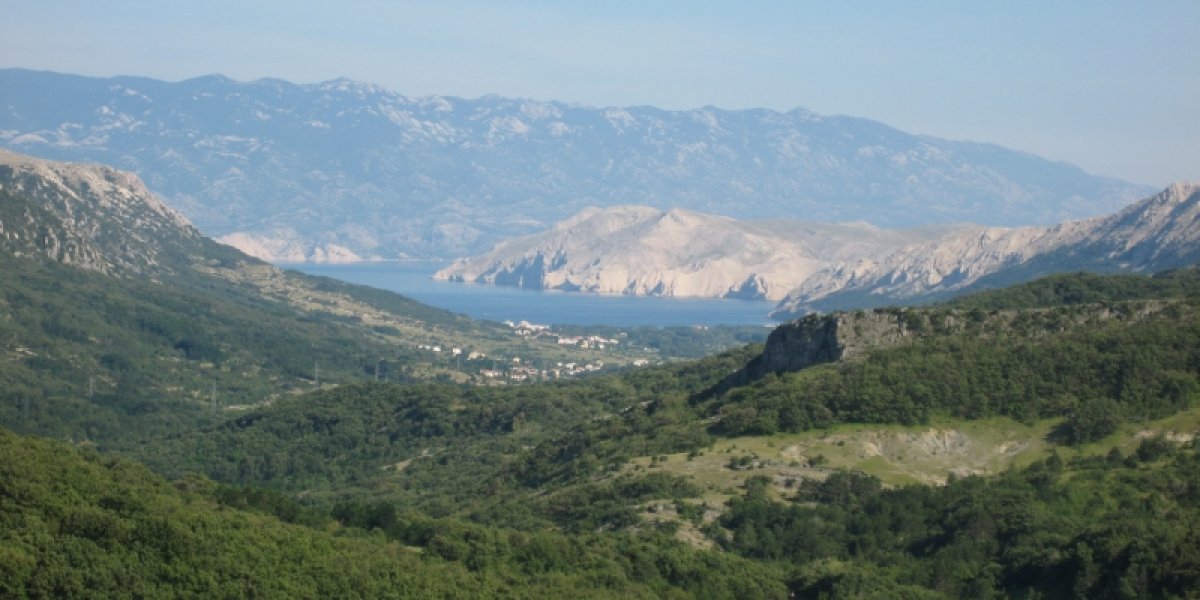
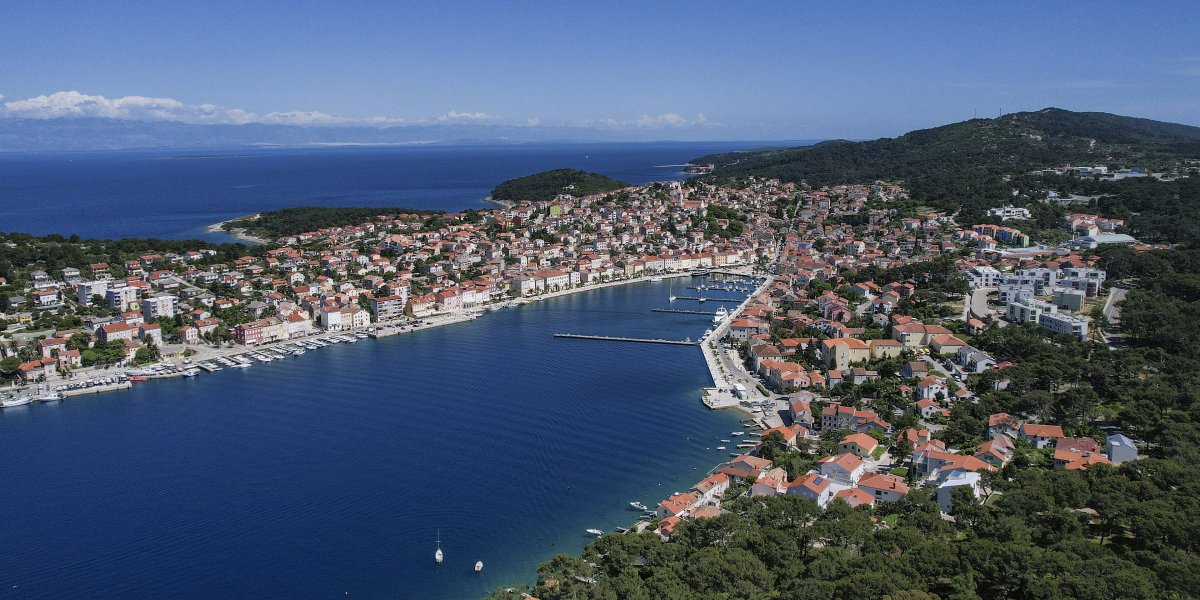
Start where the Frankopan princes did — at the four-towered fortress that anchors the harbor's western edge. Arrive five minutes before the 09:00 opening; the courtyard is empty, the stone still cool, and the low east light rakes across the 13th-century walls in a way the midday sun erases. Climb the square tower for the first proper look at Krk: a tight knot of red-tiled roofs locked inside its medieval ring, the Adriatic on one side, the bare grey wall of the Velebit mountains rising across the bay on the other.
Tip: Buy the combined ticket at the entry kiosk that bundles in the Cathedral bell tower — same operator, and it saves queueing at the second site. For the iconic shot (red roofs + harbor + Velebit in one frame) stand on the northwest tower's seaward corner, not the higher central one — the parapet is lower and the angle is cleaner.
Open in Google Maps →10:30
Religious
Leave the castle through the inland gate and walk 90 seconds up Ulica J. J. Strossmayera — the cathedral bell tower is already overhead by the time you turn the corner. The 12th-century Cathedral of the Assumption shares a single wall with the smaller Romanesque Church of St. Quirinus; together they form one of the most intact Romanesque ensembles still standing on the Adriatic coast. Step into Kamplin Square behind it — this is where the Glagolitic alphabet, Croatia's own pre-Latin script, was carved into stone a thousand years ago.
Tip: Enter the cathedral interior between 10:40 and 11:00 — that's the half-hour the east window throws a clean shaft of light down the central nave. The Glagolitic inscription you actually want to find is set into the north wall of the bell tower base facing Kamplin Square; it's eye level, unsigned, and 90 percent of visitors walk straight past it.
Open in Google Maps →12:30
Food
Cut through Vela Placa, the main square, and follow your nose four minutes north — Galija has been on this corner since 1957 and is where you eat both of Krk's signature flavors in twenty minutes. The šurlice (hand-rolled pasta tubes unique to this island) come tossed in a slow-cooked beef goulash; pair it with a glass of cold Žlahtina, the crisp white from Vrbnik on the island's east cliffs. Casual, fast, locals at the bar — exactly the lunch your afternoon needs.
Tip: Order šurlice s gulašem (€12) — it's the one pasta shape you won't find anywhere off Krk. Ask for Žlahtina "kuća" (house pour, €3) instead of opening a bottle list. Order at the bar inside rather than table service on the terrace; you'll be eating ten minutes faster, which matters on this schedule.
Open in Google Maps →14:00
Landmark
Walk back south through Vela Placa and exit the old town through Pizana — the original sea-facing gate cut through the 13th-century walls, still bearing the Venetian lion above its arch. The Riva opens immediately on the other side: a long stone waterfront with the bell tower rising behind you and the bay sweeping east toward Vela Plaza, the town beach. Take it slowly the full kilometer to the eastern end — by 14:30 the afternoon sun has come around the right way, turning the cathedral's pale limestone honey-gold.
Tip: The single best photograph of Krk — castle, walls, cathedral, bell tower, harbor, all in one frame — is taken not from the Riva itself but from the small stone breakwater that juts out 200 m east of Pizana Gate, around 15:00 when the sun is behind your shoulder. Skip the obvious viewpoint directly outside the gate; the angle is too tight and the parked tour boats ruin the foreground.
Open in Google Maps →16:00
Park
From the eastern end of the Riva, pick up the paved coastal path that curves around the bay — pines and rosemary on your right, clear shallow Adriatic on your left, almost no cars. The trail passes Dražica cove and the quiet swimming rocks of Politin, then opens onto the long view across to Košljun, the tiny monastery island floating in the middle of Punat bay. Turn around at the Punat marina entrance — by now it's near 18:00, the western sun is hitting the Krk Town silhouette dead-on, and the walk back becomes the postcard half of the day.
Tip: It's roughly 6 km each way; do the outbound in 90 minutes and the return in 60 once you stop stopping for photos. Bring a half-liter of water — there is nothing to drink between Vela Plaza and Punat marina. If you're flagging on the way back, the #17 local bus from Punat to Krk Town runs hourly (€2, 12 minutes) and the stop is at the marina roundabout.
Open in Google Maps →19:30
Food
Five minutes' walk from where the Riva meets the old town, on Šetalište Sv. Bernardina, the harbor terrace of Konoba Šime is where Krk locals book the table that matters. Family-run since 1989, with the cathedral lit up across the dark water and a kitchen that has stuck to the same dozen dishes for thirty years. Order the Krk-island lamb peka if you reserved ahead; otherwise the day's whole fish grilled on the wood embers, with blitva (Swiss chard) and olive oil from the family's own grove on the hill above town.
Tip: Call by noon to reserve janjetina ispod peke (lamb under the bell, €28/person, minimum two) — it cooks four hours under hot coals and is the single dish people fly back for. If you didn't pre-order, ask for the day's catch "na žaru" (grilled, ~€7/100g) and the brodet (Adriatic fish stew, €22). Request a numbered harbor-side table when you book. Pitfall warning: avoid every restaurant on the Riva that displays a photo menu and English-only signage out front — those are the tourist-trap operators with frozen fish at double the price; the real konobas are one street back from the waterfront with handwritten daily menus in Croatian only.
Open in Google Maps →Aller au jour
09:00
Religious
Begin right at opening — the stone interior, built on a 5th-century Roman basilica foundation, stays cool and almost empty before the first cruise group drifts in around 10:30. The Romanesque columns inside were salvaged from a Roman bathhouse and still carry their original carvings. The adjoining 12th-century Church of St. Quirinus, sharing the same wall, is included in the single ticket — most visitors miss it entirely.
Tip: Buy the combined cathedral + treasury + St. Quirinus ticket at the small booth just inside the left door. The treasury upstairs holds a 15th-century silver altarpiece that 90% of visitors never see because they don't realize the narrow staircase leads anywhere.
Open in Google Maps →11:00
Landmark
Exit the cathedral, turn right past Vela Placa and walk 4 minutes south — the castle's square tower appears straight ahead where the medieval town meets the harbor. The Frankopan family raised this fortress in the 12th century, and the climb up Kvadratna kula (the square tower) gives the single best aerial view of Krk: terracotta roofs unfolding toward the Adriatic, with Cres island on the horizon. Do the climb now, while your legs are fresh — the narrow stone staircase gets stuffy and bottlenecked by midday.
Tip: Step out onto the small stone pier directly south of the castle around 11:45 — the morning sun is now lighting the eastern wall and you can frame the entire castle with the cathedral bell tower in the same shot. Two hours later this angle goes flat.
Open in Google Maps →13:00
Food
Walk 3 minutes north into the old town's narrow lanes — Šempjun's hand-painted blue sign hangs under a low stone arch on J.J. Strossmayera. This is where Krk locals send their visiting parents. Order the šurlice (hand-rolled local pasta) with slow-cooked beef goulash (€14), made by the owner's mother each morning. Their octopus salad starter (€9) uses octopus brought in by the fishermen who moor 50 meters away. Pair with a glass of Žlahtina from Vrbnik (€4).
Tip: Arrive at 12:50 — they open at noon, and the second seating around 13:30 fills with day-trippers off the Rijeka bus. Ask for a table in the small interior courtyard, not the street terrace; it's quieter and the šurlice arrives hotter.
Open in Google Maps →14:45
Neighborhood
Step out of Šempjun and you are already inside the medieval grid — head south one block to reach Vela Placa, the main square. The old town is laid out on a Roman street plan you can still read in the pavement. From the square, pass the 1493 city loggia, then loop east along the surviving 13th-century walls to Mala vrata, the small gate where local laundry hangs above worn stone arches. Krk is where the Glagolitic alphabet was perfected, and you'll find carved Glagolitic letters chiseled into several lintels if you look up as you walk.
Tip: The clearest Glagolitic inscription is on the stone lintel of the house directly across from the cathedral's south door — easy to miss because it sits just above eye level. Bring a flashlight or use your phone torch; the carving is shallow and the deep alley keeps it shaded.
Open in Google Maps →16:30
Museum
Walk 2 minutes north from Vela Placa — Volsonis sits beneath the Galija building; the entrance is a small stone staircase marked with a bronze plaque. Hidden under modern Krk is the 1st-century Roman town of Curicum, only excavated in the 2000s. You walk among original Roman wells, a thermae floor, and amphorae embedded in situ. The cellars stay 16°C year-round — a perfect cool break from the harbor heat at this hour.
Tip: Enter on the 16:30 round — it's the smallest of the day, often just 4-5 people, and the guide will linger over the mosaic fragments most groups breeze past. The earlier 11:00 and 14:00 rounds are packed with bus groups and the guide rushes.
Open in Google Maps →19:30
Food
Five-minute walk south along Obala Hrvatske mornarice — Marina's white awning faces the small inner harbor where the fishing boats unload at dawn. Krk's white-tablecloth seafood institution since 1955, but the prices stay sensible (mains €18-26). Order the Adriatic scampi buzara (€24) with a half-bottle of Žlahtina, or the grilled John Dory with island olive oil. The terrace looks straight at the castle wall, which the city floodlights at 20:30 — time your main course to arrive then.
Tip: Reserve a 19:30 terrace table by phone the day before — they don't take online bookings reliably. Avoid the line of restaurants along the open harbor walk between Marina and the castle: they look romantic in photos, but the €35 'seafood platter' there is Krk's most-reported tourist trap — frozen calamari, microwaved mussels, and bottled water added at €8 a head.
Open in Google Maps →09:00
Landmark
Take the 8:00 bus from Krk Town (45 minutes, scenic mountain road) or drive — you want to arrive while the 1.8 km curve of polished golden pebbles is still empty. In low morning light the pebbles glow ochre and Prvić island opposite catches the first sun. Walk the full length barefoot; the smooth stones are the natural foot massage that brings Adriatic regulars back every year. By 11:30 the western end will be umbrella-to-umbrella; right now you'll have it almost to yourself.
Tip: Park at the free lot at the eastern end near Camp Zablaće and walk west — by 11:00 the western (town-side) parking is full and charges €3/hour. The clearest water for an early dip is at the very eastern end where the pebbles fade into bedrock; almost no one walks that far.
Open in Google Maps →10:45
Religious
Drive or take the local bus 3 km inland to Jurandvor — the small stone chapel sits in a quiet meadow at the foot of the mountain, signed 'Bašćanska ploča'. This unassuming 12th-century church is the birthplace of Croatian literacy: the Baška Tablet (Bašćanska ploča), found here in 1851, is the oldest surviving text in the Croatian language, carved in the Glagolitic script developed on Krk. The original is now in Zagreb; a faithful stone replica stands exactly where it was discovered. The wall panels translate the inscription — a land donation recorded by King Zvonimir around 1100 AD.
Tip: Visit now, not later — the church closes for an unposted lunch break from roughly 12:00 to 15:00 most days, and afternoon tour buses cram the tiny nave shoulder-to-shoulder. The Glagolitic letter sculptures along the path outside reward 10 extra minutes; the letter 'Slovo' near the meadow is the photograph everyone misses.
Open in Google Maps →12:30
Food
Back to the Baška seafront — Bracera sits on Palada street, three lanes back from the promenade. From the central bus stop, walk 4 minutes inland following the painted boat-rudder signs. A family-run konoba where the day's catch is chalked on a slate at noon. Order the Baška-style brodet (Adriatic fish stew with polenta, €17) — the broth is reduced for hours with local wine and bay leaf. Their šurlice with shrimp scampi (€16) and a glass of Žlahtina (€3.50) is the alternative.
Tip: Ask the owner what came in on the morning boat — there's an unlisted 'fish of the day' grilled whole, priced by weight (around €20 for two to share). Skip their dessert menu and cross the street to Slastičarna Lavanda afterwards for the fig and rosemary ice cream — a Baška specialty made nowhere else on the island.
Open in Google Maps →14:30
Neighborhood
Step out of Bracera and you are already in the lattice of stone lanes — head uphill, away from the sea, two blocks to reach the Glagolitic Path entrance behind the parish church. Baška's old village is older than the resort that grew around it: narrow alleys, fishermen's houses with external stone staircases, and 34 large stone sculptures of Glagolitic letters scattered through the town and up the lower hillside. This is a slow art walk, not a hike — the perfect rhythm for the post-lunch hour.
Tip: The letter 'B' (Buki) sculpture above the cemetery is the photo spot at around 15:30 — the angle catches Prvić island framed inside the curved stone arch of the letter. Save your energy as you go; the path ends right at the foot of the Stations of the Cross trail and you will want fresh legs for the next stop.
Open in Google Maps →16:30
Landmark
From where the Glagolitic Path ends, signed 'Križni put' continues uphill behind the Holy Trinity church — follow the small white crosses up the rocky path. You do not need to do the full 1.5-hour ascent to the chapel of Sv. Ivan on Mt. Hlam. Climb just 25 minutes to the first major cross station: from this ridge you get THE photograph of Krk — the perfect crescent of Baška Beach below, Prvić island offshore, the limestone amphitheatre framing everything. The light at this hour turns the bay gold for about 20 minutes.
Tip: Time it to be at the first cross by 17:30 in summer — the sun drops behind the western ridge and washes the entire beach amber. Wear trainers, not sandals; the path is loose limestone. Skip the full summit hike to Sv. Ivan (3 hours roundtrip) — beautiful in theory, brutal in the afternoon heat, and not worth ruining a 2-day trip over.
Open in Google Maps →19:30
Food
Walk back down to Baška in 20 minutes — Cicibela sits on Emila Geistlicha street, two minutes inland from the eastern end of the promenade. The island's most awarded restaurant, but unstuffy, with a covered garden under old fig trees. The Krk lamb peka (slow-cooked under an iron bell, must be ordered 24 hours ahead, €32 per person for two) is a once-a-trip dish. Otherwise, the Adriatic tuna steak with caper sauce (€26) is what locals order. End with a glass of Žlahtina dessert wine from the Toljanić cellars in Vrbnik.
Tip: Reserve 48 hours ahead in summer — Cicibela is booked solid by 17:00 the day before. If you didn't pre-order the peka, ask for the slow-roasted octopus from the daily blackboard instead. One island-wide warning for your final night: avoid any restaurant in Baška with a tout outside waving a laminated menu — these are tour-bus contracts and the food is reheated; the same goes for the harbor-front places in Krk Town with picture menus in five languages.
Open in Google Maps →
Trip builder
Plan this trip around Krk
Turn this guide into a bookable rail itinerary with FlipEarth.
Keep exploring
Related cities
More in the same country
FAQ
Frequently asked questions
How many days do you need in Krk?
Most travelers enjoy Krk in 1 days, with enough time for headline sights and a slower meal or museum stop.
What's the best time to visit Krk?
The easiest season for most travelers is May-Sep, especially if you want good weather and manageable crowds.
What's the daily budget for Krk?
A practical starting point is about €90 per person per day before hotels, then adjust based on museums, dining, and transport.
What are the must-see attractions in Krk?
A good first shortlist for Krk includes Frankopan Castle (Kaštel), Pizana Gate & Riva Promenade.