City Guide
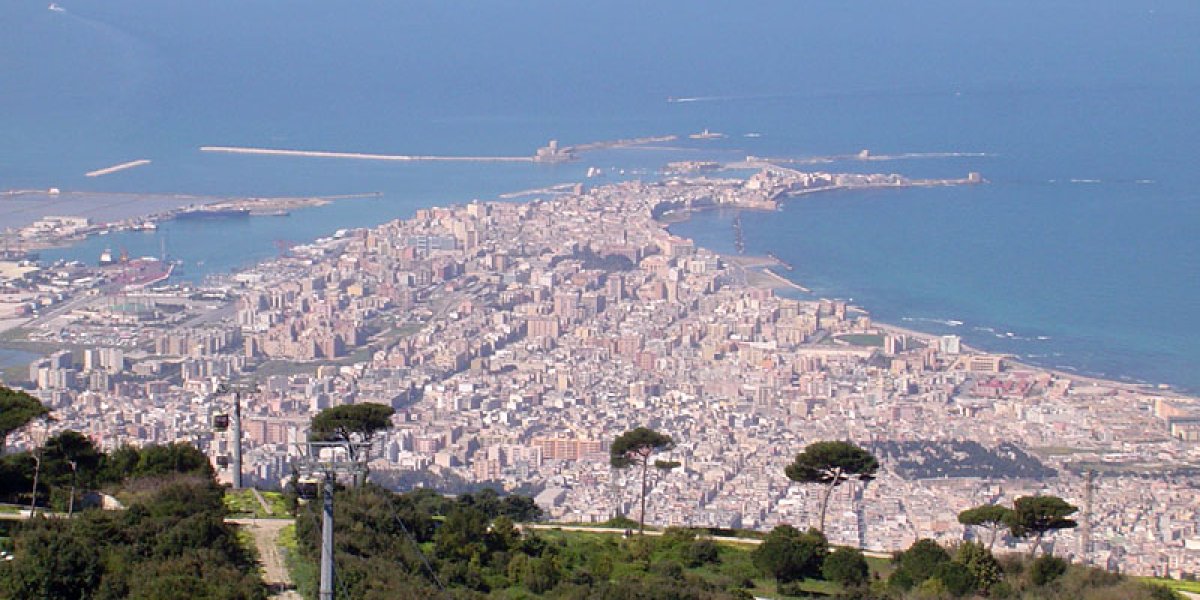
Trapani
Italia · Best time to visit: Apr-Oct.
Day-by-day plan
Choose your pace
Duración del viaje
09:00
Park
Head south out of the old town along Via Libica, then turn onto the flat coastal Via del Sale (a one-hour walk, or take AST bus 21 to shave off the first leg). The salt pans open up suddenly on both sides of the road — shallow geometric mirrors flanking the restored 17th-century windmill at Nubia, still grinding rock salt for the WWF reserve. At this hour the water is mirror-still and reflects the sky like silver foil; by midday the Sicilian glare flattens every color.
Tip: Arrive before 10:00 — once the afternoon Maestrale picks up, ripples wreck the reflection that makes this place famous. The best photo angle is from the eastern dike looking west: the windmill, the white salt pyramids covered in terracotta tiles, and the Egadi Islands line up in a single frame. Skip the small museum interior — the pans themselves are the show.
Open in Google Maps →12:00
Landmark
Walk back north along Via Marsala and Via Virgilio (about 70 minutes, flat, with the sea on your left the entire way), enter the old town from its southern edge, and cut through Piazza Vittorio Veneto to reach the Mura di Tramontana on the opposite shore. These 16th-century Spanish ramparts run almost the full length of the old town's northern edge, with the Tyrrhenian crashing below and medieval rooftops on your right. The wind here is constant — Tramontana means 'across the mountains' — and carries the smell of salt and bladderwrack.
Tip: The middle section just east of Bastione Imperiale has a low stone parapet you can sit on — the only spot along the wall where you can dangle your feet over the open sea. The Mura at noon gives the cleanest blue-water shots; afternoon sun washes the color out. On a clear day you can see the cone of Mount Erice rising 750 m straight inland to the east.
Open in Google Maps →13:00
Food
Step off the Mura and walk two blocks south down Via Roma to Via Nunzio Nasi, where Calvino has been baking pizza since 1946 in a tiled stand-up counter that has never moved. Order at the cashier and eat at the marble bar beside dockworkers and high-school kids on lunch break. This is the home of 'rianata' — Trapani's signature thick-crust pizza loaded with raw garlic, fresh oregano, anchovies, tomato, and pecorino — a recipe you will not find anywhere outside western Sicily.
Tip: Order one slice of rianata (€2.50) and one of sfincione (€2 — sweet onion and breadcrumb), chased with a small Birra Messina (€2.50). Most tourists default to the margherita, but rianata is what Trapanesi line up for at 13:00 sharp. The counter inside moves twice as fast as the cash-only side window facing the street.
Open in Google Maps →14:00
Neighborhood
Walk one block west from Calvino into Corso Vittorio Emanuele — the pedestrianized baroque spine of Trapani — and follow it straight toward the open sea. The Cattedrale di San Lorenzo (1635) appears on your left after 200 m, its honey-colored tufa facade glowing as the afternoon sun swings west. Keep going past Palazzo Senatorio with its twin clocks (one gilded for the sun side, one bronze for the sea side) and the Chiesa del Collegio dei Gesuiti, all the way to where the corso narrows into the fishermen's quarter.
Tip: Cross to the south side of the corso and stand directly opposite the Cattedrale between 14:30 and 15:30 — at this hour the southern sun lights the carved portico head-on, without the harsh shadows you'd get earlier. Look up at Palazzo Senatorio for the only twin-faced clock in Sicily: the gilded dial was meant for inland farmers, the bronze one for sailors coming home from the port.
Open in Google Maps →16:00
Landmark
Continue west along Via Torre di Ligny past the Villa Margherita gardens, then onto the narrow rocky causeway out to Torre di Ligny — the squat 17th-century Spanish watchtower planted at the absolute western tip of Sicily. The path is exposed and wind-blasted; you'll see Favignana and Levanzo floating in the haze to the west and the white arc of Trapani's seafront curving behind you. Stay until sunset — this is the only spot on Sicily where the sun drops into an open western horizon, with no land between you and Tunisia.
Tip: From 17:30 onward, climb down to the flat rocks on the south side of the tower — easy footing, no scrambling — and shoot the tower silhouetted against the sun at sea level. The viral overhead shot from the causeway is fine, but the real photograph is from below. Bring a wind layer; the temperature drops 10°C the moment the sun touches the horizon.
Open in Google Maps →19:30
Food
Walk 12 minutes back east along Via del Lazzaretto and Via Torrearsa into the Giudecca, Trapani's old Jewish quarter — whitewashed lanes so narrow a Vespa scrapes both walls. Cantina Siciliana, on Via Giudecca, has been serving fishermen's couscous since the 1920s, and owner Pino is usually at the door pouring wine. The two cave-like vaulted rooms are hung with copper pans, and the menu shifts daily on what came off the port boats at dawn.
Tip: Order the cous cous di pesce (€22 — the fish broth simmers eight hours with grouper bones and saffron) and the busiate al pesto trapanese (€14 — hand-rolled pasta with almond, tomato, basil and garlic). Reserve from the afternoon: eight tables only, and locals book by 19:00. On the walk over, ignore the chalkboard 'menu turistico' signs around Piazza Garibaldi and along the corso — those places serve reheated frozen couscous for €35 and quietly charge €5 just for the bread.
Open in Google Maps →Saltar al día
09:00
Religious
Start your morning in the heart of the old town — the church sits one block off Corso Vittorio Emanuele, a 3-minute walk from any harbor-side hotel. This 17th-century Baroque church houses the Misteri di Trapani — twenty life-size wooden sculpture groups depicting the Passion of Christ, paraded through the streets in the world's longest Good Friday procession. Even outside Easter, seeing them lined up under low light feels like walking into a frozen theater, and at 9 AM you'll often have the whole nave to yourself.
Tip: Drop a euro coin in the box by the door — it triggers the spotlights that properly illuminate each Misteri group. Without a coin the church stays dim and you miss the carved faces entirely.
Open in Google Maps →10:30
Landmark
Exit the church and turn right — Corso Vittorio Emanuele unfolds straight ahead, the Baroque spine of the old town. Trapani's marble-paved main street runs the length of the peninsula, lined with tufa-stone palazzi the color of buttercream; the cathedral, halfway along, has a quiet portico where locals duck out of the sun. Don't rush — slip into the side alleys, where laundry hangs across the lanes and old women shell almonds on doorsteps.
Tip: Morning light hits the western façades around 11:00 — the honey color of the stone is unreal for photos. The eastern (harbor) side stays shaded until late afternoon, so save it for the way back.
Open in Google Maps →12:30
Food
From the cathedral, slip into the old Giudecca quarter — three minutes through narrow lanes where wrought-iron signs jut from coral-pink walls. This tiny family-run osteria has been serving couscous trapanese — the city's signature North African–Sicilian fusion — since the 1970s. Their cuscus di pesce (€18) arrives steaming with grouper, prawns and scorpionfish in a saffron broth; pair it with busiate alla trapanese (€14), hand-twisted pasta with raw almond-tomato-basil pesto. Budget €30-40 per person with wine.
Tip: Reserve the night before, or arrive at 12:30 sharp — by 13:15 the four outdoor tables are taken until 15:00. Ask specifically for the couscous 'alla trapanese' (saffron-fish broth); the menu lists variants and tourists often end up with the wrong one.
Open in Google Maps →15:00
Museum
Walk west along Corso Vittorio Emanuele until the city ends — about 15 minutes, with the Egadi Islands ahead of you the whole way. The Spanish-built tower (1671) marks the westernmost point of Sicily; beyond it, nothing but open Mediterranean. Inside, a small prehistory museum holds Punic anchors and Greek shipwreck finds, but the real prize is the rooftop terrace — a 360° view of two coasts and the islands. This is where you finally see why Trapani is shaped like a sickle.
Tip: Skip the ground-floor cases quickly and go straight to the roof. Locals know the low railing at the base of the tower is actually the better sunset spot — it puts the tower itself inside the frame, silhouetted against the sea.
Open in Google Maps →17:00
Neighborhood
Backtrack from the tower along the northern seafront — the medieval sea walls run all the way back to the old fishermen's quarter, about 10 minutes. The Tramontana walls hug a shore where waves crash directly against the stone; pastel houses with iron balconies face the open sea, and this is where Trapani families come for their evening passeggiata. Walk slowly to Piazza Mercato del Pesce, the old colonnaded fish-market hall, now a quiet square where teenagers sit on the steps with gelato.
Tip: The light at 18:00 in summer (17:00 in spring) turns the wall stone gold — stand at the curve by Bastione Conca for the framed photo of the entire old town stretching east. Sunset itself is better from Torre di Ligny earlier; here, you want the side-light, not the sun in your lens.
Open in Google Maps →20:00
Food
From the fish-market square, cut south through two blocks of old-town lanes — five minutes through Trapani's quietest evening streets. La Bettolaccia is the old town's most respected kitchen, run by the same family for two generations. Their tonno in agrodolce (sweet-sour tuna, €22) and busiate al pesto alla trapanese (€16) are textbook — the dishes Sicilian chefs in Milan still try to copy. Eight tables, white tablecloths, a chalkboard menu. Budget €50-60 per person with wine.
Tip: Booking is essential — call 2-3 days ahead (email replies are slow), and ask for the small interior room over the alley table; the kitchen pass is there and you'll watch every plate leave. Avoid the Corso restaurants flashing photo-menus near the harbor — they're cruise-day traps charging double for frozen fish.
Open in Google Maps →09:00
Entertainment
Take city bus 21 from the port (10 min) or a €10 taxi to the lower station at Via Capua — be on the first 09:00 cabin before the haze and the tour buses arrive. The 10-minute glass-cabin ride climbs 750 meters from sea level to Erice's medieval gates, sweeping from the salt pans you'll visit later, across the Egadi Islands, all the way to Cap Bon in Tunisia on the clearest mornings. One of Sicily's most cinematic short rides.
Tip: Sit on the LEFT side going up — that's the seaward view. Buy round-trip (€9.50) rather than two one-ways; the descent queue can hit 30 minutes in late afternoon. Check the wind forecast — in strong gusts the cable car shuts down and the only alternative is the 40-minute switchback drive.
Open in Google Maps →09:45
Landmark
From the upper station, walk uphill through Porta Trapani and follow Via Vittorio Emanuele east — the castle sits at the village's far tip, 12 minutes through polished stone lanes. A 12th-century Norman castle built on the ruins of a temple to Venus Erycina (originally the Phoenician shrine of Astarte) — the Normans reused Roman blocks, the Greeks had reused Phoenician ones, three civilizations layered in one wall. The cliff-edge gardens beside it deliver the postcard: the Trapani peninsula sliced into the sea, 750 meters straight below your feet.
Tip: Enter the castle first when it opens at 10:00, then walk the gardens — the cliff viewpoint is best around 10:30 when the haze has lifted but light is still soft. The Pepoli tower garden is more photographed, but the castle ramparts have the cleaner angle down onto the peninsula.
Open in Google Maps →11:45
Neighborhood
From the castle, retrace Via Vittorio Emanuele back toward the cathedral — the village is only 600 meters across, you can't get lost. Erice's medieval lanes are paved in stones polished by 800 years of feet — they shine like wet marble even in dry weather. Wander on purpose; the Real Duomo (14th c.) has a separate bell tower you can climb for another sweeping view. Triangular streets, eight churches inside a tiny perimeter, and a silence you don't find anywhere else in western Sicily.
Tip: Climb the Duomo bell tower (€4) rather than just visiting the nave — most tour groups skip the climb and you'll likely be alone at the top. The cobblestones here are killer in heels or thin soles; this village punishes the wrong shoes.
Open in Google Maps →13:00
Food
From the cathedral, take Vicolo San Rocco — a narrow lane that opens into a hidden courtyard. The restaurant has no street sign on the main road; finding it is the trick. The medieval courtyard sits behind an unmarked door, and the busiate alla ericina (with wild fennel pesto, €14) and cassatedde di ricotta are signature. Their inland-style seafood couscous (€20), drier than Trapani's, comes with grouper alone. Budget €40-50 per person.
Tip: Book the courtyard table, not the indoor room — outside under stone arches is the whole point. After lunch walk one block to Pasticceria Maria Grammatico on Via Vittorio Emanuele and order ONE warm genovese (€2.50, custard-filled shell) — it's the most famous sweet in western Sicily and you'd regret skipping it.
Open in Google Maps →15:30
Park
Cable car back down (10 min), then taxi 15 minutes south (€20) to the saline at Nubia — the Salina Calcara visitor area has the working windmill and the salt museum. The salt pans south of Trapani are a WWF reserve where shallow basins reflect the sky like mirrors, and wooden windmills still grind salt the same way they have since the Phoenicians. Pink flamingos wade in the pools from spring through fall, and at the Museo del Sale — inside a restored mill — you can taste salt straight off the pyramids drying outside.
Tip: Walk the wooden boardwalk into the basins (free) BEFORE paying for the museum — that's where the pink-mirror reflection photos happen, and the light reads cleanest before 17:00. Bring a hat; there's zero shade out on the pans and the salt glare doubles the sun.
Open in Google Maps →19:00
Food
From the salt museum, a 5-minute walk south along the saline track — Mamma Caura sits directly on a salt basin, with the working Maria Stella windmill across the water. The only restaurant set inside the salt reserve itself — wooden deck at water level, tables looking straight at the windmill silhouette. Order the gambero rosso di Mazara (raw Mazara red prawns, €18) and busiate al ragù di tonno (€16); the sunset over the Egadi Islands, seen across the salt mirrors, is the image you'll keep from this whole trip. Budget €50-60 per person.
Tip: Reserve a deck-side table at least 3 days ahead — there are only six and they vanish in summer. Arrive at 19:00 for a Marsala spritz first (€8) and watch the salt-worker raking pyramids before service. One last warning: do NOT eat at the restaurants directly facing Trapani's cruise pier on Via Ammiraglio Staiti — they serve frozen seafood at double prices to day-trippers who don't know better.
Open in Google Maps →
Trip builder
Plan this trip around Trapani
Turn this guide into a bookable rail itinerary with FlipEarth.
Keep exploring
Related cities
More in the same country
FAQ
Frequently asked questions
How many days do you need in Trapani?
Most travelers enjoy Trapani in 1 days, with enough time for headline sights and a slower meal or museum stop.
What's the best time to visit Trapani?
The easiest season for most travelers is Apr-Oct, especially if you want good weather and manageable crowds.
What's the daily budget for Trapani?
A practical starting point is about €120 per person per day before hotels, then adjust based on museums, dining, and transport.
What are the must-see attractions in Trapani?
A good first shortlist for Trapani includes Mura di Tramontana, Torre di Ligny.