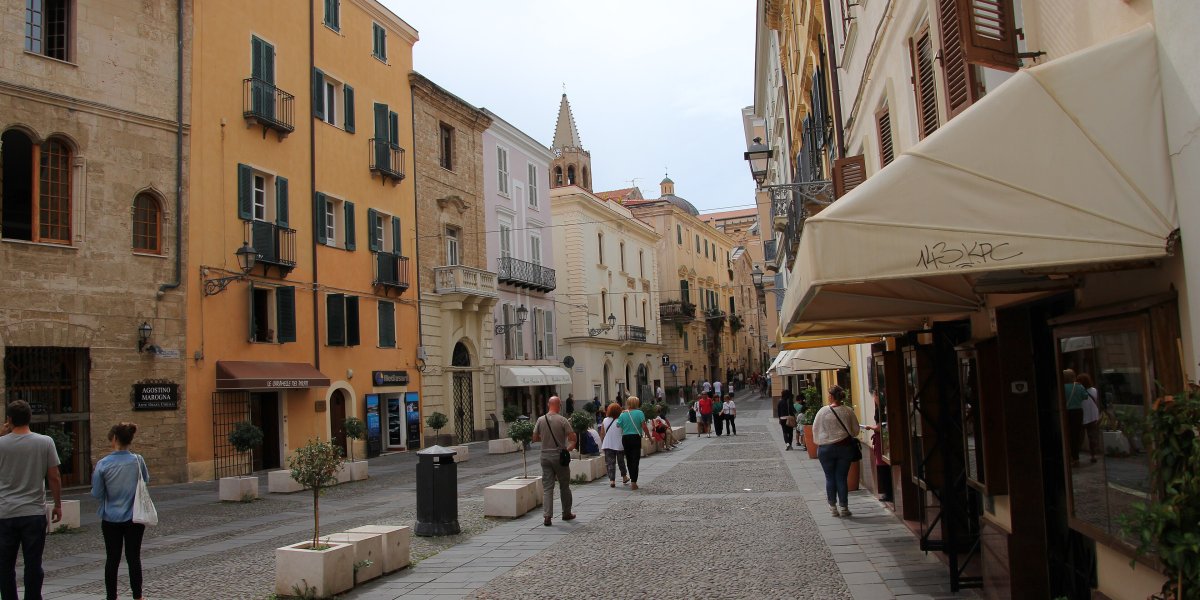
City Guide
Alghero
Italia · Best time to visit: May-Oct.
Day-by-day plan
Choose your pace
Duración del viaje
08:30
Landmark
The bastioni ringing Alghero's old town face west, so morning light hits the honey sandstone from behind you and lights up the tile rooftops and curved fishing boats below. Walk the full length from Torre di Sulis north to Torre della Maddalena: turquoise water on your left, terracotta on your right, and not a single tour bus yet on the lanes. This is the only hour these walls feel as they did 400 years ago.
Tip: Start at Torre di Sulis (south end) and walk north — the sun stays behind you and the cathedral bell tower frames every shot of the rooftops. By 11:00 the central bastion is claimed by a tour group; you'll be long gone.
Open in Google Maps →09:45
Religious
From Torre della Maddalena at the north end, slip inland one block down Via Carlo Alberto, past shop windows of red coral jewelry — the city's other treasure. The Piazza Duomo façade is austere neoclassical, but circle around to Carrer de Santa Maria for the original 16th-century Catalan-Gothic side, all sandstone arches and pointed windows. Look up at the octagonal bell tower — the only one of its kind in Sardinia, a direct import from Barcelona.
Tip: Walk into Carrer de Santa Maria for the original Catalan-Gothic façade — most visitors photograph only the bland front. The street signs here are Catalan first, Italian second; this is the only town in Italy where that's true.
Open in Google Maps →11:30
Food
Two minutes east of the cathedral on Via Garibaldi, this 1940s Sardinian institution has fed locals their elevenses for generations — and it's the right move before a boat. Order one panada (savory pastry stuffed with eel or lamb, €4) and a slice of potato-rosemary focaccia (€3.50), then a seada — fried cheese pastry drizzled with bitter Sardinian honey (€4). A full plate runs €10–14 per person.
Tip: Skip the panini case at the front — the panadas behind the counter are the reason to be here. Eat standing at the marble counter; the back tables charge a coperto and double the bill.
Open in Google Maps →13:30
Landmark
Walk five minutes north along the marina to Banchina Porto, where the Navisarda ferries leave for Capo Caccia. The 50-minute crossing is half the experience — limestone cliffs drop 200 m straight into the sea, and you'll see why this stretch is called the Riviera del Corallo. Inside the grotto, an underground lake mirrors the stalactites; the guided 45-minute walk is short but the optics unforgettable — and by boat you skip the 654 steps of the Escala del Cabirol cliff staircase.
Tip: Take the 13:30 Navisarda departure — afternoon light angles into the grotto mouth and the cave is at its most lit. Buy the combined boat + grotto ticket (€34) at the Bastione della Maddalena kiosk before walking to the dock; same price as buying separately but skips the second queue inside.
Open in Google Maps →17:30
Neighborhood
Back at the port, walk south along Lungomare Valencia — the promenade hugging the old town's western walls. Past Bastione della Maddalena, the path opens onto a long sea-facing terrace where locals come for aperitivo (Aperol €6 at the seafront kiosks). End at Bastione Magellano, the southwest corner: this is the angle where Alghero's silhouette — walls, bell tower, fishing boats — turns gold against the sun setting over Capo Caccia, the same headland you visited two hours ago, now in profile.
Tip: Caffè Latino on Lungomare Valencia has the best-value aperitivo (Aperol + free olives and focaccia, €6) — its outdoor terrace faces directly west. Arrive 30 minutes before sunset (19:15 in June, 17:30 in October) to claim a seat on the bastion wall itself.
Open in Google Maps →19:30
Food
Three minutes north of Bastione Magellano on Via Maiorca, behind a wooden door with no English sign, Al Tuguri serves the only menu in Sardinia that openly calls itself Catalan — chef Benito Carbonella has run it since 1989. Order the aragosta alla catalana (Alghero lobster with tomato and red onion, €42 when in season May–Aug) or the cassola — a Catalan-style fish stew (€28) — with a glass of Cannonau di Sardegna Riserva (€8). Plan €55–70 per person for three courses; the dining room spreads across three floors of a 16th-century house, eight tables per floor.
Tip: Reserve at least two days ahead by phone — the eight tables fill by 19:00 every night in summer; ask for the first floor for open windows over Via Maiorca. Avoid the tourist-trap restaurants on Bastione della Maddalena with English-only menus and 'aragosta' priced at €80 — those serve frozen lobster from elsewhere; real Alghero lobster is in season only May–August and is never sold at that price.
Open in Google Maps →Saltar al día
09:30
Religious
From your hotel walk into Piazza Duomo through narrow Vicolo Adami — the cathedral's neoclassical façade appears suddenly between two leaning Aragonese houses. Climb the bell tower first (60 steps, no lift): from the roof you read all of Alghero like a map — terracotta rooftops, the harbor, and Capo Caccia floating on the western horizon. Inside, look for the Catalan coats-of-arms carved into the side chapels — physical proof this corner of Italy spoke Catalan long before Italian.
Tip: The campanile opens at 10:00 only Mon-Fri (Jun-Sep). Climb before 10:30 — the light raking through the louvered windows in that half-hour is what makes the photo. The cathedral nave itself you can see anytime.
Open in Google Maps →11:30
Landmark
Exit the cathedral and walk three minutes north up Via Principe Umberto — this tawny stone tower marks the original land gate where caravans once entered the walled town. Climb the four floors of restored interiors (cool stone even in August) and step onto the rooftop: you suddenly read the whole Catalan grid below you and the line of sea walls falling into the harbor. Locals still call it 'Torre dels Hebreus' — Alghero's Jewish community financed it in 1360 in exchange for safe passage through these walls.
Tip: The €3 ticket also covers Torre di Sulis at sunset — keep your receipt. Skip the small museum on floor two; the rooftop is the entire reason you came up.
Open in Google Maps →13:00
Food
Walk five minutes south down Via Principe Umberto — Movida sits on the corner where the medieval grid meets the piazza, its wooden bar piled with small plates that lean Catalan more than Sardinian. Order the salsiccia sarda con miele di corbezzolo (€7) and polpo alla griglia (€14); for wine, a glass of Vermentino di Sardegna (€5). Two plates and a glass settles around €26 — perfect fuel before an afternoon on foot.
Tip: Skip the multi-language menu on the door rack and ask for 'la lavagna' (the chalkboard) — the kitchen's daily catch goes there, never the printed menu. Walk in at 13:00 sharp; by 13:30 the locals fill every stool.
Open in Google Maps →14:30
Religious
Backtrack one block south to Via Carlo Alberto — the church's coral-pink campanile is the unmistakable Aragonese landmark above the rooftops. Behind the nave hides the Gothic-Catalan cloister, the calmest courtyard in Alghero: twenty-two slender sandstone columns, a single fig tree, and a silence broken only by swifts. The afternoon light angles low across the colonnade between 15:00 and 16:00 — exactly when you want to be there.
Tip: Enter through the side door on Via Carlo Alberto, not the main façade — €4 buys you the cloister AND the small museum upstairs, where a 15th-century Aragonese altar survives. The cloister closes 18:00 — don't leave it for tomorrow.
Open in Google Maps →17:30
Landmark
Walk out of San Francesco and four minutes west down Via Roma — you emerge onto the open sea promenade with Capo Caccia floating on the western horizon. Start at Torre della Polveriera and walk south along the ramparts: the sun drops behind the cape between 19:30 and 20:30 (Jun-Sep), staining the honey limestone walls the color of pressed amber. Stop midway for an Aperol spritz (€7) at one of the bastion-arch bars — you are paying for the seat, and it is worth it.
Tip: Don't follow the crowd onto the central balcony — the cleanest sunset frame is from the small terrace right behind Torre della Polveriera, where the curve of the wall leads the eye toward the cape. For gelato, walk two streets inland to Cremeria Algherese on Via Vittorio Emanuele; the bastion ice-cream bars charge double for industrial gelato.
Open in Google Maps →20:30
Food
Step off the ramparts at Torre Sulis and turn one block inland into Via Maiorca — Al Tuguri occupies a 16th-century house with an iron lantern over its door. This is Alghero's most serious Catalan-Sardinian kitchen: order the aragosta alla catalana (€55 — cold lobster with sweet onion and tomato, the dish that defines this coast) and to start, paella algherese (€22, sized for two). A bottle of Cannonau di Sardegna runs €28. Two people eat about €110 with wine.
Tip: Reserve at least 48 hours ahead — eight tables only, never accepts walk-ins after 20:30. Ask for the sala superiore (upstairs room) — three tables under a vaulted ceiling, no street noise. Pitfall warning: the waterside restaurants along Bastioni Cristoforo Colombo with menus in six languages and aggressive hosts on the street are pure tourist traps charging €40 for frozen seafood — the serious cooking in this town is always one block inland.
Open in Google Maps →09:00
Landmark
Walk down to Banchina Dogana right under the bastions — the Linea Grotte boats moor here, flags snapping in the morning breeze. The 2.5-hour cruise rounds the white limestone cliffs of Capo Caccia (look up: griffon vultures circle the crags) before docking at the cave mouth for a guided 45-minute walk through a cathedral of stalactites built around an underground saltwater lake. Going by sea is the right call — the alternative is 654 steps down the Escala del Cabirol from the cape, which eats your morning and your knees.
Tip: Book the 09:00 departure the day before at the Banchina kiosk (€18 boat + €14 grotto = €32). Sit on the LEFT side outbound for the cliffs; switch to the RIGHT on the return so you photograph the bastions in late-morning light.
Open in Google Maps →13:00
Food
The boat docks back at Banchina Dogana — walk three minutes south along the marina to La Stella Marina, set on a wooden terrace right above the water. The kitchen runs entirely on whatever the morning's boats brought in. Order spaghetti ai ricci di mare (€22 — sea urchin, served only when truly fresh; the waiter will tell you the truth if you ask) and a grilled catch of the day (€26/kg). A glass of Vermentino (€5) is non-negotiable; total around €38 with coperto.
Tip: Skip the printed menu and ask 'cosa è arrivato stamattina?' (what came in this morning?) — that is always the best plate. The terrace fills by 13:30; arrive at 13:00 to grab a sea-facing two-top.
Open in Google Maps →15:00
Museum
Walk inland up Via XX Settembre for seven minutes — the museum occupies a quiet Liberty-era villa in the leafy new town. The small but meticulous exhibit shows what 'corallium rubrum' actually is — the deep red Mediterranean coral that gives the Riviera del Corallo its name — and how Alghero's divers have harvested it from these waters since the 16th century. Forty-five minutes is enough; the workshop video upstairs is the highlight.
Tip: Most 'Alghero coral' jewelry sold on Via Carlo Alberto is resin or imported Pacific coral — only pieces stamped 'Corallium rubrum Alghero' with the official municipal seal are the real thing. Memorise the seal in the museum before you walk into any shop.
Open in Google Maps →16:30
Park
Exit the museum east toward the sea — you'll join the Lungomare Dante and follow the long curve of beach that runs north out of town. Maria Pia is a white-sand crescent backed by a juniper forest: turquoise water on calm afternoons, never crowded once you walk past the first 200 m. The whole flat promenade is 35 minutes one-way under palms and oleander, and the water stays warm into October — bring a towel.
Tip: Walk past the first bagno (paid beach club, €15/lounger) — keep going 200 m north and the exact same beach turns free, with the juniper grove for shade. Carry water; the kiosks along the lungomare close after 19:00.
Open in Google Maps →19:00
Landmark
Walk back along the lungomare ten minutes — the squat round tower stands alone on a small plaza at the southern tip of the old town. Climb the three floors (free with yesterday's Torre di Porta Terra ticket) and step onto the roof: the entire western coast unfolds in front of you, from Capo Caccia to the lights of Bosa coming on in the distance. The sun drops here a few minutes after the bastions did — quieter, no crowd, no aperitivo bars. This is where locals come.
Tip: Bring yesterday's Torre di Porta Terra receipt — same ticket, no need to pay again. The tower closes 30 minutes after sunset; if the guard is locking up, the small rooftop terrace on the plaza outside (always free) gives essentially the same view.
Open in Google Maps →20:30
Food
Turn inland from Torre di Sulis into Via Misericordia — Lo Romaní is two minutes away, a low arched dining room with eight wooden tables and a chalkboard menu. This is the kitchen that didn't change when Alghero turned touristy. Order malloreddus alla campidanese (€14 — Sardinian gnocchetti with saffron sausage ragù) and fregola con arselle (€16 — toasted Sardinian pasta with clams); a bottle of Cannonau is €22. Two people eat well under €75 with wine.
Tip: Ask for sebadas con miele di corbezzolo for dessert (€7 — fried pecorino-stuffed pastry under strawberry-tree honey) — it's not always on the menu but always in the kitchen. Pitfall warning: the harbor-front restaurants along Via Garibaldi and Bastioni Cristoforo Colombo lit up with neon and €35 'menù turistico' boards serve microwaved versions of these same dishes at double the price — the real Alghero cooking lives one block inland on Via Misericordia and Via Maiorca.
Open in Google Maps →
Trip builder
Plan this trip around Alghero
Turn this guide into a bookable rail itinerary with FlipEarth.
Keep exploring
Related cities
More in the same country
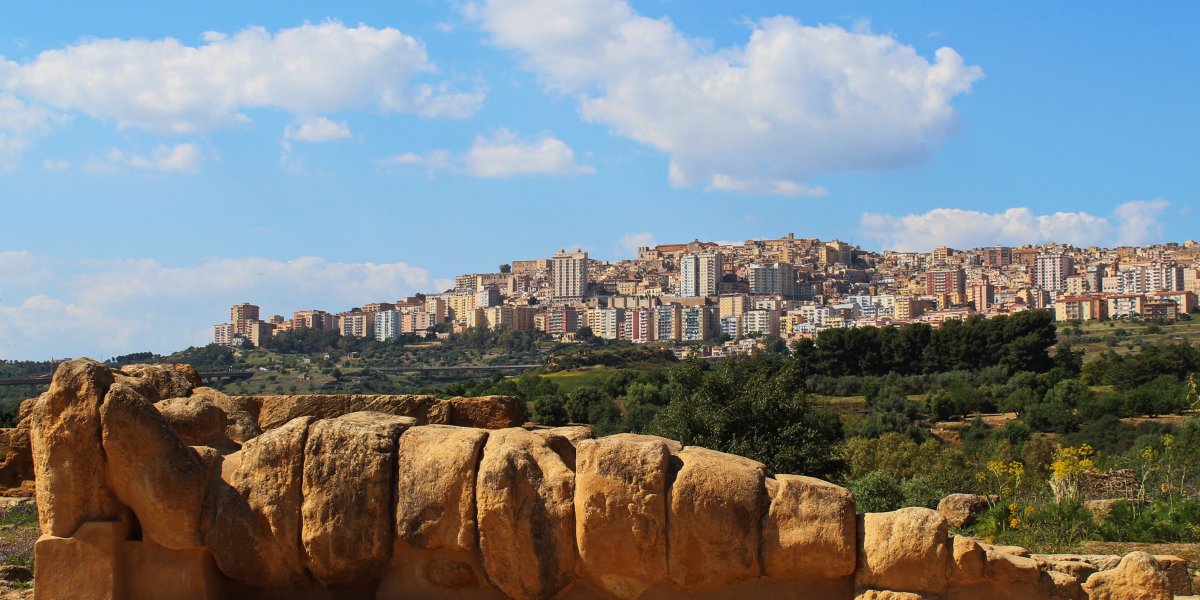
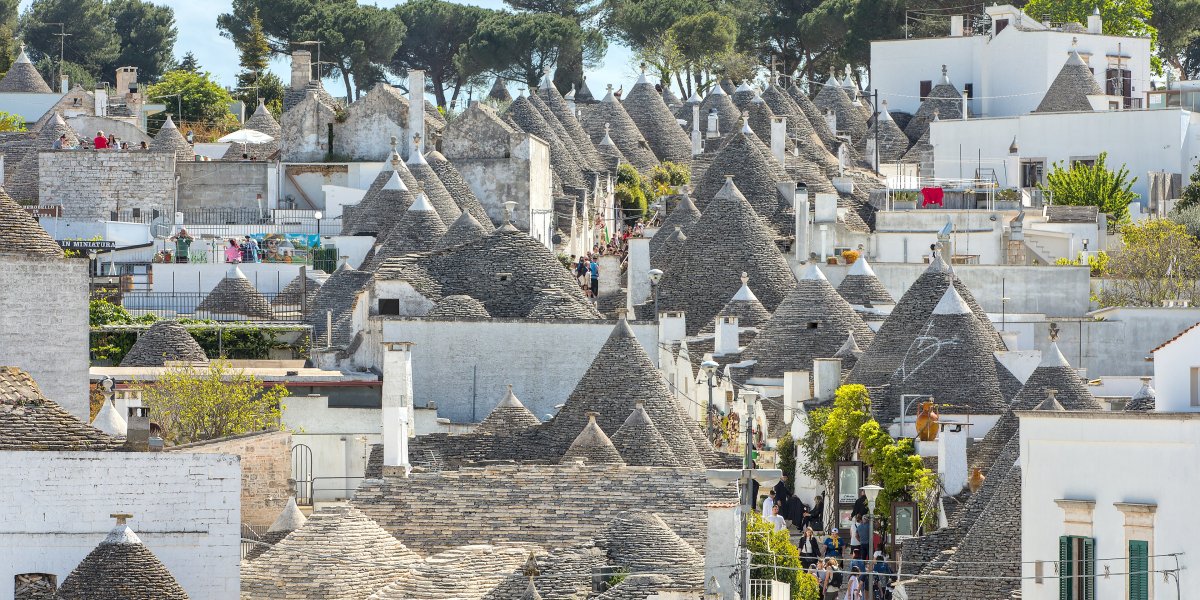
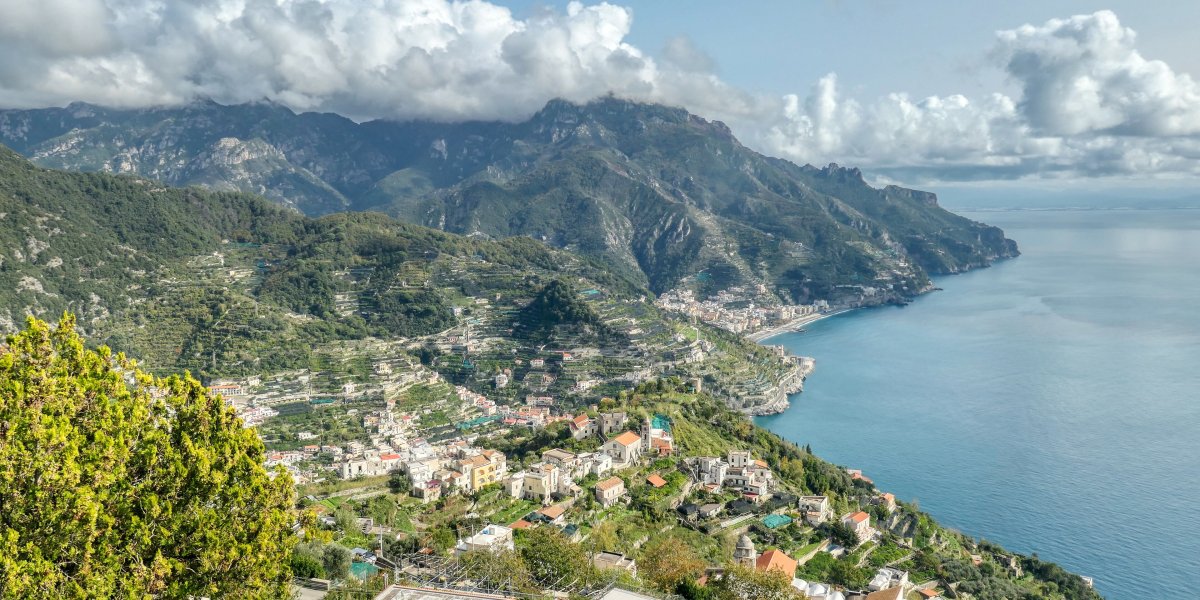
FAQ
Frequently asked questions
How many days do you need in Alghero?
Most travelers enjoy Alghero in 1 days, with enough time for headline sights and a slower meal or museum stop.
What's the best time to visit Alghero?
The easiest season for most travelers is May-Oct, especially if you want good weather and manageable crowds.
What's the daily budget for Alghero?
A practical starting point is about €115 per person per day before hotels, then adjust based on museums, dining, and transport.
What are the must-see attractions in Alghero?
A good first shortlist for Alghero includes Bastioni Marco Polo, Grotta di Nettuno.