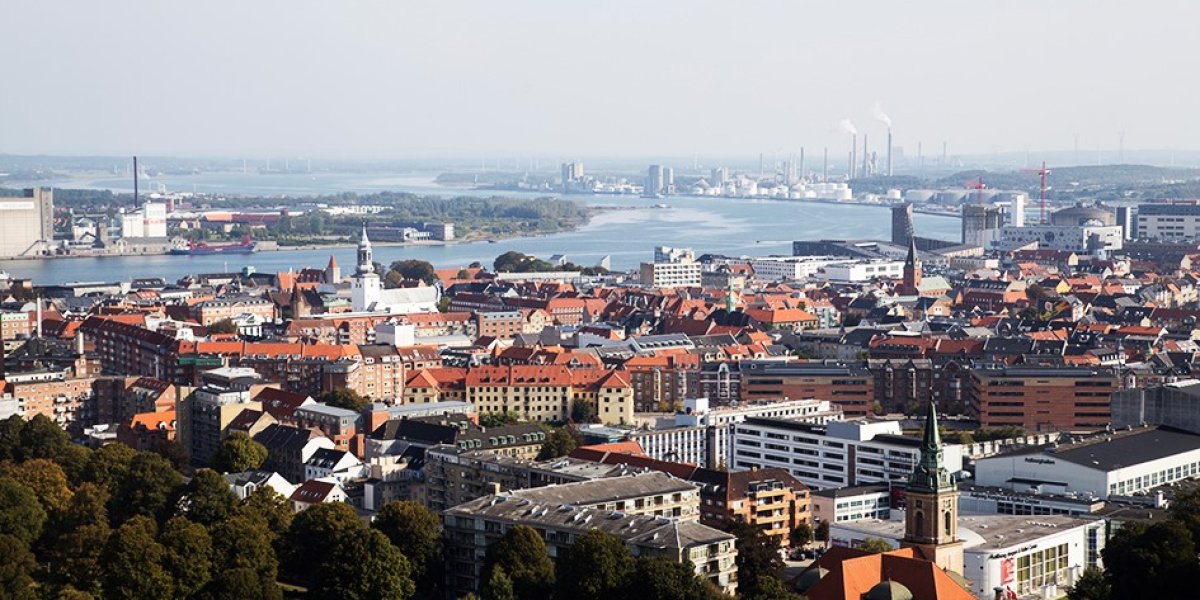
City Guide
Aalborg
Dinamarca · Best time to visit: May-Sep.
Day-by-day plan
Choose your pace
Duración del viaje
08:30
Landmark
From Nytorv, walk north up Vesterbro to the iron-arched Limfjordsbroen (Limfjord Bridge, 1933) — Aalborg's only road bridge, with sweeping fjord views from its high deck. Cross into Nørresundby and follow the brown signs uphill fifteen minutes through quiet residential streets to a wind-swept moraine covered in 700 silent Viking and Iron Age graves, each marked by upright standing stones arranged in the shape of ships. This was Scandinavia's largest pagan necropolis; sand-storms sealed it around 1100 AD and only a 1950s gale uncovered it again.
Tip: Start exactly at 08:30 to arrive by 09:30 — opening hour, no tour buses, and the morning sun rakes across the burial field from the east, throwing every standing stone into long razor-thin shadows. Climb the small hill behind the largest ship setting for the wide-angle shot with the fjord and Aalborg's skyline below. Skip the indoor museum (€8) — exteriors are the entire point of being here.
Open in Google Maps →11:00
Landmark
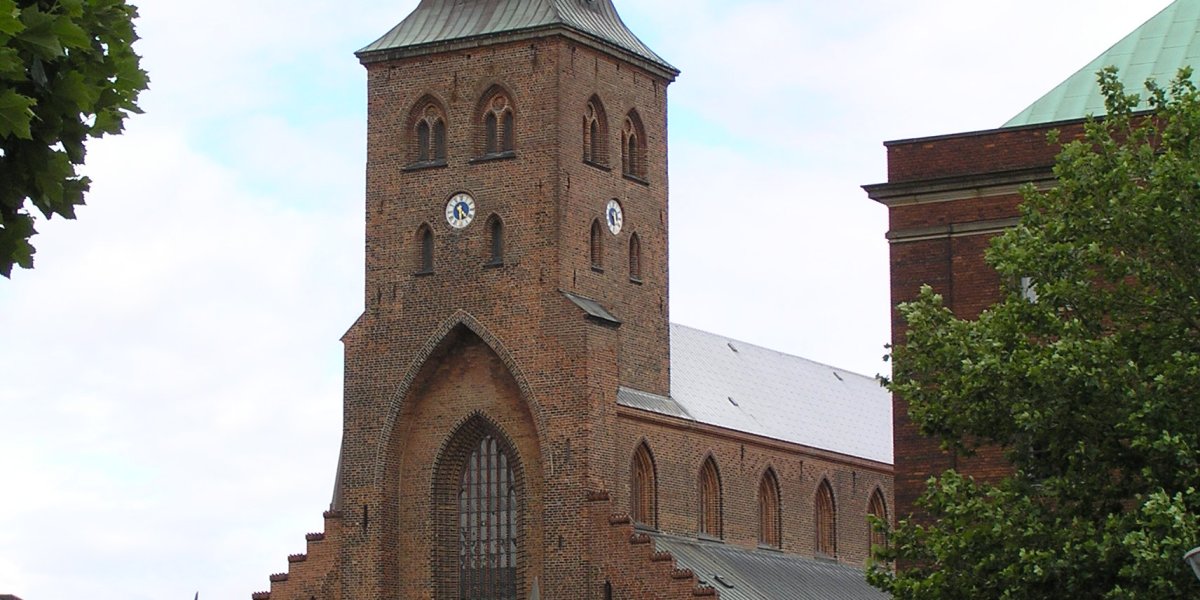
Walk back across the Limfjordsbroen the way you came — different now under full midday light, with the green-glazed copper spire of Budolfi Cathedral guiding you straight into Gammeltorv square (60 min, 5 km). The 14th-century cathedral has Denmark's only fully copper-clad church tower; step inside for the painted ceiling vaults (free). Directly opposite stands Jens Bangs Stenhus (1624) — five stories of sandstone reliefs, gargoyles and stone lions, built by a spice trader richer than the king's brother and once described by Karl Marx as 'the most ornate burgher house in northern Europe.'
Tip: Walk to the southern corner of Jens Bang's house (the side facing the old town hall) and look up at the small stone face sticking its tongue out. That is Jens Bang's revenge after the council refused him a seat — no guidebook mentions it, and locals love quizzing visitors about whether they spotted it.
Open in Google Maps →12:30
Food
Five-minute walk east through Algade pedestrian street down to Strandvejen on the harbor. Aalborg's covered street-food hall packs roughly twenty-five vendors into a converted warehouse — Vietnamese bao, Mexican tacos — but you're here for the Danish corner. Order traditional smørrebrød with marinated herring, red onion and dill on dense dark rye (€8), and a rød pølse (Denmark's red-skinned hot dog with crispy onions, mustard, remoulade and pickles, €5).
Tip: At the bar to the left, order a 2 cl shot of Aalborg Akvavit Taffel (€4) — the city's 45% caraway schnapps — and knock it back before the smørrebrød, not after. This is the Aalborg way. Ask for the 'Linie' bottling: it ages crossing the equator twice on a freighter, and any Dane will respect you for knowing the name.
Open in Google Maps →13:30
Landmark
Eight-minute walk east along Slotspladsen, past the old grain silos toward the white-and-black half-timbered castle perched on the fjord's edge. Aalborghus Slot (1539) was built by King Christian III as a royal residence and customs fortress collecting tolls from every ship sailing the Limfjord. The official interior tour is forgettable, but the courtyard and underground dungeons are free, open year-round, and completely unsupervised.
Tip: Inside the courtyard, look right for a low wooden door marked 'Kasematter' — that's the dungeons, free and almost always empty. The vaulted underground corridor amplifies every footstep. Skip the paid 'castle interior tour' (€10): it only shows the boring municipal offices in the south wing where the county council now meets.
Open in Google Maps →14:30
Landmark
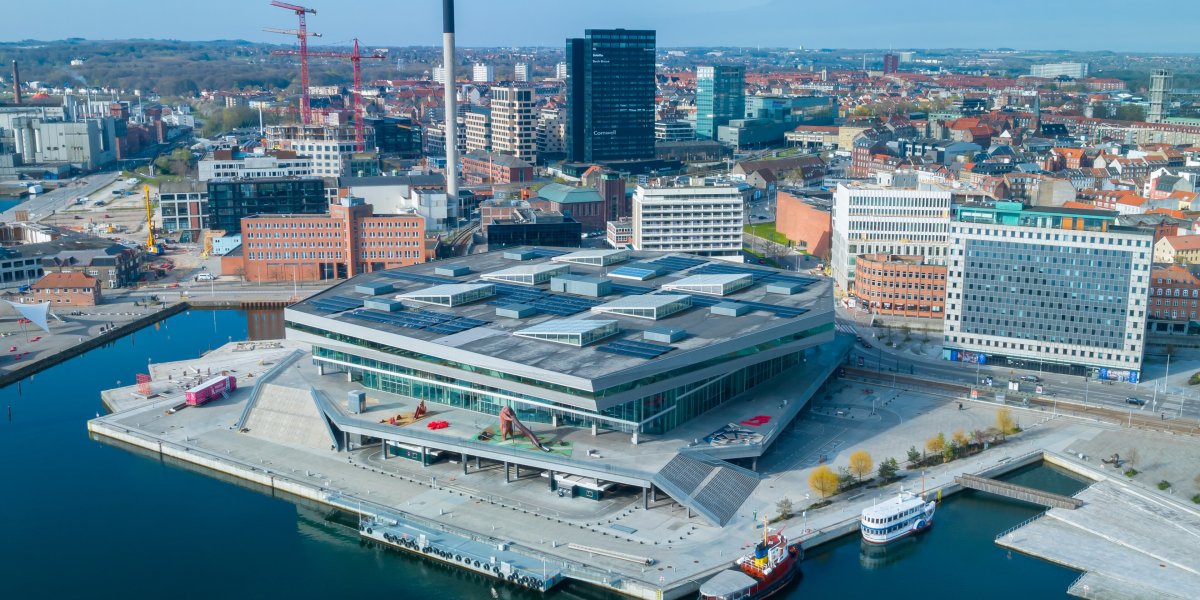
Walk down to the Limfjord promenade and turn east — the fjord on your left, brick harbor warehouses converted into cafés on your right. After 800 m you reach the Utzon Center, the last building Jørn Utzon (architect of the Sydney Opera House, born and raised here in Aalborg) designed before his death in 2008; its four white wave-shaped roofs deliberately echo the fjord swell behind it. Two hundred meters further east stands Musikkens Hus by Coop Himmelblau — a brutal black-glass-and-concrete concert hall that looks like a grand piano dropped from orbit. Between them lies Nordkraft, a 1940s coal-power station reborn as cinemas, climbing gym and craft-beer bars.
Tip: Shoot the Utzon Center from the pier directly south of the building at 16:00-17:00 in summer, when the western sun is behind your shoulder and the white roofs glow against the steel-dark fjord. Walk through Nordkraft's inner courtyard for Aalborg's most surprising photo: raw industrial concrete strung with climbing ropes and hanging gardens. Tourist trap to skip: the 'harbor sightseeing boats' departing from this dock — 45 minutes circling industrial sheds and a cement factory for €25.
Open in Google Maps →19:00
Food
Seven-minute walk back inland along Vingaardsgade to C.W. Obels Plads at the foot of Budolfi Cathedral's spire. Søgaards is Aalborg's oldest microbrewery — low beamed ceilings, dim Edison-bulb light, copper brewing tanks gleaming behind the bar and the warm yeasty smell of malt in the air. Order stegt flæsk med persillesovs (crispy pork belly, parsley cream sauce, boiled potatoes — €19, all-you-can-eat, Denmark's official national dish) with a half-liter of their dark Aalborg Porter (€8). Finish with a flight of three akvavits (€12).
Tip: Book online the day before — Søgaards is small, locals fill it after work, and walk-ins are turned away after 19:30. Sit in the back room facing the copper brewing tanks, not the front bar. Local pitfall: avoid Jomfru Ane Gade two streets north — it looks like Aalborg's restaurant strip but is 90% drunken stag-party sports bars charging €30 for frozen burgers. No local under fifty ever eats there; you'll regret it within two bites.
Open in Google Maps →Saltar al día
09:00
Landmark
Begin at the white half-timbered Renaissance castle from 1539-55, set on a low rise above the harbour where Aalborg first took shape. Slip into the underground kasematter — atmospheric stone dungeons that are free, almost always empty before 10, and the most evocative ten minutes you'll spend in the city. The east courtyard opens directly onto the Limfjord, framing your first view of the water you'll spend the rest of the day along.
Tip: The kasematter entrance is a small wooden door in the south courtyard wall — easy to miss. Bring your phone light; the tunnels are dim. The dungeons are accessible Mon-Fri 8:00-21:00 only; on weekends the courtyard and exterior are still worth the early start before the harbour fills up.
Open in Google Maps →10:30
Landmark
Walk 4 minutes west on Slotsgade to Algade, the cobbled spine of the old town. Step into Budolfi Cathedral first — its whitewashed interior and gilded baroque pulpit are a quiet Lutheran counterpoint to the city's industrial muscle, and morning light through the high windows is the best the building gets. Continue two blocks north on Østerågade to Jens Bang's Stenhus (1624), the most theatrical merchant's house in northern Europe: five storeys of sandstone caryatids built by a wine trader so wealthy he was rejected by the city council, and so spiteful he had the building's stone face stick its tongue out at city hall — still visible above the entrance.
Tip: The tongue-out face is on the north façade above the door — easy to miss without looking up. The full sandstone facade reads best from across Østerågade in 10:30-11:30 light, when the sun crosses the street rather than glaring down it. Skip the souvenir shops on Algade and walk one block east to Hjelmerstald for the prettiest cobbled lane in the old town.
Open in Google Maps →12:30
Food
Walk 3 minutes south to Boulevarden 1, just off the main square. Penny Lane is the smørrebrød lunch room where Aalborg's lawyers, shopkeepers, and retirees have eaten for decades — dense rye bread piled high with herring, roast beef, and warm meatballs, served in waves so you taste several toppings. The room is unfashionable in the best way, with old enamel signs and waitresses who remember regulars' orders.
Tip: Order the classic 3-piece smørrebrød lunch (175 DKK ≈ 23 EUR): herring with capers, roast beef with remoulade, and the warm frikadelle with red cabbage. Add a cold Aalborg Taffel Akvavit (35 DKK) — sip, never shoot. Walk in at 12:00 sharp without a reservation and you'll get a window seat; by 12:45 every chair is full. The burger menu is decoration — go straight to the smørrebrød card.
Open in Google Maps →14:30
Museum
Walk 12 minutes east along the harbour promenade — the route hugs the Limfjord and passes the old fishing pier and the Streetfood Aalborg container yard if you want a coffee on the way. The Utzon Center is Jørn Utzon's final building, completed in 2008 by his son Kim Utzon as a tribute to the architect of the Sydney Opera House, who grew up in Aalborg sketching ships on this exact water. The afternoon sun lights the wave-roofed white concrete vaults from the south, so the exterior photographs best around 15:30 — go inside first, save the facade for the way out.
Tip: Closed Mondays. The upstairs harbour-side café has the best fjord view in Aalborg — order a coffee even if you're not exhibition-hungry. The architecture model room on the ground floor (with Utzon's original Sydney Opera House sketches) is easy to miss; ask at the desk if it's not signposted.
Open in Google Maps →16:45
Entertainment
Walk 5 minutes east along the waterfront — the path continues past the new harbour baths and the moored sailing boats. Designed by Vienna's Coop Himmelb(l)au and opened in 2014, Musikkens Hus rises like a cube of stacked concrete and glass on the water's edge, and you don't need a concert ticket: the public foyers, panoramic staircases, and upper terraces are free and almost always uncrowded. The view back west toward the Utzon Center frames Aalborg's reinvented waterfront in a single shot.
Tip: Take the lift to the 7th-floor restaurant lobby; the corridor windows there are the city's secret panoramic vantage and free to anyone who walks in. Time it for 17:00-17:30 in summer — the low sun rakes across the fjord toward the Limfjordsbroen bridge, which is exactly tomorrow's walking route to the Vikings.
Open in Google Maps →19:30
Food
Walk 18 minutes back through the old town and west to Mølleå, a small canal-side lane that feels more like a hidden courtyard than a street. Mortens Kro is chef Morten Nielsen's flagship — the Aalborg institution every local mentions when asked 'where do I take a visitor.' The dining room is theatrical, generous, and has been packed for two decades; the cooking is modern Danish that respects the herring-and-rye DNA of the city.
Tip: Reserve at least a week ahead online — walk-ins are turned away most weekends. The 4-course tasting menu (645 DKK ≈ 87 EUR) is the move: expect smoked North Sea cod, slow-braised beef cheek, and a chocolate finale. Ask for the corner two-tops by the windows; the bar seats face the kitchen and miss the dining room theatre. WARNING: a 10-minute detour through nearby Jomfru Ane Gade will lead you past neon 'Danish steakhouse' signs and aggressive maitre d's flagging tourists in — these are the city's worst tourist traps, with reheated food, drink markups of 40%, and tablecloth surcharges. Real Aalborg dining is on quieter streets like Mølleå and Østerågade.
Open in Google Maps →09:00
Landmark
Walk 25 minutes north across the Limfjordsbroen bridge — the cold wind off the fjord, the seagulls overhead, the city falling away behind you. Lindholm Høje is northern Europe's most haunting Viking site: nearly 700 graves marked by stone-ship outlines, scattered across a windswept meadow above the fjord, buried under sand for centuries and uncovered only in the 1950s. Arrive before 10:00 and the field is yours alone; by 10:30 the first tour buses pull in and the spell breaks. Walk the perimeter clockwise so the rising sun is on the stones, not in your lens.
Tip: The site is always free and always open. Wear waterproof shoes — the grass is dewy until 11:00 and the path is uneven. For photos, drop down to the lower south slope and shoot upward; the stone ships read clearly from below but disappear from above. The southern viewpoint with the fjord in the background is the only angle worth posting.
Open in Google Maps →10:30
Museum
Walk 2 minutes back down to the entrance. The small museum explains what your feet just walked through: how the Vikings buried both men and women here, why ships were carved in stone (not for the dead's voyage but for the wealth they wanted to display), and how the village below was abandoned overnight to a single catastrophic sandstorm. The reconstructed Viking longhouse in the rear courtyard is worth a five-minute walkaround on the way out.
Tip: Closed Mondays from October to April. Skip the audio guide — the exhibits are well-labelled in English without it. The gift shop's mass-produced Viking horns are kitsch; the silver jewellery cases by the entrance are from genuine local makers and are the only souvenirs in Aalborg worth the price.
Open in Google Maps →12:30
Food
Walk 25 minutes back across the Limfjordsbroen and south to C. W. Obels Plads — the bridge crossing on the return is when you really see the harbour cranes, the church spires, and the Utzon Center lined up as one panorama. Søgaards is Aalborg's microbrewery and the friendliest lunch room in the centre: copper tanks behind the bar, long shared tables, locals from the nearby offices spilling onto the terrace. The kitchen does proper Danish pub food without dumbing it down for tourists.
Tip: Order the brewery's smørrebrød trio (165 DKK ≈ 22 EUR) — fried plaice, beef tartare, and the egg-and-shrimp open sandwich — with a flight of four house beers (95 DKK). The terrace facing the square is the best seat on a sunny day; locals arrive at 12:00 and stay until 14:30. Ask the bartender what just came off the line — the unfiltered pilsner rarely makes the menu but is usually available on tap.
Open in Google Maps →14:30
Museum
Walk 18 minutes west through Mølleparken, climbing gently into the green park behind the city — a route most tourists never find. KUNSTEN is one of Scandinavia's overlooked masterpieces: designed by Alvar Aalto with his wife Elissa and Jean-Jacques Baruël in 1958, opened in 1972, all white marble floors, skylit galleries, and an amphitheatre carved into the slope behind the building. The collection ranges from the CoBrA painters (Asger Jorn) to contemporary Danish art, but the building itself is the masterpiece — visit the building, take the art as a bonus.
Tip: Closed Mondays. Walk the building anticlockwise — entry hall, sculpture room, light-flooded galleries, sunken amphitheatre, sculpture garden — to follow Aalto's intended sequence. The café terrace facing the park is the locals' Sunday spot; the carrot cake is worth the visit even without a museum ticket. Look up at the ceiling skylights: each one is shaped to spread north light without shadows — Aalto's signature.
Open in Google Maps →17:00
Landmark
Walk 8 minutes south through the park, up Skovbakken hill — a short climb through pine woods. Aalborg Tower (Aalborgtårnet) is the 1933 viewing tower at 105m above the fjord, the highest point in the city, with an open 360° platform and a small bar at the top. The angled steel legs are an art-deco artefact you won't see anywhere else in Denmark. Arrive at 17:00 in summer: the sun is still high enough to see across Vendsyssel to the north, but already starting to bronze the fjord by 18:00.
Tip: Open April-October only. The viewing platform is unheated and the wind cuts at this height — bring a layer even in July. Skip the basement café and take your beer up to the top deck; the bar at the top serves the same drinks for the same price with infinitely better light. Look northeast for the Limfjordsbroen and trace this morning's walking route to Lindholm Høje.
Open in Google Maps →19:30
Food
Walk 18 minutes back down the hill and east to Østerågade — the descent through the park is gentle, the streetlights begin to come on, and you re-cross yesterday morning's old town route in evening light. Duus Vinkjælder is the wine cellar of Jens Bang's Stone House, in continuous use as a tavern since the 1620s: vaulted brick ceilings, candlelit alcoves, walls lined with hundreds of aquavit bottles. This is where Aalborg actually drinks its Akvavit — the caraway-spiced schnapps that put the city on the map — and where Danish actors, writers, and politicians have gathered for four centuries.
Tip: Reserve a table in the back vault, not the front room — the back is older, quieter, and the candlelight is honestly better. Order the rødspætte (pan-fried plaice with butter and lemon, 245 DKK ≈ 33 EUR) and the herring platter (185 DKK), both Danish classics done correctly. The aquavit flight (5 varieties for 175 DKK) is essential: ask for the Jubilæums and the Linie alongside the standard Taffel, and sip ice-cold between bites of herring — never shoot. WARNING: the parallel Jomfru Ane Gade two blocks west will be in full Saturday-night swing with neon signs, cocktail touts, and 'genuine Danish' steakhouses flagging foreigners in — these are the city's worst tourist traps with frozen food and 40% drink markups. The real Aalborg evening is in this cellar and on the quiet lanes around it.
Open in Google Maps →
Trip builder
Plan this trip around Aalborg
Turn this guide into a bookable rail itinerary with FlipEarth.
Keep exploring
Related cities
More in the same country
FAQ
Frequently asked questions
How many days do you need in Aalborg?
Most travelers enjoy Aalborg in 1 days, with enough time for headline sights and a slower meal or museum stop.
What's the best time to visit Aalborg?
The easiest season for most travelers is May-Sep, especially if you want good weather and manageable crowds.
What's the daily budget for Aalborg?
A practical starting point is about €85 per person per day before hotels, then adjust based on museums, dining, and transport.
What are the must-see attractions in Aalborg?
A good first shortlist for Aalborg includes Lindholm Høje Viking Burial Site, Budolfi Cathedral & Jens Bang's Stone House, Aalborghus Castle.