City Guide
Copenhagen
Denmark · Best time to visit: May-Sep.
Day-by-day plan
Choose your pace
Duración del viaje
09:00
Landmark
Begin your Copenhagen sprint at the Langelinie waterfront, where the bronze Little Mermaid has gazed across the Øresund since 1913. She is smaller than you expect — just 1.25 meters tall on her boulder — but with the morning light silvering the harbor behind her and almost no one around at this hour, the quiet intimacy of the moment is what stays with you. By 10:00 the tour buses arrive and the spell breaks entirely.
Tip: Stand on the rocks to her left for the classic three-quarter profile shot with the harbor behind — the right side catches harsh backlighting before noon. Widen your lens to include the water and sky; zoomed-in close-ups of the statue never look as good as the full scene.
Open in Google Maps →09:45
Park
Walk south along the waterfront for 5 minutes, pausing at the dramatic Gefion Fountain — four oxen dragged through churning water — and enter Kastellet through the northern gate. This 17th-century star-shaped fortress is one of Northern Europe's best-preserved military ramparts, yet most tourists never set foot inside because they leave after the Mermaid. Walk the grassy elevated ramparts for panoramic views of the harbor and city spires, then descend to find the red-roofed barracks, the still-functioning garrison church, and an 18th-century windmill silhouetted against the morning sky.
Tip: Walk the full rampart loop clockwise — takes 20 minutes — and pause at the southeast corner where the windmill frames perfectly against the harbor. Exit through the southern King's Gate, which drops you directly onto Bredgade, Copenhagen's most elegant street, pointing straight toward Nyhavn.
Open in Google Maps →11:00
Neighborhood
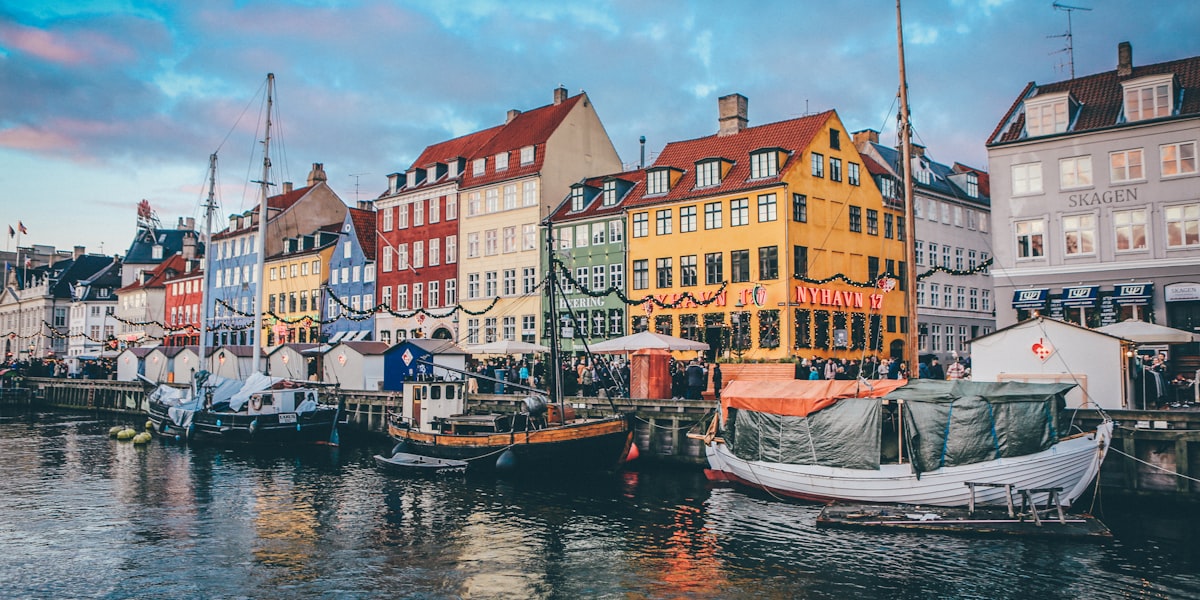
Walk 15 minutes down Bredgade — glancing left to admire the Marble Church's vast dome and the four identical Amalienborg Palace facades as you pass — then turn left at the waterfront into the head of Nyhavn canal. The 17th-century row houses in mustard, coral, and cobalt blue, mirrored in the still canal water with wooden schooners rocking gently below, are almost unreasonably photogenic. Walk the sunny northern side first for photos, then cross the canal head to the quieter southern bank to find Hans Christian Andersen's home at No. 67.
Tip: The best photo angle is from the Kongens Nytorv end looking down the canal toward the harbor — this captures the full color gradient in one frame. Late-morning light hits the north-side facades at a perfect angle. Do not eat at the canal-front restaurants: you will pay €25 for a defrosted fish sandwich with a view. Lunch is 8 minutes away at a far better spot.
Open in Google Maps →12:15
Food
Walk from the head of Nyhavn through Kongens Nytorv square and onto Strøget — Copenhagen's famous pedestrian shopping street — for 8 minutes until you reach Amagertorv, the prettiest square on the route, with the Stork Fountain glinting at its center. Café Norden occupies the prime corner with floor-to-ceiling windows overlooking the square. Order the 'stjerneskud' — a legendary open-faced sandwich of fried plaice, shrimp, lemon caviar, and fresh dill piled on dark rye bread (155 DKK / ~€21) — or the smoked salmon smørrebrød (125 DKK / ~€17) if you want something lighter. Budget €20–28 per person with a drink.
Tip: Grab a table on the upper floor by the window for the best view of the fountain and the Strøget crowds below. No reservation needed — arrive by 12:15 to beat the 12:30 lunch surge. The house-made lemonade is excellent and half the price of a beer.
Open in Google Maps →13:30
Entertainment
Continue west along Strøget past the Round Tower on your left — wave at it, no time today — through narrowing medieval lanes that suddenly open onto Rådhuspladsen, Copenhagen's grand City Hall Square with its red-brick Italianate tower. Tivoli's ornate main entrance is directly across the boulevard. A 15-minute stroll. Open since 1843, this is the world's second-oldest amusement park and the place that bewitched Walt Disney during his 1951 visit so completely that he went home and built Disneyland. The Japanese garden, the lakeside Chinese pagoda, the peacock theater, and the thousands of blooming flowers make the entry fee worthwhile even if you never touch a ride.
Tip: Buy your ticket online in advance to skip the 15-minute entrance queue (160 DKK / ~€22 for garden entry; rides cost extra). Walk the lake loop counterclockwise first for the best afternoon light on the pagoda, then find 'Rutschebanen' — the world's oldest operating wooden roller coaster, built in 1914. If you stay past 18:00, thousands of lights switch on and the atmosphere shifts from charming to genuinely magical.
Open in Google Maps →19:00
Food
Exit Tivoli and walk 12 minutes southwest through the Vesterbro neighborhood into Kødbyen — Copenhagen's Meatpacking District, where raw concrete warehouses have been reborn as the city's most thrilling food quarter, string lights crisscrossing overhead. Warpigs is a thunderous collaboration between Danish craft brewery Mikkeller and a Texas pitmaster: a 30-meter industrial hall of communal pine tables, hanging Edison bulbs, and the permanent scent of oak-smoked meat. Order the 14-hour smoked brisket plate (175 DKK / ~€24) and a pour of their house-brewed Session IPA (75 DKK / ~€10). Budget €30–40 per person.
Tip: Arrive at 19:00 sharp — by 19:30 the wait exceeds 30 minutes and there are no reservations. The brisket sells out on busy nights; if it is on the board, order it before anything else. Day-trip warning: the 'amber jewelry shops' and 'Viking souvenir stores' lining Strøget sell mass-produced imports at absurd markups — if you want a genuine Danish keepsake, step into Hay House on Pilestræde for real Scandinavian design.
Open in Google Maps →Saltar al día
09:00
Landmark
Take the S-train to Østerport and walk 10 minutes east through Churchill Park — the moat and grass ramparts of the old fortress appear before you reach the waterfront. The Little Mermaid is tiny and that's part of the spell: at this hour it's just you and a few joggers on the Langelinie promenade, no selfie sticks in sight. Afterward, loop through Kastellet, one of Northern Europe's best-preserved star fortresses — a working military base since 1664 with a photogenic red windmill, a church, and rampart paths lined with ancient chestnut trees.
Tip: Photograph the Mermaid from the rocks to her left (south side) to frame the Copenhagen Opera House in the background — the north angle only gives you industrial docks. By 10:00 the first tour buses arrive and there will be 40 people in your shot.
Open in Google Maps →10:45
Landmark
Walk south along the waterfront promenade for 10 minutes — the sleek Skuespilhuset theater and harbor swimming pools line the way. Amalienborg's four identical Rococo palaces frame an octagonal courtyard around a grand equestrian statue of Frederick V. If the Royal Standard flies above, King Frederik X is in residence and the full ceremonial Guard Change marches through at noon from Rosenborg, red-coated and bearskin-capped. Step into the Amalienborg Museum in Christian VIII's Palace to see royal private chambers and a study where Danish kings signed laws for two centuries.
Tip: Stand at the exact center of the courtyard facing the harbor: the dome of the Marble Church (Frederiks Kirke) lines up perfectly through the palace axis behind you — it's the most symmetrical photo in Copenhagen. The museum is small; 45 minutes is plenty.
Open in Google Maps →12:15
Food
Walk one block west from the palace onto Toldbodgade, a quiet street the tourists haven't found. Told & Snaps is where off-duty chefs come for textbook smørrebrød — open-faced sandwiches elevated to edible architecture. Order the Stjerneskud ('shooting star': fried plaice, shrimp, lemon cream, and dill on rye — ~130 DKK/€17) and a classic pickled herring plate with capers and raw onion (~95 DKK/€13). Budget 150–250 DKK (€20–34) per person with a cold Tuborg draft.
Tip: Arrive right at noon to get a table without waiting — the rush hits at 12:30. Skip the sidewalk seats; inside is cozier and faster to be seated. Ask for the seasonal herring, which rotates monthly and is always better than the standard menu version.
Open in Google Maps →13:30
Neighborhood
Step outside and turn right — Nyhavn's candy-colored townhouses are two minutes away at the end of Toldbodgade. This 17th-century canal was once Copenhagen's rowdiest sailor district; Hans Christian Andersen lived at No. 20, No. 67, and No. 18 at different points in his life. Walk the sunny north side — locals call it 'nyhavns solside' — for the postcard view, then cross the bridge and return along the quieter south bank past old wooden sailing ships moored in the still water.
Tip: The best photo is from the Nyhavn bridge at the harbor end: all the colored facades recede into the frame with masts in the foreground. You're here between 13:00 and 15:00 deliberately — afternoon sun hits the north-side houses head-on. In the morning they're in shadow and the colors are flat.
Open in Google Maps →14:45
Museum
Walk northwest from Nyhavn along Gothersgade for 12 minutes — you'll pass the Round Tower on your left and see the tree canopy of the King's Garden ahead. Rosenborg is a Dutch Renaissance jewel box built as Christian IV's summer palace, and the basement treasury holds the Danish Crown Jewels: a 1596 crown encrusted with table-cut sapphires and an emerald-studded sword of state. Upstairs, the Knights' Hall features life-size silver lions guarding a coronation throne. After the castle, collapse on the lawn of the King's Garden — Copenhagen's oldest and most beloved park.
Tip: Go straight to the basement treasury first — by 15:30 a bottleneck forms at the narrow jewel vault and you'll lose 20 minutes in the queue. With 1.5 hours you can see the crown jewels, the Knights' Hall, and the royal apartments comfortably. The King's Garden outside is free and ideal for decompressing with a takeaway coffee.
Open in Google Maps →19:00
Food
Walk back through the city toward Nyhavn and cross the Inderhavnsbroen pedestrian bridge to Christianshavn's waterfront — 15 minutes on foot and one of Copenhagen's most scenic evening walks as the harbor turns amber. Barr occupies the old Noma space in a soaring converted warehouse, reimagining North Sea and Scandinavian comfort food with the same obsessive sourcing. Order the whole roasted turbot with brown butter and capers (~295 DKK/€40) or the Danish frikadeller with pickled cucumber and rye crumbs (~195 DKK/€26). Budget 400–600 DKK (€55–80) per person with a glass of natural wine.
Tip: Reserve online at least 3 days ahead and request a window table facing the canal — the sunset over the harbor from here is extraordinary. Avoid the restaurants lining the Nyhavn canal itself: most serve microwaved tourist food at double the price. Barr is a 5-minute bridge walk away and a different universe of cooking.
Open in Google Maps →09:00
Religious
Take the metro to Christianshavn and walk 5 minutes south along Torvegade, then left onto Sankt Annæ Gade — the baroque spire with its external golden staircase is visible from blocks away. The 400-step climb winds outside the spire itself, narrowing to barely shoulder-width as you spiral upward, with the Copenhagen skyline unfurling in every direction. At the top you can see Sweden across the Øresund. Morning is the only time to do this — the west-facing staircase is in cool shade, the air is still, and the light on the city rooftops is soft and clean.
Tip: Be in the queue by 08:50 — only 150 people per hour are allowed up, and by 10:30 the wait exceeds 40 minutes. The external tower is open daily May through October and closes in bad weather; check the website morning-of if it's windy. The staircase is one-way, so there's no passing once you're on it — go at your own pace.
Open in Google Maps →10:15
Neighborhood
Exit the church and walk 3 minutes southeast along Prinsessegade — graffiti murals and hand-painted signs announce Christiania before you reach the entrance. Founded by squatters on an abandoned military base in 1971, this self-proclaimed autonomous neighborhood is one of Europe's most extraordinary social experiments. The infamous Pusher Street was dismantled by residents themselves in 2024 as part of a community-led transformation; what remains is more compelling — handmade houses, communal workshops, wild lakeside gardens, and the easygoing Nemoland café area. The architecture and community art are unlike anything else in Scandinavia.
Tip: The former Pusher Street area is being redeveloped into community housing — respect any construction barriers. Photography is welcome in public areas but always ask before shooting someone's private home. Enter via the Prinsessegade gate for the best first impression; exit through the main arch on Christianshavns Voldgade to loop back north toward lunch.
Open in Google Maps →12:00
Food
Walk 5 minutes north from Christiania's main exit along Wildersgade, one of Christianshavn's prettiest residential streets lined with old merchant houses and climbing roses. Café Wilder is a neighborhood institution — low-key, candlelit even at midday, packed with Christianshavn locals reading newspapers over long coffees. The French-Danish menu changes weekly; order whatever seasonal tartine is chalked on the board (~125 DKK/€17) and a bowl of the soup of the day (~85 DKK/€11). Budget 120–200 DKK (€16–27) per person.
Tip: No reservations and only about 30 seats — arrive right at noon or expect a 15-minute wait on weekends. The corner table by the window is the most coveted seat in Christianshavn. Order the coffee; they take it seriously here.
Open in Google Maps →13:30
Landmark
Cross the Knippelsbro bridge from Christianshavn — the 10-minute walk gives you a panorama of the inner harbor with the Black Diamond library glinting on your left. Christiansborg sits on the island of Slotsholmen, the exact spot where Bishop Absalon founded Copenhagen in 1167. It is the only building in the world housing all three branches of government — parliament, supreme court, and prime minister's office — under one roof. The Royal Reception Rooms upstairs are staggeringly lavish, culminating in the Great Hall where 17 modern tapestries by Bjørn Nørgaard depict 1,000 years of Danish history in riotous color.
Tip: The tower of Christiansborg is free and offers a panoramic view rivaling the Church of Our Saviour without the climb — take the elevator up and grab a coffee at Tårnet restaurant. The Royal Reception Rooms may close on Mondays; verify the current schedule online before visiting.
Open in Google Maps →15:30
Entertainment
Walk 10 minutes west along Frederiksholms Kanal and across Rådhuspladsen — the ornate red-brick City Hall deserves a glance as you pass. Tivoli opened in 1843, making it the world's second-oldest operating amusement park and Walt Disney's direct inspiration for Disneyland. Forget the roller coasters — come for the manicured gardens, the Moorish-palace architecture, the peacocks, and the lake with its Chinese pagoda. Late afternoon light turns the park into an Impressionist painting, and as dusk falls 120,000 hand-strung lights switch on, transforming it into something entirely otherworldly.
Tip: Buy tickets online to skip the Vesterbrogade entrance queue. Entry (~155 DKK/€21) covers the park only — rides require a separate pass, but you don't need one; the gardens and atmosphere are the real attraction. Head straight to the lake and Japanese-style pagoda; most visitors cluster around the entrance rides and never reach the quieter back gardens. Tivoli is seasonal (mid-April to September, plus Halloween and Christmas) — confirm opening dates before your trip.
Open in Google Maps →19:00
Food
Exit Tivoli from the Bernstorffsgade gate and walk 8 minutes southwest through Halmtorvet, the old hay-market square now lined with bistros, into Kødbyen — Copenhagen's 1930s Meatpacking District repurposed into the city's hottest dining and nightlife quarter. Paté Paté occupies a whitewashed former cold-storage room, serving Mediterranean-leaning tapas with serious cocktails. Order the duck liver paté with brioche and fig jam (~95 DKK/€13) and the slow-roasted lamb shoulder to share (~185 DKK/€25). Budget 300–450 DKK (€40–60) per person with cocktails.
Tip: Walk-in only, no reservations — arrive at 18:30 to grab a table before the 19:00 wave. Avoid the overpriced chain restaurants on Vesterbrogade between Tivoli and Central Station; they exist to catch tourists with suitcases. The Meatpacking District, five minutes further, is where Copenhagen actually eats after dark. You're a 10-minute walk from Central Station when you're done — perfect for an early flight tomorrow.
Open in Google Maps →Saltar al día
09:00
Landmark
Take the S-train to Østerport and walk five minutes east through Churchill Park — the star-shaped ramparts of Copenhagen's 1664 citadel rise from the grass like a living history textbook. Kastellet is one of Northern Europe's best-preserved fortresses and still an active military base, with an 18th-century windmill, a garrison church, and moat paths shared only by joggers and nesting swans at this hour. Walk the elevated northern rampart to the waterfront, where the Little Mermaid gazes across the Øresund on her rock — arrive before 10:00 and you will have her almost entirely to yourself, no tour buses, no selfie sticks, just bronze and Baltic light.
Tip: Approach the Mermaid from above via the rampart path — you get a cinematic elevated shot with the harbor behind her before descending to water level. The classic postcard angle is from the rocks to her left (south side), framing the Opera House across the water. By 10:30 the first buses arrive and there will be 40 people fighting for this same spot.
Open in Google Maps →10:30
Landmark
Exit Kastellet through the south gate and walk along Bredgade — a 10-minute stroll past elegant embassy buildings and antique dealers in one of Copenhagen's most refined streets. The four identical Rococo palaces of Amalienborg frame an octagonal courtyard around a grand equestrian statue of Frederick V; if the Royal Standard is flying, the King is home. Cross the square to Frederiksgade, where Frederik's Church — the Marble Church — rises with the largest dome in Scandinavia. Step inside: the interior is free, rarely crowded, and the acoustics turn whispers into something sacred. Time it right and you'll be back in the square by 11:45 to watch the Royal Life Guard march in from Rosenborg for the noon changing of the guard, bearskin caps and all.
Tip: Stand at the exact center of Frederiksgade to photograph the Marble Church dome with the palace colonnade framing it — this is the axis architect Nicolai Eigtved designed in 1750, and it remains the most powerful perspective in Copenhagen. The Amalienborg Museum (120 DKK / ~€17) inside Christian VIII's Palace is worth it only if royal interiors fascinate you; otherwise the exterior and guard change are the real show.
Open in Google Maps →12:30
Food
Walk north on Bredgade for three minutes and cut right onto Esplanaden — Lumskebugten sits in a charming half-timbered house you may have noticed on your way to Amalienborg earlier. Operating since 1854, this is a classic Danish frokostrestaurant where Copenhagen's business class still comes for real smørrebrød, not the tourist version. Order the stjerneskud — the legendary 'shooting star' open sandwich layered with fried plaice, shrimp, lemon cream, and dill on dark rye (~165 DKK / ~€23) — or the house frikadeller with creamy potato salad and pickled red cabbage (~155 DKK / ~€22). Pair it with a cold Tuborg Classic on tap and watch the lunchtime ritual unfold around you.
Tip: Reserve a table the day before — weekday lunch fills up by 12:45. Ask for the garden room in summer. Budget 180–280 DKK (€25–40) per person with a drink. This is not a quick tourist lunch; it's a culture lesson. Sit, slow down, and order a second snaps if the mood strikes.
Open in Google Maps →14:30
Neighborhood
Walk south from Lumskebugten through Amalienborg's palace square and continue down Toldbodgade — in 10 minutes you arrive at the iconic canal of Nyhavn, where 17th-century townhouses in mustard, coral, and cerulean glow in the afternoon sun. This is the most photographed street in Denmark for good reason: the gabled façades look like a Wes Anderson set when the light is right. Hans Christian Andersen lived at No. 20, then No. 67, writing his first fairy tales within earshot of the canal. Walk the sunny north side for photos, then cross to the quiet south bank and sit on the quayside with the locals. The afternoon light between 14:00 and 16:00 paints the south-facing façades at their warmest — this is exactly why you're here now and not this morning.
Tip: Buy a beer from a convenience store on Gothersgade (30 DKK vs. 80 DKK at the canal cafés) and sit on the quayside like Copenhageners do — it's legal and the atmosphere beats any terrace. From the harbor end of Nyhavn, look across the water to see the golden spiral of Church of Our Saviour in Christianshavn — if you find yourself with a free morning, the 400-step climb rewards you with the best panorama in the city.
Open in Google Maps →19:00
Food
You've spent the afternoon on Nyhavn's quayside — Cap Horn is right on the sunny side of the canal at No. 21, steps from where you've been sitting. This was Copenhagen's first organic restaurant, opened in 1990 long before organic was fashionable, sourcing everything from small Danish farms. The atmosphere is candlelit and unpretentious, with vintage maritime décor and views straight down the canal that turn golden as the sun drops. Start with the organic beef tartare hand-cut with capers and egg yolk (~165 DKK / ~€23), then the pan-fried plaice with brown butter, capers, and new potatoes (~225 DKK / ~€32) — the fish is so fresh it curls on the plate.
Tip: Reserve for 19:00 to secure a window seat facing the canal — by 19:30 the evening light floods the opposite façades and the view is pure magic. Budget 250–400 DKK (€35–55) per person. Avoid the restaurants on the south side of Nyhavn: they survive entirely on tourist traffic, serve frozen fish at double the price, and no Copenhagener would be caught dead in one.
Open in Google Maps →09:00
Museum
Take the Metro to Nørreport and walk two minutes north into the King's Garden — Copenhagen's oldest royal park, where locals sunbathe on the lawns and the first roses bloom in June. Rosenborg Castle sits at the garden's heart like a red-brick fairy tale: a 400-year-old Dutch Renaissance palace built by Christian IV, the king who shaped modern Copenhagen. Inside, walk through four centuries of royal history room by room — gilded ceilings, Venetian glass, ivory miniatures — until you reach the basement treasury, where Denmark's Crown Jewels glitter behind heavy glass: the crown of Christian IV set with table-cut diamonds and sapphires, and the crown of the absolute monarchs encrusted with two sapphires, one of which weighs 19 carats. The Knights' Hall on the top floor holds the coronation throne flanked by three life-size silver lions.
Tip: Arrive right at opening (10:00 in winter, 09:00 June–August — check the seasonal schedule). The Crown Jewels in the basement get a 30-minute queue by 11:00, but at opening you'll have the treasury almost to yourself. Closed Mondays from November to April. Consider buying the Copenhagen Card (489 DKK / ~€69 for 48h) — it covers Rosenborg, the Glyptotek, Tivoli, Round Tower, and unlimited transit, paying for itself easily over two days.
Open in Google Maps →11:30
Landmark
Exit through the King's Garden south gate onto Gothersgade, turn right, and walk five minutes along the pedestrian street of Købmagergade — you'll spot the Round Tower's honey-colored brick rising above the rooftops before you reach it. Built in 1642 by Christian IV as an astronomical observatory, the tower has no stairs: only a 209-meter spiral ramp wide enough that legend says Tsar Peter the Great once rode a horse to the top. The walk up is gentle, almost meditative. At 35 meters the outdoor platform opens to a 360-degree panorama of Copenhagen's copper spires, terracotta rooftops, and the Øresund strait — on a clear day you can see the coast of Sweden. Late morning is the ideal moment: the sun is high enough to light the entire city without the afternoon haze.
Tip: Halfway up the ramp, stop at the glass floor panel and look straight down through the hollow core of the tower — it was designed for hoisting heavy astronomical instruments and the vertigo is real. At the top, the south-facing view toward the spire of Church of Our Saviour and the Christianshavn canal district is the best angle. Entry is 40 DKK; keep your ticket for the small library hall at the top.
Open in Google Maps →12:30
Food
Walk back down Købmagergade and turn left at Kultorvet, then right into Hauser Plads — three minutes on foot. Schønnemann has been Copenhagen's temple of smørrebrød since 1877, and nothing about it feels like a museum piece: the dark-wood booths buzz with locals in suits swapping stories over towering open sandwiches. Order the dyrlægens natmad — the 'vet's midnight snack,' a rye bread canvas layered with liver pâté, salt beef, meat aspic, and raw onion rings (~125 DKK / ~€18). Follow it with a pickled herring plate with curry sauce and rugbrød (~115 DKK / ~€16). Chase each bite with a small glass of ice-cold aquavit — the way Danes have lunched here for a century and a half.
Tip: Schønnemann serves weekday lunch only (11:30–15:00) and is closed weekends — plan this day accordingly. Reserve at least two days ahead; walk-ins rarely get a seat after noon. Budget 150–250 DKK (€20–35) per person. The aquavit sampler (3 × 2 cl) is the way to go — tell the waiter to choose for you.
Open in Google Maps →14:30
Neighborhood
Step out of Schønnemann and you're already in the heart of Copenhagen's Latin Quarter — named after the old university district where scholars once debated in Latin. Walk two minutes south to Gråbrødretorv, a cobblestoned square ringed by pastel 18th-century houses and dotted with café terraces that catch the afternoon sun perfectly. This is Copenhagen's most charming hidden square, somehow missed by most visitors — sit with a coffee for 20 minutes and just watch. Continue south to Strøget, one of Europe's longest pedestrian streets stretching 1.1 km from City Hall to Kongens Nytorv. The best stretch is the middle section around Amagertorv: the Stork Fountain, the Royal Copenhagen flagship store, and Illums Bolighus — a five-floor Danish design emporium — all cluster within 50 meters.
Tip: Skip the fast-fashion chains at Strøget's western end and head straight to the Amagertorv section for Danish design. If you need a quiet break, duck into the courtyard of the old University Library on Fiolstræde — free, silent, and beautiful. The tourist-menu restaurants lining the main strip survive on foot traffic and serve frozen food at inflated prices; the side streets of the Latin Quarter always eat better.
Open in Google Maps →19:00
Food
Walk back to Gråbrødretorv — the square you discovered this afternoon now glows in the evening light with candles flickering on every terrace. Peder Oxe has anchored this square for decades, a beloved Danish grill named after a 16th-century nobleman, where Copenhagen families celebrate birthdays and couples linger over wine. Every main course comes with their legendary unlimited salad bar — a sprawling spread of fresh vegetables, pickled herring, bread, and Danish cheeses that could be a meal on its own. Order the beef tenderloin with béarnaise sauce and hand-cut fries (~265 DKK / ~€37) or the slow-roasted Danish pork belly with crackling and red cabbage (~225 DKK / ~€32).
Tip: Arrive at 18:30 to secure an outdoor table on the square — by 19:30 every chair is taken. Budget 250–350 DKK (€35–50) per person; the salad bar alone is worth the visit, pile your plate high. After dinner, walk five minutes south to Amagertorv to see Strøget after dark — the Stork Fountain lit up against the old buildings is a different city entirely.
Open in Google Maps →10:00
Museum
Sleep in on your last morning — you've earned it. The Glyptotek opens at 10:00 and it's a five-minute walk from City Hall square, past Tivoli's ivy-covered walls, to the entrance on Dantes Plads. Built in 1897 by the Carlsberg beer dynasty to house their private art collection, the Ny Carlsberg Glyptotek is Copenhagen's most beautiful museum. Begin in the Winter Garden: a soaring glass-domed atrium filled with palm trees and a reflecting pool that makes you forget you're in Scandinavia. The collection spans 6,000 years — Egyptian mummies, the finest collection of Roman portrait busts outside Italy, an entire hall of Rodin sculptures, and the largest holding of French Impressionist art outside France, with Monet, Degas, Gauguin, and Cézanne. Take your time; the building itself is the exhibit.
Tip: Free entry on Tuesdays — if you can, schedule Day 3 accordingly. The Winter Garden café serves excellent coffee under the glass dome; pause here between the ancient and modern wings. Don't miss the rooftop terrace on the top floor — a hidden viewpoint over the city that almost no one finds. Closed Mondays. Entry is 125 DKK (~€18).
Open in Google Maps →12:15
Food
Exit the Glyptotek and walk west along Tietgensgade, crossing the rail tracks into the white-tiled former slaughterhouse buildings of Kødbyen — Copenhagen's Meatpacking District, reborn as the city's most exciting food and nightlife quarter. The 10-minute walk is a dramatic transition: 19th-century museum grandeur gives way to raw industrial cool. Kødbyens Fiskebar is the anchor restaurant of the district, a buzzing seafood spot in a converted meat locker with exposed pipes and concrete walls. The fish arrives daily from Danish waters. Start with half a dozen oysters of the day (~55 DKK / ~€8 each), then the fish and chips with house-made remoulade and lemon (~155 DKK / ~€22) — crispy battered, flaky inside, and nothing like what you've had in England.
Tip: Arrive by 12:15 — the lunch crowd floods in at 12:45 and the wait stretches to 30 minutes. Sit at the bar counter if the tables are full; the view into the open kitchen is better anyway. No reservations at lunch — first come, first served. Budget 180–300 DKK (€25–42) per person.
Open in Google Maps →14:00
Neighborhood
You're already in the heart of Vesterbro. After lunch, stroll through the white-tiled alleyways of Kødbyen where vintage shops, independent galleries, and street art compete for attention in former butchery halls. Walk north onto Istedgade — once Copenhagen's red-light district, now its most eclectic neighborhood street, lined with specialty coffee roasters, record shops, natural wine bars, and artisan bakeries. The transformation is one of Europe's great urban renewal stories, and the contrast between old and new gives every block its edge. Early afternoon is when the terraces fill and the side streets come alive — this is Vesterbro at its most vibrant.
Tip: Detour one block to Værnedamsvej — a short street that channels Left Bank Paris with its cheese shops, flower stalls, and French-style cafés. Granola (Værnedamsvej 5) is a retro 1950s café perfect for a flat white and a pastry if you need a pick-me-up before Tivoli. This is also Copenhagen's best people-watching street.
Open in Google Maps →15:30
Entertainment
Walk east along Vesterbrogade for 10 minutes — Tivoli's main entrance appears across from Central Station, framed by its ornate wooden archway and thousands of fairy lights. Tivoli is the world's second-oldest operating amusement park, open since 1843, and the place that inspired Walt Disney to build Disneyland. But Tivoli is not a theme park — it's a garden that happens to contain amusements: peacocks strut between flower beds, a wooden roller coaster from 1914 rattles past Chinese pagodas, and a pantomime theater from 1874 still performs commedia dell'arte nightly. The late afternoon is ideal: ride queues are shortest between 15:00 and 17:00, and as evening falls, 115,000 softly glowing lights switch on and the entire park transforms into a wonderland.
Tip: Buy your ticket online to skip the entrance queue — entrance is 155 DKK (~€22), rides cost extra (single rides or unlimited pass for 269 DKK). Ride the wooden Rutschebanen roller coaster (1914) for the history alone — a brakeman sits on the back of each car and steers by hand. Tivoli is seasonal: mid-April to late September, plus Halloween (Oct) and Christmas (Nov–Dec) seasons. Always check dates before your trip.
Open in Google Maps →19:00
Food
You're already inside Tivoli — Grøften is a three-minute walk from the main lake, tucked behind the Pantomime Theatre near the park's eastern edge. Open since 1874, this is Tivoli's oldest restaurant and the only dining spot in the park that Copenhageners take seriously: white tablecloths, candlelight, and traditional Danish cooking done with genuine pride. Order the flæskesteg — slow-roasted pork with crispy crackling, braised red cabbage, brown gravy, and caramelized potatoes (~195 DKK / ~€27). Or try the smørrebrød platter for one final greatest-hits round of Denmark's national sandwich (~175 DKK / ~€25). Raise a glass of Carlsberg to your last Copenhagen evening as the Tivoli lights shimmer through the windows.
Tip: Reserve ahead for a garden terrace table — Grøften fills up after 18:30 in summer. Budget 250–400 DKK (€35–55) per person. Requires a Tivoli entrance ticket, but you're already inside. After dinner, don't rush for the exit: walk past the lake one last time with the illuminations reflecting in the water — it's a different park after dark. The restaurants lining Vesterbrogade outside Tivoli's gates are tourist traps charging double for half the quality; your farewell dinner inside these gardens is the right call.
Open in Google Maps →Saltar al día
09:00
Neighborhood
Step out of Kongens Nytorv Metro station, walk two minutes east down the gentle slope, and the canal of Nyhavn opens before you — seventeen-century townhouses painted in terracotta, cobalt, ochre, and deep blue, reflected in water so still at nine o'clock that every mast and gable appears twice. Walk the sunny north quay from west to east; Hans Christian Andersen lived at No. 67 for seventeen years, writing some of his most beloved tales within earshot of the rigging. At this hour the quayside belongs to a handful of joggers and one or two fishermen mending nets on the old wooden schooners docked at the harbor end — the Copenhagen postcard, before anyone else arrives to take it.
Tip: Stand at the canal's western end facing east for the classic composition — masts in the foreground, colored façades behind, morning sun lighting the north bank. Before 10:00 you will have this shot entirely to yourself; by 10:30 the first tour buses unload at Kongens Nytorv and the quay becomes shoulder-to-shoulder. The south bank is always quieter and has the better light in the afternoon — save it for a return stroll after dinner.
Open in Google Maps →10:30
Landmark
Exit Nyhavn eastward and walk along Toldbodgade, then turn left at Amaliensgade — a seven-minute stroll past stately embassy buildings and antique dealers on one of Copenhagen's most elegant streets. The four identical Rococo palaces of Amalienborg form an octagonal courtyard around Frederik V's equestrian statue, with a direct sightline south to the vast dome of Frederik's Church — the Marble Church — which you should cross the street to step inside (free, rarely crowded, the acoustics turn whispers into something sacred). The Royal Life Guard marches from Rosenborg Castle at 11:30 and arrives in the square at noon for the changing of the guard — claim a spot near the northwest palace by 11:45 for an unblocked view of the full ceremony, bearskin caps and all.
Tip: The ceremony is fullest when the monarch is in residence — look for the Danish flag flying on Christian IX's Palace (southeast). Stand at the center of Frederiksgade to photograph the Marble Church dome framed by the palace colonnades — this is the axis architect Nicolai Eigtved designed in 1750, and it remains the most powerful perspective in Copenhagen. The Amalienborg Museum inside costs ~120 DKK (~€17); skip it unless royal interiors fascinate you — the courtyard and guard change are the real show.
Open in Google Maps →12:30
Food
Walk five minutes south along Store Kongensgade past antique shops, with the Marble Church dome looming behind you. Five generations of the Davidsen family have served smørrebrød from this address since 1888, and the menu — 178 varieties on a scroll so long it earned a Guinness record — reads like an encyclopedia of the Danish open sandwich. Order the Shooting Star (stjerneskud): breaded plaice and hand-peeled shrimp on white bread with caviar, dill, and lemon cream (~165 DKK / ~€22). Follow it with the Veterinarian's Night Snack (dyrlægens natmad): liver pâté layered with corned beef, meat aspic, and raw onion rings on dense rye (~135 DKK / ~€18). Chase each bite with a small glass of ice-cold aquavit — this is the ritual.
Tip: Open weekdays only for lunch (roughly 10:00–17:00) — plan your days accordingly. Arrive by 12:15 to secure a table without waiting; after 13:00 the dining room is full of regulars who have been coming for decades. Budget 200–300 DKK (€28–42) per person with a drink. Ask which piece is the day's special — it is always the best value on the menu.
Open in Google Maps →14:30
Park
From Store Kongensgade, walk north through leafy Churchillparken — a twelve-minute stroll past the thundering Gefion Fountain, worth a photo stop — and onto the grassy ramparts of Kastellet, one of Northern Europe's best-preserved star fortresses and still an active military base. The moat paths are lined with weeping willows, a working windmill stands at the western gate, and the silence inside the walls feels centuries removed from the city outside. Walk the full rampart loop clockwise, then exit through the northern gate to reach The Little Mermaid on her waterfront rock — Edvard Eriksen deliberately sculpted her at human scale so the encounter feels intimate, not monumental, a quiet bronze figure gazing out across the Øresund toward Sweden.
Tip: Stand to the Mermaid's left (south side) so Copenhagen's harbor fills the background rather than the industrial docks. On the walk back, re-enter Kastellet through the windmill gate and exit south toward Langelinie — far prettier than retracing your steps. The souvenir kiosks along the waterfront charge triple for the same magnets you will find at any convenience store; skip them entirely.
Open in Google Maps →19:00
Food
Follow the harbor path south from Kastellet back toward Nyhavn — a twenty-minute waterfront walk with the Copenhagen Opera House gleaming across the water and the evening light turning the harbor bronze. Cross the Inderhavnsbroen cycling bridge to the Christianshavn side; Barr occupies the ground floor of the waterfront warehouse at the bridge's foot, in the space that once housed the original Noma. Built by the team behind the world's most famous restaurant, Barr is a Nordic beer hall where every grain, every ferment, and every cure traces back to the North Sea coastline. Order the fried pork schnitzel with brown butter, capers, and pickled vegetables (~195 DKK / ~€26) and the whole fried plaice with shrimp butter and new potatoes (~245 DKK / ~€33). Budget: €50–65 with a house-brewed lager.
Tip: Reserve for 19:00 — walk-ins may luck out at the bar counter after 17:00, but dinner tables fill by 18:30. Order the house lager, brewed specifically for the restaurant to complement the Nordic grain flavors of the kitchen. Avoid the restaurants on Nyhavn's south quay: they survive entirely on tourist foot traffic, serve defrosted fish at double the price, and no Copenhagener would eat there willingly.
Open in Google Maps →09:00
Museum
Take the Metro to Nørreport and walk three minutes north into Kongens Have — the King's Garden, Copenhagen's oldest royal park, where locals are already spreading blankets on the lawns under centuries-old linden trees. Rosenborg Castle stands at the garden's heart like a red-brick fairy tale: a Dutch Renaissance palace built by Christian IV in 1606, filled with four hundred years of royal treasure — gilded ceilings, Venetian glass cabinets, ivory miniatures, and rooms so lavishly decorated they make Versailles look restrained. The crown jewels wait in the basement vault: Christian IV's crown set with table-cut diamonds and sapphires, the crown of the absolute monarchs encrusted with two massive sapphires, and the Knights' Hall upstairs where three life-size silver lions guard the coronation throne.
Tip: Arrive right at opening (09:00 June–August, 10:00 other months) and go directly to the basement treasury — by 11:00 there is a thirty-minute queue. Most visitors rush through the Knights' Hall on the third floor, but the three silver lions and the coronation throne behind them are the most extraordinary objects in the building; give them a full five minutes. Closed Mondays November–April. Entry ~130 DKK (~€18).
Open in Google Maps →12:00
Food
Exit through the King's Garden south gate and walk two minutes down Frederiksborggade — the twin glass halls of Torvehallerne rise from Israel Plads like greenhouses for food lovers. Copenhagen's premier food market packs over sixty stalls under two soaring glass roofs: artisan cheesemakers, fishmongers stacking langoustines on crushed ice, smørrebrød counters assembling open sandwiches to order, organic juice bars, and the city's finest coffee. Start at a smørrebrød counter for a hand-peeled shrimp sandwich on dark rye (~85 DKK / ~€12), add a portion of crispy duck confit or slow-roasted porchetta from one of the hot-food stalls (~75 DKK / ~€10), and finish with a flat white from Coffee Collective — the roastery that launched Copenhagen's third-wave coffee movement. Budget: €15–30 for a generous market lunch.
Tip: The outdoor stalls between the two halls sell seasonal fruit and fresh-baked pastries — grab a kanelsnegl (cinnamon roll) for later. Weekday lunchtimes are calm; Saturday before noon is a shoulder-to-shoulder experience. Eat standing at the high tables inside the halls like Copenhageners do — the full market circuit takes about forty minutes if you graze your way through.
Open in Google Maps →14:00
Museum
Walk south from Torvehallerne through the city center, past the ornate spire of City Hall and along Vesterbrogade — a fifteen-minute stroll to Dantes Plads, where the Glyptotek's grand entrance awaits. Built in 1897 by the Carlsberg beer dynasty to house their private art collection, this is Copenhagen's most beautiful museum. Begin in the Winter Garden: a soaring glass-domed atrium filled with palm trees, a reflecting pool, and a silence that makes you forget you are in Scandinavia. The collection spans six thousand years — Egyptian sarcophagi, the largest ensemble of Roman portrait busts outside Italy, an entire hall of Rodin bronzes, and a luminous floor of French Impressionists: Monet's water lilies, Degas's dancers, Gauguin's Tahitian women, and Cézanne's landscapes, all hung in rooms with natural light so perfect the paintings seem to glow.
Tip: Free admission on Tuesdays — if you can schedule this day accordingly, that saves €18. The Winter Garden café serves excellent coffee under the glass dome; pause here between the ancient and modern wings. The rooftop terrace on the top floor is an almost-secret viewpoint over the city's spires — follow the signs through the French wing to find it. Closed Mondays. Entry 125 DKK (~€18).
Open in Google Maps →17:00
Entertainment
Exit the Glyptotek, cross Dantes Plads, and Tivoli's ornate wooden archway is directly ahead — a two-minute walk. The world's second-oldest amusement park (1843), and the place that inspired Walt Disney to create Disneyland, is not about the rides — it is about the atmosphere: peacock-filled gardens, a Chinese pagoda reflected in a lake, a wooden roller coaster from 1914 where a brakeman still steers by hand, and a pantomime theatre that has performed commedia dell'arte nightly since 1874. Arriving at 17:00 gives you the park in its most magical transition — golden afternoon light softening as 115,000 bulbs flicker on at dusk and Tivoli transforms from a garden into a wonderland.
Tip: Buy tickets online to skip the gate queue — entry ~155 DKK (~€22), rides cost extra. Walk the full perimeter path counterclockwise; the Japanese garden in the southwest corner is the calmest spot in the park and the one most visitors never reach. The wooden Rutschebanen roller coaster (1914) is worth riding for the history alone — it is the oldest operating roller coaster in the world. Tivoli is seasonal: mid-April to late September, plus Halloween and Christmas seasons.
Open in Google Maps →19:30
Food
From the Japanese garden, follow the lakeside path east past the Pantomime Theatre — Grøften is tucked behind it, a three-minute walk. Open since 1874, this white-tablecloth institution is the only restaurant inside Tivoli that Copenhageners take seriously: traditional Danish cooking served with genuine pride while the park's thousands of lights shimmer through the windows. Order the crispy roasted duck with braised red cabbage, brown gravy, and caramelized potatoes (~225 DKK / ~€30) or the frikadeller — golden pork meatballs with creamy potato salad and pickled beetroot (~185 DKK / ~€25). Budget: €35–55 with a glass of wine.
Tip: Reserve ahead and request a garden terrace table — after 20:00 the Tivoli illuminations reflect in every glass on the table and your seat becomes the finest dining view in Copenhagen. After dinner, walk past the lake one last time before exiting; Tivoli after dark, when the rides glow against the night sky and the fountains are lit from below, is an entirely different park from the one you entered at five. The restaurants lining Vesterbrogade outside the gates charge double for frozen food — your farewell dinner inside these gardens is the right call.
Open in Google Maps →10:00
Religious
Take the Metro to Christianshavn station and walk five minutes south on Torvegade — the church's extraordinary golden corkscrew spire, wrapped in an external staircase that spirals to a vanishing point against the sky, is your beacon from a kilometer away. The Baroque interior is serene, all white walls and gilded organ, but the real pilgrimage is the tower: 400 steps spiraling upward, the last 150 on the outside of the spire with the city wheeling beneath you, the staircase narrowing until you are gripping a single iron rail above the rooftops of Copenhagen. The summit delivers the city's most dramatic panorama — a 360-degree sweep of harbors, copper domes, the Øresund Bridge disappearing into Sweden, and the colorful geometry of Christianshavn's rooftops directly below.
Tip: The tower opens at 10:00 (summer) and admits roughly twenty people at a time — arrive by 9:50 to be in the first group; by noon there is a forty-minute queue snaking down the street. The climb is closed in high winds and heavy rain, so check the church website that morning. If you are uncomfortable with heights, the interior staircase view from the second landing is still spectacular. Tower admission ~60 DKK (~€8).
Open in Google Maps →12:00
Food
Descend the tower and walk south along Sankt Annæ Gade past brightly painted housefronts and bicycle-crowded courtyards — six minutes to Wildersgade, where Café Wilder has been Christianshavn's neighborhood living room for decades. This is where the area's residents actually eat: architects sketching on napkins, houseboat dwellers between canal errands, parents claiming the corner table with strollers. Order the croque madame with melted Gruyère and a fried egg (~115 DKK / ~€15) or the smoked salmon tartine with horseradish cream and dill on sourdough (~105 DKK / ~€14). Budget: €15–25 with a flat white.
Tip: Sit at the window counter facing Wildersgade for the best people-watching in Christianshavn — this quiet street is a world away from Strøget's tourist crowds. The weekend brunch menu runs until 14:00 and outclasses anything on the Nyhavn side of the harbor.
Open in Google Maps →14:00
Neighborhood
Walk east on Prinsessegade for five minutes — the entrance arch, covered in murals and hand-painted slogans, announces Freetown Christiania, the self-governing community that has occupied this former military barracks since 1971. Beyond the counter-culture headlines, what you actually find is surprising: hand-built wooden houses with wildflower gardens, a lake with kayaks, an organic restaurant and bakery, a working blacksmith, live-music venues in converted barracks, and some of the most inventive vernacular architecture in Scandinavia. The car-free lanes feel like a rural village that forgot it was inside a capital city — artists and craftspeople have been building this place by hand for over fifty years, and every corner tells a different story.
Tip: Photography is welcome everywhere except Pusher Street — the signs are explicit and residents enforce this seriously. Visit the Loppen music venue building even if nothing is playing; the rooftop view across the ramparts is remarkable. Exit through the southern gate toward the canals, which leads naturally into the next part of your afternoon.
Open in Google Maps →16:30
Neighborhood
Exit Christiania's south gate and walk west to Torvegade, then turn right onto Overgaden Neden Vandet — the cobblestoned street that traces Christianshavn's main canal, the most photogenic waterway in Copenhagen and one almost no tourists know exists. Houseboats with flower boxes line the green water, three-hundred-year-old merchant warehouses reflect in the surface like an oil painting, and the only sound is the occasional splash of a passing kayaker. Walk the full canal from Torvegade north to Christians Kirke and return along the opposite bank via Overgaden Oven Vandet — a slow forty-minute loop that reveals a neighborhood more Amsterdam than Scandinavia, with golden late-afternoon light catching the east-bank façades.
Tip: The best light on the canal falls after 16:00 when the western sun catches the east-bank façades and the houseboat reflections sharpen — this is exactly why you are here now and not this morning. Stand on the small wooden footbridge near the canal's midpoint for the iconic reflection photo. On warm summer evenings you will see locals jumping into the canal for a swim — Christianshavn's own private beach.
Open in Google Maps →19:00
Food
The canal walk ends naturally at Wilders Plads, a quiet harborfront square where Restaurant Kanalen occupies a handsome corner building with its terrace right on the water. This is Christianshavn's celebration restaurant — where locals book for birthdays and anniversaries — serving refined Danish cuisine from seasonal, mostly organic ingredients with a view straight across the harbor to the city's spires. Order the pan-fried plaice with brown butter, hand-peeled shrimp, and white asparagus (~225 DKK / ~€30) or the slow-braised Danish beef cheeks with root vegetables, horseradish cream, and crispy rye (~245 DKK / ~€33). Budget: €45–60 with wine.
Tip: Book the terrace for 19:00 — the sunset from this angle is a straight sightline west toward the city's copper spires turning gold, Christianshavn's best-kept secret. This is your reward for spending the day on the quiet side of the water. The three restaurants on Nyhavn's south quay charge twice as much for half the quality and exist solely on tourist inertia — never eat there.
Open in Google Maps →09:30
Park
Take the Metro to Nørrebro station and walk five minutes west on Nørrebrogade to the iron gate on the cemetery's south side at Kapelvej. This is not a solemn place — it is Nørrebro's public park, where residents jog the gravel paths, sunbathe on blankets between the headstones, and read novels under the linden trees while Søren Kierkegaard and Hans Christian Andersen rest a few meters away. The juxtaposition of picnicking locals and philosophers' graves captures something essentially Danish about the relationship between living and remembering — an ease with mortality that feels quietly profound on a summer morning when the old alleys are filled with birdsong and dappled light.
Tip: Kierkegaard's grave is in section A along the eastern wall — look for the simple upright stone marker, easy to miss among the ornate neighbors. Hans Christian Andersen's is in section D near the north gate, marked by a low iron railing and usually with a few fresh flowers. The wildflower meadow in the northwest corner is the cemetery's most beautiful spot in summer — bring a coffee and sit for ten minutes.
Open in Google Maps →11:00
Neighborhood
Exit the cemetery's east gate onto Jagtvej, cross the road, and walk two blocks east — you will see ceramic pots spilling onto the sidewalk before you reach the street sign. Jægersborggade is two hundred meters of independent Copenhagen at its finest: ceramics studios where you can watch potters throwing bowls through open doorways, a natural wine bar with two hundred labels, a vintage furniture dealer, a bean-to-bar chocolate maker, a small-batch coffee roaster, a tattoo parlour. No chains, no souvenir shops, no tourist menus. This is what Danish design looks like when it is made by hand on a street that was a rough housing estate fifteen years ago and is now the creative heart of Nørrebro.
Tip: The ceramics studios are the street's soul — step into any open door and the potters are happy to talk about their craft. A handmade stoneware cup (150–300 DKK / €20–40) is the most genuinely Danish souvenir you can bring home, and it will outlast anything on Strøget. The natural wine bar at the north end does afternoon tastings on weekends.
Open in Google Maps →12:30
Food
Jægersborggade spills into Guldbergsgade at its southern end — Bæst is two minutes around the corner, announced by the scent of wood-fired oven drifting through the open kitchen window. This restaurant raises its own heritage-breed cattle, makes its own mozzarella by hand in the basement every morning, mills its own flour, and slow-ferments every dough for forty-eight hours — the result is arguably the best pizza in Scandinavia, and the queue at the door tells you the neighborhood agrees. Order the Margherita with house mozzarella (~135 DKK / ~€18) — it needs nothing else — or the pizza with nduja, roasted peppers, and wild oregano (~155 DKK / ~€21). Budget: €20–30 with a draft beer.
Tip: No reservations at lunch — arrive by 12:15 and you will walk right in; by 12:45 there is a twenty-minute wait out the door. Sit at the counter facing the pizza oven if you can — watching the dough stretched, topped, and fired in ninety seconds is half the experience. The house-made charcuterie board is the best starter if you are hungry enough for it.
Open in Google Maps →14:30
Park
Walk north on Guldbergsgade, cross Nørrebrogade at the lights, and continue straight up through Mjølnerparken — ten minutes on foot to the most provocative public park in Europe. Superkilen stretches across three color-coded zones: the Red Square, a surreal expanse of saturated orange-red rubber sporting playground equipment from Baghdad and boxing rings from Thailand; the Black Market, a central plaza anchored by a Moroccan fountain, Japanese cherry trees, and neon signs salvaged from Russia and Qatar; and the Green Park, a rolling lawn with hammocks and barbecue pits. Sixty objects collected from sixty countries create a living portrait of the neighborhood's immigrant communities — it is landscape architecture as social commentary, designed by the Bjarke Ingels Group, and it works brilliantly.
Tip: Start from the Red Square at the southern end for maximum visual impact — the saturated color against a grey Nordic sky is extraordinary in photographs, and on a clear day it practically vibrates. The circular benches around the Moroccan fountain in the Black Market zone are the best resting spot. Weekday afternoons are quiet; summer weekends bring out the entire neighborhood.
Open in Google Maps →19:00
Food
Walk south from Superkilen back down Nørrebrogade and turn left onto Jægersborggade — twelve minutes on foot, now seeing the street in completely different evening light, the ceramics studios closed and the wine bars filling up. Manfreds, from the team behind the former Michelin-starred Relæ next door, is a natural wine bar that serves some of the most inventive seasonal food in Copenhagen without the white-tablecloth ceremony. The menu changes daily: expect four or five small sharing plates built around whatever the farms delivered that morning — celeriac baked in hay, raw beef tartare with fermented mushrooms and pickled elderflower, grilled cabbage with brown butter and toasted hazelnuts. Budget: €40–55 for a full spread with two glasses of natural wine.
Tip: Book ahead — Manfreds fills by 18:30 most evenings. Ask the sommelier to pair your dishes with natural wines by the glass; the cellar is exceptional and the markup is unusually fair for Copenhagen. Before leaving Nørrebro, walk ten minutes south to Dronning Louises Bro — the Queen Louise's Bridge over the city lakes — where all of Copenhagen gathers on summer evenings to sit on the railings, drink beer, and watch the water turn copper at sunset. Skip Strøget for any last-minute shopping; the stores are the same international chains you would find in any European capital.
Open in Google Maps →
Trip builder
Plan this trip around Copenhagen
Turn this guide into a bookable rail itinerary with FlipEarth.
Keep exploring
Related cities
Nearby cities
More in the same country
FAQ
Frequently asked questions
How many days do you need in Copenhagen?
Most travelers enjoy Copenhagen in 1 days, with enough time for headline sights and a slower meal or museum stop.
What's the best time to visit Copenhagen?
The easiest season for most travelers is May-Sep, especially if you want good weather and manageable crowds.
What's the daily budget for Copenhagen?
A practical starting point is about €110 per person per day before hotels, then adjust based on museums, dining, and transport.
What are the must-see attractions in Copenhagen?
A good first shortlist for Copenhagen includes The Little Mermaid.