City Guide
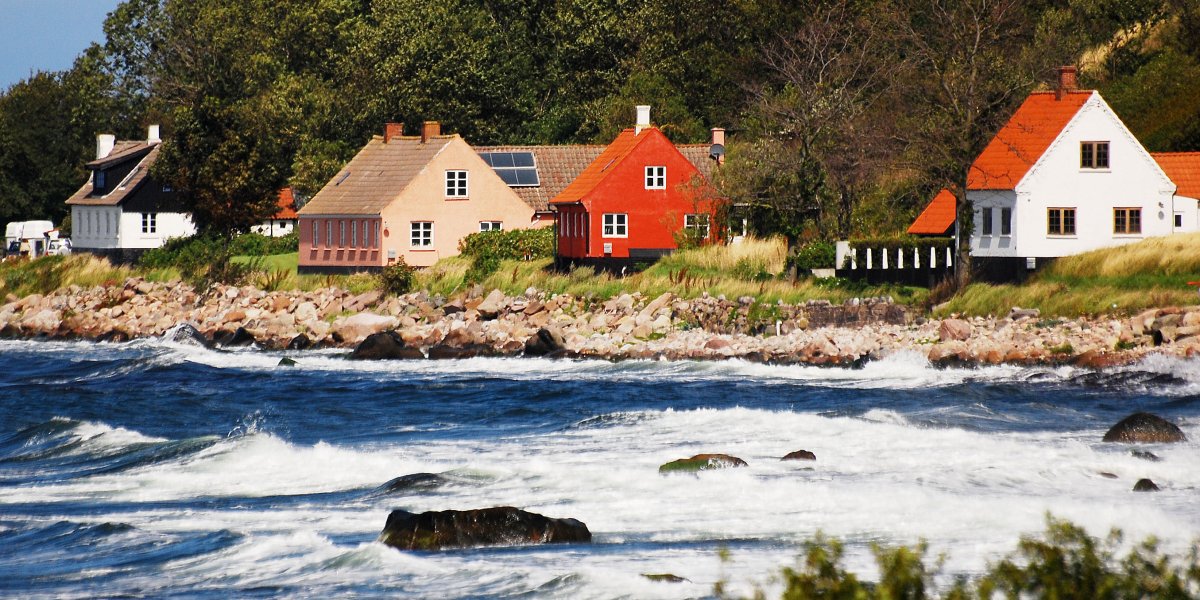
Bornholm
Dinamarca · Best time to visit: Jun-Aug.
Day-by-day plan
Choose your pace
Duración del viaje
09:00
Religious
From the Bus 1 stop on Rønnevej, walk 200 m up a gentle rise past dry-stone walls — the white silhouette appears suddenly above the rye fields. One of Bornholm's four medieval round churches, built around 1150 as both house of worship and last-resort fortress against Wendish pirates raiding the Baltic. The three-story whitewashed cylinder under a conical black roof is the tallest of the four; the arrow slits and the second-floor garderobe on the north wall give away that this was a fort with a chapel inside, not the other way round. Open the day at first light: the slanted morning sun catches the lime-white walls against the green wheat fields, and you'll have the churchyard to yourself before the first tour bus rolls in around 11:00.
Tip: Walk the exterior counter-clockwise and stop at the north wall to look up at the projecting garderobe (medieval latrine) — clearest proof you're standing under a fortress. Skip the modest whitewashed interior; the photo here is the silhouette from the southwest corner of the graveyard, not anything inside.
Open in Google Maps →10:30
Landmark
Leave Ols Kirke heading north on Madsebakkevej — a 5 km flat farmland walk through dairy pasture, wind-stunted apple orchards, and the smell of cut hay. After about an hour the pink granite outcrop appears on your left, just before the southern edge of Allinge. This is the largest concentration of Bronze Age rock carvings in Denmark — over a hundred ships, footprints, sun-wheels, and cup marks pecked into the slope around 1500 BC. The site is open, free, and entirely outdoors; a low wooden boardwalk lets you cross the carvings without damaging them. Late morning is the moment: the low east light brings the 3,500-year-old ship outlines into relief — by flat noon light they almost vanish.
Tip: Carry a small bottle of water and gently pour it on the rock — wet pink granite makes the ship outlines pop visibly for photos, the trick every Danish school group uses. The big ship cluster is on the central slab to the right of the boardwalk; ignore the smaller pecked marks near the road, which are mostly weathered cup-holes.
Open in Google Maps →12:30
Food
Walk south from Madsebakke into Allinge village, about 15 minutes down past low painted-wood houses fronted by hollyhocks. The bakery sits on Kirkegade, a side street one block inland from the harbour, behind the white parish church. A wood-fired organic bakery run by a baker who mills his own island grain — the smørrebrød are made each morning on dense malted rye: smoked salmon with horseradish cream (95 DKK / €13), pickled herring with onion compote (75 DKK / €10), and the obligatory 'Sol over Gudhjem' — smoked herring topped with a raw egg yolk, radish, and chives (85 DKK / €11), the dish you came to Bornholm for. Average lunch with coffee runs €15.
Tip: Arrive at 12:30 sharp — local lunch break begins at 12:00 and the smørrebrød tray is empty by 13:30. Take a cinnamon-knot (kanelsnegl, 25 DKK) for the cliff walk; it's the best on the island. No need to reserve; order at the counter, grab a wooden bench out front. Skip the bottled smoothies at €6 — they're a tourist mark-up.
Open in Google Maps →14:00
Park
From Allinge harbour, walk north 1 km along Strandpromenaden past the painted fishing sheds, through the small spa town of Sandvig, then climb the wooden steps onto the Hammeren peninsula. The trail begins at Opalsøen — a turquoise lake in an abandoned granite quarry, the colour from copper mineral leaching out of the rock. From there a 5 km cliff loop circles past Hammeren Lighthouse on the high point and the ruined pilgrim chapel of Salomons Kapel, with sea-eagles overhead and views across Hammersø lake to the castle ruin in the south. Afternoon is the right window: the western cliffs face the sun and the pink granite warms to rose-orange between 15:00 and 17:00, the famous Bornholm light.
Tip: Take the Yellow Trail (Gul Rute), not the Red — Yellow stays on the cliff edge with the views, while Red cuts inland through dull forestry. Wear closed shoes; the granite is slick after a shower. Do NOT swim in Opalsøen despite the Caribbean colour — the abandoned quarry has vertical walls, no exit, and the water stays around 8 °C even in August; two tourists drown there per decade.
Open in Google Maps →17:30
Landmark
Descend the southern Hammeren trail for 20 minutes — Hammershus appears below you on its own granite knuckle, framed by the silver of Hammersø lake on one side and the open Baltic on the other. Cross the wooden bridge into the bailey from the upper north approach. This is the largest medieval fortress ruin in Northern Europe: built around 1255 by the Archbishop of Lund as a power base over the Baltic, contested by Danish kings and Lübeck merchants for four centuries, abandoned in 1743 and quarried for stone until preservation in 1822. What remains is a sprawl of granite curtain walls, the square keep (Manteltårnet), brewhouse, mint, and prison tower — all open, all free, all walkable. Time the visit for late afternoon: the day-trip buses leave at 17:00, the western walls catch the low gold light, and on a clear evening the silhouette of Sweden's Skåne coast surfaces across the water. Midsummer sunset is near 21:30 — you get the full golden hour without rushing dinner.
Tip: Walk the outer curtain wall counter-clockwise from the bridge — the southwest corner around Blommetårnet has the unbroken sea view that is the photo of Bornholm. Skip the visitor-centre exhibition (€13, 30 minutes of panels) unless it's raining; the ruin itself tells the story. Mind the unrailed cliff edges in the inner courtyard.
Open in Google Maps →19:30
Food
Climb the wooden ramp out of the southern ruin and walk five minutes inland to the bunker-like visitor centre — a low concrete and Cor-Ten steel building by Arkitema, half-buried in the slope so it never competes with the ruin. The restaurant on the upper floor is the only proper sit-down meal on the headland and easily the best one with a view of the ruin glowing at sunset through the floor-to-ceiling glass. The kitchen runs a tight island-sourced menu: line-caught cod with brown butter and dill (245 DKK / €33), slow-cooked Bornholm lamb with juniper (285 DKK / €38), a smoked-cheese tart from Svaneke (165 DKK / €22), and a short list of Svaneke Bryghus craft beers. Two courses with a beer lands around €55-65.
Tip: Book the 19:30 seating in summer (phone +45 56 49 96 50, two days ahead in July-August) — the sun drops behind the ruin around 21:00 and the dining room lights up gold; walk-ins after 20:30 usually get a table once the early diners leave. Order the cod and the burnt-cream (brændt creme) dessert; pair with a Svaneke Pilsner over any imported wine. Pitfall warning specific to this corner of the island: in Allinge and Sandvig harbours, men sometimes pitch 'private' cliff boat tours at €40 — they're unlicensed and skip the most scenic stretch; the real, licensed Hammerknuden boat trips leave from Hammerhavn just south of the ruin and cost €18 with the seabird-cliff section included. Also avoid the harbour-front fish-and-chips kiosk in Sandvig charging €18 for a paper cone — same fish, half the quality, no view.
Open in Google Maps →Saltar al día
09:00
Landmark
From the visitor centre, follow the gravel switchback five minutes down through yellow rapeseed and Baltic wind. The largest medieval ruin in Northern Europe rises in raw granite against the sea — best seen at this hour, before the late-morning fog burns off and before the buses from Rønne arrive at eleven.
Tip: Entry to the ruins is free; only the visitor centre charges. Be at the south tower, Manteltårnet, by 10:30 — that is the one angle where you can frame the Baltic without another tourist in the shot.
Open in Google Maps →11:30
Landmark
Drive 7 minutes northeast to Bornholm's quietest landmark. A wooden boardwalk threads through pine and heather to a granite slab scored with ships and sun-wheels carved 3,000 years ago — the largest Bronze Age rock carvings in Denmark, and almost always empty.
Tip: Midday sun is non-negotiable here — the shallow carvings vanish in flat light. The famous solar wheel is on the second slab from the boardwalk's end; most visitors miss it because they turn back too early.
Open in Google Maps →12:45
Food
Five minutes east into Allinge harbour. The four white chimneys above the cliff edge are the postcard of Bornholm — alder-wood smoke has risen from them since 1900. Take a tray and sit on the harbour deck where the local fishing boats unload.
Tip: Order the 'Sol over Gudhjem' (€15) — smoked herring on rye with a raw egg yolk, radishes and chives. Skip the buffet; it is built for bus tours. The smokehouse stops serving at 17:00, so this is your only window.
Open in Google Maps →14:30
Park
A 25-minute drive south down the coast road, windows down for the smell of pine and salt. Park at the art museum and take the cliff trail north for fifteen minutes through ferns and gnarled juniper — the granite spires drop 22 metres straight into transparent green water.
Tip: The afternoon western light is what makes this place — the cliffs glow amber from 15:00 onward. Skip the tour boat from Gudhjem; the cliffs are made to be seen from above, not from a packed deck below.
Open in Google Maps →16:30
Museum
Walk four minutes back south on the same cliff trail to the museum entrance. The building cuts through the bedrock like a granite blade, with a freshwater stream running straight through the floor. Inside: Oluf Høst, Karl Isakson, and the Bornholm painters who chased a quality of northern light you cannot find anywhere else.
Tip: Go straight to the west wing first — the landscape paintings are hung where the late window light matches the canvases. The café terrace has the same view as the paintings; have a coffee and stay until 18:00 closing.
Open in Google Maps →19:00
Food
Drive 7 minutes south to Gudhjem, the yellow-cottage village whose name became a national dish. Pakhuset is a restored 19th-century warehouse on the harbour, and the kitchen cooks whatever the boats brought in that morning — turbot, cod, lobster from Christiansø, finished with browned butter and Bornholm herbs.
Tip: Reserve the terrace by phone the day before for the 19:00 seating — they do not take walk-ins after 19:30. Tourist trap warning: do not buy the harbour-front ice cream charging €8 a scoop — locals queue at Svaneke Is, which you will pass tomorrow.
Open in Google Maps →09:00
Religious
The oldest and largest of Bornholm's four round churches — a 12th-century fortress-church built when Wendish pirates raided the coast. The central pillar is hollow with three concentric corridors and frescoes that survived the Reformation. The slit windows admit a morning light that feels older than the building.
Tip: Climb the wooden ladder to the gunloft above the nave — most visitors don't notice it is open and walk straight past. Bring €4 in coins for the honesty box. Arrive by 09:30; the first tour bus from Rønne pulls up at 11:00.
Open in Google Maps →10:45
Neighborhood
Drive 20 minutes east to Denmark's easternmost town, twice voted Europe's best small town. Park at the top of Hovedgaden and walk the cobbled lanes downhill toward the harbour — half-timbered yellow cottages, the wooden smock-mill on the hill, the glassblowing studio of Pernille Bülow, and the boiled-sweet makers at Bolcheriet pulling sugar with hand-tools.
Tip: Stand at Bolcheriet at exactly 11:00 — the candy-makers do a public pull then, free to watch, and the air fills with caramelised lemon. Buy the black salt-licorice; it is the one only the locals queue for.
Open in Google Maps →12:30
Food
A two-minute walk down to the harbour. The four-chimney smokehouse is Bornholm's oldest still in operation — alder-smoked herring, mackerel and salmon eaten at picnic tables looking at the fishing boats. The brewery is fifty metres away; you carry your beer over.
Tip: Order the smoked salmon plate (€16) with new potatoes and dill mayonnaise, then a Svaneke Skør lager from the brewery next door — they expect you to bring it back to the picnic tables. Eat outside; the indoor buffet is half the food at twice the price.
Open in Google Maps →14:30
Park
Drive 35 minutes south through pine forest until the road opens onto dunes. The sand at Bornholm's southern tip is so fine it was once shipped to Copenhagen for hourglasses. Climb the 197 steps of the lighthouse for the long Baltic view, then walk barefoot west into the empty dunes.
Tip: The lighthouse closes at 16:00 — do that first, the beach after, not the reverse. Walk west from the parking lot rather than east; the marked beach gets the families, the dunes 400m west get the locals. There is only one kiosk, so bring water.
Open in Google Maps →16:45
Neighborhood
Drive 35 minutes northwest to the island's only proper town. From Store Torv walk down Søndergade to the old fishing harbour — the half-timbered houses along Storegade and Laksegade are painted in eleven different ochres and reds, all original 18th-century facades that survived the 1945 bombing. End at the small lighthouse above the harbour for the last Baltic view.
Tip: Walk Storegade and Laksegade between 17:00 and 18:00 in summer — the western light hits the painted facades directly, and the most photographed street on Bornholm is here, not at the harbour. Pop into Lille Madam tearoom on Søndergade for an open-faced sandwich if you need a snack before dinner.
Open in Google Maps →19:00
Food
A four-minute walk up from the harbour to Søndergade 20. Di20 is the island's quietly ambitious kitchen — a young Danish chef cooking strictly Bornholm: stone-ground rye from the local mill, fish off the morning boats, summer herbs from his mother's garden. Three or five courses, no menu choices, full trust in the kitchen.
Tip: Book the 19:00 seating and add the wine pairing (€55) — it includes a glass of Bornholm cider that no other restaurant serves. Tourist trap warning: skip every 'all-you-can-eat smørrebrød' sign on Lille Torv — the smørrebrød is reheated, and the chain steakhouses near the ferry terminal add an undisclosed 18% terrace charge at the till.
Open in Google Maps →
Trip builder
Plan this trip around Bornholm
Turn this guide into a bookable rail itinerary with FlipEarth.
Keep exploring
Related cities
More in the same country
FAQ
Frequently asked questions
How many days do you need in Bornholm?
Most travelers enjoy Bornholm in 1 days, with enough time for headline sights and a slower meal or museum stop.
What's the best time to visit Bornholm?
The easiest season for most travelers is Jun-Aug, especially if you want good weather and manageable crowds.
What's the daily budget for Bornholm?
A practical starting point is about €120 per person per day before hotels, then adjust based on museums, dining, and transport.
What are the must-see attractions in Bornholm?
A good first shortlist for Bornholm includes Madsebakke Helleristninger (Madsebakke Rock Carvings), Hammershus Slotsruin (Hammershus Castle Ruins).