City Guide
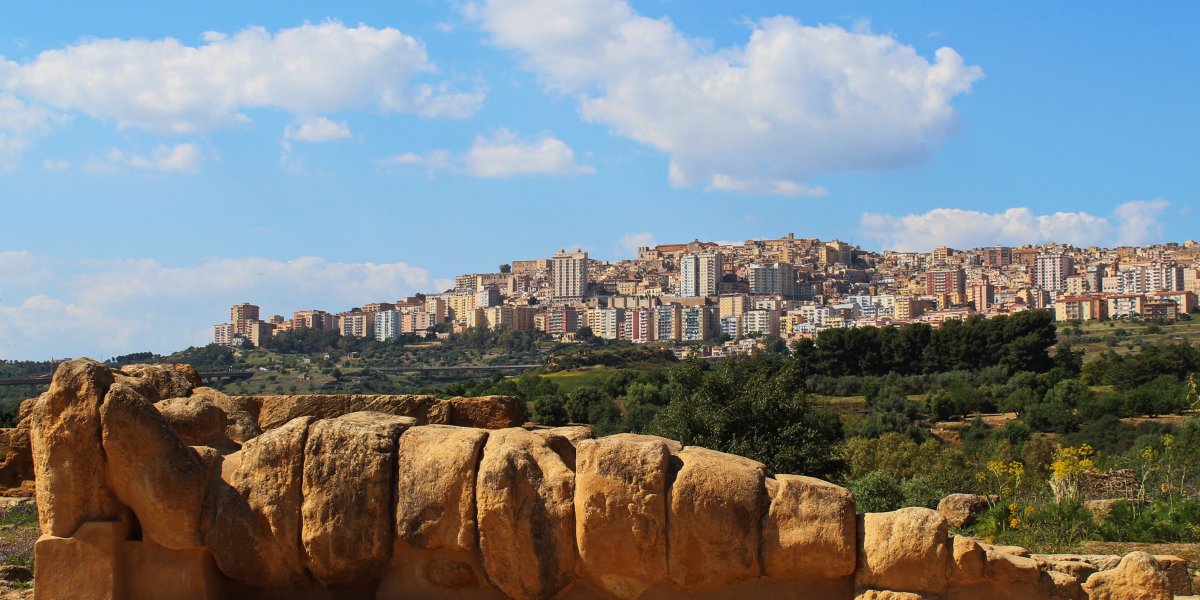
Agrigento
Italia · Best time to visit: Apr-Jun, Sep-Oct.
Day-by-day plan
Choose your pace
Duración del viaje
09:00
Landmark
Enter through the eastern (Giunone) gate the moment it opens — for fifteen golden minutes the whole eastern ridge is yours before the first tour bus crests the hill. Climb the worn sacrificial steps where 2,500-year-old fire scars still blacken the limestone (Carthaginian arson, 406 BC), then turn east and let the morning sun rake across the columns above the Sicilian sea. This is the temple Greek sailors first sighted approaching from Africa — and it still works as a beacon.
Tip: Buy the combined Valley + Giardino della Kolymbethra ticket (€18) at the kiosk, not the €13 temples-only ticket — almost no day-tripper knows about the hidden almond and pomegranate grove tucked below Temple of Heracles, and that single upgrade gives you the Valley's only shaded spot. Best photo: stand 20 meters southeast and frame the columns against the empty morning sea — no people in shot before 09:30.
Open in Google Maps →10:15
Landmark
Walk west along the Via Sacra for 10 minutes — the same dusty path Greek pilgrims used 25 centuries ago, lined with twisted olive trees older than most European countries. Then Concordia rises: 34 honey-colored columns standing exactly as they were placed in 430 BC, the best-preserved Greek temple outside the Acropolis. The mid-morning light at this exact hour rakes sideways across the fluted columns and makes the whole sandstone block glow like it's lit from inside.
Tip: Everyone photographs the bronze Icarus by Mitoraj sprawled at the temple's base — skip it, it's the same shot 10,000 people post weekly. Walk 50 meters past the temple to the south side and shoot it through the gnarled olive-tree frame instead: no fence, no crowd, the columns float above the silver leaves. This is the only photo of Concordia your friends won't have already seen.
Open in Google Maps →12:00
Landmark
Continue west on the Via Sacra for 12 minutes, descending past the toppled columns of Temple of Heracles into the lower Valley. What greets you is the ruin of what would have been the largest Doric temple ever built — Carthage sacked Agrigento in 406 BC before the roof went on, and it has lain in spectacular ruin ever since. The reclining Telamon, a 7.6-meter stone giant who once helped hold up the roof, sprawls full-length on the ground here. Walk around him slowly: this is the only place in the world you can stand beside one.
Tip: The Telamon outside is a replica (the original is in the Archaeological Museum just north) — but for photos this one is far better: no glass, no guards, soft outdoor light, and you can lie on the grass at his head for a sense-of-scale shot. Exit through the western gate (Porta V); the bus-stop for shuttle line 1 back up to old-town Piazzale Aldo Moro is 80 meters straight ahead — €1.20, runs every 30 minutes.
Open in Google Maps →13:30
Food
Take the line 1 shuttle up to Piazzale Aldo Moro (10 minutes), then walk 4 minutes down Via Atenea to this third-generation Sicilian bakery where locals queue at lunch for arancini still hissing from the fryer. Order one arancino al ragù (rice-ball stuffed with meat and peas, €3.50) and a panino con panelle e crocchè (chickpea fritters and potato croquettes in a sesame bun, €5). Eat standing at the marble counter — this is exactly what Agrigentini have eaten on weekday lunches for fifty years.
Tip: Order the cannolo only if you see them piping the ricotta into the shell while you wait — pre-filled cannoli go soggy in 20 minutes and every cafe on Via Atenea with photos in the window is selling exactly that. Pair the arancino with a granita di mandorla (almond) — Agrigento's province grows half of Italy's almonds, and this is where you taste it. Budget €12-15 total with espresso.
Open in Google Maps →15:30
Landmark
Grab a taxi from Piazza Marconi (€20, 22 minutes west along the coast) and ask for the Lido Rossello access point — the iconic blinding-white marl staircase plunging into a turquoise sea. Direct climbing onto the cliff face has been fenced off since 2020 for conservation, but the beach below gives you the better photograph anyway: the wave-cut limestone 'stairs' rising above you like a frozen wedding cake. The mid-afternoon sun hits the white wall full-on and turns the scene cinematic.
Tip: Use the Lido Rossello parking entrance (north side) — not the Realmonte main approach, which has been closed and barricaded for years and where most tourists waste an hour walking to a locked gate. From the wooden boardwalk down to the beach (5 minutes), turn left and walk 80 meters east along the shore: that's the postcard angle. No shade, blinding glare off the white face — sunglasses and a water bottle are non-negotiable, and bring a hat if you're fair-skinned.
Open in Google Maps →19:30
Food
Taxi back toward the Valley (€20, 25 minutes) and ask for Via Panoramica dei Templi — the trattoria sits on a hillside terrace looking straight down at the temples as floodlights flick on for the night. Order the busiate alle sarde (Sicilian pasta twists with fresh sardines, wild fennel and pine nuts, €14) and the involtini di pesce spada (swordfish rolls with breadcrumbs and orange zest, €18). Concordia goes gold from 8pm sharp — you'll watch dinner unfold against the same view that has rendered travelers speechless for 200 years.
Tip: Call the same morning (+39 0922 403110) for a 19:30 terrace table — the inside dining room has no view and they default tourists there. Avoid every restaurant on Via Atenea advertising 'menù turistico €25 con vino' on a chalkboard: that's local code for frozen seafood reheated for cruise-ship day-trippers, and the touts at the door work on commission to drag you in. Real Agrigentini eat above the Valley, not on the main shopping street.
Open in Google Maps →Saltar al día
08:30
Landmark
Enter through Porta V the moment the gates open — the Temple of Juno crowns the eastern ridge, its honey-colored sandstone glowing in slanted morning light while the Sicilian sun is still kind. Walk westward along the ancient Via Sacra to the Temple of Concordia, one of the best-preserved Greek temples on earth — it survived only because the Byzantines turned it into a church in the 6th century. The almond grove around the Temple of Hercules is unforgettable, and you'll be a full hour ahead of the coach tours that flood in after 10:30.
Tip: Buy the €19 combined ticket at Porta V — it covers the whole Valley plus the Kolymbethra Garden for the afternoon, saving a queue later. Approach the Temple of Concordia from its southern flank: that's the only angle where the Doric colonnade lines up against pure sky with no fence in the frame.
Open in Google Maps →12:30
Food
Walk five minutes west from the Temple of Hercules along the dirt path through the olive trees — Casa Diodoros sits inside the archaeological park itself, a converted farmhouse most tour groups never find. The kitchen cooks only with ingredients grown in the surrounding 'Diodoros' organic estate — wild fennel pasta, slow-cooked lamb with Girgentana goat ricotta, and almond-and-pistachio tart from trees a hundred meters away. Eating Greek-Sicilian food on Greek-Sicilian soil is the whole point of this day.
Tip: Reserve the night before (+39 0922 401110) and ask for a shaded terrace table on the olive side, not the parking side. Order the 'busiati alla Diodoros' (€14) — handmade twisted pasta with almonds, mint and tomato — and the goat ricotta cannoli (€6); both use ingredients you can't taste anywhere else on the island.
Open in Google Maps →14:30
Landmark
Continue west from the restaurant five more minutes to the toppled giant of the Temple of Olympian Zeus — once the largest Doric temple ever conceived, now a field of collapsed thunder. The four re-erected columns of the Temple of Castor and Pollux become the postcard of Agrigento as the sun moves behind them. Then descend into the Kolymbethra, a hidden FAI-protected garden in the ravine below — citrus trees, Arab-Norman irrigation channels and almost no other visitors; after the stark glare of the temple plateau, this green hush is the day's emotional turn.
Tip: From the Telamone fallen-giant viewpoint, the four columns of the Dioscuri line up perfectly with the horizon at about 16:30 — that's the photo. In Kolymbethra take the lower path along the aqueduct: it leads to a viewing terrace directly under the Temple of Vulcan that 90% of visitors miss.
Open in Google Maps →17:15
Museum
Take the shuttle (or a 12-minute uphill walk) from the Kolymbethra exit to the museum — the late-afternoon slot is deliberate, because everything you've just seen in stone now reappears in clay, bronze and marble. The reassembled 8-meter Telamone from the Temple of Olympian Zeus stands in the central hall; the painted Greek vases and the Ephebe of Agrigento are the other unmissables. Visiting the museum after the temples — not before — is the order locals always recommend, because every artefact suddenly has a place you've already stood.
Tip: Skip Room 1 first and head straight to Room 6 — that's where the Telamone giant lives, and at this hour you'll often have him alone. The museum is closed Sunday afternoons, so plan this for a Saturday; the combined Valley+Museum ticket is €22 if you ask at either entrance.
Open in Google Maps →18:45
Religious
Step out of the museum and walk literally 80 meters across the lawn — the small Norman-Cistercian Church of San Nicola is built from temple stones, with a single rose window framing the Valley below. Behind it is the Ekklesiasterion, the open-air assembly where ancient Akragantines voted on civic matters, plus the Oratory of Phalaris. In the soft six-o'clock light you get a free, crowd-less panorama down to the temples you walked through this morning — the perfect closing parenthesis on the day.
Tip: Stand in the rose-window doorway of San Nicola and look due south — the Temple of Concordia frames itself exactly inside the stone arch, a free composition that costs photographers in workshops hundreds of euros to learn.
Open in Google Maps →20:00
Food
Walk ten minutes downhill on Via Panoramica dei Templi — the road runs along the ridge with the floodlit temples on your left, an unhurried after-dinner-before-dinner moment. Trattoria dei Templi has been run by the same family since 1968 and is where Agrigentini take their parents on Saturday night, not their Instagram followers. Order the 'pasta con le sarde' (€13) — wild fennel, sardines, raisins, pine nuts, the dish that explains Sicily in one bite — and the involtini di pesce spada (€18), swordfish rolled around breadcrumbs and lemon zest.
Tip: Book ahead for 20:00 (+39 0922 403110) and ask specifically for the small inner garden, not the front room. Pitfall warning: the streets directly outside Porta V are lined with 'Ristorante Tipico' traps with photo menus and €25 lasagna — never eat on the Valle dei Templi tourist strip itself; the real cooking is on Via Panoramica or up in the old town.
Open in Google Maps →09:30
Religious
Climb the stepped Via Duomo to the very top of the old city — the cathedral perches on the highest point of Agrigento with a stunning sea-to-temples panorama from its terrace. Inside, the painted wooden ceiling from the 16th century is a forest of saints and angels in faded blue, and the curious 'acoustic phenomenon' in the nave lets a whisper at the altar travel clearly to the back wall. The early slot is non-negotiable: the morning light hits the façade head-on, and the bell ringer often comes through around 10.
Tip: Climb the campanile (€4 extra, separate ticket at the side door) — from the top you see the Valley of the Temples laid out south of you and the African sea due south, the only spot in town with both in one frame. The cathedral itself closes 12:30–16:00 for siesta, so morning is the only practical window.
Open in Google Maps →11:00
Religious
Walk down Via Duomo and turn left onto Salita Santo Spirito — five minutes through stone alleys hung with laundry, ending at a 13th-century Cistercian monastery still inhabited by cloistered nuns. The Gothic-Chiaramonte church holds rare Serpotta stuccoes, but the real reason to come is the sweets: ring the bell beside the wooden 'rota' (revolving cupboard) and the unseen nuns will send out almond pastries, cuscusù di mandorle, and pistachio biscotti by the same recipes they've used since the Middle Ages. This is the kind of Sicily that exists nowhere else.
Tip: The rota is open roughly 09:30–12:30 only — say clearly 'vorrei dei dolci, per favore' (€2–3 per pastry, cash only, no card). Order the 'cuscusù di mandorle' — sweet almond couscous with pistachios and candied citron — a dessert virtually impossible to find outside this convent.
Open in Google Maps →13:00
Food
Walk five minutes down through Piazzetta San Calogero — Kalòs sits on a quiet square just off the main Via Atenea, with tables under a fig tree and a tiny dining room of arched stone. It's the lunch place where Agrigentine doctors and judges take an unhurried hour: caponata, pasta alla Norma, and grilled red prawns from nearby Mazara. The location matters — you're staying close to the cathedral cluster for the morning and saving the long western drive for the afternoon, which is the only sane way to run this day.
Tip: Order the 'spaghetti ai ricci di mare' (€16, sea-urchin pasta) only if it's on the chalkboard today — it means the morning catch was good. Skip the printed menu's tourist primi and ask 'cosa c'è di fresco oggi?' — the waiter will steer you to whatever came off the boat at Porto Empedocle this morning.
Open in Google Maps →15:00
Museum
A 15-minute drive west to the seaside hamlet of Caos — the modest red-roofed house where Luigi Pirandello, Sicily's Nobel laureate (1934), was born in 1867. The rooms hold his typewriter, manuscripts and the death mask of the man who invented modern theatre's 'six characters' before Beckett or Brecht. Walk five minutes through the pine grove behind the house: at the cliff edge stands the great twisted pine where his ashes are buried — the writer asked to return to the sea wind that raised him, and the spot is one of the most quietly moving places in Sicily.
Tip: The pine tomb is free and outdoors — even if the house is shut for siesta you can always walk to the grave. Stand with the pine to your back and you see the African sea framed exactly as Pirandello described in 'I Vecchi e i Giovani'; this is the photo, not the house façade.
Open in Google Maps →17:00
Landmark
Continue 10 minutes west along the SP68 to Realmonte — the Scala dei Turchi is a wave of pure-white marl limestone rising out of the Mediterranean, named for the Saracen-Turkish pirates who supposedly climbed it in the 16th century. The late-afternoon timing is essential: at 17:00 the cliff is bone-white and sharp; by 19:30 the sun drops behind it and the rock turns rose-gold, then violet, then near-pink — sunset over the Strait of Sicily is the closing image of the trip. Stay until the last light dies behind the cape.
Tip: Direct climbing on the white rock is officially banned since 2022 to protect the cliff — police hand out €500 fines. Don't follow Instagrammers up; walk instead along Lido Rossello beach (free, 400m east of the parking lot) — from there you get the entire pink-sunset cliff as a single backdrop, far more photogenic than standing on it.
Open in Google Maps →20:30
Food
Drive 20 minutes back east toward the San Leone beachfront — Leon d'Oro has been the serious local choice for over 30 years, on a quiet street one block from the sea. Chef Galanti cooks raw red prawns from Mazara, hand-cut tonnarelli with sea-urchin, and a couscous of fish that nods to the African coast a hundred miles south. After a day that began with cloistered nuns and ended with a pink cliff, this final long Sicilian dinner is the proper full stop.
Tip: Reserve at +39 0922 414400 — Saturday nights fill by 21:00 — and ask for the 'menu degustazione di pesce crudo' (€48) if you're a raw-fish person; otherwise the 'spaghetti ai ricci' (€22) is the dish to come back for. Pitfall warning: avoid the beach-club restaurants along Lungomare Falcone-Borsellino with sea-view terraces and €35 fish platters — the seafood is frozen and the markup is brutal; the locals walk one block inland for everything serious.
Open in Google Maps →
Trip builder
Plan this trip around Agrigento
Turn this guide into a bookable rail itinerary with FlipEarth.
Keep exploring
Related cities
More in the same country
FAQ
Frequently asked questions
How many days do you need in Agrigento?
Most travelers enjoy Agrigento in 1 days, with enough time for headline sights and a slower meal or museum stop.
What's the best time to visit Agrigento?
The easiest season for most travelers is Apr-Jun, Sep-Oct, especially if you want good weather and manageable crowds.
What's the daily budget for Agrigento?
A practical starting point is about €120 per person per day before hotels, then adjust based on museums, dining, and transport.
What are the must-see attractions in Agrigento?
A good first shortlist for Agrigento includes Temple of Juno (Tempio di Hera Lacinia), Temple of Concordia, Temple of Olympian Zeus & the Telamon.