City Guide
Gjirokaster
Albanie · Best time to visit: Apr-Oct.
Day-by-day plan
Choose your pace
Durée du voyage
09:00
Landmark
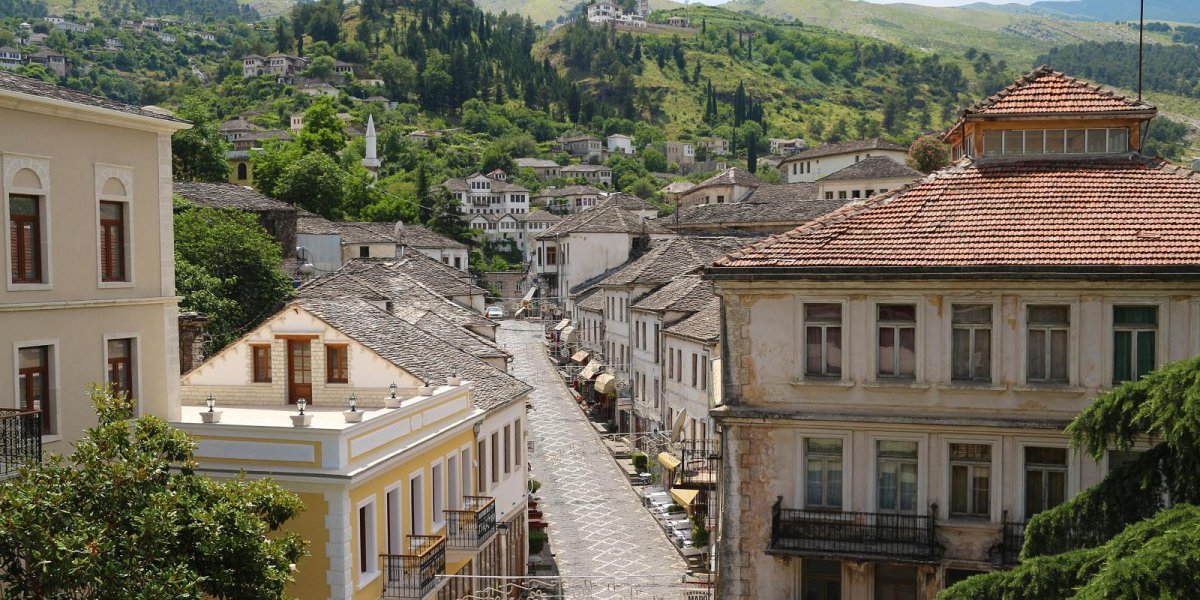
Take a taxi straight up to the castle's east gate before the Saranda day-trip buses pull in around 10:30 — for an hour you will have the ramparts to yourself. The colossal stone fortress crowns the ridge like a battleship run aground; walk the full length of the upper gallery for the most photographed panorama in southern Albania, sweeping down the Drino Valley to the Greek border. Drift past the rusting WWII artillery lined up along the long corridor — the atmosphere lives in the stone, the wind, and the slate-roof carpet of the town below you, not in any interior.
Tip: Use the upper east gate, not the lower visitor entrance — the upper gate puts you directly on the ramparts and you can buy the ticket on your way back out. The single best photo angle is the western bastion at the far end: stand against the right-hand corner and frame the Communist-era MiG-17 fighter jet against the valley.
Open in Google Maps →11:30
Landmark
Descend the cobbled Rruga Ismail Kadare for 8 minutes — the stone street is itself a UNESCO listing, polished smooth as marble and treacherous when wet, so step on the granite borders rather than the slabs. Skenduli is the most intact Ottoman tower-house left in Albania: four storeys of slate, lime, and rough-cut stone, looking exactly as it did in 1700, and the descendant of the original Bey still lives inside. Photograph the façade from the wooden bench on the opposite lane — the lone cypress on the right perfectly brackets the twin chimney stacks against the sky.
Tip: Skip the paid interior tour — the exterior silhouette is what's iconic, and the family lets you photograph the inner courtyard gate from the street for nothing. If the elderly gentleman with the felt cap is sitting on the bench outside, that IS the Bey; ask politely and he will tip his hat for a portrait.
Open in Google Maps →12:30
Food
Backtrack 60 seconds up the same cobbled lane — you walked past the door already. Taverna Tradicionale is the unmarked stone arch where the bazaar merchants stop after the morning market, and the kitchen sends out the local rice-and-mint fritters in under ten minutes. Order qifqi (Gjirokaster's signature dish, €3), byrek me spinaq (flaky spinach pie, €2.50), and an Elbar beer (€2) — under €10 per head and you'll be out the door in forty minutes.
Tip: Ask for the small back terrace — the slate roofs cascade away below you, the same view as the postcard. Cash only, no card reader; bring small lek or euro notes.
Open in Google Maps →14:00
Neighborhood
Step out of the taverna and you are already on Pazari i Vjetër — the bazaar IS the lane. Walk slowly from Çerçiz Topulli Square down to the far end and back; the afternoon sun slants between the stone arches and turns the cobblestones gold, while behind the wood-shuttered workshops blacksmiths still hand-forge iron keys and old men stitch qeleshe (white felt caps) the same way they did under the Ottomans. This is the best window-shopping street left in the Balkans, and the right hour to walk it is exactly now, when the light is at 30 degrees.
Tip: Do not buy the 'antique' Albanian flag pins from the corner stall at Çerçiz Topulli Square — they are stamped in China for €1 and resold for €10. The real craftsmanship is in the middle stretch: Stilian's silver workshop and the small bookbindery sit on the right-hand side, both with the maker working at the window.
Open in Google Maps →16:30
Landmark
Continue south, downhill, through the steep stone lanes for about 12 minutes — three slate-roofed mansions pass on the way, each more dramatic than the last. Zekate, built in 1812, is the grand finale: twin defensive towers, a triple-arched façade, the most photographed Ottoman house in Albania. Arrive at 16:30 deliberately — the western sun rakes across the stone for the next forty minutes and turns the slate roof from grey to burnished copper, which is the precise photograph you came to Gjirokaster to take.
Tip: The signature wide-frame shot is from the dirt footpath 20 metres downhill on the left — not the front gate. Stand there with both towers and the valley behind, and you'll have the cover photo. Skip the painted interior; the exterior IS the masterpiece, and the late-afternoon light only lands on the façade for one hour.
Open in Google Maps →19:30
Food
Walk back up the cobbled lanes toward the bazaar — fifteen minutes uphill but every stone house you pass is glowing amber by now. Taverna Kuka has a living fig tree growing straight through the dining room and a wood-fired hearth that has been burning for forty years; order kingji (lamb slow-baked in a sealed clay pot, €11), fërgesë (peppers, tomato, and cottage cheese in an iron pan, €6), and a half-litre of the house red (€4). The owner's mother still hand-rolls the petulla — sweet fried dough dusted with mountain honey — for dessert.
Tip: Reserve for 19:30 sharp — by 20:30 the Saranda tour groups fill every chair, and ask specifically for the table under the fig tree, not the back stone room. Final pitfall warning: do NOT eat at any of the restaurants strung along Rruga 18 Shtatori below the castle — they pay touts on commission, charge double for microwaved food, and the menu prices are written in euros rather than lek so you'll never notice the markup.
Open in Google Maps →
Trip builder
Plan this trip around Gjirokaster
Turn this guide into a bookable rail itinerary with FlipEarth.
Keep exploring
Related cities
More in the same country
FAQ
Frequently asked questions
How many days do you need in Gjirokaster?
Most travelers enjoy Gjirokaster in 1 days, with enough time for headline sights and a slower meal or museum stop.
What's the best time to visit Gjirokaster?
The easiest season for most travelers is Apr-Oct, especially if you want good weather and manageable crowds.
What's the daily budget for Gjirokaster?
A practical starting point is about €50 per person per day before hotels, then adjust based on museums, dining, and transport.
What are the must-see attractions in Gjirokaster?
A good first shortlist for Gjirokaster includes Gjirokaster Castle, Skenduli House, Zekate House.