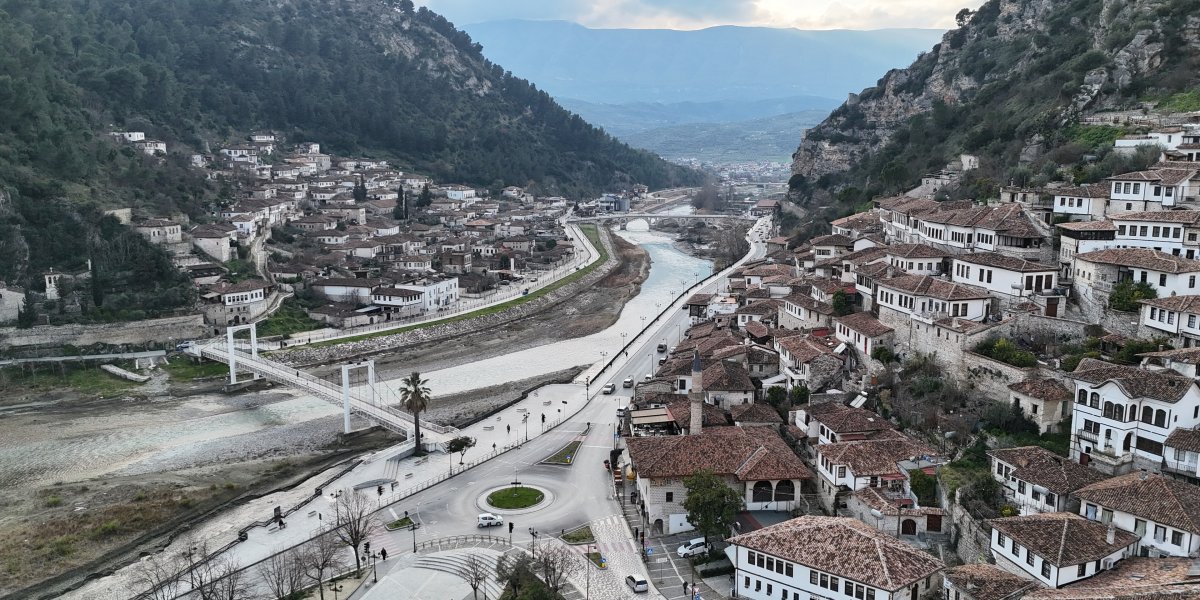
City Guide
Berat
Albanie · Best time to visit: Apr-Oct.
Day-by-day plan
Choose your pace
Durée du voyage
08:30
Landmark
Walk down to the south bank of the Osum from wherever you're staying — every Berat guesthouse is within ten minutes of the river. At this hour the rising sun crosses Mangalem head-on, lighting every black-framed window on the white facade in a way that flattens out completely after 10:30 when the sun climbs overhead. The 1780 Ottoman stone bridge will be yours alone for another thirty minutes; by 09:30 the first Tirana coaches roll in and this exact angle becomes a scrum of selfie sticks.
Tip: Stand at the SOUTH end of the bridge, not the middle — you want the stone arches sweeping into the foreground with the castle crowning Mangalem above. Phones at default zoom crop the castle out; switch to 0.5x (wide-angle) on iPhone or step ten meters further back along the south bank.
Open in Google Maps →09:30
Landmark
Cross the bridge north into Mangalem and turn left up Rruga Mihal Komnena — twenty minutes of steady climb on cobblestones polished slick by 700 years of footsteps, past hidden vegetable gardens and stone houses still pierced with arrow slits. Inside the gates the castle reveals what no other fortress in Europe still offers: about thirty families live here, hanging laundry between 13th-century Byzantine churches and Ottoman cisterns, so the whole hilltop functions as a working village rather than a museum. Climb now while the limestone is cool — by noon the southern ramparts radiate heat off white stone and become genuinely unpleasant.
Tip: Walk the perimeter counterclockwise to the southwest corner above St. Michael's cliff — this is the empty viewpoint over the Osum valley toward Mt. Tomorr that 95% of visitors miss entirely. Skip the Onufri Museum (€4, eats 90 minutes for a single small room) and skip the souvenir stand selling 'antique' icons at the main gate — they're factory prints aged with tea.
Open in Google Maps →12:30
Food
Descend the cobblestones back to Mangalem (15 minutes, all downhill — knees thank you for not doing it in reverse). Slip into the small pastiçeri just below the King Mosque where two women have been folding byrek over the same wood-fired oven for thirty years; there are three plastic tables and no menu in English. Order byrek me djathë (cheese pastry, 150 lek / €1.50) and qifqi (Berati's signature fried rice-and-mint balls, €3 a portion) — both are bullseye Berat dishes you won't find an hour outside this city.
Tip: Point at what's freshest in the oven case — anything cooked in the last hour beats whatever the menu suggests. Tap water is safe here (rare in Albania); wave off the €2 bottled water push. Cash only, and small notes — they won't break a €50.
Open in Google Maps →13:30
Neighborhood
Step out of the pastiçeri and walk east along the spine of Mangalem — the cobblestone street threads past three Ottoman monuments in 300 meters: the 16th-century King Mosque (Xhamia e Mbretit) with its rare lone minaret, the smaller Halveti Teqe with carved cedar ceilings visible through the doorway, and the Lead Mosque (Xhamia e Plumbit) named for the metal that once sheathed its dome. Afternoon is the deliberate hour to walk these streets: shutters fly open, kids return from school, and the white walls catch a golden side-light that disappears entirely at midday. The 'thousand windows' you photographed from across the river this morning are now overhead, framing your walk on both sides.
Tip: If the Lead Mosque's wooden door is propped open (typical 14:00–17:00), you can see the painted Ottoman ceiling from the threshold without entering — exactly what you want. The carved courtyard fountain three doors east of King Mosque is the photographer's secret: late afternoon shadows cut diagonally across it for ninety seconds around 16:00, and there's almost never anyone there.
Open in Google Maps →16:00
Neighborhood
Retrace your steps west along Mangalem's spine and re-cross the Gorica Bridge — this time south, into the quarter that Mangalem looks at across the river. The houses here face north and stack up identically to those you've just walked, which means at sunset (around 19:30 in summer, 18:00 in October) you can sit on Gorica's terraced lanes and watch the entire Mangalem-and-Castle complex turn amber in a light unavailable from any other angle in town. Gorica is residential, quieter, with no souvenir shops — this is the half of the city where you finally see Berat the way the people who actually live here do.
Tip: Climb the small uphill path to the Holy Trinity Church of Gorica (Kisha e Shën Mërisë) for the highest sunset platform on the south bank — five minutes of steep cobbles past where every other tourist stops. The benches in front of the church are empty at golden hour while the bridge below is packed; this is where to be.
Open in Google Maps →19:30
Food
Cross the Gorica Bridge one last time as the river lamps come on and Mangalem's white walls turn yellow against the dark castle above. Lili runs four tables in his family's stone courtyard inside Mangalem — there is no printed menu, only what his garden and the morning market gave him: usually tave kosi (baked lamb in tangy yogurt and rice, €10), homemade qifqi, stuffed peppers, and a glass of his grandfather's mulberry raki to finish. It ends, every night, with Lili pulling up a chair at your table to ask how it was.
Tip: Reserve at least a day ahead through your guesthouse or by walking past in the morning to leave your name — walk-ins are turned away most evenings and the 'overflow' restaurants on Bulevardi Republika that catch the rejected diners (menus in eight languages, English-speaking touts at the door) charge €25 for €10 dishes and are the single biggest tourist trap in Berat. If Lili is full, ask your host for Onufri or Mangalemi by name — avoid anything on the boulevard.
Open in Google Maps →Aller au jour
08:30
Landmark
From the main square Sheshi Teodor Muzaka, walk uphill 25 minutes along the cobbled Rruga Mihal Komnena — Mangalem's stacked white houses rise on your left as the lane bends past Ottoman walls. Arrive at the gate by 08:45 to enter as it opens; the morning sun rakes east-to-west across Mangalem's facades and you'll have the bastions to yourself for the first full hour. The Kala is not a ruin but a living quarter — families still live inside the walls, hanging laundry between Byzantine churches.
Tip: Skip the central kiosk crowd and head straight to the southern bastion behind the Cathedral — most visitors miss it. From that corner you get the unphotographed view: the Osum bending east toward Mount Tomorr, with Gorica's stone roofs framing the foreground.
Open in Google Maps →10:30
Museum
Cross the upper plateau past inhabited stone houses — a 5-minute walk to the Cathedral of the Dormition of Saint Mary, which now holds the museum inside its 16th-century nave. The iconostasis is intentionally dim; raking morning light through the narrow apse window catches Onufri's signature red and the gold-leaf halos exactly when you arrive. The icons here have never left the church they were painted for — you are standing where they have always stood.
Tip: Onufri's 'red' was a pigment from a plant whose recipe died with him. Find the icon of Saint George in the second hall — the cloak is the truest example, brighter and warmer than anything modern restoration can replicate. Hold your camera flash off; the staff will quietly walk you out otherwise.
Open in Google Maps →12:30
Food
Descend the castle path back into Mangalem — 20 minutes downhill past the King Mosque's stone minaret, then a narrow alley to a green wooden door with no sign. Run by Lili's son and grandson out of a home kitchen with four tables: order tavë kosi (lamb baked under yogurt, €6) and byrek me presh (flaky leek pie, €3), with a glass of homemade grape raki. Cash only, €12-15 per person; arrive at 12:30 sharp or it's full — better, telephone the night before to hold a seat.
Tip: Ask for the homemade fig preserve at the end — it never appears on the table by default but the family always has a jar in the kitchen. Pair it with a spoon of their thick yogurt; it's the unofficial dessert no tourist menu lists.
Open in Google Maps →14:30
Religious
From Lili, cross the small park and follow the signposted stone trail toward the castle hill — 15 minutes uphill, with Mangalem's white houses cascading below you to the south. The 13th-century Byzantine brickwork shows its red-and-white cross-in-square patterning best in afternoon side-light, when the western sun grazes the apse and the herringbone bands glow. The interior is usually locked — the real reward is the saddle 50 m behind the church.
Tip: Walk past the church to the small grass platform on the far side — it's the only spot in Berat where you see the Osum gorge cutting east toward Mount Tomorr without any roof in the frame. Most photographers come at noon; afternoon side-light here is twice as good and you'll be alone.
Open in Google Maps →16:30
Neighborhood
Walk down the stone trail back into the quarter — 15 minutes — and end on the old Gorica Bridge for Berat's defining view. The 'thousand windows' all face east-southeast, so late afternoon to sunset paints every facade the same amber tone and the geometry finally makes sense. Wander the alleys above the river before the sun drops, then return to the bridge for the moment the windows light up one by one.
Tip: The classic photo is from the middle of the bridge looking back at Mangalem — but step 30 m down to the riverbank path on the Gorica side. The angle is lower, you frame the bridge stones in foreground, and the wall of windows fills the upper third. Sunset reflects on the Osum here for about 12 minutes — set yourself up by 18:30 in summer.
Open in Google Maps →19:30
Food
Walk five minutes back into Mangalem from the bridge — Mangalemi occupies a 200-year-old Ottoman house with a wisteria-shaded terrace overlooking the lower town. Order pulë me arra (chicken with walnuts, €10) and tavë kosi (€8), with a glass of local Çobo red (€4); budget €25-30 per person. Reserve ahead in summer and specifically ask for the terrace — the interior is beautiful but you'll miss the night silhouette of the castle wall above.
Tip: Skip the photo-menu places on the pedestrian street near the bridge — they advertise 'traditional Berati' in English and charge tourists 2-3x for frozen fish flown in. At Mangalemi the kitchen is family-run; ask the waiter for the day's catch and order off-menu rather than from the printed list, and never pay before you confirm raki is included (it usually is, on the house).
Open in Google Maps →09:00
Museum
Start at Sheshi Teodor Muzaka and walk uphill three minutes to the museum at the foot of the castle path — an 18th-century Ottoman merchant's house preserved with original ceilings and raised hearths. It opens at 09:00 sharp; be at the door, because by 11:00 four tour groups will be elbowing through its tiny rooms. The wood-carved muqarnas and the women's quarters reward a slow, quiet visit you can only get in the first hour.
Tip: Everyone starts upstairs in the men's salon. Reverse the route: begin downstairs in the kitchen and women's quarters, take the original 18th-century back staircase up, and you'll have the upper rooms alone for 20 minutes. Closed Mondays — verify the day before if your weekend is unusual.
Open in Google Maps →11:00
Religious
Walk five minutes south down Rruga Mihal Komnena into lower Mangalem — the King Mosque's stone minaret is your landmark, and the Halveti dervish hall stands directly beside it. The mosque itself is austere; the prize is the Teqe, whose ceiling is a forest of carved linden-wood rosettes restored in 2018 with the original technique. Late morning light pours through the high south windows onto the carved muqarnas — there is no other half-hour all day when it looks this good.
Tip: Remove shoes at both buildings; women cover heads and head scarves are free in the basket by the door. Inside the Teqe, lie back on the bench under the south corner and look straight up — the rosettes form a star pattern that only resolves from that exact angle. The custodian never points it out.
Open in Google Maps →13:00
Food
Cross the Gorica Bridge over the Osum — a seven-minute walk — to Pasarella, whose riverside deck looks back at Mangalem's wall of windows from the Gorica bank. Order fërgesë (peppers, tomato, cottage cheese baked in a clay pan, €5) and grilled lamb chops (€8), or Berat-style stuffed peppers (€6); budget €12-18 per person. Lunch is mostly locals so walk-in works at 13:00; ask for a deck table on the river — you eat looking at exactly where you walked yesterday.
Tip: Fërgesë comes in a small clay pan that arrives bubbling — wait three minutes before the first bite or the cheese burns your mouth. Eat it with their dark cornbread (kollomboqe), which arrives free; ask for a second basket and the waiter will smile because no tourist ever asks.
Open in Google Maps →14:30
Neighborhood
From the restaurant, walk west and uphill along a cobblestone lane — five minutes brings you into a maze of low stone houses and small Orthodox shrines tucked into garden walls. Gorica is where Berat's Christian families lived: the quarter is quieter than Mangalem, doorways carry painted icons above the lintels, and afternoon shade keeps the cobbles cool underfoot. Wander without a map; every uphill alley ends at a wall with a view.
Tip: Look up at the chimneys — squat and round, the only place in Albania where Ottoman and Orthodox roofing meet on the same skyline. Many courtyard doors are unlocked and if you say 'mirëdita' (good day) and gesture, locals will wave you in to see a vine or a well. The unmarked Kisha e Shën Spiridhonit at the top of the quarter is the oldest standing church on this side.
Open in Google Maps →16:30
Religious
From Gorica, descend back over the bridge to the Mangalem side and follow the marked trail behind the river road — 25 minutes climbing through scrubby pine brings you to a 14th-century chapel clinging to a stone ledge directly under the castle's southwest wall. Late afternoon is the only correct hour to be here: the sun sets behind you over the Osum gorge, the chapel facade catches gold for fifteen minutes, and the great castle wall above turns orange in unison. It is the most cinematic spot in Berat and almost nobody finds it.
Tip: Wear grippy shoes — the last 30 m is loose stone on a narrow shelf and there is no railing. Stand on the small platform west of the chapel for the sunset frame: the gorge, Mount Tomorr's pyramid silhouette, and the lit castle wall all align. Bring a small torch — if you stay through dusk the descent gets dark fast.
Open in Google Maps →19:30
Food
Descend from Saint Michael's the way you came — 25 minutes down to river level — and Antigoni sits on the Mangalem side just below the bridge with a terrace cantilevered over the Osum. Order Tavë Berati (Berat-style baked meat with onions and rice, €10) and trout from Lake Ohrid (€12), with a glass of Çobo white (€5); budget €25-35 per person. Reserve for 19:30 to catch the moment Mangalem's windows light up over your shoulder while you eat — the timing is the meal.
Tip: Beware the pedestrian-street places near the bridge advertising 'traditional Berati menu' in English with photo placards — most fish is frozen, prices double, and the raki is industrial. At Antigoni, ignore the printed list and ask the waiter for today's catch; the trout comes overland from Pogradec, not flown frozen, and you can request to see it before they grill it. Also: the bill never includes coperto in Berat — if you see it, ask politely for it to be removed and it will be.
Open in Google Maps →
Trip builder
Plan this trip around Berat
Turn this guide into a bookable rail itinerary with FlipEarth.
Keep exploring
Related cities
More in the same country
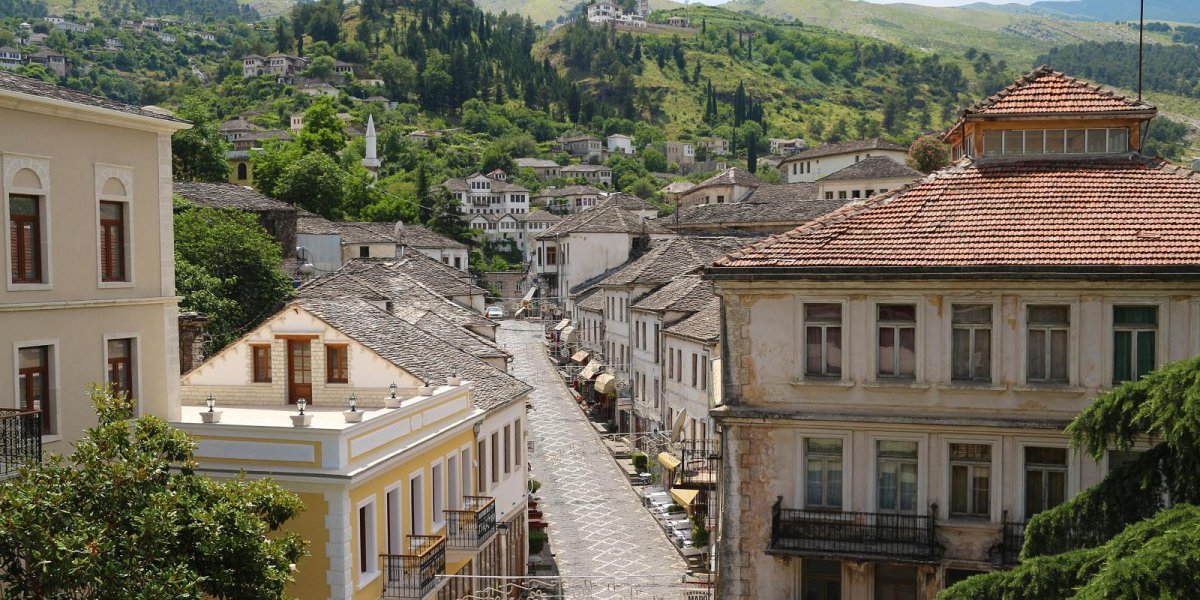
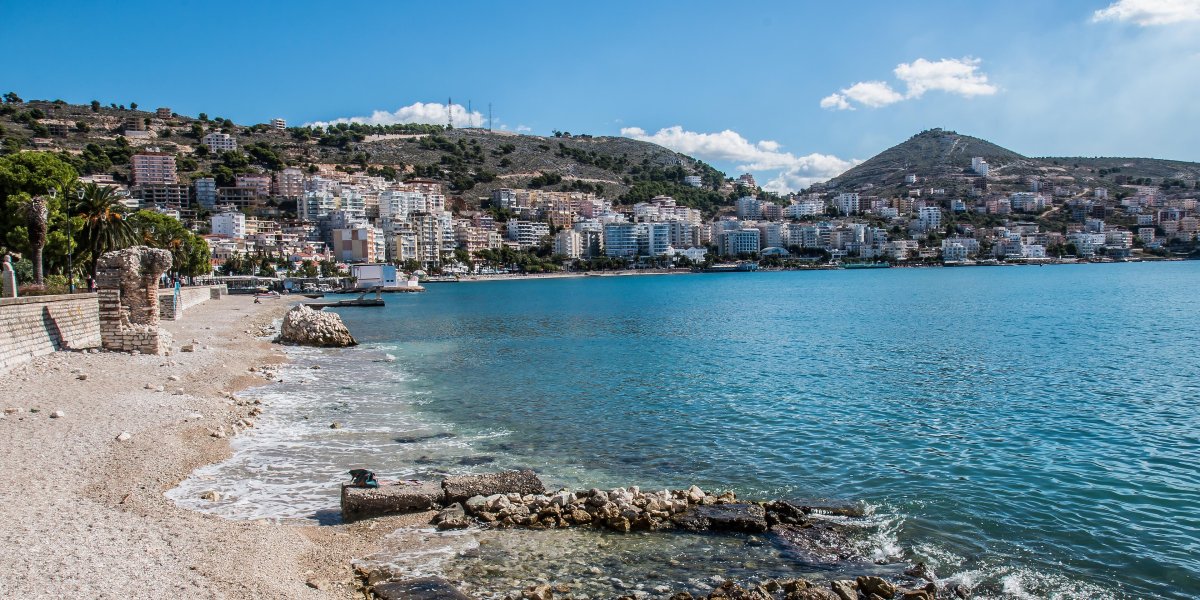
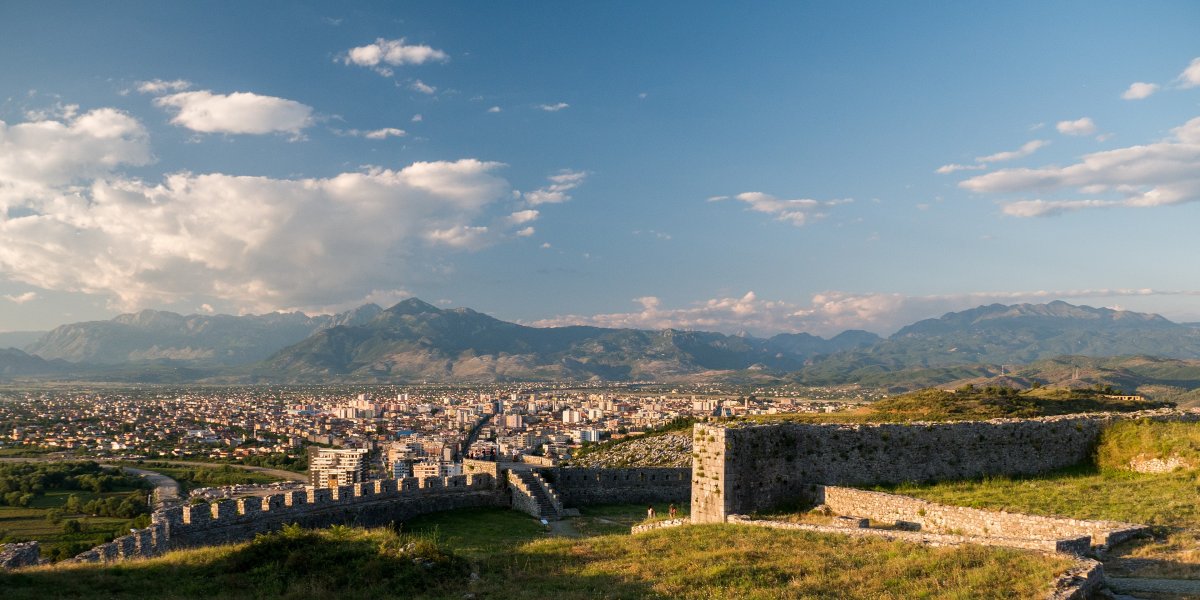
FAQ
Frequently asked questions
How many days do you need in Berat?
Most travelers enjoy Berat in 1 days, with enough time for headline sights and a slower meal or museum stop.
What's the best time to visit Berat?
The easiest season for most travelers is Apr-Oct, especially if you want good weather and manageable crowds.
What's the daily budget for Berat?
A practical starting point is about €55 per person per day before hotels, then adjust based on museums, dining, and transport.
What are the must-see attractions in Berat?
A good first shortlist for Berat includes Gorica Bridge & Mangalem Viewpoint, Berat Castle (Kalaja).