City Guide
Cuenca
Espagne · Best time to visit: May-Oct.
Day-by-day plan
Choose your pace
Durée du voyage
09:00
Landmark
Step off the bus or taxi onto the southern lip of the old town and walk one block north — the cobbles widen and the postcard hits you all at once: the candy-pink Ayuntamiento arch, the unfinished triangular Gothic facade of the cathedral, and the painted houses leaning in from both sides. The raking morning light flattens the shadows on the cathedral's bare stone and gives you the cleanest frame of the day, before the cafés roll out their parasols and the Madrid coaches dump their first wave. We are not going inside — the exterior tells the whole story and the clock is already running.
Tip: Shoot from the south-east corner under the Ayuntamiento arch looking north — you get the cathedral spires, the cobbles and the pink houses in a single frame, with no delivery vans parked before 09:30. Skip the cathedral's €5.50 interior ticket; the unfinished facade is the photograph, the inside is not.
Open in Google Maps →10:30
Landmark
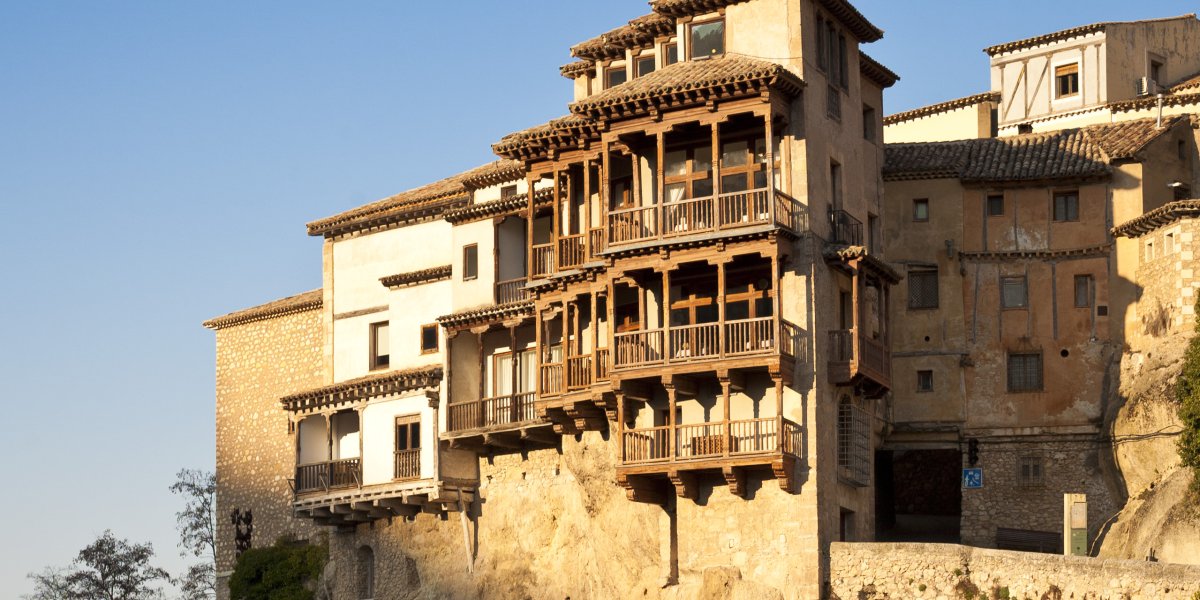
Exit Plaza Mayor at the north-east corner and follow Calle Canónigos for three minutes — the lane narrows, drops, and suddenly the cliff edge opens to your right with three slim wooden balconies hanging straight out into thin air above the Huécar Gorge. From this side you only see the doorways and the iron railings; the famous angle is on the other side of the gorge, which we reach next. Lean over the low wall at the end of the street for your first taste of the vertigo this city was built on.
Tip: Do not waste your shutter from Calle Canónigos itself — from above the balconies barely show and the iconic cantilever is invisible. Save the photo for the bridge in fifteen minutes; here, just look down.
Open in Google Maps →11:30
Landmark
Step straight from the houses onto the 1903 iron footbridge — sixty metres of riveted nothing under your boots — and the postcard opens up to your left: the three balconies leaning off the cliff with the cathedral floating above them. Cross slowly to the Parador on the far side (the old San Pablo convent, now a state hotel) and walk through its terrace to the gorge-edge viewpoint — this is the frame on every Cuenca poster. The mid-morning sun is now striking the Casas Colgadas dead on, and this exact window is precisely why we are doing the bridge at 11:30 and not at sunrise.
Tip: You need two shots: one from the middle of the bridge (houses + gorge together) and one from the Parador-side end (houses + cathedral stacked vertically). The bridge bounces when people walk past — brace your elbow on the railing or wait two seconds for the deck to settle before you press.
Open in Google Maps →13:00
Food
Re-cross the iron bridge and drop two minutes down a stepped alley onto Calle Fray Luis de León, where Basilio has been pouring wine for the same regulars for over thirty years. Stand at the bar (the dining room upstairs is for tourists), point at whatever is on the counter, and you are eating in fifteen minutes. Order the two flagship Cuenca plates: morteruelo, a warm game-and-liver paste eaten on toast, and zarajos, lamb intestines coiled around vine sticks and grilled — neither is for the squeamish, both are why you came to Castilla-La Mancha.
Tip: Morteruelo around €4, zarajos around €6, a glass of local Mentrida red €2.50 — that is lunch for €12-15 standing. Arrive before 13:15 to claim a stool at the bar; by 13:45 the locals are shoulder-to-shoulder and you will eat on your feet.
Open in Google Maps →15:00
Landmark
Walk north straight out of the bar up Calle San Pedro — the climb is the activity, fifteen minutes of steepening cobble that passes the tiny round Iglesia de San Pedro (peek at the unusual circular footprint) and ends at the Arco de Bezudo, the 16th-century stone gate marking what is left of the Moorish castle precinct. The walls are mostly gone but the cliff itself is the real fortress: stand at the Mirador del Rey and both ravines fall away at once, with the cathedral floating on its rock behind you. Loop back down through Ronda Julián Romero, the row of painted upper houses spilling toward the Júcar gorge — afternoon light now rakes the south-facing facades and turns the ochre walls almost orange.
Tip: From Mirador del Rey, walk thirty metres further north along the dirt path past the broken arch — almost no day-tripper bothers, and you get the empty Júcar gorge framed by the painted upper houses, the photo nobody else on your AVE will have. Wind whips hard at the cliff edge here; keep one hand on hats and phones.
Open in Google Maps →19:30
Food
Walk back down Calle San Pedro for eight minutes — the same street, now lit by warm wall lamps and emptied of day-trippers — and stop where you smell roasted lamb: a modern Castilla-La Mancha kitchen tucked into a 17th-century townhouse, twelve tables, white linen, no nonsense. Order the morteruelo brioche (the bar dish from lunch, elevated for the evening) and the slow-roasted lamb shoulder with Manchego foam — same regional flavours, a different decade, the proper finish to a day that began with an exterior cathedral and ended on a cliff.
Tip: Reserve 48 hours ahead; twelve tables sell out by Thursday in season. Tasting menu around €58, à la carte around €55 per person. Pitfall: skip the famous restaurant inside the Casas Colgadas (Mesón Casas Colgadas) — you pay double for the same view you already photographed for free, and the kitchen has coasted on tourism for years. Last AVE to Madrid leaves around 21:50; tell Raff's staff when you sit down and they will pace the courses to land you at the door by 21:15, with a fifteen-minute taxi ride to Fernando Zóbel station.
Open in Google Maps →
Trip builder
Plan this trip around Cuenca
Turn this guide into a bookable rail itinerary with FlipEarth.
Keep exploring
Related cities
More in the same country
FAQ
Frequently asked questions
How many days do you need in Cuenca?
Most travelers enjoy Cuenca in 1 days, with enough time for headline sights and a slower meal or museum stop.
What's the best time to visit Cuenca?
The easiest season for most travelers is May-Oct, especially if you want good weather and manageable crowds.
What's the daily budget for Cuenca?
A practical starting point is about €110 per person per day before hotels, then adjust based on museums, dining, and transport.
What are the must-see attractions in Cuenca?
A good first shortlist for Cuenca includes Plaza Mayor & Cuenca Cathedral (exterior), Casas Colgadas (exterior view from Calle Canónigos), Puente de San Pablo & Parador Mirador.