City Guide
Alicante
Espagne · Best time to visit: May-Sep.
Day-by-day plan
Choose your pace
Durée du voyage
09:00
Landmark
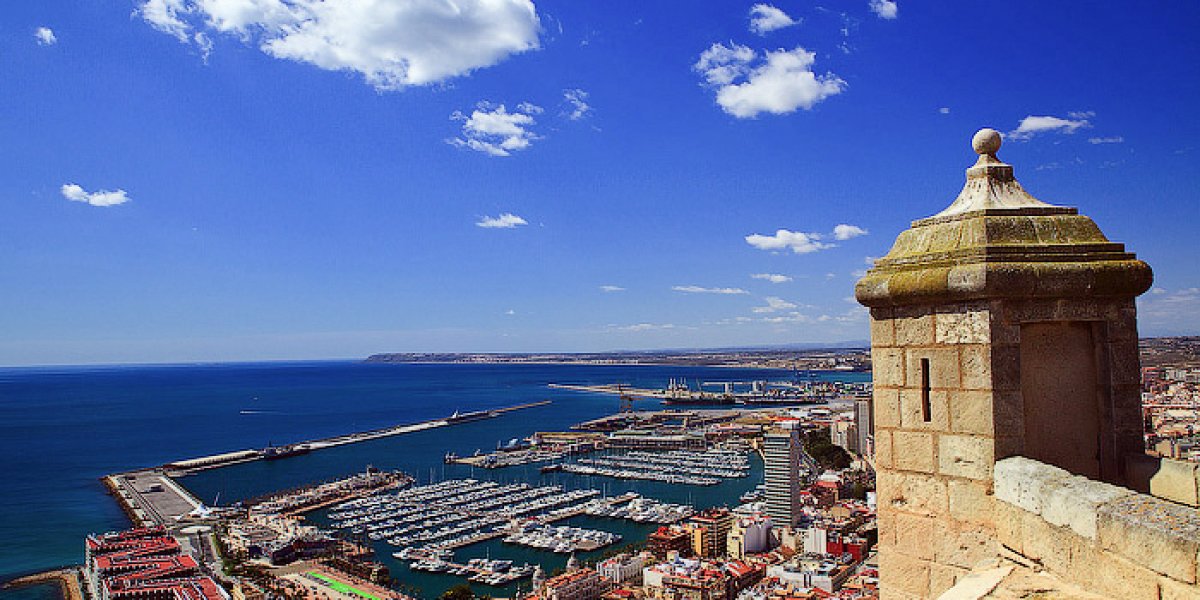
Begin at Parque de la Ereta on the old town's western flank and pick up the zigzag stone path that scales Mount Benacantil — Aleppo pines fall away behind you and the Mediterranean widens with every switchback. Climbing at nine means cool air, soft eastern light flooding the bay, and empty ramparts before the 10:30 tour buses spill out at the upper carpark. From the Macho summit at 166 m the entire Costa Blanca arcs in front of you: harbor, palm promenade, Postiguet beach, and the Aitana sierras behind.
Tip: Climb via the Ereta path (free, ~25 min through pines) rather than the elevator from Postiguet (€2.70 and a queue by 10am). For the postcard frame, walk past the main viewpoint to the southern Macho rampart — it captures the whole bay including the marina, which the front terrace can't.
Open in Google Maps →11:00
Religious
Descend the castle's eastern path back to Parque de la Ereta and slip into the lanes of El Barrio — 12 minutes downhill past whitewashed houses with blue-painted doors and bougainvillea spilling from balconies. The basilica sits on the city's oldest foundation, a converted 13th-century mosque hidden behind a high baroque facade. Late morning is when the worshippers have left, the side door swings open, and slanted sun lights the gold altarpiece without the harsh midday wash.
Tip: Free entry, but step inside and look up at the rose window immediately — Mudéjar geometry the renovated facade hides. Doors close at 13:00 sharp for siesta, so don't drift; the small Plaza Santa María outside is the prettiest tile-paved corner of El Barrio for a photo.
Open in Google Maps →12:30
Food
Two blocks south along Calle Mayor — three minutes, the lane narrows and the smell of vermouth pours from open doors. This is the locals' canned-fish temple, a marble counter under hanging hams where Alicantinos stop for a quick stand-up feed before the long lunch hour. Fast, sharp, salty, finished with a small Mistela — exactly the rhythm a layover needs.
Tip: Skip the printed menu and point at the cured fish behind the bar. Two musts: mojama de atún with Marcona almonds (€6) and anchoa del Cantábrico on toasted tomato bread (€4.50). Stand at the bar — table service adds 20% and the bar is where the regulars are; arrive at 12:30 sharp before the 13:30 local rush.
Open in Google Maps →14:00
Landmark
Cut down Calle Mayor to the seafront — seven minutes through Plaza del Ayuntamiento, where the rose-gold facade of the Town Hall opens onto the harbor. The promenade is a 500-metre ribbon of 6.6 million red, cream and black marble tiles laid in a wave pattern, framed by 1,400 date palms. Afternoon is when the sun cuts long shadows through the palms onto the wave, and the shoeshiners, accordion players and grandfather chess games come out — the city's social living room.
Tip: The wave pattern is designed to be read from above — climb the steps at the marina end and look back to see the full ripple. Skip the photo-menu cafés directly facing the palms; their prices are double the side streets, and locals never sit there.
Open in Google Maps →15:30
Park
From the marina end of the Explanada, follow the harbor edge east past the yachts — six minutes, then golden sand opens with Santa Bárbara Castle towering directly above you. This is the only city-center beach in Spain where you can swim with a medieval fortress looking down on your towel. Mid-afternoon the heat softens, the water turns that turquoise the postcards promise, and by 17:00 the western sun lights the castle face full-on for the iconic shot.
Tip: For the castle-reflected-in-wet-sand frame, walk to the eastern end near the Cabo de la Huerta rocks around 17:00 — the angle there strips out the high-rises behind. Showers and shaded benches are free at the central walkway; lockers (€5) by the lifeguard tower if you want to wander before dinner.
Open in Google Maps →19:30
Food
Walk back along the Postiguet palm promenade and turn inland at Calle Villegas — ten minutes from the beach. Open since 1971 and still the unanimous local answer for a proper Alicantino rice dinner: a copper-pan kitchen open behind the bar, white-jacketed waiters who've worked here for thirty years, and a wine list that quietly stocks the best Costa Blanca producers. This is the meal you remember on the flight home.
Tip: Reserve 3-4 days ahead for a table; otherwise arrive at 19:30 sharp and take the bar (no reservations, full menu, watch the croquetas being shaped). Order arroz a banda for two (€28/pp, 25 min wait — start with croquetas de gallina en pepitoria), one half-portion of gamba roja de Denia (€38, worth every euro), and the leche frita to finish. PITFALL: skip every photo-menu 'paella' joint along the Explanada and the Rambla — what arrives is yellow Valencia rice, often microwaved, and locals never eat there; real Alicante rice is the brown, fish-broth arroz a banda you just had.
Open in Google Maps →Aller au jour
09:00
Landmark
Begin at the Postiguet beachfront and walk into the pedestrian tunnel on Avenida de Jovellanos — a 3-minute approach past the palm-lined seawall to the free lift that punches up through 200m of limestone. The 9 AM opening means you climb the battlements in soft morning light, with the bay still untouched by the noonday haze. From La Torreta at the summit you'll see why the city's name comes from Arabic 'al-Laqant' — a place wrapped between mountain and sea.
Tip: Take the lift up (€2.70 each way) but walk DOWN through Parque de la Ereta on the south slope — the descent through cypress terraces gives you the postcard shot of the old town spread below, which you cannot get from the summit itself.
Open in Google Maps →11:30
Religious
From the lift exit at sea level, follow Calle Villavieja uphill into El Barrio's tangle of pastel facades — a 6-minute walk past hidden plazas where cats sun themselves on whitewashed steps. The basilica rises on the foundations of Alicante's main mosque, and entering by late morning means the sun is high enough to fire the gold of the 18th-century altarpiece without backlighting the rose window. The asymmetric twin towers betray that this church grew piece by piece across 400 years.
Tip: Look up at the carved Gothic tympanum above the main door before entering — most visitors push straight inside and miss one of the few medieval Valencian stone-carvings to survive 19th-century renovations.
Open in Google Maps →13:00
Food
Cut west from the basilica through Plaza Santa Faz and down Calle Mayor — a 5-minute stroll along Alicante's main commercial spine since the 16th century. Manero is the kind of place where Alicantinos eat standing up at the tiled bar; the brothers behind it source obsessively — tuna from Almadraba, anchovies from Santoña, mojama cured in-house.
Tip: Order the bonito en aceite con anchoa (€6.50) and the croqueta de bacalao (€2.80 each) with a glass of vermut casero (€3). Arrive by 13:00 sharp — by 13:30 there is no standing room and they do not take reservations.
Open in Google Maps →15:00
Religious
Two blocks south down Calle Labradores — a 4-minute walk through what becomes Alicante's tapas alley after dark, with chalkboard menus being set out as you pass. San Nicolás is the city's quietest masterpiece: a sober Herrerian-style co-cathedral built between 1616 and 1662 on the site of yet another former mosque. At 15:00 the side aisles are nearly empty, and the cloister's orange trees throw long stripes of shadow across the stone.
Tip: Don't skip the cloister entrance (door to the left of the main nave) — the Communion Chapel inside has a baroque cupola so over-the-top it feels like stumbling into another building entirely.
Open in Google Maps →17:30
Landmark
Exit the cathedral via the south door and walk down Calle Bilbao to the seafront — a 5-minute descent ending as the palm canopy of the Explanada opens in front of you. The famous wave-pattern mosaic — 6.5 million red, cream, and black marble tiles laid by hand in 1957 — only reveals itself fully when you walk the length of the promenade. At 17:30 the low western light brings out every color, and the local paseo crowd is just beginning its evening drift toward the port.
Tip: For the full mosaic shot, climb to the upstairs terrace of Heladería Borja on the inland side — from ground level the wave pattern is invisible. Ignore the human-statue performers along the central allée; tipping is expected and never agreed up front.
Open in Google Maps →20:30
Food
Walk back inland along Calle San Fernando — a 4-minute uphill into the heart of Alicante's dining street, lantern-lit and humming by 8 PM. María José San Román's flagship is where the city's rice tradition gets serious treatment: her arroz a banda uses Bombá rice with a fumet built from three kinds of rockfish, and her olive-oil program is studied by chefs from Madrid.
Tip: Order the arroz a banda for two (€26 per person, minimum two diners) and the salazones de atún (€18). Reserve at least 48 hours ahead — there are zero walk-in seats on weekends. Final-day pitfall: avoid the chalk-board 'menú turístico' spots along Rambla de Méndez Núñez and the marina outer ring — they serve reheated paella with frozen seafood and charge €18 sangrias; real Valencian rice is always 'por encargo' (made to order, 25-min wait minimum).
Open in Google Maps →10:00
Museum
From the city center, walk north along Avenida de Jovellanos and curve around the castle's lower slope to Plaza Doctor Gómez Ulla — a 12-minute walk that ends at the museum's glass-and-steel canopy. Arriving at 10:00 sharp means you have the Iberian and Roman halls almost to yourself for the first hour; school groups don't roll in until 11:30. MARQ took European Museum of the Year in 2004 because it doesn't just display objects — the recreated Iberian sanctuary, Roman insula, and 4th-century BC Bou Ferrer shipwreck do the contextual work no audio guide ever could.
Tip: Go straight to the underwater archaeology hall (room 4) first — most visitors take the chronological route and burn out before reaching it, but the recreated dive on the Bou Ferrer wreck off Villajoyosa is the museum's best ten minutes.
Open in Google Maps →12:30
Shopping
From MARQ, walk west down Avenida de la Estación through the Garbinet quarter — a 12-minute walk past 1930s modernist tile facades that ends at the market's neo-Valencian dome. The 1921 building is two floors of theater: marble countertops, glass cases of glistening prawns, jamón legs hanging like chandeliers above the salt-cured tuna stalls. At 12:30 the morning rush is over but every stall is still open — you can taste before you buy.
Tip: Find Salazones Diego (ground floor, stalls 84-86) for a free taste of mojama (cured tuna loin) and hueva de mújol (mullet roe) — both are Alicante specialties you won't see on a restaurant plate for less than €30.
Open in Google Maps →13:30
Food
Cross Avenida Alfonso el Sabio from the market's south door — a 2-minute walk to a place that looks like nothing from the street and a religion from inside. The original Sento on Calle Teniente Coronel Chápuli is a single L-shaped bar with no chairs, and the queue starts forming before 13:00.
Tip: Order the montadito de solomillo con foie (€3.50) and the montadito de pulpo a la brasa (€3.80) paired with a glass of house Mistela (€2). The secret is the hand-written 'media raciones' menu on the tiled side wall — half-portions not printed on the main card. Arrive at 13:30 exactly; by 14:00 it's a 40-minute wait.
Open in Google Maps →15:30
Park
Walk east along Calle Jorge Juan and cross through Plaza Puerta del Mar — a 12-minute stroll that ends as the palm-lined Paseo de Gómiz opens onto 900 meters of golden Mediterranean curve. Postiguet is the rare city beach worth the visit: Mount Benacantil's castle rises directly above the sand, and at 15:30 the south-facing afternoon light hits the cliff face full-on, throwing the fortress into sharp relief against the blue. This is the postcard angle locals use, not the one in the guidebooks.
Tip: Swim at the eastern end near the Puente Rojo footbridge — water is deeper and clearer there, away from the family pile-up at the central section. Showers are free; chair rentals from the chiringuitos are €5/day flat — never accept a higher quote.
Open in Google Maps →18:00
Landmark
Follow the seafront promenade west from Postiguet, past the breakwater anchors set as monuments — a 10-minute walk along the bay ending as the marina's white masts come into view. The boardwalk curves around the basin where the cruise ships dock, and at 18:00 the western sun gilds the hulls and the Volvo Ocean Race pavilion to the south. The Muelle de Levante widens into a row of mid-range terraces that local families fill on Sundays, while the cargo cranes of the working port stand silhouetted across the water.
Tip: Walk all the way to the Faro de las Salinas lighthouse at the marina's southern breakwater — almost no tourists go this far, but it's the only spot that frames castle, old town, and Mediterranean in a single shot.
Open in Google Maps →20:30
Food
Cut inland from the port through Plaza Puerta del Mar and up Calle Villegas — a 7-minute walk to Alicante's most decorated kitchen. Nou Manolín opened in 1971 and holds a permanent seat in the Spanish Academy of Gastronomy; chef José Antonio Romero's gambas rojas de Dénia and arroz con bogavante are the dishes that quietly ruin you for any other Valencian rice.
Tip: Book the downstairs 'barra de tapas' (not the upstairs dining room) — same kitchen, lower bill, and you can order half-portions. Must-order: gambas rojas de Dénia a la plancha (€42 for four — yes, worth it) and arroz seco de bogavante (€32 per person, 30-min wait, always made to order). Final-day pitfall: skip every restaurant on the Explanada with picture menus or staff hawking outside — they double-charge sangria, serve frozen seafood, and add a hidden 'servicio de mesa' fee that the consumer ombudsman receives complaints about every summer.
Open in Google Maps →
Trip builder
Plan this trip around Alicante
Turn this guide into a bookable rail itinerary with FlipEarth.
Keep exploring
Related cities
More in the same country
FAQ
Frequently asked questions
How many days do you need in Alicante?
Most travelers enjoy Alicante in 1 days, with enough time for headline sights and a slower meal or museum stop.
What's the best time to visit Alicante?
The easiest season for most travelers is May-Sep, especially if you want good weather and manageable crowds.
What's the daily budget for Alicante?
A practical starting point is about €95 per person per day before hotels, then adjust based on museums, dining, and transport.
What are the must-see attractions in Alicante?
A good first shortlist for Alicante includes Castillo de Santa Bárbara, Explanada de España.