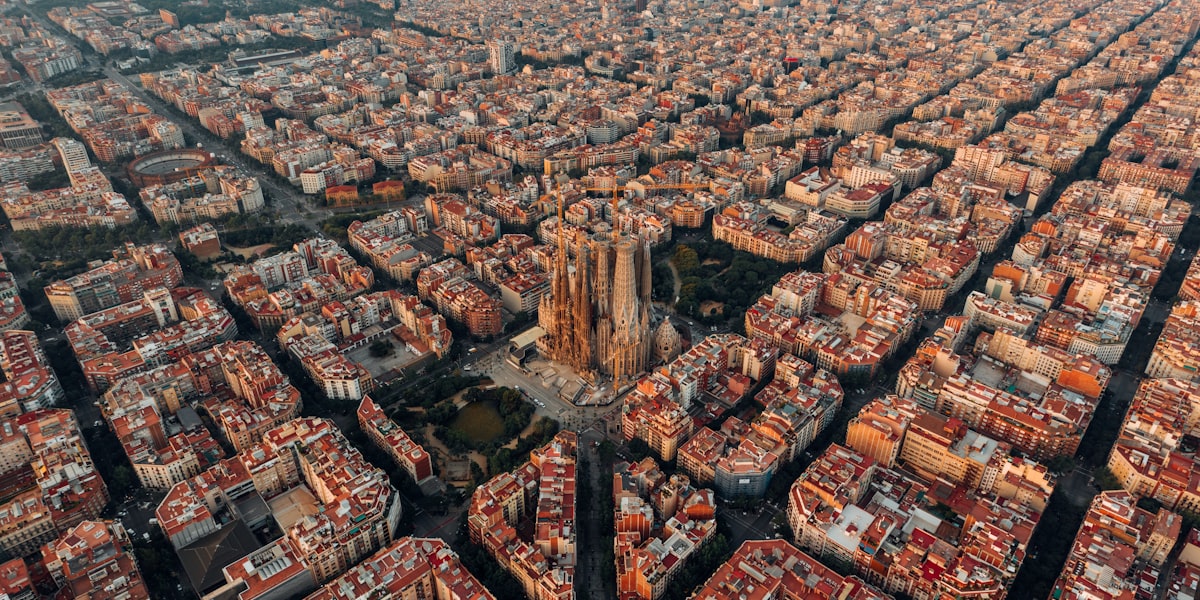
City Guide
Barcelona
Spain · Best time to visit: Apr-Jun, Sep-Oct.
Day-by-day plan
Choose your pace
Durée du voyage
09:00
Religious
Start at the masterpiece that defines Barcelona. Walk around all four facades — the ornate Nativity Facade (east) glows golden in morning sun, while the stark Passion Facade (west) sits in dramatic shadow. Cross to Plaça de Gaudí park for the iconic reflection shot in the pond. Even from outside, the sheer vertical ambition of these spires will stop you cold.
Tip: The reflecting pond in Plaça de Gaudí (across Carrer de la Marina) gives you the full Nativity Facade + spires + water reflection in one frame. Morning light is perfect — by afternoon this side falls into shadow. Walk counterclockwise: Nativity → Apse → Passion → Glory.
Open in Google Maps →11:00
Landmark
Walk 25 minutes southwest through Eixample's orderly grid — the chamfered corners and wide sidewalks are pure Barcelona. You'll hit Passeig de Gràcia, the city's grandest boulevard. Two blocks before Casa Batlló, you'll pass Casa Milà (La Pedrera) with its undulating stone facade — pause for a quick photo. Then Casa Batlló itself: dragon-spine roofline, skull-shaped balconies, iridescent mosaic tiles that shift color as clouds pass. This is Gaudí at his most playful.
Tip: Best photo angle: stand on the opposite sidewalk, slightly left of center — you can capture both Casa Batlló and its neighbor Casa Amatller together for the full 'Block of Discord' effect. If your flight is late, come back after dinner: the facade is illuminated at night and looks completely surreal.
Open in Google Maps →12:00
Food
Three minutes from Casa Batlló, turn onto Carrer de Mallorca. Skip every tourist restaurant on Passeig de Gràcia — this counter-bar is where Barcelona's office workers demolish tapas at lunch. Grab a stool at the bar, point at whatever looks good in the display case. Order the bomba (€3.50, a Catalan potato bomb with brava sauce and alioli — the crunch-to-cream ratio is perfect) and a plate of jamón ibérico croquetas (€9 for 6, molten inside). Wash it down with a caña of draft beer (€2.80). Budget €15–20 per person.
Tip: Arrive at noon sharp — you're eating two hours before the Spanish lunch rush, so the bar is half-empty. By 13:30 locals flood in and the wait begins. Eat at the bar counter for fastest service; tables have a longer wait.
Open in Google Maps →13:15
Neighborhood
Walk 15 minutes south through Plaça de Catalunya and dive into streets that are 2,000 years old. The sunlight barely reaches down here; the alleyways stay cool even in summer. Hit the key spots in order: Barcelona Cathedral's soaring Gothic facade, the atmospheric Plaça de Sant Felip Neri (its church walls still pockmarked with Spanish Civil War shrapnel), and the Pont del Bisbe — a neo-Gothic bridge that looks straight out of a fantasy novel. Let yourself get lost for a few turns; that's the whole point of this quarter.
Tip: Enter the Cathedral's cloister from the side door on Carrer del Bisbe — it's free and hides 13 white geese (one for each year of Santa Eulàlia's martyrdom). Most tourists walk right past. For the best Pont del Bisbe photo, stand at the far end of Carrer del Bisbe looking toward Plaça Nova so the bridge frames the narrow street perfectly.
Open in Google Maps →15:30
Landmark
Walk 20 minutes southeast through El Born — glance into its boutique-lined alleys — past the green lawns of Parc de la Ciutadella, and suddenly the Mediterranean opens up in front of you. Kick off your shoes. Afternoon sun is warm and front-lit on the water, turning everything gold. Walk south along the shore past the first crowded stretch until the W Hotel's sail-shaped silhouette rises at the far end of the beach — that's your shot. Sit on the sand, feel the breeze, let the city noise fade behind you.
Tip: The first 200m of beach from the metro exit is packed with tourists and hawkers — walk south past Hospital del Mar for breathing room. Beach showers are free; rinse off before dinner. Golden hour (roughly 18:00–19:00 in spring and fall) makes the W Hotel glow — face south for that shot.
Open in Google Maps →20:00
Food
Leave the beach and walk 7 minutes into Barceloneta's narrow residential streets — a different world from the waterfront. Can Solé has been here since 1903, feeding fishermen's families long before tourists discovered this neighborhood. The dining room is lined with old photos and maritime memorabilia. Order the arroz negro (squid ink rice, €18/person — jet black, intensely savory, it stains your teeth and you won't care) or the fideuà (Catalan noodle paella, €17/person — the crispy socarrat on the bottom is the best part). Budget €30–40 per person with wine.
Tip: Reserve 2–3 days ahead on their website or call +34 932 215 012 — walk-ins are risky on weekends. Avoid every single restaurant on Passeig de Joan de Borbó (the waterfront boulevard) — they are tourist traps serving €20 mediocre paella. Can Solé is one block inland but a universe apart in quality. Also: if anyone on Las Ramblas tried to hand you rosemary or rope you into a 'friendship bracelet', that was a scam — you were right to keep walking.
Open in Google Maps →Aller au jour
09:00
Park
Book the 9:00 slot — you'll walk into the monumental zone with the first group of the day, and for about thirty minutes the mosaic terrace is yours alone. Stand on the undulating bench of the Plaça de la Natura: the entire city unfolds below in a grid of rooftops that descends to the Mediterranean, and the morning sun from the east lights up every shard of broken ceramic like a kaleidoscope. The gingerbread gatehouses below look like they melted out of a fairy tale. Gaudí didn't build a park here — he built a fever dream that nature decided to finish.
Tip: Enter through the main gate on Carrer d'Olot — turn right immediately and go up the steps to the terrace. The first 30 minutes are golden for photos with no heads in frame. By 9:30 tour groups flood in. The salamander fountain ('El Drac') at the entrance staircase is the money shot, but shoot it on the way out when the crowd thins. Bus V32 from Alfons X metro or taxi — don't walk uphill, save your legs.
Open in Google Maps →11:00
Landmark
From Park Güell, walk downhill through the Gràcia neighborhood — 25 minutes of sloping streets lined with independent coffee shops and Catalan balconies hung with laundry (or take bus D40, 10 minutes). Book the 11:00 entry with Nativity Tower access. At this hour the morning sun pours through the east-facing stained glass of the Nativity facade, and the entire nave floods with blues, greens, and golds — the forest of branching stone columns becomes a living kaleidoscope. Look up: the ceiling is a canopy of hyperboloid flowers that makes Notre-Dame feel like a rehearsal sketch. Gaudí spent 43 years on this church and it still isn't finished. When it is, nothing will ever top it.
Tip: Buy the ticket with Nativity Tower access (€36) — the elevator takes you up into the spires where ceramic fruit finials are at arm's reach and the city sprawls below. Inside, go to the Nativity (east) side first while morning light floods the blue-green glass; by afternoon the magic shifts to the Passion (west) side. The €26 basic ticket skips the tower and you'll regret it. Book at sagradafamilia.org at least 2 weeks ahead — slots sell out.
Open in Google Maps →13:15
Food
From Sagrada Família's Nativity facade exit, walk straight down Carrer de Provença heading west — 25 minutes through the Eixample grid, and every intersection shows you the city's signature chamfered corners that turn crossroads into small octagons. This standing-room tapas bar has been a locals' canteen for decades and still packs in more Barcelona residents than tourists. The glass counter is piled with tapas arranged like jewels — point at what looks good. The mini hamburguesa de buey (beef slider, €4.50) is unreasonably delicious, the gamba al ajillo (garlic prawns, €14) comes sizzling in a clay dish, and a slice of jamón ibérico 5J (€18) will ruin you for all other ham. House wine €3. In and out under an hour.
Tip: No reservations — arrive at 13:00 (30 minutes before the local lunch rush) and grab bar seats, which turn over fastest. If the queue is more than 8 people, walk one block to Ciudad Condal (Rambla de Catalunya 18) — same owners, same quality, slightly bigger. Don't sit at the terrace tables; counter service is faster and you see the food being assembled.
Open in Google Maps →14:30
Landmark
From the restaurant, turn onto Passeig de Gràcia and walk 2 minutes south — you'll spot the building before you reach it: a facade of iridescent ceramic scales rippling like the skin of a dragon. This is Gaudí at his most delirious. The afternoon sun from the west catches the organic curves of the balconies, each one shaped like a skull or a Venetian mask. Inside, the AR-enhanced tour (included) fills rooms with butterflies and underwater creatures — theatrical, but it helps you see what Gaudí imagined. The central light well is lined with blue tiles that deepen in shade from top to bottom, mimicking how light behaves underwater. Not a single straight line in the entire building.
Tip: Book online at casabatllo.es — walk-up tickets cost €4 more and the queue wastes 30 minutes. After the visit, cross to the opposite sidewalk and step back 20 meters for the full facade photo. Next door, Casa Amatller has a beautiful Puig i Cadafalch facade worth a free glance — no need to pay to enter.
Open in Google Maps →16:15
Landmark
Walk 5 minutes up Passeig de Gràcia from number 43 to number 92 — this stretch is Barcelona's most elegant boulevard, and even the hexagonal pavement tiles under your feet were designed by Gaudí (sea urchins and starfish in concrete). La Pedrera's undulating stone facade looks like a cliff carved by Mediterranean waves. Take the elevator straight to the rooftop: the warrior-helmet chimneys stand in clusters against the sky like sentinels from another planet, and at this hour the late-afternoon sun turns them golden while their shadows stretch dramatically across the wavy floor. The attic level below has a catenary-arch gallery that explains Gaudí's structural genius better than any textbook.
Tip: The rooftop chimneys face southeast — shoot them in late afternoon for warm sidelight with long shadows. From the eastern edge you can see the Sagrada Família spires in the distance. The attic's parabolic arches are the least crowded part — most people rush to the rooftop and miss the best architecture lesson in Barcelona. Skip the apartment floor exhibit if short on time.
Open in Google Maps →20:30
Food
From La Pedrera, stroll south down Passeig de Gràcia — the designer storefronts are all lit up now and the boulevard feels completely different at night. Turn right into Carrer de la Diputació, 8 minutes on foot. This is chef Carles Abellan's casual masterstroke — his Michelin-starred Comerç 24 is gone, but the DNA lives on here. The McFoie Burger (foie gras patty in a brioche bun, €14.50) is the single most famous bar snack in Barcelona. The Bikini (truffle-infused ham and cheese toastie, €13) is obscenely good for something that simple. Bomba (fried potato ball with spicy sauce, €6) is classic Barceloneta street food elevated. Budget €25–35 per person with wine.
Tip: Arrive at 20:30 to grab a bar seat before the 21:00 local dinner wave. Don't over-order — portions are bigger than typical tapas. Avoid restaurants with glossy photo menus on Passeig de Gràcia — they charge double for half the quality. The men approaching with 'friendship bracelets' or roses on the boulevard at night are running a known scam; a firm 'no gracias' is enough.
Open in Google Maps →09:00
Religious
Morning mass is winding down and the cathedral is nearly empty — light from the clerestory windows falls in quiet columns across the Gothic nave. Enter free before 12:30 (after that it's €9 tourist entry). The real treasure is the cloister: a medieval garden with palm trees, a mossy fountain, and 13 white geese wandering freely — they've been kept here since the Middle Ages, one for each year of the life of Saint Eulàlia, Barcelona's patron saint who was martyred at age 13. Her alabaster tomb glows in the crypt below the altar. This isn't a tourist attraction yet — it's still a neighborhood church where elderly locals come to light candles.
Tip: Enter through the main Pla de la Seu entrance and go left immediately to the cloister before guided groups arrive at 10:00. The rooftop terrace (€3 separate ticket, elevator) gives a panorama of Gothic Quarter rooftops and a distant sea view — worth it if you skipped the Sagrada Família tower yesterday, skip it if you didn't.
Open in Google Maps →10:15
Neighborhood
Walk out of the cathedral's main door and turn left into Carrer del Bisbe — the neo-Gothic 'Bridge of Sighs' overhead is Barcelona's most photographed detail, and at this hour the sun carves a sharp diagonal of light across the stone. Follow this route: Carrer del Bisbe → Plaça Sant Felip Neri (a tiny square where the church wall still bears shrapnel scars from a 1938 Civil War bombing — the silence here is deafening) → Plaça del Rei (the medieval royal palace courtyard where Columbus reportedly presented New World treasures to Queen Isabella) → Carrer del Paradís 10 (push open the unmarked door to find four Corinthian columns from the 2,000-year-old Roman Temple of Augustus standing in a random apartment courtyard). Every lane is two shoulder-widths wide, and every turn reveals another century.
Tip: The Temple of Augustus at Carrer del Paradís 10 is free, open 10:00–19:00, and 90% of visitors have no idea it exists — the most underrated ancient site in Barcelona. Avoid the 'living statue' performers on Las Ramblas (a two-minute detour south) — they charge after you photograph them and the street is pickpocket central. Walk past, don't stop.
Open in Google Maps →12:00
Food
Cross Via Laietana heading east — five minutes through the narrow streets and you enter El Born, the neighborhood that was Barcelona's medieval merchant quarter and is now its coolest food-and-design district. Walk down Carrer de Montcada, past the Picasso Museum entrance, and you'll see the blue-tiled facade of this tiny tavern that's been pouring since 1929. The house xampanyet (a slightly sweet, lightly sparkling house wine, €2.50 a glass) is poured from a porcelain tap behind the bar — not cava, their own recipe, dangerously drinkable. Pair it with anchoas del Cantábrico (Cantabrian white anchovies on bread, €8 — silver, clean, perfect) and a plate of jamón ibérico (€12). Stand elbow to elbow with old-timers from the neighborhood. Budget €15–22.
Tip: Opens at 12:00 sharp — arrive at 11:55 and you'll be among the first five at the bar. By 12:30 it's standing room only with a queue out the door. Closed Sunday evenings and all day Monday. The anchoas are non-negotiable: if sold out, get the boquerones en vinagre instead. No table service, no pretension, no English menu — point and smile.
Open in Google Maps →13:30
Religious
Step out of El Xampanyet, turn left on Carrer de Montcada and walk two minutes south — the church appears at the end of the street like a stone ship anchored in the neighborhood. This is the anti-Sagrada Família: no decoration, no excess, just pure space and light. The octagonal pillars rise 26 meters in clean verticals, spaced 13 meters apart — the widest nave span in any medieval church in Europe. Every stone was carried on the backs of port stevedores, block by block, between 1329 and 1383. Afternoon light from the south windows fills the interior with warm amber. The novel 'Cathedral of the Sea' made this church famous, but the silence and proportion do all the talking.
Tip: Free entry (donation box at the door). The best photo is dead center at the entrance — shoot straight up to capture the octagonal columns converging at the vault. The small square in front (Fossar de les Moreres) has an eternal flame for Catalan independence — locals treat it as sacred ground, be respectful. If the guided rooftop tour (€10) is running, it's worth it for the view.
Open in Google Maps →15:00
Landmark
From the church, walk south through Passeig del Born — the tree-lined promenade that was Barcelona's medieval jousting ground — then cut through the southwest corner of Parc de la Ciutadella. The Cascada Monumental fountain (young Gaudí helped design it) is worth a 2-minute detour. Continue south 15 minutes total and the Mediterranean opens up. After a morning of medieval stone corridors, the sudden expanse of blue sky and sea is the most dramatic scene change Barcelona offers. Kick off your shoes, walk the waterline, and breathe. The Barceloneta neighborhood behind the beach is a grid of narrow fishermen's streets with laundry overhead — more authentic than anything on Las Ramblas.
Tip: Walk past the main beach toward the W Hotel (sail-shaped building to the southwest) — Sant Sebastià beach is half as crowded. The boardwalk (Passeig Marítim) is the best sunset walk in the city if you stay until 19:00. Do NOT leave valuables on the sand — beach theft in Barceloneta is constant and organized. Carry only phone and a little cash.
Open in Google Maps →20:30
Food
Walk north along the Passeig de Joan de Borbó waterfront promenade — 10 minutes from the beach, yacht masts on one side, old port buildings on the other. This is one of the only serious seafood restaurants on this tourist-heavy boulevard, run by a chef who actually knows what he's doing. The arroz negro (squid-ink rice with cuttlefish and aioli, €16) turns your lips black and your mood ecstatic — the rice crust at the bottom is toasted exactly right. The fideuà (short pasta cooked paella-style with prawns, €15) is the local alternative to paella and arguably better. Glass of Albariño, €5. End your Barcelona trip the way the city ends: where the stone meets the sea.
Tip: Reserve online for a terrace table facing the port — sunset light over the harbor is the final gift. Order arroz negro over paella (paella is Valencian, not Catalan — and most 'paella' on this street is frozen reheated tourist bait). Joan de Borbó is lined with hawker seafood restaurants with laminated photo menus — walk past every single one. La Mar Salada and nearby Kaiku are the only two worth your money on this strip.
Open in Google Maps →Aller au jour
09:00
Religious
The morning sun pours through the east-facing Nativity stained glass, turning Gaudí's forest of stone columns into a kaleidoscope of blues and greens — a spectacle only visible before noon. Book the Nativity Tower add-on for spiral staircase views over the Eixample grid stretching to the sea. This is the building that will make you believe one man can change a city.
Tip: Book the 9:00 slot online at least 2 weeks ahead. Enter from the Nativity facade side (Carrer de la Marina) — shorter queue. Best photo spot: stand inside looking up at the tree-column canopy around 10:00 when sunlight hits the east windows at full intensity, casting rainbow light pools across the floor.
Open in Google Maps →12:00
Food
Walk from Sagrada Família along Carrer de Mallorca for 20 minutes, passing elegant Eixample apartment blocks with ornate modernist balconies — the chamfered corners at every intersection are pure Barcelona. This tapas bar is where office workers come for lunch: squeeze up to the marble counter for patatas bravas with ali-oli and brava sauce (5€), crispy jamón ibérico croquetas (3€ each), and gambas al ajillo sizzling in garlic oil (14€). Budget 20–30€ per person.
Tip: Arrive at 12:00 sharp — by 12:30 the queue spills onto the sidewalk for 30+ minutes. Sit at the bar counter for the full experience and fastest service; the dining room is slower and has no atmosphere. The bomba (potato bomb, 3.50€) is the hidden star — ask for it if you don't see it on display.
Open in Google Maps →13:30
Landmark
From the restaurant, walk 3 minutes south to Passeig de Gràcia — Barcelona's grandest boulevard. Casa Batlló's facade looks sculpted from dragon bones and sea foam; inside, Gaudí's genius for organic form peaks: walls that breathe like gills, windows shaped like turtle shells, a rooftop crowned with a dragon's spine. The AR guide brings every room to life, and afternoon light makes the iridescent tiles shimmer.
Tip: Buy the 'Blue' ticket online for full access including the AR experience — walk-up is 5€ more. The inner courtyard light well, tiled in deepening shades of blue from top to bottom, is the most photographable spot — shoot looking straight up. Save the rooftop for last: late afternoon light makes the ceramic dragon spine glow gold.
Open in Google Maps →15:30
Landmark
Stroll 5 minutes north on Passeig de Gràcia past luxury boutiques. La Pedrera's undulating stone facade was so radical in 1912 that locals mocked it as 'the quarry.' The real magic is on the roof: a surreal landscape of helmeted warriors — actually ventilation shafts — that reportedly inspired Star Wars. The Espai Gaudí attic with its parabolic brick arches reveals the engineering genius behind the beauty.
Tip: Head straight to the rooftop before crowds build — the 'warrior selfie' shot is from the southwest corner with the Eixample grid behind you. Golden hour (16:00–17:00 in spring) casts dramatic shadows across the chimney sculptures. The ground floor courtyard is free to peek into — worth a quick look even without a ticket.
Open in Google Maps →20:00
Food
Walk 8 minutes west from La Pedrera along Carrer de Provença — the tree-lined sidewalks fill with locals heading out for the evening. Paco Meralgo is where Barcelona goes for serious seafood tapas, far from any tourist radar. Order gambas de Palamós a la plancha (Palamós red prawns grilled simply, 18€ — the sweetest prawns in the Mediterranean), croquetas de jamón (2.50€ each), and pulpo a la gallega (Galician octopus with paprika, 16€). Budget 30–45€ per person.
Tip: Arrive at 20:00 when doors open — by 20:30 every seat is taken. Sit at the bar counter to watch the kitchen work. Don't order the mixed seafood platter — that's for tourists. Order individual species: the Palamós prawns are non-negotiable. Avoid any restaurant on Passeig de Gràcia with a greeter outside — they are tourist traps charging double for half the quality.
Open in Google Maps →09:00
Neighborhood
Barcelona's medieval heart wakes up slowly — arrive at 9:00 and the labyrinth is yours. Enter via Plaça Nova, step into the Cathedral (free before 12:30) to find 13 white geese in the cloister honoring Saint Eulalia's martyrdom. Then lose yourself: the Roman Temple of Augustus hides in a courtyard on Carrer del Paradís, Civil War bomb scars still mark the church wall at Plaça Sant Felip Neri, and at Plaça Reial — just off La Rambla — Gaudí's very first public commission, a pair of lampposts, still stands among the palm trees.
Tip: Enter the Cathedral cloister from the side door on Carrer del Bisbe for the geese garden — most tourists miss it. The Roman Temple of Augustus (Carrer del Paradís 10) is free and unsigned: look for the small doorway next to the Centre Excursionista de Catalunya. Arrive at Plaça Sant Felip Neri before 10:00 to have the square to yourself — after 11:00 tour groups fill it.
Open in Google Maps →11:30
Museum
Walk east through Carrer de la Princesa for 10 minutes — the streets narrow and the vibe shifts from medieval to bohemian as you cross into El Born. Five connected medieval palaces on Carrer de Montcada house over 4,000 Picasso works. Focus on the Las Meninas series in Room 15: 58 paintings where Picasso systematically deconstructs Velázquez's masterpiece. You'll understand that he mastered every rule before breaking them.
Tip: Book online — walk-up often sells out by noon. Thursday evenings 18:00–21:30 are free but mobbed. Skip temporary exhibitions and spend your time on the permanent collection. The courtyard of Palau Aguilar (first palace) is a hidden gem — look up at the Gothic arches before entering the galleries.
Open in Google Maps →13:15
Food
Step out of the museum and turn right — El Xampanyet is 30 seconds away on the same Carrer de Montcada. Unchanged since 1929: blue-and-white tiled walls, wine barrels behind the counter, old men arguing about Barça. Order their house cava poured from the barrel (2.50€/glass), anchoas de la casa cured in-house (8€ — meaty, nothing like canned anchovies), and a plate of jamón ibérico (12€). Budget 15–25€ per person.
Tip: Closed Sunday and Monday — plan accordingly. Arrive by 13:00 to grab a spot at the bar; by 13:30 it's standing room only. Don't ask for a menu — point at what others are eating or ask the bartender what's good today. The anchoas are the star; order them first before they run out.
Open in Google Maps →14:30
Religious
Walk through Passeig del Born — a tree-lined promenade where medieval jousting tournaments were once held — for 5 minutes. Built by dock workers and merchants in just 54 years (a medieval speed record), Santa Maria del Mar achieves a purity of proportion the grander Cathedral cannot match: columns rise like ship masts to a canopy of stone ribs, and afternoon light through the western rose window fills the nave with amber. After visiting, stroll toward the waterfront through Parc de la Ciutadella and spend 30 free minutes at Barceloneta beach with the Mediterranean.
Tip: Free entry to the main nave. The rooftop tour (10€, book online) offers stunning views of El Born's medieval rooftops and the sea — worth it if your legs are willing. On the walk to the beach, peek into the Born Cultural Centre (the old market hall with exposed 18th-century ruins beneath a glass floor) — free and fascinating.
Open in Google Maps →20:00
Food
From Barceloneta beach, follow the waterfront promenade along Passeig d'Isabel II for 15 minutes — the Mediterranean fades behind you as grand 19th-century arcades appear ahead. 7 Portes has fed Barcelona since 1836: Hemingway, Dalí, and every Catalan president have eaten under these vaulted ceilings. Order the Paella Parellada (their signature: all seafood shells removed so you just eat, 23€) or the dramatic Arròs negre (squid ink rice that stains your lips black, 22€). Budget 35–50€ per person.
Tip: Reserve 2–3 days ahead and request a window table with port views. The Parellada paella is the dish that made them famous — don't overthink it, just order it. Skip dessert here; walk to the waterfront for gelato instead. Avoid every restaurant on Passeig de Joan de Borbó (Barceloneta's waterfront boulevard) — they are tourist traps with mediocre €20 paella. Also: if anyone on La Rambla offers rosemary or a 'friendship bracelet,' keep walking — it's a scam.
Open in Google Maps →09:00
Park
Take metro L3 to Vallcarca and walk uphill 10 minutes through quiet residential streets (or taxi directly to the entrance). The Monumental Zone glows in morning light: Gaudí's mosaic terrace with the serpentine bench frames the entire city and Mediterranean below, gingerbread gatehouses guard the entrance, and the famous mosaic salamander watches every visitor pass. Every surface erupts with broken-tile trencadís — this is Gaudí at his most joyful and childlike.
Tip: Book the 9:00 slot online — by 10:30 tour buses arrive and the terrace is shoulder-to-shoulder. Best panorama photo: not from the mosaic bench (too crowded) but the upper terrace behind it — bench + city + sea in one frame. After the paid zone, walk up to the free area's Turó de les Tres Creus (Hill of Three Crosses) for the park's highest viewpoint.
Open in Google Maps →11:30
Neighborhood
Walk downhill from Park Güell for 15 minutes through quiet residential streets — bougainvillea tumbles over balconies and old men play chess in doorways. Vila de Gràcia was an independent village until 1897 and still feels like its own little town. Linger in Plaça del Sol's café terraces, pass the 33-meter clock tower at Plaça de la Vila de Gràcia, and find Plaça del Diamant immortalized in Mercè Rodoreda's novel. No agenda — just absorb the most authentic neighborhood in Barcelona.
Tip: Gràcia hosts Barcelona's most spectacular street festival (Festa Major de Gràcia) in mid-August — residents compete to decorate each street with the most creative theme. Even now, the creative DNA is everywhere: indie boutiques, vinyl shops, street art. Plaça del Sol faces south — morning keeps it peaceful, afternoon sun makes it perfect for coffee.
Open in Google Maps →12:30
Food
From Plaça del Sol, walk 3 minutes west on Carrer de Còrsega. La Pepita is a shoebox-sized tapas bar with walls covered in Post-it love notes from regulars — Gràcia's worst-kept secret. The pepito de ternera (grilled beef sandwich with caramelized onions, 9€) is legendary; pair it with patatas bravas trufadas (truffle-oil bravas, 7€) and a glass of house vermouth on tap (4€). Budget 15–25€ per person.
Tip: Opens at 12:30 for lunch — arrive right at opening. By 13:00 the queue stretches down the street. No reservations accepted. The pepito is the move — don't get creative, trust the house specialty. Grab a Post-it from the bar and write something on the wall — it's tradition.
Open in Google Maps →14:00
Landmark
Walk 25 minutes east through the residential Eixample — or take metro L4 from Joanic to Sant Pau | Dos de Maig (two stops). Barcelona's best-kept architectural secret: 27 Art Nouveau pavilions by Lluís Domènech i Montaner, Gaudí's contemporary and rival. Each pavilion bursts with stained glass, mosaic, and sculpture — with none of the Gaudí crowds. The underground tunnels connecting the buildings feel like walking through a jewel box. Domènech's genius deserves the same reverence as Gaudí's.
Tip: The English guided tour (included in ticket) runs every hour and is excellent — worth timing your arrival for it. Best photo: the main hall of the Administration Pavilion, where stained glass and ceramic ceiling together create a jaw-dropping canopy. After the visit, walk 10 minutes south down Avinguda de Gaudí — a pedestrian avenue with Sagrada Família perfectly framed at the far end. Grab a coffee and sit with that view.
Open in Google Maps →20:00
Food
After a free afternoon strolling down Avinguda de Gaudí (Sagrada Família framed at the end), take metro from Sagrada Família to Diagonal (L5, 10 minutes) and walk 5 minutes up Gran de Gràcia for your farewell dinner. Botafumeiro has been Barcelona's temple of Galician seafood since 1975 — white-jacketed waiters wheel carts of live shellfish past your table. Order percebes (goose barnacles, market price ~45€ — alien-looking creatures with the purest Atlantic flavor, a once-in-a-lifetime bite) and pulpo a feira (Galician octopus with paprika and olive oil, 24€). Budget 50–70€ per person.
Tip: Reserve 3 days ahead for a 20:00 table — this is your farewell dinner, worth the splurge. Don't be intimidated by prices: sharing 2–3 shellfish plates between two people is perfectly fine. The live shellfish cart is the show — ask the waiter what's in season. Skip cooked fish mains; simply prepared shellfish is why you're here. When leaving, keep your phone in your pocket — motorbike phone-snatching occasionally happens on Barcelona streets at night.
Open in Google Maps →Aller au jour
09:00
Religious
Book the 9:00 slot — you'll enter with the first wave and have 20 minutes of near-empty nave before tour groups flood in. Morning light pours through the east-facing stained glass, painting the forest of columns in shades of warm gold and green. Take the Nativity Tower elevator up for a dizzying view through the stone latticework, then spiral down the narrow staircase.
Tip: Buy tickets on the official website at least 2 weeks ahead — they sell out. Choose 'Nativity Facade tower' over Passion: the carvings are more intricate and the descent staircase has better photo angles. Skip the museum in the basement if short on time.
Open in Google Maps →12:00
Food
Take the L2 metro from Sagrada Família two stops to Passeig de Gràcia, then walk 10 minutes east into the Eixample grid — you'll pass rows of ornate modernista apartment balconies. This is not a restaurant in the traditional sense: you queue at a fish-market counter, point at the shellfish and fish you want, choose how it's cooked, pay by weight, and they bring it to your table sizzling. No pretension, just the best seafood bang for your buck in Barcelona.
Tip: Arrive at 12:00 sharp — locals come at 13:30 and the queue wraps around the block. Must-order: razor clams (navajas) grilled, €12/portion, and a half-kilo of gambas al ajillo. Total per person around €18-25.
Open in Google Maps →13:30
Neighborhood
Walk south down Carrer del Bruc toward Via Laietana, about 15 minutes, the Eixample's wide avenues gradually narrowing into medieval alleyways. Lose yourself in the Gothic Quarter — this is not a single sight but a labyrinth of stone. Start at Plaça de Sant Felip Neri, the small square with bullet-scarred walls from the Civil War, then wind through to the Cathedral of Barcelona cloister (free entry, look for the 13 white geese in the garden). Find the ancient Roman temple columns hidden inside a residential courtyard at Carrer del Paradís 10. Afternoon light cuts dramatic shadows through the narrow lanes — perfect for photography.
Tip: Carrer del Paradís 10 (Temple of Augustus) is free and unsigned — push the heavy wooden door open, it's a public building. Cathedral cloister: enter via the side door on Carrer del Bisbe, not the main facade queue. Avoid the overpriced restaurants lining Plaça Reial — walk one block deeper into the quarter for authentic spots.
Open in Google Maps →16:30
Religious
From the Cathedral, walk 8 minutes east through Carrer de l'Argenteria — this street was medieval Barcelona's silversmiths' quarter, now lined with independent boutiques. Enter Santa Maria del Mar, the 'people's cathedral' built in just 54 years by dockworkers and sailors. Unlike the ornate Gothic Cathedral, this church stuns with its austere, soaring space — the widest nave span of any medieval church in Europe. Late afternoon light through the rose window fills the interior with a warm amber glow.
Tip: Free entry for worship visits. The paid rooftop tour (€10) is worth it only on clear days — you walk across the top of the vaulted ceiling with views to the port. Best photo spot: stand at the main entrance looking down the full length of the nave.
Open in Google Maps →20:30
Food
Just 3 minutes on foot from Santa Maria del Mar, on Plaça de les Olles. Stroll through the Born neighborhood as the streetlights come on and the tapas bars start buzzing. Cal Pep has been serving the best bar-counter tapas in Barcelona since 1989. There's no menu decision to stress over — sit at the bar, tell Pep's team you trust them, and let the kitchen send out whatever is best today. Expect fried baby squid, clams in white wine, and the legendary tortilla.
Tip: No reservation for bar seats — queue from 19:30, you'll get a spot by 20:15. Bar is better than the dining room (you watch the cooks). Must-eat: fried artichokes (€9), gambas with garlic (€14), tortilla (€8). Budget €35-45/person with wine. Closed Sundays and Monday lunch.
Open in Google Maps →09:00
Landmark
Book the 'First Visit' 9:00 slot — you enter before general admission and have the main floor nearly to yourself. Casa Batlló is Gaudí at his most playful: the facade ripples like the sea, the interior flows with organic curves, and the light well is tiled in deepening shades of blue as you descend, mimicking an underwater dive. The AR guide is actually good — it overlays Gaudí's inspirations onto the rooms. End on the dragon-spine rooftop with the city spreading below.
Tip: The 'First Visit' ticket (€39) includes a drink on the rooftop and 30 min of crowd-free access — worth the €4 premium over standard. Best photo: the main salon window from inside, with the Passeig de Gràcia distorted through the wavy glass.
Open in Google Maps →10:45
Landmark
Exit Casa Batlló and turn right on Passeig de Gràcia — a 5-minute stroll past luxury storefronts brings you to Casa Milà, the building locals call 'La Pedrera' (the quarry) because of its rough-hewn stone facade. Start on the rooftop: the warrior-shaped chimneys against the blue sky are the single most photographed Gaudí image. Then descend through 'The Whale' attic — a parabolic arch space that feels like standing inside a ribcage. The apartment floor shows how a bourgeois family lived inside Gaudí's wild imagination.
Tip: Go to the rooftop first while morning light is soft — by noon it's harsh and the chimneys lose dimension in photos. The 'La Pedrera Night Experience' (evening light show on the rooftop) is magical but book separately. Buy combo tickets for Batlló + Milà on either official site for a small discount.
Open in Google Maps →12:45
Food
From La Pedrera, walk 5 minutes back down Passeig de Gràcia and turn left onto Carrer de Mallorca — you'll pass the elegant Eixample block interiors with their hidden gardens. This is the tapas bar where off-duty chefs eat. The glass counter displays 30+ pintxos (Basque-style tapas on bread) in a visual feast. Point at what looks good, or order from the menu — either way you can't go wrong.
Tip: Arrive before 13:00 — by 13:30 there's a 40-minute wait. Sit at the bar, not a table. Must-order: mini hamburguesas (€4 each), grilled prawns (gambas a la plancha, €16), and patatas bravas (€6). Pair with a cold Estrella Damm draft. Budget €22-28/person.
Open in Google Maps →14:30
Landmark
Take the metro L4 from Passeig de Gràcia one stop to Guinardó, or walk 20 minutes northeast up Avinguda de Gaudí — a pedestrian boulevard with the Sagrada Família framed perfectly at the far end, lined with cafés and plane trees. This UNESCO site is Barcelona's best-kept secret: a former hospital designed by Lluís Domènech i Montaner, Gaudí's rival and teacher. The complex is a city within a city — 27 pavilions connected by underground tunnels, every surface covered in mosaics, stained glass, and sculptural flourishes. You'll likely have entire pavilions to yourself.
Tip: Get the self-guided audio tour (included in ticket). Don't miss the underground tunnels connecting the pavilions — they're cool in temperature and atmosphere. The main pavilion's ceiling is the highlight: look straight up. Less than 1/10 the visitors of Sagrada Família and arguably as beautiful.
Open in Google Maps →20:30
Food
Take the metro back to Diagonal and walk 5 minutes into the Gràcia neighborhood — notice how the vibe shifts: indie record shops, hand-painted bar signs, and locals chatting on tiny squares. La Pepita is a neighborhood tapas bar that has been perfecting modern Catalan small plates for over a decade. The walls are covered in handwritten notes from regulars. Inventive flavor combinations with zero pretension.
Tip: Their signature 'pepito' sandwiches (€8-12) are legendary — try the one with brie, caramelized onion and ibérico ham. Also order the smoked sardine tataki (€10) and patatas bravas with alioli (€7). Arrive at 20:00 to snag a table; by 21:00 it's standing room only. Budget €25-32/person with drinks.
Open in Google Maps →08:30
Park
Book the 8:30 first entry slot. Take a taxi (€10 from Eixample) or bus 24 to the side entrance on Carretera del Carmel — this avoids the steep uphill walk from the main entrance. Morning light bathes the mosaic terrace in soft warm tones, and you'll share the space with maybe 30 people instead of 300. The serpentine mosaic bench on the main terrace is the icon, but walk deeper into the park's free zone: the stone viaducts with their leaning columns look like a forest turned to stone. The city-to-sea panorama from the terrace is the best viewpoint in Barcelona.
Tip: The ticket only covers the 'Monumental Zone' (mosaic terrace + Gaudí house). The rest of the park is free and actually more atmospheric. Don't waste time on the Gaudí House Museum inside the park — it's small and the real Gaudí houses (Batlló, Milà) are far more impressive. Best photo: sit on the mosaic bench with the city behind you, shot from the far right end of the terrace.
Open in Google Maps →11:00
Landmark
Take bus 24 back down the hill to Gràcia, or walk 20 minutes downhill through the quiet residential streets of upper Gràcia — laundry hanging between balconies, old men playing cards outside bars. This neighborhood market is where Gràcia residents have shopped for a century. No tourists, no souvenirs — just butchers, fishmongers, cheese stalls, and a couple of tiny bars tucked between the stands where you can eat a vermouth and some olives standing up at 11am like a local.
Tip: Buy some Manchego cheese (ask for 'curado', €3/wedge), Marcona almonds, and a slice of coca bread to picnic later. The small bar 'Bar del Mercat' inside has excellent vermouth on tap (€2.50). Market closes at 14:30 and all day Sundays.
Open in Google Maps →12:30
Entertainment
From the market, walk 10 minutes south through Gràcia's charming Plaça del Sol — this square is the heart of the neighborhood's nightlife, now peacefully sunlit at midday. The cooking school is in a converted apartment near Fontana metro. You'll make pa amb tomàquet (the bread-and-tomato ritual that starts every Catalan meal), a proper seafood fideuà (like paella but with short noodles — locals actually prefer it to paella), and crema catalana for dessert. Then sit down and eat everything you just made with Catalan wine.
Tip: Book 'bcnKITCHEN' or 'Cook & Taste Barcelona' — both are run by real chefs (not actors), class size 6-10. The session includes market shopping, cooking, and a full lunch with wine. Book at least 5 days ahead. This replaces a separate lunch — you'll be very full by 16:00.
Open in Google Maps →17:00
Neighborhood
Step out of the cooking class into the golden hour of Gràcia. This former independent village (annexed by Barcelona in 1897) still has its own fiercely local identity. Wander from plaza to plaza — Plaça de la Vila de Gràcia with its clock tower, Plaça de la Virreina with its church, Plaça del Diamant made famous by Mercè Rodoreda's Civil War novel. Browse the vintage shops on Carrer de Verdi, peek into artisan studios, stop for a cortado at whatever café has the best-looking terrace. This isn't sightseeing — it's neighborhood living.
Tip: If you're here in mid-August, the Festa Major de Gràcia transforms every street into an insanely decorated competition — residents spend months building themed decorations. Carrer de Verdi has the best vintage shopping. For a cortado, try 'Federal Café' on Carrer del Parlament — but any plaza terrace will do.
Open in Google Maps →21:00
Food
Walk 5 minutes to Carrer Gran de Gràcia — the neighborhood's main artery comes alive after dark with locals pouring out of apartments for their evening paseo. Botafumeiro is a Galician-Catalan seafood institution — white-jacketed waiters, towers of shellfish on crushed ice, and a raw bar that rivals anything in Lisbon. This is your one splurge dinner. Dress slightly up, order the percebes (goose barnacles) if you're feeling brave, and let the somelier pair a Rías Baixas Albariño.
Tip: Reserve 2 days ahead for a table — call directly, their online system is unreliable. Must-order: Galician-style octopus (pulpo a feira, €22), percebes (goose barnacles, market price ~€30), and grilled turbot (rodaballo, €28). Budget €55-75/person with wine. This is a local institution, not a tourist trap — you'll see Catalan families celebrating around you.
Open in Google Maps →09:30
Museum
Book the 9:30 slot online. The museum occupies five connected medieval palaces on Carrer de Montcada — the most beautiful street in the Born quarter, where 14th-century merchants built their mansions. This isn't a greatest-hits Picasso show; it's the story of how a teenage genius absorbed Barcelona and began to explode traditions. The 'Las Meninas' series room — 58 furious reinterpretations of Velázquez — will change how you see both painters. The progression from academic skill to radical invention happens before your eyes.
Tip: Free entry on the first Sunday of every month (but arrive at 9:00 and expect a long queue). The permanent collection is the real draw — skip the temporary exhibition if short on time. Room 12 (Las Meninas series) is unmissable. The museum's courtyard cafés are overpriced; get coffee after at one of the Born quarter's side-street bars.
Open in Google Maps →12:30
Food
Step out of the Picasso Museum and turn left — El Xampanyet is literally 30 seconds away on the same street. This tile-walled cava bar has been pouring house-made sparkling wine since 1929. The blue-and-white tiled interior hasn't changed in decades. Stand at the bar elbow-to-elbow with locals, drink the house cava from small tumblers, and eat anchovies straight from the tin — this is old Barcelona at its most authentic and unpretentious.
Tip: Cash only. The house cava (€2.50/glass) is surprisingly good. Order: anchovies (anxoves, €5), pan con tomate (€3), and a plate of Ibérico ham (€12). Don't eat too much — keep room for a proper lunch or late-afternoon snack. Closed Mondays and Sunday evenings.
Open in Google Maps →14:00
Neighborhood
Walk south from Born through the narrow streets of Barceloneta — this former fishermen's village is now Barcelona's beach quarter. The 10-minute walk takes you from medieval stone to blinding Mediterranean blue. Kick off your shoes and walk the sand, or stroll the boardwalk to the W Hotel sail-shaped building at the breakwater's tip. The old fishermen's quarter still has laundry strung between balconies and grandmothers watching from windows. This is where Barcelona remembers it's a Mediterranean port city, not just a Gaudí theme park.
Tip: Walk to the far end of the breakwater (Espigó del Gas) past the W Hotel — almost no tourists go this far, and the views back toward the city with Montjuïc in the background are spectacular. Avoid the chiringuitos (beach bars) closest to the boardwalk entrance — they're overpriced and mediocre. The ones further south toward Hospital del Mar are better.
Open in Google Maps →16:30
Landmark
Take the metro L4 from Barceloneta to Liceu, or walk 20 minutes along the port and up La Rambla. You're going in the late afternoon deliberately — morning is a tourist zoo, but by 16:30 the tour groups are gone and the real vendors are restocking for tomorrow. The market is a feast for the eyes: towers of tropical fruit, legs of jamón, bins of olives, counters of glistening seafood. Buy a cone of freshly fried fish at Bar Pinotxo (the tiny counter-only bar near the entrance) and eat it standing up.
Tip: Bar Pinotxo is the ONLY place worth eating at in the market — the €5 smoothie stands and €12 fruit cups are tourist traps. At Pinotxo, order chickpeas with baby squid (garbanzos con chipirones, €9) and a glass of cava (€3). Don't buy pre-cut fruit cups — they've been sitting out. Buy whole fruit from the regular vendors instead.
Open in Google Maps →20:00
Food
Walk back down La Rambla toward the port, turn left into Barceloneta — 15 minutes and you'll arrive at Barcelona's most legendary standing-only cava bar. Can Paixano has been filling Barceloneta with the sound of popping corks since 1969. The house rosé cava comes in full bottles (€5!) and the cured meat and cheese plates are enormous. It's loud, packed, and completely exhilarating. Stand at the barrel tables, clink glasses with strangers, and feel Barcelona's port-city soul.
Tip: Arrive at 19:30 to get a barrel table — by 20:30 it's body-to-body. Order a full bottle of rosé cava (€5, absurdly cheap), the entrepà de pernil (ham sandwich, €4.50), and a cheese plate (€8). Total per person about €12-18 including wine. Cash preferred. Closed Sundays. Avoid any restaurant on La Rambla itself — every single one is a tourist trap with frozen food.
Open in Google Maps →09:30
Museum
Take the Telefèric de Montjuïc cable car from Paral·lel metro station — the 5-minute ride lifts you above the city into the green quiet of Montjuïc hill. The Miró Foundation is a whitewashed Mediterranean building filled with light, housing the largest collection of Miró's work anywhere. His primary-color universe — part childlike, part cosmic — is the perfect palate cleanser after days of Gaudí's organic excess. The rooftop sculpture terrace has playful Miró bronzes set against a panorama of the city and port.
Tip: The terrace is the best part — don't skip it. Room 18 (the massive tapestry) and the Mercury Fountain by Calder in the courtyard are highlights. Thursday evenings in summer the museum stays open late with live music on the terrace. The cable car ride itself is a sight — buy a round-trip ticket (€13).
Open in Google Maps →12:00
Landmark
From the Miró Foundation, walk 15 minutes uphill through the Jardins de Joan Brossa — a fragrant path through Mediterranean pines and wild rosemary with the sea glinting through the trees. The 17th-century fortress sits at the summit of Montjuïc with 360-degree views: the port below, the city grid stretching to the Sagrada Família, the Collserola hills behind, and on clear days the faint outline of Mallorca on the horizon. The castle itself has a complicated history — prison, execution site, now a peace memorial. Walk the ramparts slowly.
Tip: The €5 entry fee gives you access to the ramparts, which are the real draw. Best photo angle: from the southeast bastion looking down at the container port with the Mediterranean behind. Bring water — there's nowhere to buy drinks inside. The walk up from Miró is gentle but entirely uphill.
Open in Google Maps →13:30
Food
Walk back downhill from the castle 10 minutes through the botanical gardens — the scent of lavender and thyme intensifies in the midday warmth. La Font del Gat is a stone terrace restaurant hidden among the gardens of Montjuïc, shaded by ancient trees. Originally a 19th-century spring water pavilion, it now serves refined Catalan cuisine in a setting that feels a thousand miles from the city below. Eat slowly under the dappled light of plane trees — there's nowhere you need to be.
Tip: The menú del día (daily set menu, €18-22) is excellent value: 3 courses with bread and a drink. Order the arroz caldoso (soupy rice, €16) if it's on the menu — it's their best dish. Pair with a glass of Penedès white (€5). Reservations not needed for weekday lunch. This spot is almost entirely unknown to tourists.
Open in Google Maps →15:30
Entertainment
Walk 10 minutes west through the Montjuïc gardens, past the Palau Nacional (the grand building housing the art museum — admire the facade but save the museum for a future trip). Poble Espanyol was built for the 1929 World's Fair as a life-size architectural sampler of Spain — Andalusian whitewashed courtyards, Basque stone houses, Castilian plazas, all recreated in meticulous detail. What could be kitschy actually works: artisan workshops are real (glassblowers, leather workers, jewelers), and you can watch them create and buy directly.
Tip: Go to the glassblowing workshop in the Andalusian quarter — watching a vase take shape in 3 minutes is mesmerizing, and small pieces start at €15. The main plaza hosts flamenco shows on summer evenings (check schedule). Skip the 'immersive experiences' they sell at the entrance — they're overpriced projections. The architecture itself is the experience.
Open in Google Maps →19:30
Food
Take the cable car or walk down from Montjuïc to Paral·lel — 15 minutes downhill through the gardens as the city lights begin to flicker on below. Tickets is the creation of Ferran and Albert Adrià (yes, that Adrià family from elBulli). It's divided into themed stations — a cocktail bar, a taquería, a dessert counter — each one a playground for avant-garde tapas. The 'air bread' with jamón ibérico, the liquid olive that bursts in your mouth, the cotton candy dessert — this is food as theater, and the perfect last meal in a city that takes eating as seriously as art.
Tip: Reservations open online 30 days ahead and sell out in minutes — set an alarm. No reservation = no entry, period. Order the 'liquid olive' (€4), 'air bread with jamón ibérico' (€9), mini taco with sea urchin (€12), and the cotton candy egg dessert (€8). Budget €50-60/person with cocktails. The cocktail bar 41° next door is by the same team — grab a nightcap there if you're not ready to say goodbye to Barcelona.
Open in Google Maps →Aller au jour
09:00
Landmark
Book the 9:00 slot — this is when eastern morning light floods through the warm-toned stained glass, painting the nave in reds, oranges, and golds that will stop you mid-step. Enter via the Nativity Façade on Carrer de la Marina. Spend the first 30 minutes just standing in the nave looking up, then climb the tower for panoramic views of Barcelona's grid stretching to the sea.
Tip: Buy the 'Sagrada Família with Towers' ticket online at least 2 weeks ahead — slots sell out. Choose the Nativity Façade tower (not Passion) for the better view and spiral staircase. Photograph the Passion Façade from Plaça de Gaudí across the street in the afternoon when the sun hits it directly.
Open in Google Maps →12:00
Food
From Sagrada Família take Metro L5 two stops (Sant Pau—Dos de Maig to Diagonal), then walk 3 minutes south on Passeig de Gràcia to Carrer de Mallorca 236. Barcelona's most beloved tapas bar — not a tourist trap but the place where office workers and grandmothers elbow for counter space. The jamón ibérico (€18/plate) melts on your tongue, the patatas bravas (€7) have the city's crunchiest crust, and the anchovy-pepper montaditos (€4 each) are addictive. 人均€25-35。
Tip: Arrive at 12:00 sharp — by 12:30 the line wraps around the corner. Stand at the bar counter for faster service; don't sit on the terrace (slower service, same food). Order 4-5 tapas for two people, portions are generous.
Open in Google Maps →13:30
Landmark
Walk 2 minutes south to Passeig de Gràcia 43 — the shimmering dragon-scale façade is unmissable. Early afternoon light from the west makes the ceramic tiles glow in shifting blues and greens. The AR guide (included) brings Gaudí's underwater fantasy to life: every room is a different depth of ocean. The rooftop is the climax — the dragon-spine chimneys silhouetted against the Barcelona sky.
Tip: Book the standard 'Blue' ticket online — the Gold and Silver tiers add VR extras not worth the €15-25 premium. On the rooftop, walk to the far left corner for the best angle: chimney cluster with Sagrada Família towers visible in the background.
Open in Google Maps →15:30
Landmark
Walk 500 meters north along Passeig de Gràcia — keep your eyes up, the buildings are the real spectacle. La Pedrera at number 92 has an undulating stone façade like a frozen wave. The attic exhibition explains Gaudí's engineering through catenary arch models, but the rooftop is the prize: surreal warrior chimneys against the late-afternoon golden light, with a 360° view of the Eixample grid stretching to the sea.
Tip: The last 90 minutes before closing are the most atmospheric on the rooftop as light turns golden. Skip the night tour (La Pedrera Night Experience) — overpriced projections cheapen the architecture. If you only have time for one Gaudí house, choose this one for the rooftop alone.
Open in Google Maps →09:30
Religious
Take Metro L4 to Jaume I, walk 3 minutes west into Plaça Nova where the Gothic façade rises above Roman wall remnants. Enter before 10:00 for free admission and near-empty aisles. The cloister is the secret treasure: 13 white geese wander among palm trees and a mossy fountain. Then lose yourself in the Barri Gòtic — walk Carrer del Bisbe to see the neo-Gothic bridge, duck into Plaça de Sant Felip Neri with its Civil War shrapnel scars, and follow Carrer del Paradís to find four hidden Roman temple columns inside an unmarked doorway.
Tip: The Roman temple columns at Carrer del Paradís 10 are free and almost always empty — push open the unmarked door to find four 2,000-year-old Corinthian columns from the Temple of Augustus, standing at the highest point of Roman Barcino. Most tourists walk right past.
Open in Google Maps →12:00
Food
Walk east through Carrer de la Princesa past Santa Maria del Mar — pause to look up at that austere 14th-century façade — and continue to Plaça de les Olles 8. Cal Pep is Barcelona's most legendary tapas counter. Don't look at the menu: watch what the chefs are plating and point. The fritura de Cal Pep (mixed fried fish, €16) is the signature, gambas al ajillo (garlic shrimp, €18) arrive sizzling, and the tortilla is runny inside the way it should be (€10). Sit at the counter — that IS the experience. 人均€35-45。
Tip: Arrive at 12:00 on the dot — the queue starts by 12:30. Closed Sundays and Monday lunch. If you see 'clóquisses amb pernil' (clams with jamón) on the chalkboard, order immediately — it's seasonal and runs out fast.
Open in Google Maps →13:30
Museum
Walk 3 minutes north up Carrer de Montcada — the museum occupies five connected medieval palaces on this street, the architecture alone worth the visit. The collection focuses on Picasso's formative Barcelona years (ages 14-24). The climax is Room 15: his complete 58-painting reinterpretation of Velázquez's Las Meninas, executed in a single fevered burst in 1957. Entering at 13:30 you'll have missed the morning tour groups entirely.
Tip: Closed Mondays. Free on the first Sunday of the month but expect a 90-minute queue. The audio guide (€5) is worth it for the Las Meninas room only. After visiting, walk 30 meters south on Montcada to El Xampanyet (no. 22) for a €2.50 glass of house cava — a Born institution since 1929, standing room only.
Open in Google Maps →18:00
Entertainment
Walk 30 meters south on Carrer de Montcada to number 20 — an ornate 17th-century baroque palace. This is not a dinner-show tourist package but an intimate performance in a candlelit stone hall seating 50 people. One singer, one guitarist, one dancer — raw and real. Ticket includes one drink (choose the cava). Between Picasso and the show you have free time — stroll 2 minutes to Basílica de Santa Maria del Mar for quiet afternoon light inside, or grab a vermouth on Passeig del Born.
Tip: Book the 18:00 show online — more intimate than the 19:30 or 21:30 sessions. Front row gets eye contact with the dancer. This is one of few Barcelona Flamenco venues with professional performers from Seville and Jerez. Avoid the tourist Flamenco shows on La Rambla — expensive and mediocre.
Open in Google Maps →09:00
Museum
Take Metro L3 to Paral·lel, then the Montjuïc funicular (free with metro ticket) up the hill; walk 5 minutes through the park. The white building by Josep Lluís Sert is itself a masterpiece — Mediterranean light floods every room through skylights and rooftop openings. Miró's massive triptych 'Fireworks' occupies an entire wall. The rooftop sculpture garden has one of the best views of Barcelona's port and coastline. Go at opening for the clearest light and empty galleries.
Tip: Closed Mondays. The rooftop terrace is often overlooked — take stairs up from the bookshop level. Don't miss Alexander Calder's Mercury Fountain near the entrance. The Espai 13 downstairs shows rotating contemporary installations, included in the ticket.
Open in Google Maps →11:30
Museum
Walk 15 minutes west through Jardins de Joan Brossa — the path winds through Mediterranean plantings with the city spread below. MNAC sits in the grand Palau Nacional, built for the 1929 World Expo. The Romanesque collection is the crown jewel: entire 12th-century church frescoes were peeled from remote Pyrenean churches and reassembled in life-size alcoves. Stand before the Pantocrator from Sant Climent de Taüll — a 900-year-old gaze that still burns.
Tip: Closed Mondays. The Romanesque galleries are on the left ground floor — go there first, it's world-class. The rooftop terrace is free to access even without a ticket (side stairs). Saturdays after 15:00 are free entry — but it gets crowded.
Open in Google Maps →14:00
Food
No need to leave the building — Oleum is inside MNAC, on the upper level behind the Throne Room. Floor-to-ceiling windows frame Barcelona's rooftops all the way to the sea. This is the most dramatic lunch view in the city. The set lunch menu (~€28 for 3 courses with wine) is excellent value: try the arròs negre de sípia (cuttlefish ink rice, €19) or bacallà amb samfaina (baked cod with Catalan ratatouille, €18), and finish with crema catalana (€8). 人均€28-38。
Tip: Weekday lunch walk-in is fine; book for weekends. Ask for a window table on the right side for the best city panorama. The house wine (Penedès DO, €4/glass) is perfectly drinkable. Don't confuse Oleum with the cheaper self-service cafeteria downstairs.
Open in Google Maps →15:30
Landmark
Walk 25 minutes east through Jardins del Mirador and Jardins de Mossèn Cinto Verdaguer — the path climbs gently through cactus gardens and pine groves with city glimpses between the trees. The castle is an 18th-century star fortress with a dark history from prison to execution ground. But you come for the 360° panorama: the coastline, the port, container ships, Barceloneta beach, Sagrada Família towers, and on clear days the Pyrenees. Late afternoon light turns the city and sea to amber.
Tip: Free entry on the first Sunday of the month after 15:00. The south-facing rampart has the best port and sea view. Return via the Telefèric cable car (€13 one-way) for aerial views down to Paral·lel. Warning: the Transbordador Aeri cable car from Barceloneta is a tourist trap — long queues, overpriced, same views as the Telefèric without the wait.
Open in Google Maps →08:00
Landmark
Head to the FGC station at Plaça Espanya (Metro L1/L3). Buy the 'Tot Montserrat' pass (€52, includes round-trip train + rack railway + museum + all funiculars + cafeteria lunch). Take the 08:36 R5 train to Monistrol de Montserrat — 60 minutes through the Llobregat valley; sit on the right side for the mountain approach view. Transfer to the Cremallera rack railway for the 15-minute climb up the cliff face. As the train clings to the rock, the serrated stone pillars rise around you like a cathedral built by geology.
Tip: Buy Tot Montserrat online at fgc.cat the day before — the ticket office queue wastes 20 minutes. The 08:36 train is the sweet spot: arriving before the tour buses that flood the monastery by 11:00. Bring a jacket — the mountain is 700m higher than Barcelona and noticeably cooler, especially mornings.
Open in Google Maps →10:00
Religious
Step off the rack railway into the monastery complex — the Basilica entrance is across the main plaza. Go directly to the Moreneta (Black Madonna): the line is short before 10:30 but grows to 45+ minutes by noon. The 12th-century polychrome wooden statue sits in a golden alcove above the altar; you'll touch her right hand through a small opening. Then explore the Basilica interior (free), the excellent museum (Caravaggio, El Greco, Picasso — included in Tot Montserrat), and walk Plaça de Santa Maria to absorb the mountain amphitheater surrounding you.
Tip: The Escolania boys' choir performs in the Basilica at 13:00 Monday to Friday (not July or school holidays). If on a weekday, be inside by 12:50. Founded in 1307, it's one of Europe's oldest boys' choirs — the acoustics are spine-tingling. Museum closes at 17:45.
Open in Google Maps →13:00
Food
Cross the main plaza to Restaurant Abat Cisneros — the only proper sit-down restaurant on the mountain, in a restored 16th-century building within the monastery courtyard. If you have the Tot Montserrat pass, the buffet lunch is included. Hot dishes rotate but typically include escalivada (smoky roasted vegetables), botifarra amb mongetes (Catalan sausage with white beans, ~€14), and seasonal stews. The house wine is surprisingly decent for a mountain canteen.
Tip: The buffet gets picked over after 13:30 as tour groups descend — go right at 13:00 for the freshest spread. The self-service cafeteria next door works in a pinch but skip the pre-made bocadillos (dry and overpriced). Bring a snack from Barcelona for the afternoon hike.
Open in Google Maps →14:30
Park
Walk 2 minutes to the Sant Joan funicular station. The funicular rises steeply for 5 minutes to the upper station at 970m. Follow the path to Ermita de Sant Joan (20 minutes, easy) for a view of the monastery far below, then continue to the summit at 1,236m (another 40 minutes, moderate) where the panorama explodes: Pyrenees to the north, Mediterranean to the east, and on clear days Mallorca shimmering on the horizon. Rock formations along the trail look like giant fingers reaching for the sky. Take the funicular down by 17:00 to catch the 17:30 Cremallera + R5 back to Barcelona.
Tip: The Sant Joan funicular is included in Tot Montserrat. Wear proper shoes — the upper trail is rocky and exposed. Don't attempt the summit in rain or strong wind. For an easier option, take the Santa Cova path instead (30 minutes each way, paved) to a cliff-side chapel with Gaudí-era sculptures along the route. Confirm the last Cremallera time at the info desk — missing it means an expensive taxi.
Open in Google Maps →09:00
Park
Book the first 09:00 slot — the monumental zone is magical when the mosaic bench catches eastern light and the crowd is still thin. Enter from Carrer d'Olot. Start with the hypostyle hall (Doric columns below the main terrace), climb to the serpentine mosaic bench for the postcard panorama from Gaudí's dragon-scale rooftops to the sea, then walk through the slanted stone colonnades that look like petrified waves. This is Gaudí's love letter to nature disguised as architecture.
Tip: Book online at parkguell.barcelona at least 3 days ahead — walk-up spots are rare and gone by 10:00. The ticket says 30 minutes but guards rarely enforce this. The free zone outside the fence (forested hillside paths) is worth a quiet walk after. The iconic salamander (El Drac) at the entrance staircase is much smaller than you expect.
Open in Google Maps →11:00
Landmark
Walk downhill from Park Güell through Gràcia's residential streets — 15 minutes on a gentle slope, passing colorful low-rise buildings with laundry on balconies, the real neighborhood texture of Barcelona. Casa Vicens at Carrer de les Carolines 18 is Gaudí's very first house (1883), years before Sagrada Família. The explosion of color and pattern — ceramic tiles, wrought iron, Moorish arches — is the DNA of everything he built after. Smaller and far less crowded than Casa Batlló, this is where you understand where it all began.
Tip: The ground-floor smoking room with its 3D papier-mâché ceiling of palm leaves and cherries is the highlight — linger here instead of rushing through. Buy tickets online; rarely sold out but saves queuing. The gift shop has genuinely tasteful Gaudí-pattern merchandise, unlike most Barcelona tourist shops.
Open in Google Maps →12:30
Food
Walk 5 minutes along Carrer de les Carolines to Carrer de Còrsega 343 — a corner spot buzzing with Gràcia locals. This is neighborhood-kitchen Barcelona, not tapas-bar Barcelona. Their signature llonguet de La Pepita (braised pork, foie, caramelized onion on soft bread, €11) is messy and magnificent. The croquetas de jamón (€7 for 4) shatter like glass. Patatas bravas (€6) come with two sauces. Order a Moritz beer on the terrace and watch Gràcia's bohemian parade. 人均€15-22。
Tip: Arrive before 13:00 — locals fill every seat by 13:30. If full, walk 3 minutes to Plaça de la Vila de Gràcia and try any terrace bar around the square. After lunch, wander Gràcia's small squares: Plaça del Sol (best afternoon sun), Plaça del Diamant (immortalized in Mercè Rodoreda's novel), Plaça de la Virreina (the quietest). This was an independent village until 1897 and still feels like one.
Open in Google Maps →17:00
Entertainment
Walk south from Gràcia into the Eixample — 15 minutes downhill along Carrer de Còrsega to Consell de Cent 346, or Metro L3 one stop from Fontana to Passeig de Gràcia. This intimate evening class (max 12 people) teaches you to make paella de mariscos from scratch — toasting the sofrito, blooming saffron, arranging shellfish — plus proper Catalan pan con tomate and a pitcher of sangria. Then you sit down and eat everything you cooked with wine included. Class ends around 20:00, which means you've eaten on Barcelona dinner time.
Tip: Book at espaiboisa.com at least 5 days ahead — the paella class is most popular. Vegetarian options available if you email in advance. This replaces dinner so eat a lighter lunch. The secret to great pan con tomate: rub the tomato hard (don't slice it) and use Arbequina olive oil.
Open in Google Maps →10:00
Landmark
Take Metro L1 or L4 to Urquinaona, walk 3 minutes south to Carrer del Palau de la Música. The 10:00 guided tour is the first of the day — the concert hall is empty and the stained-glass inverted dome catches morning light so it glows like a living thing. Domènech i Montaner's 1908 Modernista masterpiece is an explosion of mosaic, sculpture, and colored glass that out-Gaudís Gaudí. The stage's sculpted muses seem to step out of the walls. This is the single most jaw-dropping interior in Barcelona.
Tip: Book the guided tour at palaumusica.cat — the 10:00 English tour fills up. If you prefer music, check their concert schedule: even a short lunchtime recital in this space is unforgettable. Photography allowed during tours but not concerts. The exterior on the corner of Carrer de Sant Pere Més Alt is the best photo angle.
Open in Google Maps →11:30
Shopping
Walk 10 minutes west through Carrer de Sant Pere Més Alt, across Via Laietana into the Gothic Quarter, and along Carrer del Cardenal Casañas to La Rambla — the market's iron entrance is at number 91. At 11:30 the market is alive but not yet drowning in cruise passengers (they arrive after 12:30). Skip the overpriced smoothie stalls at the front — push to the back for the real market: Mediterranean fish glistening on ice, jamón vendors, and autumn mushroom stalls. Buy a cone of jamón ibérico (€5) and fresh-cut fruit (€3), eat standing like a local.
Tip: The first 3 rows of stalls from the entrance are tourist traps — €5 smoothies, €8 fruit cups. Walk to the middle and back for real prices. El Quim de la Boqueria (inside, on the left) is a legendary market counter — their huevos rotos con jamón (broken eggs with ham, €10) is the best market meal. Closed Sundays.
Open in Google Maps →13:00
Food
Walk south along La Rambla to the Columbus Monument (10 minutes) — Columbus points to the sea — then turn left past Port Vell marina into Barceloneta through Carrer de Sant Carles. Can Solé at number 4 is a white-tablecloth seafood institution since 1903, three generations of the same family serving the freshest catch in Barcelona. The arroz negro (squid ink rice, €18) stains your lips and fills your soul. The fideuà (thin pasta paella, €17) has the socarrat crust that separates the great from the good. A carafe of white Penedès (€12) pairs perfectly. 人均€35-50。
Tip: Book by phone for 13:00 — this is a proper restaurant, not walk-in tapas. Ask for a table in the back dining room for old-Barcelona atmosphere. Order the arroz negro for two (comes in a paella pan to share). Skip the 'tourist menu' — go à la carte. Can Solé closes in August for vacation; check before your trip.
Open in Google Maps →15:00
Neighborhood
Walk 5 minutes east through Barceloneta's narrow fishermen's alleys to the beach promenade. Take off your shoes. After five days of Gaudí, Picasso, Gothic cathedrals, and mountain monasteries, let Mediterranean salt and sun be your last Barcelona memory. Walk south along the waterline toward the W Hotel's sail-shaped silhouette. The afternoon light on the water is silver-blue. Find a chiringuito (beach bar) for a last cold Estrella Damm and watch the kitesurfers. This city gave you its best — now its simplest pleasure.
Tip: Don't leave valuables unattended on the beach — Barceloneta has the highest petty theft rate in Barcelona. Chiringuitos further south (toward Hospital del Mar) are less crowded and cheaper. If you have an evening flight, Aerobus from Plaça Catalunya takes 35 minutes to the airport; Barceloneta station (L4) to Plaça Catalunya is 15 minutes. Leave the beach by 16:30 if your flight is before 20:00.
Open in Google Maps →Aller au jour
09:00
Landmark
Book the 9am first-entry slot online — morning sun streams through the east-facing Nativity Façade stained glass, flooding the nave in warm amber and gold. The forest of branching stone columns soars to a canopy of light unlike anything else in architecture. After the interior, descend to the museum to see Gaudí's original plaster models, then take the Nativity Facade tower elevator for a spiral staircase descent with panoramic views across all of Barcelona.
Tip: Book 2–3 weeks ahead on the official site; choose 'Towers on the Nativity Facade' — better views and the iconic spiral staircase. At 9am the nave is nearly empty; by 10:30 tour groups flood in. Arrive 10 minutes early to clear security.
Open in Google Maps →12:00
Landmark
Walk straight out of Sagrada Família and down Avinguda de Gaudí — a tree-lined pedestrian boulevard that frames the basilica's spires perfectly behind you (turn around halfway for the shot). In 10 minutes you reach this Art Nouveau hospital complex designed by Gaudí's rival Domènech i Montaner. Sunlight pours through mosaic domes onto lush inner gardens; it is ten times quieter than Sagrada Família and equally photogenic.
Tip: Head straight to the upper terrace on the second floor — the only spot where you can photograph the mosaic domes with Sagrada Família's towers rising behind. Audio guide is included and worthwhile. Opens at 10:00; the noon slot is still uncrowded.
Open in Google Maps →14:00
Food
From Sant Pau, walk 20 minutes south through the Eixample grid — look up as you go, every block hides ornate modernista balconies and ironwork. This tapas bar on Carrer de Mallorca is where Barcelona locals actually eat, not a travel-blog invention. Stand at the marble counter and watch the kitchen fire. Order the montadito de jamón ibérico (acorn-fed ham on tomato bread, €4.50) and gambas al ajillo (garlic prawns, €14). The weekday menú del día is a steal at €16 for three courses. Budget €25–35 per person.
Tip: Arrive by 13:30 to walk right in; after 14:00 expect a 20–30 minute queue. No reservations. Sit at the bar counter — the back dining room has half the atmosphere.
Open in Google Maps →21:00
Food
A 15-minute walk south through the Eixample to Carrer d'Aribau. This one-Michelin-star restaurant is chef Jordi Artal's love letter to Catalonia — every ingredient sourced within the region, the tasting menu a journey from the Pyrenees to the sea. His grandmother's recipes reinterpreted through modern technique make this the ideal first-night introduction to Catalan gastronomy. Tasting menu €95–110 per person; wine pairing €65.
Tip: Book at least one week ahead on their website. Always choose the tasting menu over à la carte — the courses are designed as a narrative arc. Mention it is your first time in Barcelona; they will add extra context to each course's Catalan story.
Open in Google Maps →09:30
Food
Walk down La Rambla to the wrought-iron Art Nouveau archway that has welcomed shoppers since 1840. This is not sightseeing — this is your first grocery run as a temporary Barcelona resident. Head to Pinotxo Bar (green awning, first aisle on the right, look for Juanito in his trademark bow tie) for a café con leche and a plate of garbanzos fritos (fried chickpeas, €3). Browse the fruit stalls for a cup of fresh-cut tropical fruit (€2.50) and the seafood counters for glistening Gamba de Palamós.
Tip: Arrive before 10:00 — after 10:30 it is shoulder-to-shoulder tourists. Never eat at the stalls right at the entrance; they charge triple and target visitors. Pinotxo and Bar Central (deep inside) are where the vendors themselves eat breakfast. Closed Sundays and public holidays.
Open in Google Maps →11:30
Neighborhood
Step out of Boqueria and walk 3 minutes south on La Rambla, then turn left at Carrer de Ferran into the Gothic Quarter's medieval labyrinth. Head to the Cathedral's main plaza — the light carves deep shadows into every carved saint and gargoyle on the Gothic facade. Enter the cathedral (free) to find the cloister garden where 13 white geese roam under palm trees — each representing a year of patron saint Eulàlia's life. Take the elevator to the rooftop terrace (€9) for an unobstructed panorama of the old city's rooftops. After descending, walk down Carrer del Bisbe to photograph the famous neo-Gothic aerial bridge, then lose yourself — Plaça del Rei hides a Roman palace, and bullet-scarred Plaça de Sant Felip Neri bears traces of a Civil War bombing.
Tip: Plaça de Sant Felip Neri is best after 16:00 when angled sun lights the pockmarked wall — but even at midday the square is hauntingly quiet. Many Gothic Quarter dead-ends are not actually dead ends; push through. Avoid the three-card-monte scams on La Rambla and anyone offering rosemary sprigs — it is a pickpocket distraction.
Open in Google Maps →14:00
Food
From the Cathedral, walk east across Via Laietana into El Born — down Carrer de l'Argenteria past the soaring buttresses of Santa Maria del Mar, 10 minutes to Plaça de les Olles. Cal Pep has no menu. Sit at the marble counter and tell Pep 'lo que tú quieras' (whatever you like) — he and his team send out a parade of whatever came off the boats this morning. Small plates run €8–16 each; the gambitas (tiny sweet shrimp, flash-fried) and his legendary tortilla are essential. Budget €35–50 per person.
Tip: Counter seats only — the back dining room has none of the magic. Line up at 13:45 for the 14:00 service to guarantee a first-batch spot. Closed Sundays and Monday lunch. Do not overthink the order; the joy of Cal Pep is trusting the chef.
Open in Google Maps →21:00
Food
Walk 3 minutes north on Carrer de Montcada — this street houses the Picasso Museum in a row of medieval palaces (peek at the façades). El Xampanyet has been pouring its own house cava since 1929. The blue tilework, wooden barrels, and marble counter have not changed in a century. Order the house cava (€2.50 a glass — impossibly cheap for this much joy), anchoas de L'Escala (anchovies, €6, the best in Catalonia), and jamón ibérico (€15). Add boquerones en vinagre (marinated white anchovies, €5) if still hungry. Budget €15–25. This is a light dinner by design — Barcelona's evening is not over; stroll through the Born streets after.
Tip: Go at 19:00 when the doors open to snag a counter spot; by 19:30 it is standing room only. Closed Sundays and Mondays. Do not sit in the back room — the counter is where the owner will teach you how to drink cava properly.
Open in Google Maps →09:00
Landmark
Passeig de Gràcia is Barcelona's grand boulevard, and Casa Batlló is its crown jewel — Gaudí's reimagining of an ordinary apartment into a dragon's spine of iridescent tiles and skull-balconied windows. The 9am first-entry slot gives you the building nearly to yourself. The augmented-reality guide brings the design to life in real time. The rooftop is the climax: dragon-spine chimneys against the morning sky, the single most photographed detail in Barcelona.
Tip: Buy the 'Blue' standard ticket (€35) online well in advance — it includes the AR experience. The 9am slot is by far the emptiest; by 11:00 every room is packed. Best facade photos are taken from across the street, in front of the Amatller building next door.
Open in Google Maps →12:30
Food
Step out of Casa Batlló and walk 2 minutes south on Passeig de Gràcia to Carrer de la Diputació. Tapas 24 is chef Carles Abellan's casual tapas joint — he trained at elBulli and channels that creativity into comfort food. This basement spot is where Eixample office workers come for their midday break. The legendary McFoie (foie gras burger, €6.50) is worth every bite of cognitive dissonance. Order the bikini de jamón ibérico y trufa (ham and truffle toastie, €12) and bombas (fried potato balls with aioli and spicy sauce, €8). Budget €20–30.
Tip: Go between 12:30–13:00 to beat the office lunch rush that peaks at 14:00. The bikini toasted sandwich is so good it has become a Barcelona icon — Abellan basically reinvented the grilled cheese.
Open in Google Maps →15:00
Landmark
Walk 5 minutes north up Passeig de Gràcia — you pass the 'Block of Discord' where three rival architects compete on the same block. La Pedrera is Gaudí's last residential project before he devoted himself entirely to Sagrada Família. The undulating stone facade looks like a cliff face eroded by the Mediterranean. The rooftop's warrior-shaped chimneys are surreal against the afternoon sky, and the attic — a parabolic-arch space — is a masterclass in structural engineering disguised as art.
Tip: The rooftop is the highlight — go on a clear afternoon when the chimneys cast dramatic shadows. The attic exhibition on Gaudí's engineering principles is often overlooked but fascinating. Consider the 'La Pedrera Night Experience' for a rooftop light show after dark (separate ticket, €39). Skip the ground-floor gift shop — overpriced tourist merchandise.
Open in Google Maps →21:00
Food
A 15-minute walk south through the Eixample grid to Carrer de Villarroel. Disfrutar — 'enjoy' in Spanish — is one of the world's best restaurants, holding two Michelin stars and a perennial top-five position on the World's 50 Best list. Chefs Oriol Castro, Eduard Xatruch, and Mateu Casañas trained together at elBulli and create dishes that are part magic trick, part emotion, part science. The multi-sensory tasting menu is a three-hour journey you will remember for years. Tasting menu from €220 per person; wine pairing €110.
Tip: Book at least 2 months in advance — this is not optional. Choose the Festival or Classic tasting menu. The signature 'panchino' (a savory doughnut) alone is a transcendent experience. Smart casual dress; no suit needed but skip beach clothes.
Open in Google Maps →09:30
Park
Take the metro L3 to Vallcarca (then 15 minutes uphill) or a taxi to the Carmel entrance. The monumental zone — Gaudí's mosaic salamander, the serpentine bench with panoramic views, the Hypostyle Hall of leaning Doric columns — is a fantasy world of color against the Mediterranean sky. At 9:30 when the gate opens you have the famous bench almost to yourself; after 11:00 the crowds pour in and the spell breaks.
Tip: Book the earliest slot on the official site; the monumental zone requires timed entry (€10). Use the Carmel side entrance (Carretera del Carmel) to skip the main-gate queue. Walk to the Calvary viewpoint at the park's highest point — most tourists miss it but it has the best 360° view of Barcelona meeting the sea. Wear grippy shoes; the stone paths are steep.
Open in Google Maps →12:30
Food
Walk downhill from Park Güell for 20 minutes through Gràcia's quiet residential streets — the houses get smaller and more colorful, the pace slows, and you feel the shift from tourist Barcelona to a village that still thinks of itself as an independent town. La Pepita on Carrer de Còrsega is Gràcia's beloved sandwich-and-tapas spot; the hand-drawn paper placemats change with the seasons. Their bikini filled with brie, truffle honey, and jamón ibérico (€10) is decadent. The bravas (€7) come with a secret-recipe sauce. Budget €15–20.
Tip: Weekday lunch is mellow; weekends fill by 13:30. Ask for a terrace table if the weather is good. The house vermouth is surprisingly excellent for a tapas bar — order one to start your Gràcia afternoon.
Open in Google Maps →15:30
Neighborhood
This is not a destination — it is an afternoon of being a Gràcia local. Walk from La Pepita southeast to Plaça del Sol, the neighborhood's living room: pick a terrace, order a vermut (vermouth on tap, €3–4), and watch the skateboarders, dog walkers, and old men arguing about Barça. Drift to Plaça de la Vila de Gràcia with its clock tower, then down Carrer de Verdi — Gràcia's indie main street lined with vintage shops, record stores, and tiny galleries. Pop into a traditional bodega; these dusty-barrel vermouth bars are disappearing from Barcelona, but Gràcia still has a handful. This is the vermouth hour: a Catalan ritual that is less about alcohol and more about the art of slowing down.
Tip: Plaça del Sol gets the best late-afternoon sun (hence the name). For an authentic bodega experience look for places with barrels visible through the window and old men inside — these are the real ones. Skip any bar with an English menu on the door. If you are here in mid-August, the Festa Major de Gràcia is a week-long block party where residents decorate entire streets in competitive themes — one of Barcelona's best-kept secrets.
Open in Google Maps →21:00
Food
Walk 5 minutes from Plaça del Sol to Carrer de Sant Lluís. El Glop is Gràcia's no-frills, maximum-flavor Catalan restaurant — the kind of place where families come for Sunday lunch and the same waiter has worked for 20 years. The interior is a jumble of old photos, wine bottles, and hand-written specials. Order the botifarra amb mongetes (Catalan sausage with white beans, €14) — the dish that defines Catalan home cooking. If calçots are in season (January–April), get them: charred spring onions dipped in romesco sauce, eaten with your hands wearing a bib. Budget €20–30.
Tip: Reserve for dinner, especially weekends — call or book via their website. The bread with tomato (pa amb tomàquet) that arrives automatically is some of Barcelona's best; ask for extra. Come hungry — portions are enormous and meant for sharing.
Open in Google Maps →08:30
Religious
At Plaça Espanya FGC station, grab the R5 train toward Manresa (first departure around 8:36; pick up the Tot Montserrat combo at the ticket office). An hour through the Llobregat valley, then the cremallera rack railway climbs through pine forest into the rock face. When the monastery appears — clinging to vertical stone at 725 meters like a stone eagle's nest — you understand why medieval Catalans believed this was the holiest site in the land. Head straight to the basilica to see La Moreneta, the 12th-century Black Madonna carved from poplar wood, before the queue forms. The monastery museum hides El Greco, Caravaggio, Monet, and a young Dalí.
Tip: Buy the Tot Montserrat package (€50–55) at the FGC counter in Plaça Espanya — covers train, cremallera, museum, and audiovisual. Visit the Black Madonna before 10:00 to skip the 30-minute midday queue. The Escolania boys' choir sings at 13:00 on weekdays — be in the basilica by 12:45 for a seat. Not available Saturdays or during summer break (late June–August).
Open in Google Maps →13:30
Food
After the choir's last notes fade, walk across the plaza to the restaurant. It serves simple Catalan mountain food with a terrace overlooking the valley. Not gourmet, but those impossible rock formations towering behind you are the best seasoning. Try the escudella (Catalan winter stew, seasonal) or the set menu with grilled meat and local cheese. Budget €15–20.
Tip: Terrace tables go fast — grab one immediately. The cafeteria next door is cheaper (€10–12) if you just want a sandwich. Bring a water bottle; the mountain gets hot in the afternoon.
Open in Google Maps →15:00
Park
Take the Sant Joan funicular from the monastery to the upper station. The trail to the Sant Joan chapel ruins winds through bizarre rock pinnacles that look like giant stone fingers reaching for the sky. A 45-minute walk to the chapel with increasingly dramatic views — on clear days you see the Pyrenees to the north and Mallorca shimmering on the eastern horizon. The path is well-marked but moderately steep; bring water and steady shoes.
Tip: The funicular runs roughly every 20 minutes; do not miss the last one down (check the posted schedule — usually 17:00–18:00 depending on season). The view from Sant Joan chapel is the single best panorama on the mountain — most visitors stay at the monastery level and miss it entirely. Check the last R5 train back (usually 18:30–19:30) to avoid being stranded.
Open in Google Maps →20:30
Food
The R5 train drops you at Plaça Espanya around 18:30. Walk 15 minutes east through the Raval to Carrer de la Unió, just off La Rambla. Bar Cañete is a high-energy tapas counter where chefs shout orders, pans flame, and the marble counter vibrates with life. Sit at the bar and order the tortilla de patatas (thick, runny-centered potato omelette, €10) and gambas a la plancha (grilled prawns, €16). The croquetas de jamón (€9) are among Barcelona's best. Budget €30–40.
Tip: Counter seats are first-come; arrive at 20:00 for a spot before the dinner peak. Closed Sundays. Hidden gem: the txuletón (bone-in rib steak, €28/500g) is not on the menu board — ask the waiter. After a mountain day, you have earned it.
Open in Google Maps →08:30
Religious
Take the first morning AVE from Barcelona Sants (38 minutes; book on Renfe, ~€12–15 each way). Arrive by 9:15, walk 15 minutes across the Onyar river into the old town. Climb the monumental 86-step baroque staircase to Girona Cathedral — its single nave is the widest Gothic nave in the world, wider than St. Peter's in Rome. Morning light from the rose window fills the stone interior with a quiet golden glow. The treasury museum houses the 11th-century Tapestry of Creation, a medieval masterpiece depicting the cosmos.
Tip: Estimated cost includes round-trip AVE train (~€25) and cathedral combined ticket (€7). Game of Thrones fans: the staircase doubled as the Great Sept of Baelor in Season 6. Morning is best — tour groups from Barcelona arrive after 11:00. The trapezoidal cloister is unique in Romanesque architecture.
Open in Google Maps →13:00
Food
Walk down the cathedral steps through the old town — every turn reveals another medieval alley or hidden courtyard. Head to Plaça de la Independència, Girona's arcaded main square. Casa Marieta has occupied its corner since 1892, four generations of the same family running a restaurant that is equal parts institution and neighborhood living room. Order the arròs de ceps (wild-mushroom rice, €14) or botifarra dolça amb mongetes (sweet Catalan sausage with beans, €12). The homemade crema catalana (€5) for dessert is obligatory. Budget €20–30.
Tip: Sit under the arcades on the square terrace — the midday sun gives it an almost Italian piazza atmosphere. The menú del día is the best deal (€15–18 for three courses). Service is old-school and unhurried; embrace the Girona pace.
Open in Google Maps →14:30
Neighborhood
Walk from the square to Pont de les Peixateries Velles — the small iron bridge designed by Gustave Eiffel (yes, that Eiffel) that perfectly frames the colorful houses reflected in the Onyar river. This is Girona's most iconic image. Then climb into El Call — the medieval Jewish Quarter, one of the best-preserved in Europe. Its narrow stone alleys (some barely shoulder-width) have not changed in 600 years. The Museu d'Història dels Jueus (€4) tells the story of the community that thrived here before the 1492 expulsion.
Tip: Best photo of the colored houses is from Pont de Pedra (one bridge south) — it gives the widest composition with houses and Eiffel bridge together. In the Jewish Quarter, look for carved mezuzah marks on doorframes — many are still visible. On the walk back to the station, stop at Rocambolesc (Carrer de Santa Clara 50) for ice cream by the Roca brothers — the family behind three-Michelin-star El Celler de Can Roca.
Open in Google Maps →20:30
Food
The train back from Girona brings you to Barcelona Sants or Passeig de Gràcia around 18:30. Head to 7 Portes on Passeig d'Isabel II by the waterfront — a Barcelona institution since 1836. This wood-paneled dining room has served rice to Picasso, Dalí, and generations of Barcelona families. It is not cutting-edge and does not try to be; it is the comfort of a city that has been eating well for two centuries. Order the Paella Parellada (€25/person, signature rice with seafood and meat, all deboned — invented here in the 19th century). The arròs negre (squid-ink black rice, €22/person) is equally magnificent. Budget €35–50.
Tip: Reserve on their website or by phone. Ask for a window table facing the port. Paella is minimum 2 people — order as soon as you sit down since it takes 25 minutes to cook. Skip the fideuà here (better elsewhere); their identity is rice.
Open in Google Maps →09:30
Museum
Take the metro to Paral·lel and the funicular up to Montjuïc, or walk 20 minutes uphill through the Jardins de Laribal for one last morning stretch. Josep Lluís Sert's white rationalist building was designed in collaboration with Miró himself — the architecture is as much a work of art as the collection. Light pours through skylights and courtyards, creating a dialogue between Miró's explosive color and the Mediterranean sky. The museum is intimate — you see his evolution from delicate early drawings to the wild, free canvases of his final years.
Tip: Go right at 10:00 opening — it is never as packed as the big-name sites but mornings are calmest. The rooftop terrace has Miró sculptures with a panoramic view of the city and port — easy to miss if you do not find the stairs. The museum shop has the best art prints and books of any Barcelona museum. Closed Mondays.
Open in Google Maps →12:30
Food
Walk downhill from the Miró Foundation for 10 minutes through Montjuïc's quiet gardens into Poble Sec — the streets narrow, laundry lines appear between balconies, and you are suddenly in one of Barcelona's most authentic barrios. Quimet & Quimet on Carrer del Poeta Cabanyes is a tiny standing-room-only bar that has been stacking bottles floor-to-ceiling for four generations. This is Barcelona's temple of montaditos — small open-faced toasts with impossibly creative toppings. Try the salmón con yogur y trufa (salmon with yogurt and truffle, €5), tuna belly with roasted peppers (€4.50), and a glass of fino sherry (€3). Budget €15–25.
Tip: Standing room only — arrive at 12:30 sharp; by 13:30 you cannot fit through the door. Closed weekends after Saturday lunch and all of August (verify before going). Point at other people's plates — owner Quim loves explaining his combinations. This is not a place to linger; eat, drink, smile, leave.
Open in Google Maps →15:00
Neighborhood
From Poble Sec, walk east along the base of Montjuïc past the World Trade Center into Port Vell — the old port where pleasure boats bob against the city skyline. Cross the Rambla de Mar wooden bridge, continue east along Passeig Marítim into Barceloneta. This former fishermen's quarter still has its narrow 18th-century grid, laundry fluttering from every balcony. Walk to the beach, find a spot, take off your shoes, and put your feet in the Mediterranean one last time. This is not sightseeing; this is saying goodbye to a city that became yours for a week.
Tip: The stretch of beach in front of Hospital del Mar is less crowded than the main Barceloneta strip near the W Hotel. For a farewell drink on the sand, order a clara (beer with lemon soda, €4) at a chiringuito beach bar — the local beach ritual. Avoid the paella restaurants lining the boardwalk; they are tourist traps with frozen seafood and €20 markups.
Open in Google Maps →20:30
Food
Walk 10 minutes back into the heart of Barceloneta to Carrer de Sant Carles. Can Solé has been serving seafood here since 1903 — this is where Barcelona comes to eat fish. The tiled walls, wooden chairs, and photos of old Barceloneta have not been redecorated for Instagram; they simply have not changed because nothing needed to. Order the suquet de peix (Catalan fisherman's stew, €22) — the dish that built Barceloneta. The arroz caldoso de bogavante (soupy lobster rice, €28/person, minimum 2) is a celebration on a plate. Finish with mel i mató (fresh cheese with honey, €6) — the simplest and most Catalan dessert. Budget €35–45.
Tip: Reservations essential — call at least 3 days ahead and request a ground-floor table. Order rice as soon as you sit; it takes 25 minutes. The wine list has excellent Catalan whites — ask for a Penedès (€18–22/bottle) to match the seafood. This is a proper farewell: finish slowly, walk home along the beach under the stars.
Open in Google Maps →
Trip builder
Plan this trip around Barcelona
Turn this guide into a bookable rail itinerary with FlipEarth.
Keep exploring
Related cities
Nearby cities
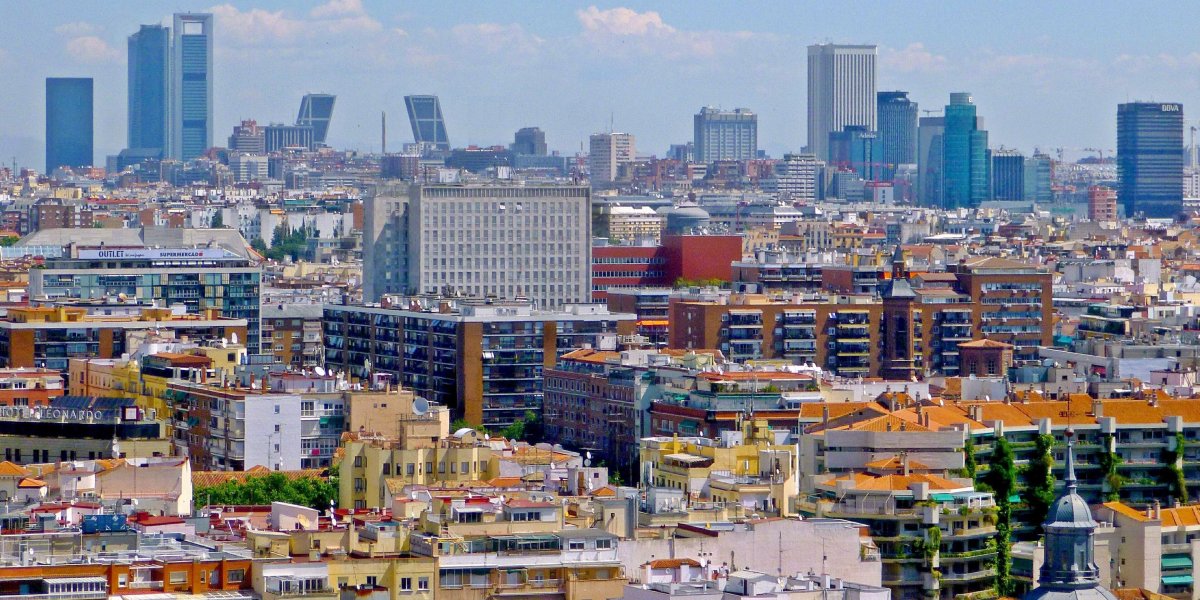
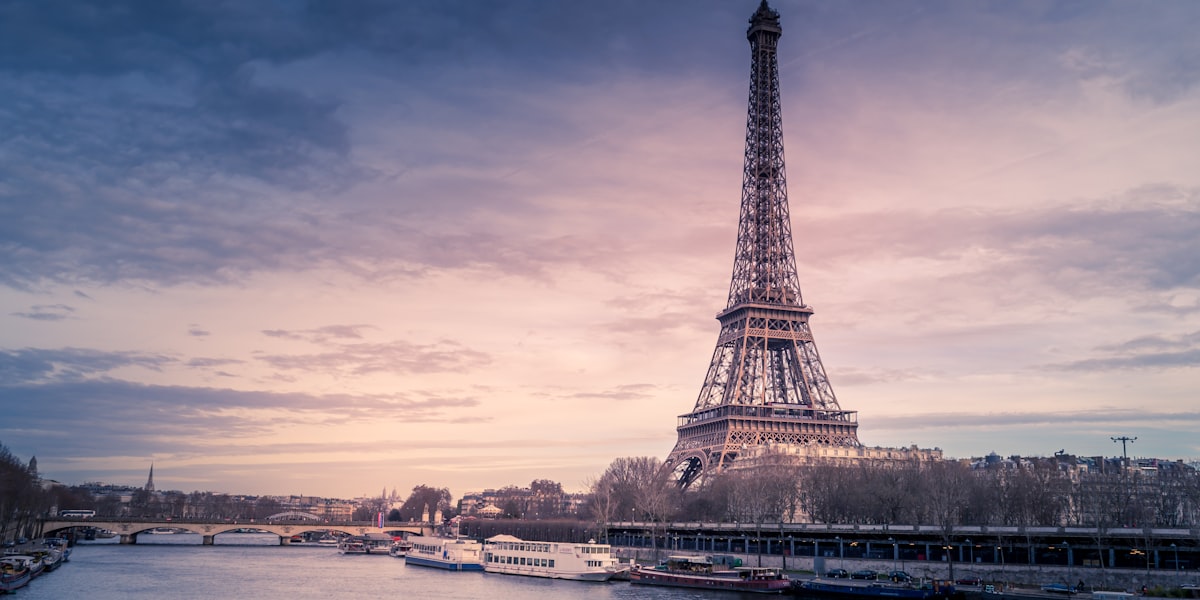
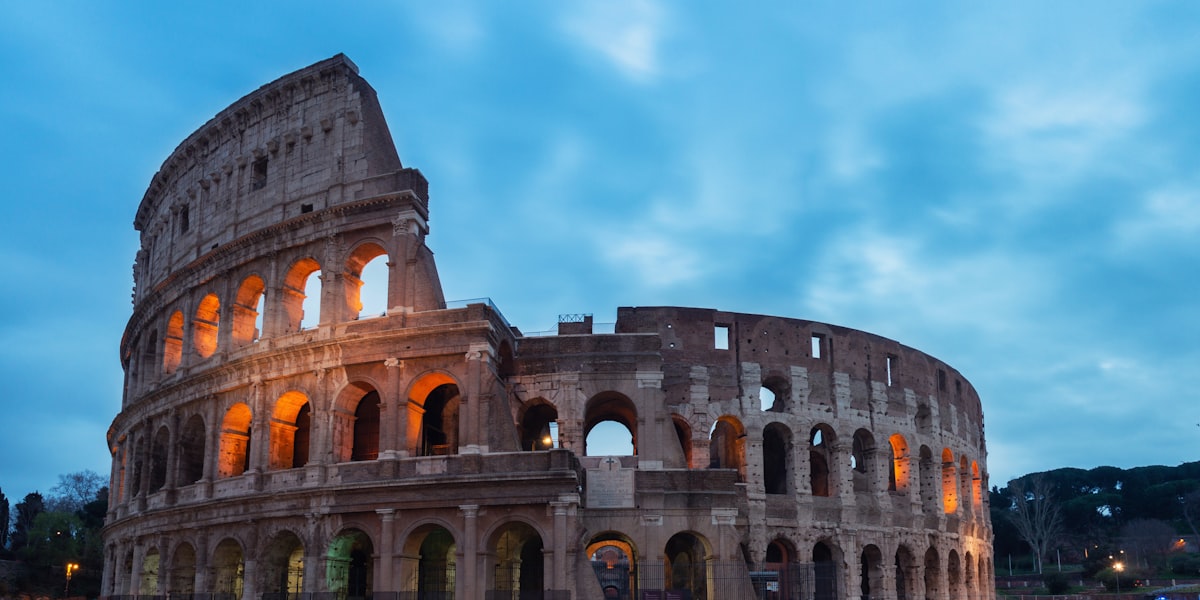
More in the same country
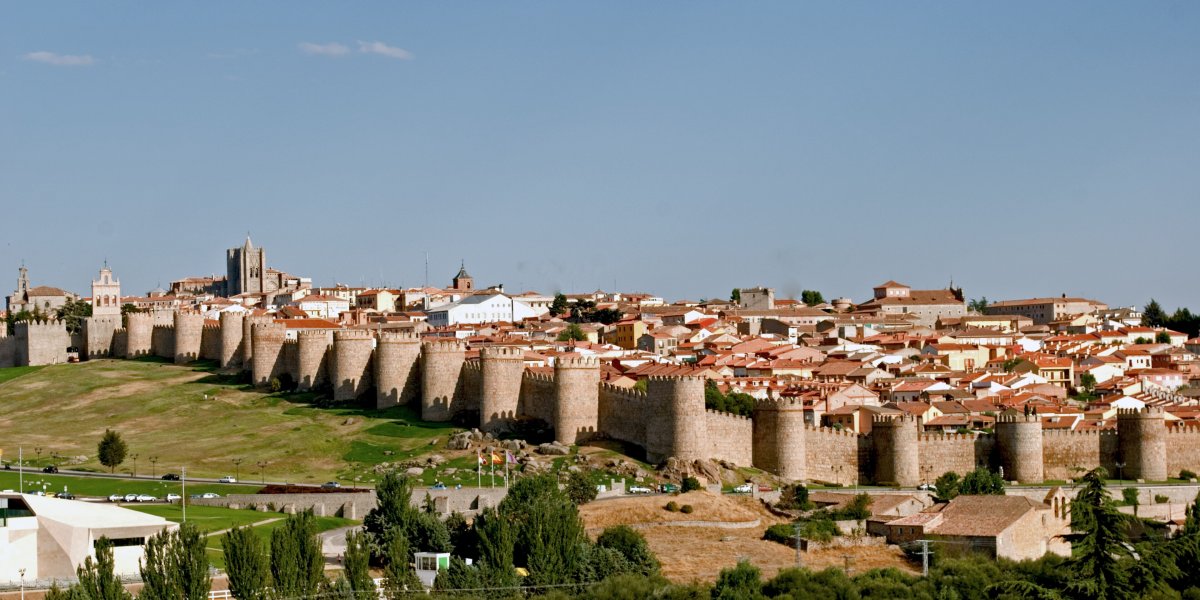
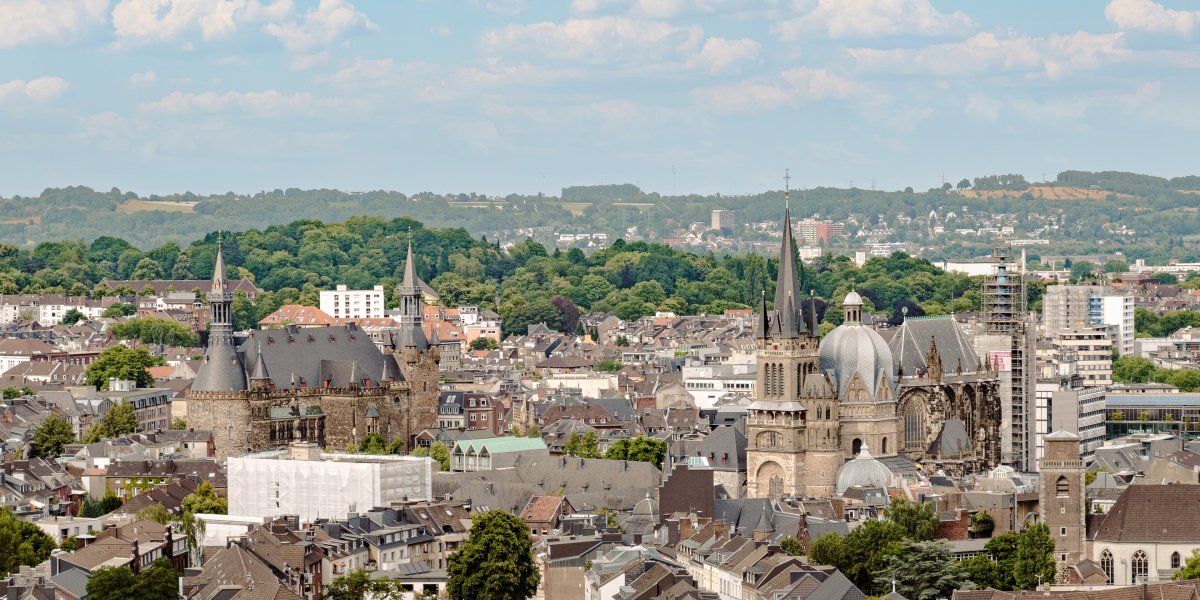
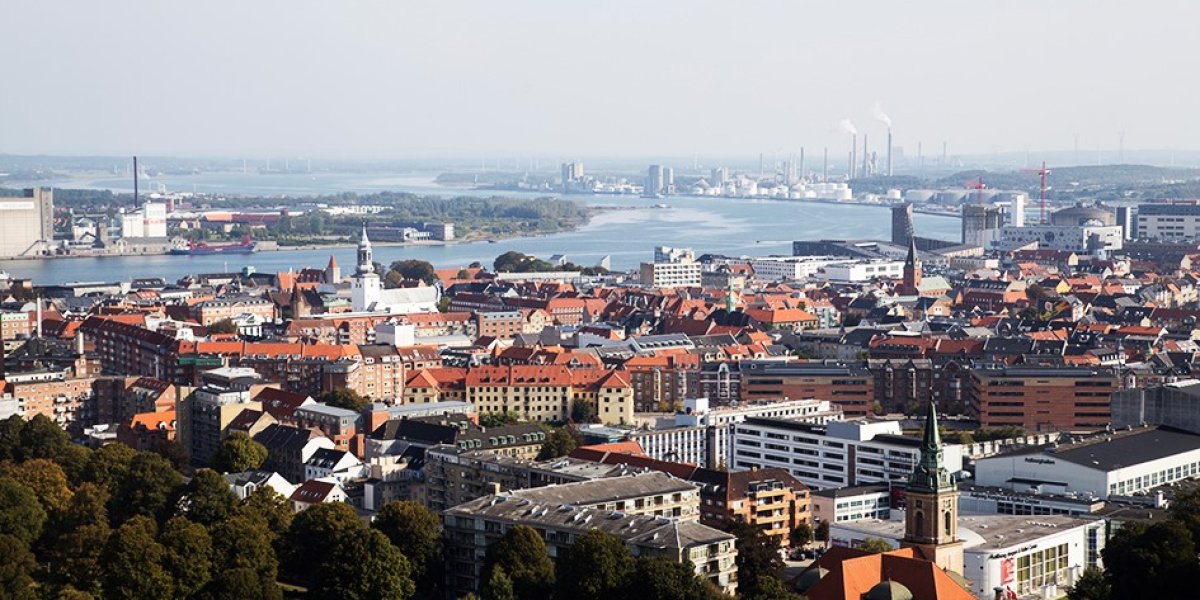
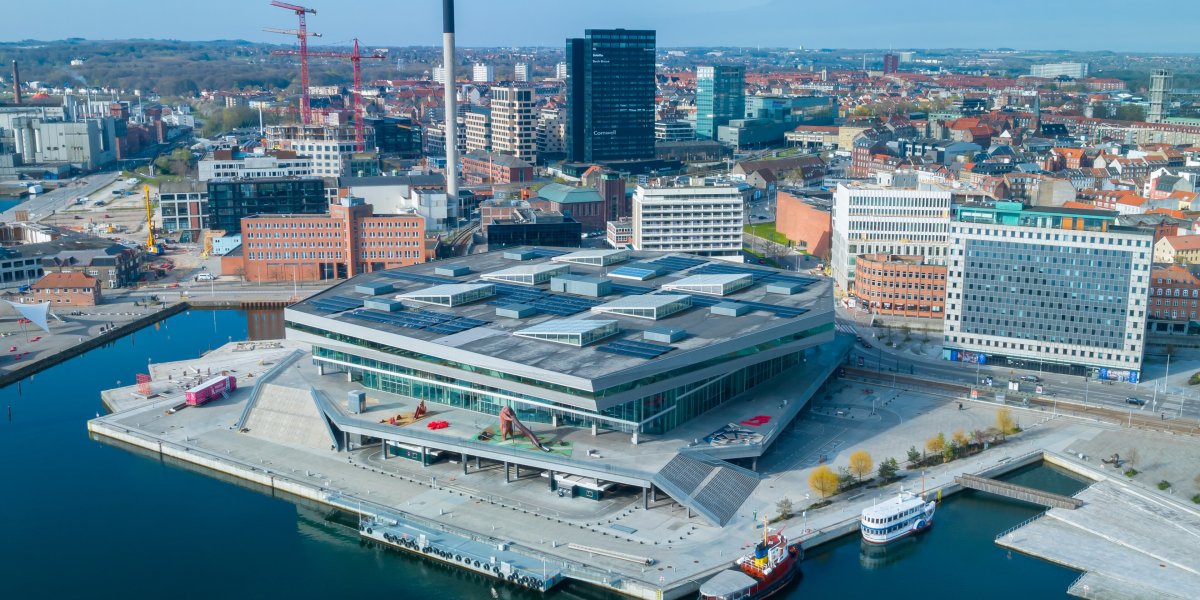
FAQ
Frequently asked questions
How many days do you need in Barcelona?
Most travelers enjoy Barcelona in 1 days, with enough time for headline sights and a slower meal or museum stop.
What's the best time to visit Barcelona?
The easiest season for most travelers is Apr-Jun, Sep-Oct, especially if you want good weather and manageable crowds.
What's the daily budget for Barcelona?
A practical starting point is about €60 per person per day before hotels, then adjust based on museums, dining, and transport.
What are the must-see attractions in Barcelona?
A good first shortlist for Barcelona includes Casa Batlló, Platja de la Barceloneta.