City Guide
Almeria
Espagne · Best time to visit: Mar-May, Sep-Nov.
Day-by-day plan
Choose your pace
Durée du voyage
09:00
Landmark
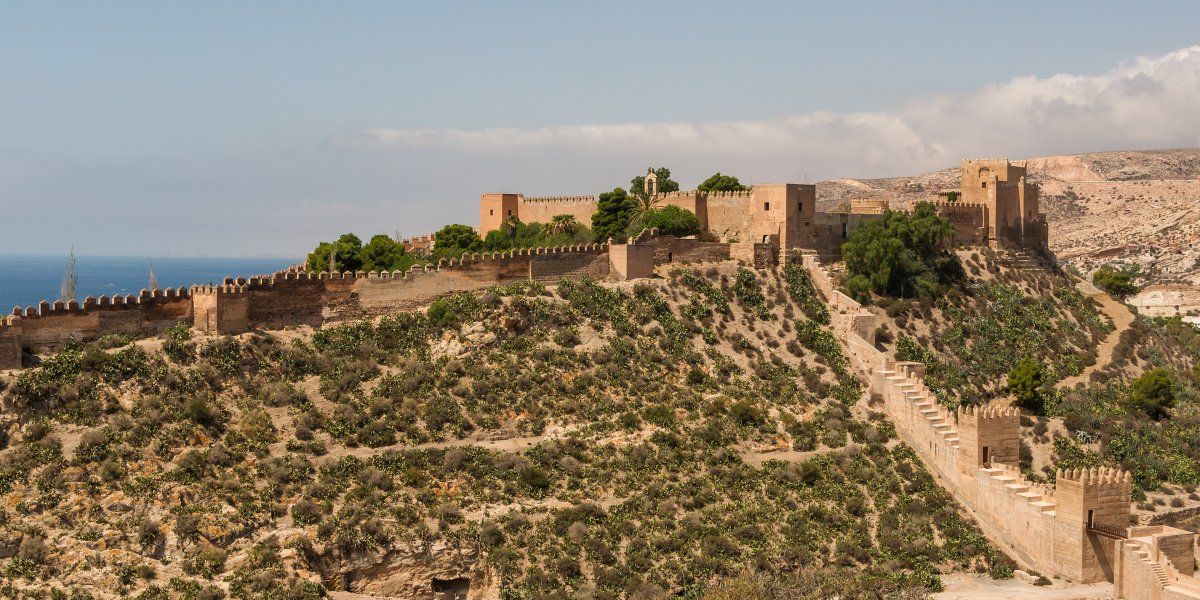
Start at the upper gate on Calle Almanzor — a 10-minute climb from the old town that warms the legs and pulls ochre walls into view above the whitewashed roofs of La Chanca. This is Spain's second-largest Moorish fortress after the Alhambra, and at opening hour you walk the cisterns and gardens of the First Precinct nearly alone, with cool desert air still hanging in the courtyards. Three precincts, three centuries of conquest, all reading as one continuous wall against the bluest sky in Andalusia.
Tip: EU passports enter free; non-EU pays €1.50 at the booth. Skip the marked mirador and walk to the northeast bastion of the Second Precinct — from there the cathedral, the Medina rooftops and the Mediterranean line up in a single frame, and morning light strikes the Christian keep dead-on before 10:30.
Open in Google Maps →11:30
Neighborhood
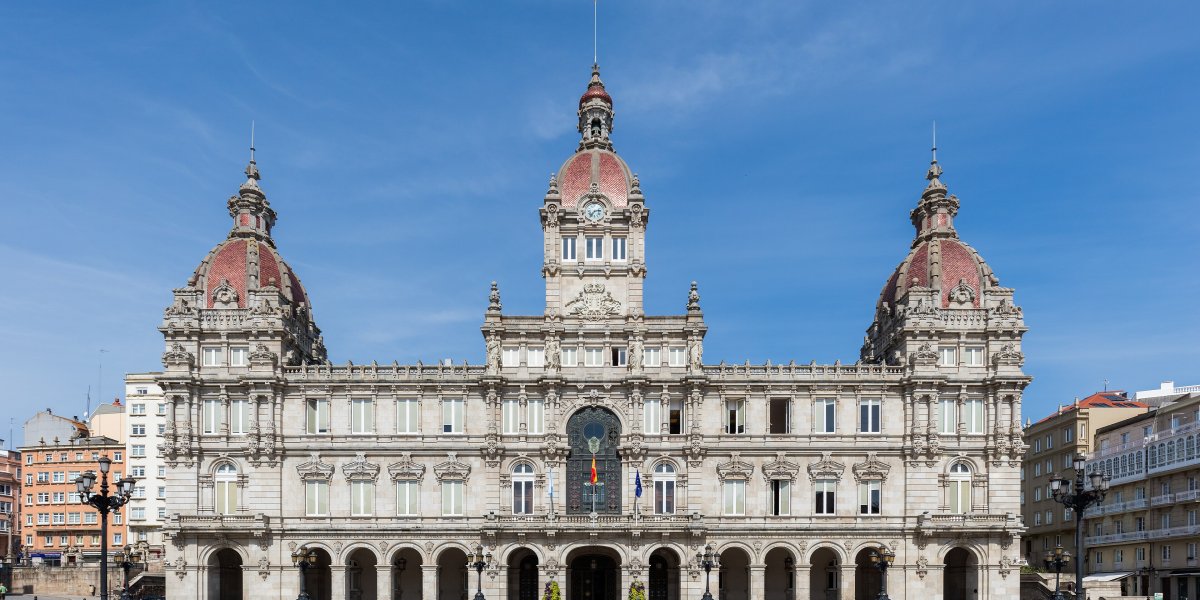
Drift down through the Medina's narrow whitewashed alleys — a 12-minute descent where laundry overhead doubles the colour of the walls. You emerge into a perfectly enclosed arcaded square, the prettiest plaza in Andalusia that foreign guidebooks miss entirely, with the City Hall's strawberry-pink facade on one side and a slender memorial column for the citizens shot in 1824 at the centre. This is where Almerienses actually pause their day; you should too.
Tip: Order a café solo at the kiosk on the south side and sit facing the City Hall — the arcades cast a sharp shadow line across the cobbles around 11:45 that's the photo of the square. It stays empty before 13:00; cruise-ship groups only arrive after their cathedral tour ends.
Open in Google Maps →12:45
Food
Two minutes east of Plaza Vieja on Calle Jovellanos, behind a wooden door that looks 150 years old because it is — Casa Puga has poured wine since 1870. Don't take a table: push to the bar, where the waiters chalk your tab directly onto the marble counter, the way five generations of Almerienses have ordered. The walls are wallpapered in yellowed bullfight posters and the air smells of fried garlic and Manzanilla.
Tip: Order gambas a la plancha (€9 a half-ración, plump red prawns landed that morning in Garrucha) and pulpo a la brasa (€12), with a copa of Sierras de Málaga white. Arrive before 13:30 — the courthouse lawyers fill the bar after and you'll stand in the doorway holding your beer.
Open in Google Maps →14:45
Religious
Three minutes south the alley opens into Plaza de la Catedral, and you finally see what a fortress-cathedral really means. Four crenellated towers, no flying buttresses, gun-loops instead of stained glass: this is the only church in Spain designed to repel Berber pirate raids. Mid-afternoon sun hits the south facade head-on, lighting the Renaissance Sol de Portocarrero relief that locals quietly consider their city's unofficial emblem.
Tip: Skip the paid interior — you don't have the time and the cloister is the only real reward inside. Walk the perimeter clockwise instead: the back wall on Calle Mariana hides two original cannon spouts. Shoot the Sol relief from the southwest corner of the plaza between 14:30 and 15:30, when the carving casts its own shadow rays into the stone.
Open in Google Maps →17:00
Landmark
Head south down Paseo de Almería, then cut east through the port edge — a 15-minute walk that takes you from Belle Époque facades to the salt wind off the Mediterranean. The Cable Inglés is a colossal 1904 iron pier built to load Sierra de los Filabres ore onto British ships, now rusting in spectacular orange against the blue water. Late-afternoon light turns the trusses into a Piranesi engraving suspended over the sea.
Tip: Don't shoot it from the promenade — that's the cruise-passenger angle. Walk down to the small beach immediately east (Playa de las Almadrabillas) and look back: the pier reads against the Alcazaba on the hilltop, the only frame that ties your whole day into one photo. Shoulder-season golden hour is 18:45-19:30.
Open in Google Maps →20:00
Food
Backtrack 700 m along Avenida Cabo de Gata to Calle Real, one block inland from the sea — Casa Joaquín has no sign worth speaking of, no English menu, and no chair free without reservation. It has been Almería's serious seafood address since 1959, and tonight's catch is laid out on ice by the door for you to point at. The dining room seats thirty; the regulars have sat in the same seats for forty years.
Tip: Reserve 48 hours ahead by phone — walk-ins after 20:30 are turned away politely but firmly. Ask the waiter for 'lo que entró hoy' rather than ordering blind; gambas rojas de Garrucha (€32/100g) and the grilled wild urta when in season are non-negotiable. Pitfall warning: every restaurant on the seafront promenade between Cable Inglés and the marina sells frozen pre-fried 'pescaíto' at sit-down prices to tourists — the real Almería seafood scene is on this back-block of Calle Real, never on the beach itself.
Open in Google Maps →Aller au jour
09:00
Landmark
From the old town climb the lime-washed lane of Almedina — ten minutes uphill past lemon trees and clay-tiled rooftops. The Alcazaba opens its cypress-lined first enclosure to you alone at this hour: the second-largest Moorish fortress in Spain after the Alhambra, set on a ridge where the white city spills toward the Mediterranean and the desert hills shimmer to the north.
Tip: Free for EU citizens, €1.50 for everyone else — be at the gate by 8:55, the first hour is empty and the morning sun on the red ramparts is the photograph you came for. Climb to the Torre del Homenaje first, before tour groups arrive around 10:30. The third enclosure (Christian castle) is mostly 1522-earthquake ruins; if you're short on time, skip it and spend longer on the gardens of the first enclosure where the water channels still run.
Open in Google Maps →11:30
Religious
Descend the eastern slope through the gardens of San Cristóbal — an 8-minute walk down into Plaza de la Catedral. What rises in front of you looks more like a fortress than a church: cannon turrets, a defensive parapet, walls 3 metres thick. After Berber pirates kept raiding the coast in the 1500s, Almería built a cathedral that could fight back.
Tip: Don't miss the Sol de Portocarrero — the carved sun emblem on the eastern facade, Almería's unofficial city symbol. It's best photographed just before midday when the relief catches the deepest shadow. Inside, ask at the desk for rooftop access (€5 extra) — most tourists don't know it exists and it gives the only elevated view back to the Alcazaba ramparts you climbed earlier.
Open in Google Maps →13:00
Food
Two minutes north along Calle Jovellanos — Casa Puga has been pouring fino since 1870 and is still where local lawyers and dockworkers stand shoulder-to-shoulder at the marble counter. Hams hang from the ceiling, the tilework is original, and the floor by 14:00 is a daily archive of napkins and toothpicks. This is Almería tapas without the costume.
Tip: Order a small caña (€1.80) and you'll get a free tapa with every drink — Almería is one of the last cities in Spain where the free-tapa tradition is still real, not a tourist gesture. Must-orders: gambas al ajillo (€9) and pulpo a la plancha (€14). Arrive at 13:00 sharp; by 13:45 there are no seats and locals stand three-deep at the bar. Pay in cash — the card machine 'breaks' suspiciously often.
Open in Google Maps →15:30
Museum
Three-minute walk south to Plaza Manuel Pérez García, where a discreet stairway descends into 4.5 kilometres of tunnels carved beneath the city during the Spanish Civil War — the most preserved network in Europe. The temperature drops the moment you start down the stairs.
Tip: Visits are by guided tour only — book online the night before, weekend slots sell out by mid-morning. Tours are in Spanish; request the English audio guide at reception (free, but only if you ask). Wear a light jacket — it holds 19°C below ground year-round, even in August. The tour ends at the surgery chamber with the original operating table — the most affecting room and worth lingering for once the group moves on.
Open in Google Maps →17:30
Neighborhood
Five-minute walk north back into the heart of the Almedina — Plaza Vieja is an arcaded 17th-century square most visitors never find because the three entrances are narrow alleys you have to know to look for. Order a coffee under the orange trees and watch the evening paseo: grandmothers walking arm-in-arm, fathers with sleeping toddlers on shoulders.
Tip: The white obelisk in the centre is a memorial to liberals executed by the king's forces in 1824; locals nod to it but never gather around it. The western arches glow gold for ten minutes around 19:00 in spring — sit at the south-side terrace for that light. Avoid Café Colón on the square (overpriced, tourist menu); walk one block east to Bar Cordobés on Calle Mariana where the regulars sit and the wine is €2.
Open in Google Maps →20:00
Food
Eight-minute walk south through the alleys of the old town to Calle Marín — La Encina sits over an 11th-century Moorish well, visible through a glass panel in the dining room floor. The kitchen does Andalusian classics with confidence and restraint: gambas rojas de Garrucha, slow-cooked lamb shoulder, fresh Mediterranean fish from the morning's auction.
Tip: Reserve 48 hours ahead and ask for 'la mesa del pozo' — the table directly over the Moorish well, lit from below. Order the gambas rojas de Garrucha (€38 per 100g, sold by weight — ask the price before nodding yes) and the paletilla de cordero (€32). Pitfall warning: the bars along Paseo de Almería one street over look inviting after dinner but charge full tourist prices; locals walk one block east to Calle Real for the same vermouth at half the cost.
Open in Google Maps →09:00
Museum
Walk east along Avenida de Federico García Lorca for ten minutes, the wide boulevard waking up around you. The Museum of Almería is a sleek black-and-glass box dedicated to two of Europe's earliest urban civilizations — Los Millares (3200 BC) and El Argar (Bronze Age) — both discovered in the dry hills just outside this city, and almost unknown beyond academic archaeology.
Tip: Free entry, closed Mondays. Take the lift to the third floor and work downward — the chronology runs top to bottom and the Los Millares burial-tomb reconstructions hit hardest when seen first, before context dulls them. The Argar gold pieces on the second floor are the museum's secret: small, lit individually, easy to walk past — look in the dim alcove behind the central pillar.
Open in Google Maps →11:00
Landmark
Fifteen-minute walk south down Avenida del Mediterráneo, the sea growing slowly louder. Cable Inglés rises ahead — a wrought-iron pier suspended above the waves, built by British engineers in 1904 to load ore from the inland mines straight onto ships. From below it looks like a Victorian railway viaduct that wandered into the Mediterranean by mistake.
Tip: The upper deck is closed for restoration, but the path beneath gives the iconic shot — stand at the eastern base at 11:30 when the sun is behind you and the sea glints through the iron lattice. For the silhouette photo, walk fifty metres west onto the small breakwater. Skip the food trucks at the entrance — overpriced and forgettable; you're eating somewhere better next.
Open in Google Maps →12:30
Food
Twelve-minute walk back north along Avenida del Mediterráneo into the old town — Casa Joaquín has held its corner of Calle Real since 1962, a marble-counter bar where the morning catch from Almería port is laid out in a glass case and you point to what you want. No menu, no fuss, no English. The owner's son weighs your fish in front of you.
Tip: Ask for 'lo que está bueno hoy' (whatever's good today) — typically rape (monkfish) or boquerones (fresh anchovies) at €15-18 per ración. Cash only. Closed Sundays and all of August. If gambas rojas are on the counter, get them — they're from the same Garrucha boats that supply the high-end restaurants, at a third of the price. Budget €25-30 per person including wine.
Open in Google Maps →14:30
Park
Twelve-minute walk south back to the waterfront — the Paseo Marítimo runs east along Almería Bay with palm trees, joggers, and the long thin curve of Playa de las Almadrabillas right at the foot of the Cable Inglés you saw earlier. Mid-afternoon is when locals emerge for the post-siesta walk, the desert hills glowing copper behind the city.
Tip: Start at the Monument to the Victims of the Holocaust (a small understated obelisk near the port) and walk east — 1.5km along the sea with the desert hills as backdrop. At the eastern end the Chiringuito Las Almadrabillas (open March-October only) does an excellent tinto de verano for €3.50. Don't swim October to March — despite the Andalusian sun the water is genuinely cold (15°C) and there are no lifeguards off-season.
Open in Google Maps →16:30
Museum
Ten-minute walk north into the old town through the small alleys behind Puerta de Purchena — the CAF occupies a converted 17th-century house with a colonnaded patio, and the rotating photography exhibitions are quietly some of the best in southern Spain. Free, cool, almost always empty.
Tip: Free entry, closed Mondays. Two exhibitions usually run in parallel — start with the upstairs gallery (better natural light). The interior patio café is the city's best-kept secret: €2.50 for a perfect espresso under the orange tree, no queue, no music. Check the current exhibition online before going — the programme rotates every 6-8 weeks and ranges from Magnum retrospectives to local Andalusian photographers.
Open in Google Maps →20:00
Food
Ten-minute walk west through the old town toward the Alcazaba — Mesón Gitano sits at the foot of the fortress's eastern wall, the terrace looking straight up at the ramparts as they catch the last sun and then the floodlights. The kitchen is contemporary Andalusian: serious technique, generous portions, the wine list a love letter to Granada and Cádiz.
Tip: Reserve a terrace table 48 hours ahead and ask specifically for 'la primera fila' — the front row of the terrace facing the wall. Arrive at 20:30 to catch the floodlights turning on at sunset (March around 20:00, October around 19:30). Order the tartar de gamba roja (€22) and the presa ibérica (€26). Pitfall warning: avoid the taxi rank on Plaza de la Constitución after 23:00 — drivers there routinely refuse the meter for tourists; walk three minutes to the official rank in front of Puerta de Purchena where meters are mandatory.
Open in Google Maps →
Trip builder
Plan this trip around Almeria
Turn this guide into a bookable rail itinerary with FlipEarth.
Keep exploring
Related cities
More in the same country
FAQ
Frequently asked questions
How many days do you need in Almeria?
Most travelers enjoy Almeria in 1 days, with enough time for headline sights and a slower meal or museum stop.
What's the best time to visit Almeria?
The easiest season for most travelers is Mar-May, Sep-Nov, especially if you want good weather and manageable crowds.
What's the daily budget for Almeria?
A practical starting point is about €110 per person per day before hotels, then adjust based on museums, dining, and transport.
What are the must-see attractions in Almeria?
A good first shortlist for Almeria includes Alcazaba of Almeria, Cable Ingles.