City Guide
Burgos
Espagne · Best time to visit: May-Sep.
Day-by-day plan
Choose your pace
Durée du voyage
09:00
Landmark
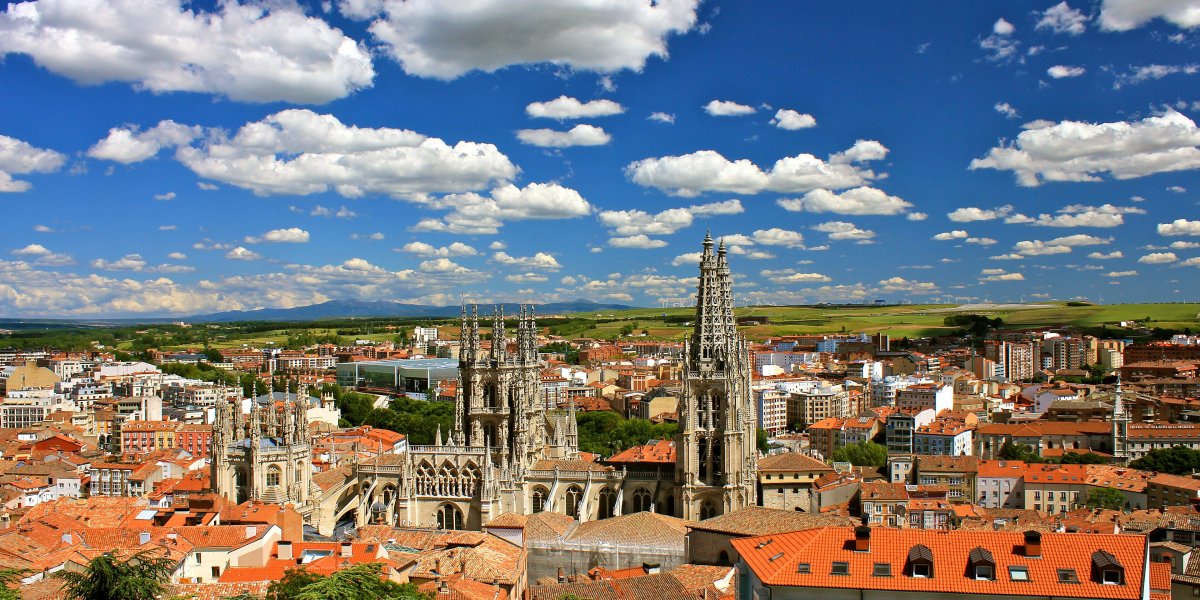
Start at the train station or your hotel and head straight uphill — from the cathedral square take the stone staircase of Calle Fernán González, climb past the old city wall and through the pine wood for about 15 minutes. You arrive sweaty but alone: the entire Castilian plain opens beneath you, and below your feet the cathedral's two Gothic spires pierce the red-tiled roofs. This is the only place in Burgos where you understand why the Cid chose to be buried here.
Tip: Stand at the southeastern edge of the platform (not the central viewing balcony) — from there the two cathedral spires line up perfectly with the river bend behind, and the morning sun (east) lights the limestone facade gold while you shoot west, no backlight. Avoid the castle ruins themselves; they cost €3.70 and are far less impressive than the view that's free.
Open in Google Maps →10:45
Religious
Descend the same stone staircase — 12 minutes down, knees first, and Calle Fernán González drops you straight onto the cathedral's north flank. Walk a full slow loop around the building before facing it: the Puerta del Sarmental on the south side is the original 13th-century portal, while the famous twin-spire western facade is best photographed from Plaza del Rey San Fernando at this hour when the sun rakes across the openwork stone. We are not going inside — the €10 ticket is worth it on a longer trip, but exterior alone tells the story of the only freestanding Gothic cathedral in Spain to be a UNESCO site in its own right.
Tip: Walk around to the back (east end) and find the Capilla del Condestable's octagonal lantern bulging out of the apse — most tourists never see this side, and a small bench in the lane behind gives you a near-vertical shot of the spires against the sky. Skip the queue at the Pilgrim's Office out front; that's only for Camino passport stamps.
Open in Google Maps →13:00
Food
Walk two minutes east on Calle Sombrerería — the narrow lane behind the cathedral that locals call 'la calle del pincho.' Morito has been the loudest, most elbow-fought tapas bar in Burgos for forty years, and you eat standing at the marble counter or perched on a wine barrel outside. Order the morcilla de Burgos pincho (€2.80) — black rice-stuffed blood sausage, the city's defining bite — and one pimiento relleno de morcilla (€3.20). One caña of beer (€1.80) and you are done in forty minutes, hands sticky, exactly the lunch this day calls for.
Tip: Arrive by 13:15 sharp — by 13:45 the counter is three-deep and you'll wait 20 minutes for a pincho. Don't sit at the proper tables (they cost 30% more for the same food); push in at the standing counter and shout your order to the bartender in the white coat. Cash gets faster service than card.
Open in Google Maps →14:30
Landmark
Cut south through the cathedral square and the Arco de Santa María's six stone kings (including the Cid himself) rises directly ahead — walk under it onto the riverbank and you've crossed from medieval Burgos into 19th-century Burgos in twelve paces. The Paseo del Espolón is a 600-metre tree-lined promenade along the Arlanzón river, with the four sculpted seasons of the year on plinths and old men playing cards on shaded benches. Walk it slowly east — this is where Burgos shows you it is still a living Spanish city, not a museum.
Tip: Halfway down the promenade you'll reach Puente de San Pablo — eight modern bronze statues of figures from the Cid's life line both railings, and the enormous bronze Cid on horseback dominates the far bank. Cross to the equestrian statue's base and look back toward the Arco de Santa María; this is the postcard shot of Burgos, and at 15:00 the sun is behind you, perfectly lighting the medieval gate.
Open in Google Maps →16:30
Landmark
Continue 300 metres east along the south bank of the river — the Camino Frances actually passes right here, and you'll cross paths with pilgrims walking the opposite direction. Rafael Moneo's glass-and-steel cube appears suddenly on your right, a deliberate provocation of titanium-clad geometry set against the Gothic skyline behind you. We are not going in (the Atapuerca skulls deserve a longer visit on another trip) — instead walk to the river's north bank by the next footbridge for the iconic shot: the entire MEH facade mirrored in the Arlanzón, with the cathedral spires rising 1.5 km behind it in the same frame.
Tip: From the north bank look back west — at 17:30 in summer the low sun hits the glass facade and the entire building flares orange for about 12 minutes; this is the only window in the day when the building is genuinely photogenic rather than just architecturally interesting. Don't waste time on the riverside playground sculptures by the museum entrance — they are a school art project, not the real museum collection.
Open in Google Maps →20:00
Food
Walk 850 metres west back along the Paseo del Espolón as the streetlamps come on — this evening stroll is itself one of the day's best moments, locals out in the paseo hour, the cathedral lit up ahead. Casa Ojeda has been on Calle Vitoria since 1912 and serves the dish you came to Castile for: lechazo asado, milk-fed lamb roasted in a wood-fired clay oven for three hours until it falls off the bone. The dining room upstairs has dark wood, stained glass, and waiters in bow ties who have worked here for thirty years.
Tip: Book at least 24 hours ahead and ask specifically for the upstairs Castilian dining room (not the downstairs cafeteria, which serves the same menu in a far worse setting). Order half a lechazo asado (€32) split between two people, plus a cojonudo pincho (quail egg over morcilla and chorizo, €4.50) and a glass of Ribera del Duero (€5). Pitfall warning: do NOT eat at the tourist-menu restaurants ringing Plaza Mayor or the 'menú peregrino' spots along Calle de la Paloma — they serve frozen industrial morcilla and oven-reheated lamb at double the price, targeted at Camino pilgrims who don't know better. The good Burgos kitchens are all on Calle Vitoria and Calle Sombrerería.
Open in Google Maps →Aller au jour
09:30
Religious
Enter through the Sarmental Door right at opening — the south-facing facade is hit by full morning sun and the rose window inside glows like stained honey. UNESCO-listed and arguably the most spectacular Gothic cathedral in Spain, this is the resting place of El Cid and his wife Jimena, set under the impossible star-vaulted lantern of the crossing. Take your time with the Constable's Chapel: it's a cathedral inside a cathedral.
Tip: Buy the combined ticket online the night before to skip the cashier line, and head straight upstairs to the Diocesan Museum first while every tour group floods the nave — you get the Capilla del Condestable nearly to yourself around 10:15.
Open in Google Maps →12:00
Religious
Exit the cathedral's north door and climb the worn stone steps directly opposite — 90 seconds and you're at the door. From outside it looks like a humble parish church, but inside is a 16th-century stone altarpiece by Francisco de Colonia so dense with carved figures that scholars rank it among Spain's finest. The light at noon catches the upper tier perfectly.
Tip: The altarpiece has over 465 carved figures — bring binoculars or zoom in on your phone to see the saints in the top register; from the floor they're just silhouettes.
Open in Google Maps →13:15
Food
Walk one block east along Calle Sombrerería — you'll see locals three-deep at the bar before you see the sign. This is the Burgos tapas institution: stand at the counter (no tables, that's the point), order the morcilla de Burgos (€3, the city's legendary rice-and-blood sausage on toast) and the cojonudo (€2.50, quail egg + chorizo on bread). Total damage with a caña of beer rarely passes €15.
Tip: Arrive by 13:15 sharp — by 14:00 there's no elbow room. Pay at the end, the bartender counts your toothpicks. Skip the menu board and just point at what the regulars are eating.
Open in Google Maps →14:45
Landmark
Drift south from the tapas street, cross Plaza del Rey San Fernando, and the great honey-stone gate is straight ahead — five minutes max. This is the medieval ceremonial entrance to the city, its facade covered in statues of Castilian founders with El Cid front and center. Step through to the small free exhibition hall inside the gate for one of the best framed photos of the cathedral spires you'll get all weekend.
Tip: From the riverside side of the arch (south face), stand 20 meters back on the bridge for the postcard shot — gate in foreground, cathedral towers rising directly behind. Mid-afternoon backlight makes the stone almost gold.
Open in Google Maps →16:00
Landmark
From the arch, walk back past the cathedral and follow the signed path up Calle Fernán González — the climb is steady but only 15 minutes, and every turn opens a new angle on the cathedral roofline below. Up top are the ruins of Burgos Castle and the only viewpoint where you see the entire Gothic skyline aligned with the river plain stretching toward Atapuerca. Afternoon light is the moment: the western sun hits the cathedral spires head-on.
Tip: Don't pay for the castle interior tour — it's modest. The free mirador terrace is the entire reason to come up. Sit on the stone wall on the south side; by 17:30 the cathedral towers glow orange and you'll have the bench to yourself.
Open in Google Maps →20:30
Food
Descend the hill back to Calle Vitoria, the main artery just east of the cathedral — 12 minutes downhill on cobbled lanes. Casa Ojeda has been the Burgos dining room since 1912, all dark wood, white linen, and waiters who've been here decades. Order the lechazo asado (suckling lamb roasted in a wood-fired oven, €28) and the morcilla starter — this is the canonical version, served as it should be.
Tip: Reserve 48 hours ahead and ask specifically for the upstairs dining room, not the downstairs tavern — same kitchen, far better atmosphere. Skip the tourist traps clustered around the cathedral plaza after dark: prices double and the morcilla is reheated. Locals eat one block away on Calle Vitoria for a reason.
Open in Google Maps →10:00
Museum
Cross the Puente de San Pablo just south of the cathedral — five minutes and the glass-and-steel Juan Navarro Baldeweg building rises on the south bank. This is where the actual fossils from Atapuerca live: Miguelón's skull, the bones of Homo antecessor (the oldest Europeans, 800,000 years old), and the Pleistocene 'Pit of Bones' reconstruction. Open at 10:00 sharp — first hour you can stand alone in front of a face that watched mammoths cross Castile.
Tip: Start on the top floor and work down — that's the chronological flow most visitors miss because they go up the central ramp first. The original Miguelón skull (Level -1) is rotated with a replica; ask at info which is on display today. Tuesdays the museum stays open, but it closes Mondays.
Open in Google Maps →12:30
Park
Walk back across the bridge and turn left onto the riverside promenade — three minutes. The Espolón is the Burgos passeggiata, a tunnel of pollarded plane trees pruned into a flat green ceiling that locals have shaped for two centuries. At noon the dappled light through the leaves is the postcard of Burgos that nobody photographs. Look for the four stone kings on the river wall — relics of a demolished medieval gate.
Tip: The bronze statue of a man on a bench midway along is Spanish poet Antonio Machado — sit beside him for the obligatory photo, but the better shot is the long avenue itself from the eastern end looking west, with the cathedral spire poking above the canopy.
Open in Google Maps →13:30
Food
Cut north one block to Calle Avellanos — the tapas alley locals actually use. La Favorita is an old wine cellar with bare brick, hams hanging from the rafters, and a slate-board menu that changes daily. Order the torrezno (crisp pork belly cube, €3.50) and the picaña a la brasa on grilled toast (€4) — the kitchen runs a real charcoal grill behind the bar, you can smell it from the door.
Tip: Grab a high table in the back room — the front bar is for standing tapeo and they'll rush you. Order one round at a time; the kitchen is fast and food piling up cold defeats the point.
Open in Google Maps →15:30
Religious
Walk west along the river path — 25 minutes through Parque de la Isla, the prettiest stretch of greenery in Burgos, with the river always on your left. The monastery was founded in 1187 by Alfonso VIII as the royal pantheon of Castile and is still home to a community of Cistercian nuns. You enter only with a guided tour (Spanish only, but a printed English sheet is included) and it's the only way to see the Capilla de Santiago, where the wooden articulated statue of Saint James once 'knighted' Castilian kings.
Tip: Tours leave on the hour and last 45 minutes — aim for the 16:00 slot, the late afternoon one usually has the fewest people. Photography is forbidden inside the cloisters, so put the phone away and actually look — the Pendón de las Navas battle banner hanging in the chapter house is the real thing, captured from the Almohads in 1212.
Open in Google Maps →17:45
Landmark
Walk back east along the river (20 minutes — by now you know the path) and turn up to Plaza de la Libertad. This 15th-century Gothic palace is where Columbus was received by the Catholic Monarchs after his second voyage in 1497, and where Philip the Handsome dropped dead after a game of pelota in 1506. The stone Franciscan-cord frieze around the door gives the building its name. The interior is now a bank lobby — walk in like you own the place; it's free and open until 18:30.
Tip: From the plaza step back to the corner of Calle Santander for the full facade photo with the late-day sun catching the stone cord motif. Beware the 'friendship bracelet' guys who work the nearby pedestrian streets at this hour — say no firmly, don't make eye contact, don't accept anything placed in your hand.
Open in Google Maps →20:30
Food
Five minutes south on foot, on Calle de la Merced. Chef Miguel Cobo runs the modern face of Burgos cuisine here — this is the kitchen the city sends visitors to when they've already had their canonical lechazo dinner the night before. The tasting menu (€55) walks you through morcilla reimagined, Arlanzón river trout, and Castilian pulses elevated to art. Open kitchen, low light, room for maybe twenty diners.
Tip: Reserve a week ahead for Saturday — only 20 seats and locals book it for anniversaries. Ask for a counter seat facing the pass if you want to watch Miguel work; the tables along the wall are quieter but you miss the show.
Open in Google Maps →
Trip builder
Plan this trip around Burgos
Turn this guide into a bookable rail itinerary with FlipEarth.
Keep exploring
Related cities
More in the same country
FAQ
Frequently asked questions
How many days do you need in Burgos?
Most travelers enjoy Burgos in 1 days, with enough time for headline sights and a slower meal or museum stop.
What's the best time to visit Burgos?
The easiest season for most travelers is May-Sep, especially if you want good weather and manageable crowds.
What's the daily budget for Burgos?
A practical starting point is about €90 per person per day before hotels, then adjust based on museums, dining, and transport.
What are the must-see attractions in Burgos?
A good first shortlist for Burgos includes Mirador del Castillo, Arco de Santa María & Paseo del Espolón, Museum of Human Evolution (Exterior).