City Guide
Prizren
Kosovo · Best time to visit: Apr-Oct.
Day-by-day plan
Choose your pace
Duración del viaje
09:00
Religious
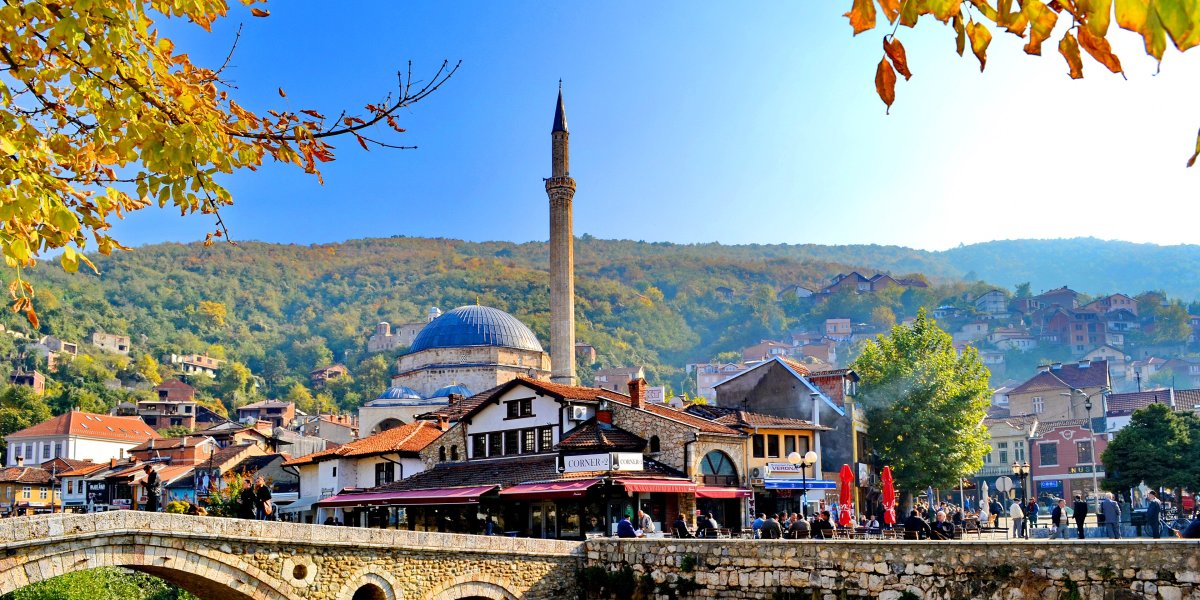
Begin where every postcard of Kosovo begins — on the Ura e Gurit (Stone Bridge) over the fast-running Lumbardhi, with the slender minaret of the early-17th-century Sinan Pasha Mosque rising behind it. At this hour the riverside cafés are still pulling chairs out, the light is hitting the white stone of the dome head-on, and the whole tableau is yours alone for photographs. Step into the mosque courtyard (shoes off, shoulders covered) for a look at the painted floral panels under the porch — the calligraphy and Ottoman blues survive even where the interior fresco work has faded.
Tip: Stand on the second arch of the bridge facing upstream — the mosque, minaret, and the snow-capped Šar Mountains line up in one frame. By 11:00 the bridge is shoulder-to-shoulder with selfie sticks and tour-bus arrivals from Pristina; before 10:00 you'll have it empty. A small donation (1 EUR) at the mosque entrance is appreciated but not required.
Open in Google Maps →10:30
Religious
From the bridge, walk 5 minutes northeast through cobbled lanes lined with low Ottoman houses — the pink-brick bell tower appears between rooftops without warning. This 13th-century Serbian Orthodox church is one of four Kosovo monuments on UNESCO's World Heritage list, and the recessed double porch, alternating brick-and-stone masonry, and the small walled cemetery feel transplanted from a different century to the Muslim quarter around it. The 2004 riots scarred the building; you'll see the protective steel fence and the soot still ghosting the upper walls — part of the story, not a flaw.
Tip: The church is usually locked, but ring the bell at the side gate and a caretaker often lets you into the courtyard (small donation, ~2 EUR). The famous gold-ground frescoes inside are off-limits during ongoing restoration — don't come hoping to see them; come for the masonry and the silence. Skip the climb if a service is in progress.
Open in Google Maps →12:30
Food
Walk 4 minutes south back into Shadërvan Square and look for the unassuming wooden bench seats under the awning — this is Prizren's most famous qebaptore, grilling the same recipe of minced-beef sausages since the 1950s. The menu is essentially one item: order '10 me kos' (ten qebapa with yoghurt and raw onion, served on a warm lepinje flatbread, ~5 EUR), eat at the communal counter or standing at the window with locals. Wash it down with an ayran (~1 EUR) or a small Turkish coffee. The whole stop, including queue, is 25 minutes.
Tip: Skip the ketchup, eat with your hands, ask for extra onion — that's the local way. If the queue spills onto the square, the qebaptore one door down (Te Tupi) is equally good and faster. The 'tourist menus' chalked up by riverside spots at the Stone Bridge are 3× the price for half the flavor — do not be lured.
Open in Google Maps →13:30
Neighborhood
Step out of Te Syla and you're already standing in Shadërvan — Prizren's living room, named for the pyramidal 16th-century Ottoman fountain that still runs in its center. Old men play chess under the mulberries, families parade in their best clothes, the call to prayer overlaps with a church bell. Drift south down Rruga Marin Barleti into what's left of the old bazaar — silver filigree workshops (Prizren's signature craft), copper-beaters, leather stalls — and walk west to the League of Prizren complex, the 1878 birthplace of Albanian nationalism (the exterior and rose garden are enough). This is the slow, sensory hour of your day; let the city come to you.
Tip: Buy filigree silver only inside the workshops around the League of Prizren — those pieces are hand-twisted on the spot by the men you're watching. A small pin starts ~15 EUR, earrings ~25 EUR, roughly a third of Pristina prices. Souvenir stalls on the bridge sell Chinese-stamped lookalikes. A polite 10% bargain is normal; haggling beyond that reads as rude.
Open in Google Maps →16:30
Landmark
From the bazaar, walk east along Rruga e Kalasë past the old Turkish hammam ruin, then turn right onto the steep cobbled track up the hill — allow 35 minutes at a steady pace, partly shaded. The climb is the hardest 2 km of your day and the most rewarding: as you rise, the mosques shrink, then the red-tiled roofs, then the river itself, until at the summit the Šar Mountains roll south toward the Albanian border 30 km away. The fortress itself is roofless walls, scattered cisterns, and grass — entry is free, unguarded, open dawn to dusk — but the panorama is unmatched anywhere in Kosovo. From spring through October the sun drops behind the western ridge and lights the whole valley in copper.
Tip: Arrive 45 minutes before official sunset (around 20:00 in midsummer, 18:30 in October) — that's when the light goes from gold to fire to violet. Stand on the southern wall: the mosque minaret will be silhouetted against the burning sky, and the river will glow like a copper ribbon. Carry a phone-flashlight for the descent — the path has zero lighting and turns pitch black within 20 minutes of sunset, and the cobbles get genuinely slick if it has rained.
Open in Google Maps →19:45
Food
Descend the fortress trail the way you came; from the bottom of the path it's a 6-minute walk along the river to Marashi's lantern-lit terrace, where the Lumbardhi runs three meters below the railing. This is the kind of stone-walled konak a Prizren grandmother would point you toward — start with flia (paper-thin pancakes baked in layered cream, ~6 EUR) and a glass of mulberry rakia, then the tavë kosi (lamb baked in yoghurt with rice, ~9 EUR), the regional version more peppery than the Albanian original. Budget 18-22 EUR per person with one drink; the terrace fills by 20:30 in summer, so phone ahead (+383 49 658 433) if you want river-side.
Tip: Ask for rakia me dredh — house-distilled mulberry brandy, poured from an unlabeled bottle, tasting more like jam than alcohol; a single shot is ~2 EUR. Pitfall to avoid: the row of restaurants directly on the Stone Bridge with English-only menus and posted set-price boards (€25-30) are pure day-tripper traps — same dishes, half the soul, double the bill, and the waiters work on commission. Walk 50 m off the bridge in any direction and you're already eating where locals eat.
Open in Google Maps →
Trip builder
Plan this trip around Prizren
Turn this guide into a bookable rail itinerary with FlipEarth.
Keep exploring
Related cities
More in the same country
FAQ
Frequently asked questions
How many days do you need in Prizren?
Most travelers enjoy Prizren in 1 days, with enough time for headline sights and a slower meal or museum stop.
What's the best time to visit Prizren?
The easiest season for most travelers is Apr-Oct, especially if you want good weather and manageable crowds.
What's the daily budget for Prizren?
A practical starting point is about €60 per person per day before hotels, then adjust based on museums, dining, and transport.
What are the must-see attractions in Prizren?
A good first shortlist for Prizren includes Kalaja Fortress.