City Guide
Pristina
Kosovo · Best time to visit: May-Sep.
Day-by-day plan
Choose your pace
Duración del viaje
09:00
Landmark
Start your day at the south end of Bill Clinton Boulevard, where a 3.5-meter gilded Clinton waves at you — papers in hand, allegedly the orders authorizing NATO's 1999 intervention that Kosovars credit with saving them. Erected in 2009 from popular gratitude, the statue stands in front of an apartment block whose ground floor houses the Hillary boutique (yes, named after Hillary Clinton) selling locally tailored dresses. No other capital in Europe begins this way.
Tip: Visit before 10am — morning light from the east strikes Clinton's bronze face cleanly, and the boulevard's bus stop is still empty of commuters. Step inside the Hillary store (opens 09:30) even without buying; the dresses are genuinely sharp and supporting a Kosovar women-owned business is more meaningful than another statue photo.
Open in Google Maps →10:30
Landmark
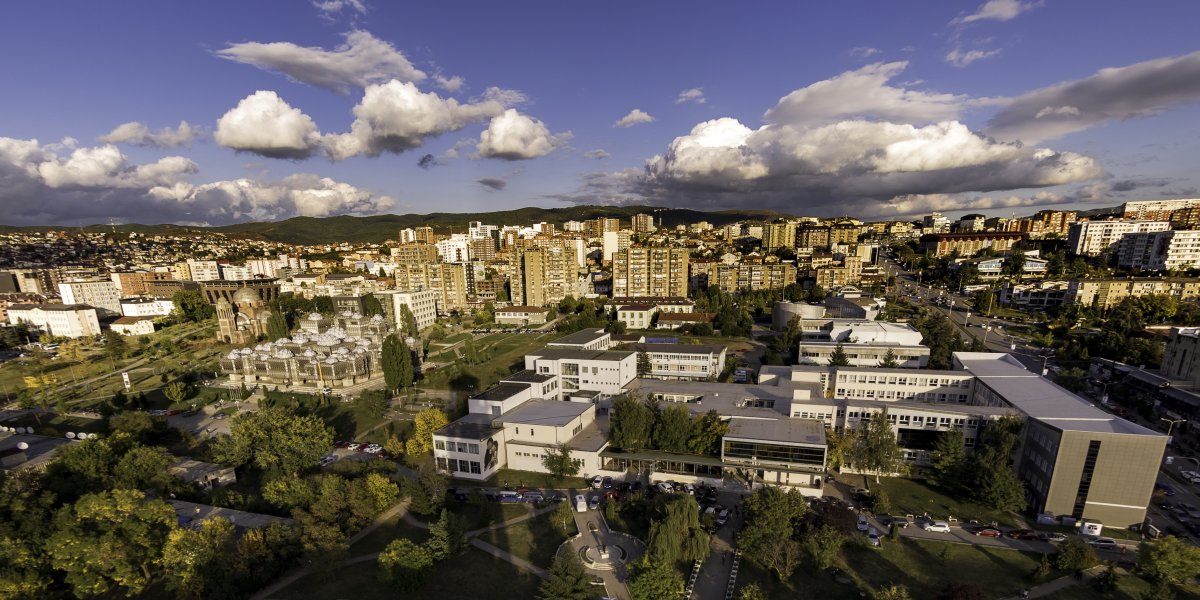
Walk east along Bill Clinton Boulevard for ten minutes, then turn south onto Agim Ramadani, the wide-shouldered street leading into the University of Pristina campus. The Library hits you head-on: 99 white domes locked inside a brutal cage of metal lattice, designed by Croatian architect Andrija Mutnjaković and opened in 1982. It is the most polarizing building in the Balkans and the single best photographic backdrop in Kosovo.
Tip: Shoot from the southwest corner at 11am, when the sun is high enough to throw the lattice's shadow as knife-sharp diamonds across the white domes. Skip the reading hall — the interior is just shelves and silent students. The exterior is the entire point of coming here.
Open in Google Maps →12:00
Landmark
Cut north through the campus past the Faculty of Philosophy for fifteen minutes — you'll emerge in front of the Palace of Youth, where the seven yellow letters spelling NEWBORN have anchored Kosovo's identity since February 17, 2008. Every Independence Day they are repainted with a new theme — flags, faces, slogans — making this the only monument in Europe redesigned annually. Touch the letters; every Kosovar your age already has.
Tip: Stand 8 meters back to the southeast for the frame that catches both NEWBORN and the brutalist mass of the Palace of Youth in one shot. Read the small-print messages painted on the back of each letter — that is where the actual story of any given year lives, and almost no day-tripper bothers to walk around.
Open in Google Maps →13:00
Food
Walk ten minutes north up Luan Haradinaj to Mother Teresa Boulevard, the pedestrian heart of Pristina — café tables, buskers, no cars. Te Syla has been grilling qebapa on this corner for decades; you smell the coal before you see the sign. Order the qebapa plate with somun bread and raw onion (€4 for ten pieces), sit at the metal pavement table, and the boulevard's afternoon coffee crowd streams past you like a slow river.
Tip: Sit down by 13:00 sharp — Pristina's office workers swarm the place at 13:30 and the queue stretches twenty deep. Order qebapa 'me djathë' (stuffed with white cheese inside) for the upgrade locals know about and almost no tourist asks for; it costs the same as the regular plate.
Open in Google Maps →14:30
Neighborhood
Continue north along Mother Teresa Boulevard for ten minutes — you'll pass the Skanderbeg equestrian statue and the white spire of Mother Teresa Cathedral on your left, then drop down into the Ottoman quarter. Wander between the Imperial (Fatih) Mosque of 1461, the 15th-century Great Hammam, the stone Sahat Kulla clock tower, and the carved wooden gates of the Emin Gjiku Ethnographic Complex. The streets here haven't changed shape in 400 years.
Tip: Photograph the Imperial Mosque's minaret from the small staircase off Bajram Kelmendi around 16:30 — the late-afternoon sun lights the stone gold. Pitfall: ignore the 'antique' brass coffee sets and 'Ottoman' silver on the bazaar's main strip — almost all of it is mass-produced reproductions shipped in from Turkey; the real filigree silversmiths work one block off the main lane and will let you watch them solder.
Open in Google Maps →19:00
Food
Walk seven minutes south out of the old bazaar onto Rruga Fehmi Agani; Tiffany sits on a quiet side street, its doorway easy to miss. There is no printed menu — the chef sends out whatever the season and the morning market gave him, always anchored by flija (the layered crepe-like Albanian pastry baked under a metal lid) and wood-fired lamb. Dim lights, white tablecloths, no English required, and the bill rarely tops €25 even with house rakija.
Tip: Arrive at 19:00 sharp — walk-ins after 19:30 wait thirty minutes and reservations are awkward here because no one quite takes them. Tell the waiter 'everything you have today' and they'll bring extra dishes off the books. Pitfall warning: avoid the restaurants along Mother Teresa Boulevard with four-language photo menus — they double-price foreigners and serve frozen meat; the places worth eating at, like this one, have no menu at all.
Open in Google Maps →
Trip builder
Plan this trip around Pristina
Turn this guide into a bookable rail itinerary with FlipEarth.
Keep exploring
Related cities
More in the same country
FAQ
Frequently asked questions
How many days do you need in Pristina?
Most travelers enjoy Pristina in 1 days, with enough time for headline sights and a slower meal or museum stop.
What's the best time to visit Pristina?
The easiest season for most travelers is May-Sep, especially if you want good weather and manageable crowds.
What's the daily budget for Pristina?
A practical starting point is about €60 per person per day before hotels, then adjust based on museums, dining, and transport.
What are the must-see attractions in Pristina?
A good first shortlist for Pristina includes Bill Clinton Statue & Boulevard, National Library of Kosovo, Newborn Monument.