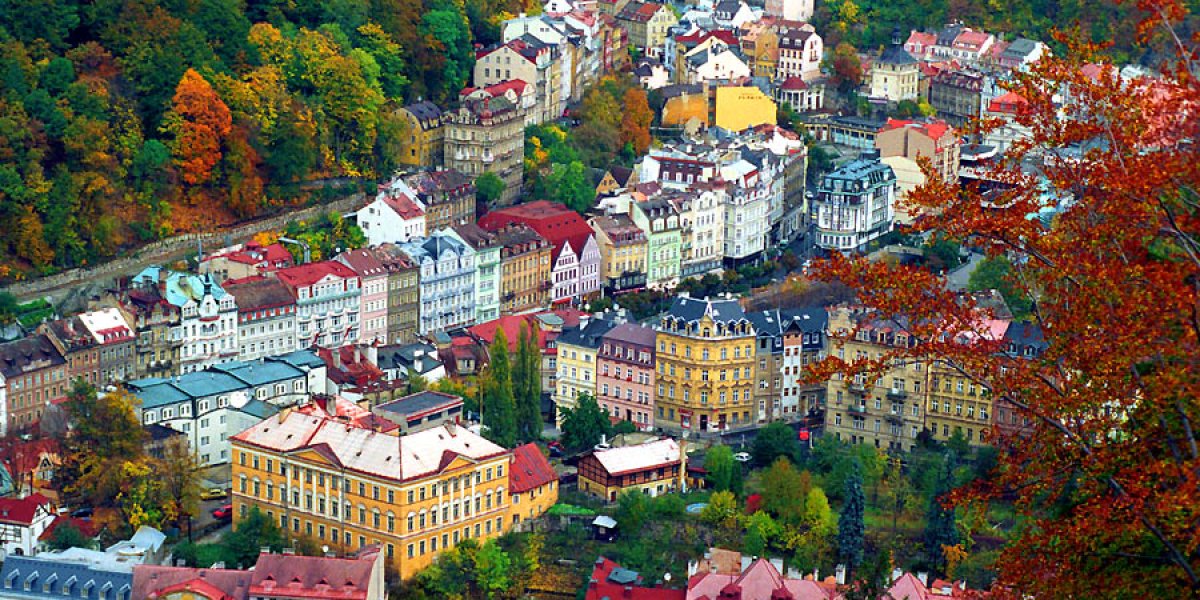
City Guide
Karlovy Vary
Chequia · Best time to visit: May-Sep.
Day-by-day plan
Choose your pace
Duración del viaje
09:00
Landmark
Step into the valley's most-photographed structure right at opening — morning light slants between 124 sandstone columns and you'll have the colonnade almost to yourself before the tour buses arrive at 10:30. Five mineral springs flow from brass spouts along the promenade; buy a porcelain spa cup (lázeňský pohárek, €5-8) from a shop on Lázeňská street and start with Spring #2, the gentlest of the bunch. The classical orchestra that fills the colonnade at midday hasn't begun, so the only sound is your own footsteps on marble.
Tip: Stand at the southern corner near the orchestra pedestal at 09:15 — the sun lights the columns from the side and you can frame all 124 in one shot. Skip the cheap cups sold near the entrance; Manufaktura on Tržiště sells hand-painted ones at the same price and they're a real keepsake, not a souvenir.
Open in Google Maps →10:45
Landmark
Walk south along the riverside promenade past the wooden Market Colonnade — 5 minutes brings you to the brutalist 1970s glass pavilion that shelters Vřídlo, Karlovy Vary's mightiest spring. A 12-meter geyser of 73°C water shoots toward the ceiling every minute or two; fill your porcelain cup at the cooled-down taps along the wall and taste the intensely salty, sulfurous water that has drawn 600 years of European nobility here for the cure. Step outside afterward to photograph the baroque Church of St. Mary Magdalene perched on the hillside directly above.
Tip: Spring #5 (the hottest cooled tap inside the pavilion) is what the locals actually drink — start with #1 if you want a gentler introduction before working up to the strong stuff. Never photograph the geyser with flash; the mineral spray fogs lenses within seconds and is brutal to clean off.
Open in Google Maps →12:30
Food
Walk back 3 minutes north along Lázeňská street to Mefisto — a vaulted Czech bistro tucked between the colonnades where locals use the lunch special as their everyday meal. Order svíčková na smetaně (marinated beef in cream sauce with bread dumplings, €13) and the house dark beer (€3); the kitchen turns plates in under 20 minutes so you'll be back on your feet before the afternoon climb.
Tip: Avoid the trdelník stands along the colonnade — it's a Hungarian export sold to tourists, not actually Czech. If you're in a real hurry, order smažený sýr (fried Edam with tartar sauce, €8) which arrives in 10 minutes flat and is heavy enough to fuel the Diana climb.
Open in Google Maps →14:00
Landmark
Walk south along the Teplá river — the buildings turn grander and the trees taller, until after 8 minutes the cream-and-gold facade of Grandhotel Pupp opens onto Mírové náměstí. Daniel Craig walked through these doors as James Bond in Casino Royale; the lobby is open to non-guests and Becher's Bar inside will pour you a Becherovka neat (€5) on the exact spot where the film was shot. From the front terrace, the entire valley opens to the south — your last flat ground before the climb to Diana.
Tip: Frame the hotel's full curving facade from the small park across Mírové náměstí — the entrance steps cut off the building's most elegant wing. Do not eat dinner at the Grandrestaurant inside; its tourist menu is wildly overpriced and you'll eat far better at Embassy two bridges away.
Open in Google Maps →15:30
Landmark
Behind Pupp, the Stag's Leap trail enters beech forest and climbs in switchbacks for 30 minutes — halfway up, the iron stag statue at Jelení skok viewpoint commands a sweeping panorama, with the colonnades unspooling below as pale ribbons along the river. Continue 15 minutes uphill to Diana Lookout Tower; climb the 150 spiral steps to the 35-meter platform for a 360° view in afternoon golden light. Take the 1912 funicular back down to the Mariánské lázně station beside Pupp — the wooden cabin still smells of a century of varnish.
Tip: Catch the last funicular down at 18:00 in summer (17:00 in spring/autumn) — miss it and the forest descent gets dark fast under the canopy. Photograph the iron stag from the path below looking up so it silhouettes against open sky, not from the lookout platform above where it disappears against the trees.
Open in Google Maps →19:00
Food
From the funicular station, cross the small footbridge over the Teplá — Embassy is 100 meters along Nová louka, in a 19th-century townhouse where spa-cure nobility once dined and the Frühauf family has cooked since 1985. Order pečená kachna (slow-roasted duck with red cabbage and bramboráky potato pancakes, €22) and finish with chilled Becherovka (€4), the herbal liqueur invented two blocks from this table in 1807. The Moravian whites on the wine list never leave the Czech Republic.
Tip: Reserve by phone the day before in peak season (July film festival, summer weekends) — there are only 12 tables and they fill nightly. Ask for a window seat over the river bend at dusk. Final warning for the walk back to your hotel: along Stará louka and Mírové náměstí, avoid any restaurant with English-language menus on easels outside and a host hovering at the door — they target tour groups with €40 'Czech specialty platters' that are microwaved and double the local rate.
Open in Google Maps →Saltar al día
09:00
Landmark
Begin at the river's east bank and let the 132 meters of Corinthian columns reveal themselves between the trees — built 1871-1881 by Josef Zítek, the same architect who designed Prague's National Theatre. Five hot springs flow inside the colonnade, each a different mineral content and temperature; buy your porcelain spa cup (lázeňský pohárek) at any kiosk for €6 and sip your way down the row, exactly as Goethe, Beethoven, and Tsar Peter the Great did before you. This is the town's defining image — and at 09:00 the morning light slants through the columns with no one in your photos.
Tip: Arrive before 09:30 — by 10:00 the day-trip buses from Prague unload and every spring tap has a queue. The salty Mlýnský spring (third from the right) is the most pleasant for first-timers; the iron-heavy Skalní at the far end tastes like sucking on a rusty coin — taste it for the bragging rights, then move on.
Open in Google Maps →10:30
Landmark
Walk south along the river promenade for 4 minutes, passing the white wooden Market Colonnade on your left (peek inside at the smallest Charles IV Spring where the town's founding legend is engraved). The brutalist 1975 glass hall ahead houses Vřídlo — a 12-meter column of 73°C mineral water erupting from a fissure 2,000 meters below the earth, the most powerful thermal geyser in continental Europe and the reason every other spring exists.
Tip: Stand on the left side facing the geyser column — the steam drifts right and you'll get the unobstructed shot. Downstairs there's a free spa hall with five drinking taps of the actual Vřídlo water (much hotter and saltier than the colonnade taps above) — bring your porcelain cup; the small ones can't hold the heat.
Open in Google Maps →12:30
Food
From the Hot Spring Colonnade, walk 4 minutes uphill on Zámecký vrch — the cobbled street curling toward the old castle tower — to this wood-paneled tavern in a 16th-century cellar. Order the svíčková na smetaně (beef sirloin in cream sauce with bread dumplings and cranberries, €11) and a 0.5L Pilsner Urquell from the tank (€2.50); finish with hot apple strudel. This is the exact hearty meal Karlovy Vary's spa guests have eaten for two centuries before walking it off along the colonnades.
Tip: Skip the English-menu places along Stará Louka where the same svíčková costs €25; here the Czech menu tops out at €15. Ask for a window seat in the upper room looking down over the colonnade rooftops — only four of them and they go first.
Open in Google Maps →14:00
Religious
Walk down the stone staircase from Sklípek and cross Kostelní náměstí — 3 minutes to the twin onion-domed Baroque towers. Built 1733-1736 by Kilian Ignaz Dientzenhofer (the master behind Prague's St. Nicholas), this is the finest high Bohemian Baroque outside the capital — the oval nave, the trompe-l'œil ceiling, the pink-veined marble altar. Most visitors stop in the nave for five minutes and leave; the real reward is the lower chapel below.
Tip: The 14th-century crypt below the church — bone reliquaries, vaulted brick, complete acoustic isolation — is reached through an unmarked side door on the right of the altar (50 CZK / €2). Almost no tourists find it. If you hear the organist practicing upstairs, stay until they finish a piece — the acoustics under the dome are extraordinary.
Open in Google Maps →15:30
Museum
Walk north along the river promenade for 15 minutes — you'll see the green Becherovka bottle motif on shop fronts, lampposts, even manhole covers — to the original 1867 distillery on T. G. Masaryka. The guided 90-minute tour walks you through the locked secret room (only two living people know the full herbal recipe), the cellar of oak aging barrels, the original 19th-century bottling line, and ends in a tasting room with four Becherovka varieties: the original 38% bitter, KV14 (the new sharper one), Cordial, and Lemond.
Tip: Book the English tour slot online the night before — 15:00 is the last departure and walk-ins after 16:00 are turned away. The 'Jan Becher 1807' premium bottle in the gift shop is €25, identical to Prague Airport duty-free, so this is the better place to buy — they vacuum-seal it for your suitcase.
Open in Google Maps →19:30
Food
Walk back south along the Teplá river for 12 minutes — magical at dusk when the colonnades light up from within and the steam ghosts off the warmest springs — to this elegant restaurant just above the Market Colonnade. Long considered the finest in the historic spa quarter, the kitchen marries Czech classics with French technique: the venison goulash with cranberries and forest mushrooms (€26), the wild boar medallions with juniper sauce (€28), and the apricot dumplings with browned butter and curd (€9) are the ones locals plan birthdays around.
Tip: Reserve three days ahead — there are only 14 tables. Two pitfalls to dodge before you go: (1) avoid the souvenir shops on Stará Louka selling 'hand-painted' porcelain spa cups for €25; the exact same cups (same local workshop) sit in the colonnade kiosks for €6-8. (2) Skip the 'massage parlors' along the promenade quoting €30 and adding €40 in 'oil supplements' at the end — book only at a real hotel spa.
Open in Google Maps →09:00
Landmark
Walk to the funicular station tucked behind the Grandhotel Pupp — the historic 1912 cog railway climbs 167 vertical meters through dense beech forest in just 3 minutes, emerging at 562m on Výšina Přátelství (Friendship Heights). Climb the 150 steps of the 1914 stone tower for a 360° view: every colonnade roof in miniature, the meander of the Teplá, the green hills wrapping the gorge in every direction. Below the tower a small free butterfly house is worth 15 minutes for the kids and the camera.
Tip: Take the 09:00 first funicular — by 11:00 the line is 20 minutes long and the top platform fills with group photos. The east-facing balcony has the killer morning shot of the town nestled in the gorge with full sun on the colonnades; from 11:00 onwards the sun moves behind the town and the photos go grey and flat.
Open in Google Maps →11:30
Landmark
Do not take the funicular back down. From Diana, follow the brown forest sign 'Jelení skok' east along a pine-needle path for 25 minutes — gentle descent, occasional benches, the colonnade bells ringing up from below. The trail opens suddenly onto a rock spur with the bronze chamois statue (cast 1850) and the most reproduced view in all of Karlovy Vary: the pink-and-cream Pupp framed by treetops directly beneath your feet. Legend says Charles IV's hunters chased a stag here in 1370 — the stag leapt into the steaming springs below, the king ordered a town built, and 600 years of spa culture followed.
Tip: The 'Restaurace Jelení skok' just behind the viewpoint now serves only drinks and ice cream — fine for a 10-minute break but skip the food. From the chamois statue, take the lower forest switchback (signed 'Pupp 15 min') rather than the road — quieter, shaded, and you emerge directly at the back of the hotel.
Open in Google Maps →13:00
Food
Step from the forest path straight into the Grandhotel's side entrance on Mírové náměstí — Café Pupp occupies the original 1701 building, older than the grand hotel that grew around it. Order the Pupp goulash with house bread dumplings (€14) and a tank-poured Pilsner; finish with the Pupp Cup sundae (€7), a sweet vanilla-and-cherry recipe unchanged since 1925. Empire-style mirrors, crystal chandeliers, and stucco swans line the walls — the room feels like nothing has been redecorated since Franz Joseph last stopped by.
Tip: Lunch service runs 11:30-15:00 — arrive at 13:15 and the morning tour groups have cleared, the second seating hasn't begun. Skip the hotel's main Grand Restaurant for daytime — same kitchen, double the price; the café is the smart play.
Open in Google Maps →14:30
Landmark
Walk from the café through the connecting corridor directly into the 1907 main hall — three centuries of building grew this complex from one bakery shop (Mr. Pupp, 1701) into the masterwork of Vienna's Fellner & Helmer, the architectural duo behind the Salzburg Festival Hall and the Odessa Opera. Wander freely through the Festsaal where July's film festival rolls out its red carpet, the gilded Grand Restaurant ceiling, and Becher's Bar where Daniel Craig filmed his Casino Royale (2006) baccarat scenes. The original 18th-century courtyard fountain still gurgles in the inner glass atrium.
Tip: Non-guests are welcome through all public areas during the day — walk in confidently and the concierge will not stop you. The film festival memorabilia cabinet in the side corridor behind the Festsaal contains Roman Polanski's signed champagne flute and Robert De Niro's wine glass; 99% of tourists walk straight past it because there's no sign.
Open in Google Maps →16:30
Religious
Exit the Pupp's main entrance and turn right, walking west up Sadová ulice for 8 minutes — past the 19th-century villas built for Russian and German aristocrat patients during the spa's belle époque — until five gilded onion domes rise above the chestnut trees. Built 1893-1897 with private donations from visiting Russian nobility, the interior is a complete Byzantine iconostasis brought piece by piece from Moscow: gilt panels, dark icons, the lingering scent of frankincense, and most weekday afternoons a small choir practicing the liturgy in the back nave.
Tip: Open 10:00-18:00 daily except during services (typically Saturday 17:00 vigil and Sunday morning liturgy — check the wooden board on the gate). 40 CZK / €1.50 entry, women should drape a shoulder scarf inside (one is provided at the door). The best photograph of all five domes catching the late sun is taken from the small park 30 meters back on the south side — not from directly in front, where a power pole cuts across the frame.
Open in Google Maps →19:30
Food
Walk east along Nová Louka for 6 minutes — the Teplá on your left murmuring beside you, the wooded slope rising on your right — to this 1839 townhouse two doors from the Pupp. Run by the same Karlovy Vary family for two generations, this is where the town's doctors and lawyers come for a serious Czech kitchen: smoked duck breast with red cabbage and Karlsbad dumplings (€24), wild-mushroom svíčková (€26), and dessert pancakes flambéed at the table with apricot brandy. Ask for a Moravian Pálava on the wine list — a perfumed white you cannot get outside Czechia.
Tip: Reserve in advance — only 11 tables, and the family politely turns away walk-ins after 19:30 because they cook to order. The single biggest tourist trap in Karlovy Vary is the row of waterfront restaurants on Stará Louka with English/Russian/Chinese menus stuck in the window and waiters touting from the doorway — prices run 2-3x what locals pay and the kitchens microwave the day's batch. Embassy is the antidote: Czech menu first, no touts, no tourist-bus parking allowed on the street.
Open in Google Maps →
Trip builder
Plan this trip around Karlovy Vary
Turn this guide into a bookable rail itinerary with FlipEarth.
Keep exploring
Related cities
More in the same country
FAQ
Frequently asked questions
How many days do you need in Karlovy Vary?
Most travelers enjoy Karlovy Vary in 1 days, with enough time for headline sights and a slower meal or museum stop.
What's the best time to visit Karlovy Vary?
The easiest season for most travelers is May-Sep, especially if you want good weather and manageable crowds.
What's the daily budget for Karlovy Vary?
A practical starting point is about €80 per person per day before hotels, then adjust based on museums, dining, and transport.
What are the must-see attractions in Karlovy Vary?
A good first shortlist for Karlovy Vary includes Mill Colonnade (Mlýnská kolonáda), Hot Spring Colonnade & Vřídlo Geyser (Vřídelní kolonáda), Grandhotel Pupp.