City Guide
Varna
Bulgarie · Best time to visit: May-Sep.
Day-by-day plan
Choose your pace
Durée du voyage
09:00
Landmark
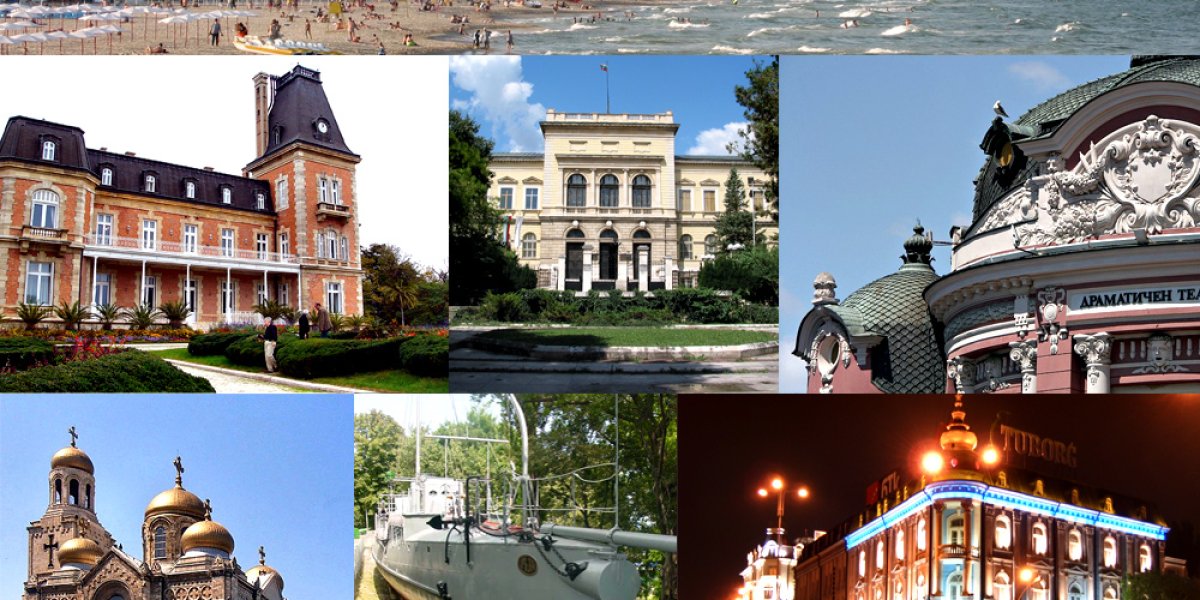
This 1898 neoclassical building is the casket of the world's oldest worked gold — a 6,500-year-old Chalcolithic hoard — but we're staying outside today. We're here at opening hour because the morning light hits the cream-colored facade at the perfect angle and the small front garden is quiet before the tour buses arrive; walk the full perimeter for the wrought-iron grilles, the Latin inscription above the door, and the original Cyrillic plaque on the side wall.
Tip: Stand on the southwest corner of Maria Luiza Boulevard directly across the street: the linden trees frame the full facade and almost no one shoots from this angle — most tourists waste their shot from the front steps where you can't fit the building in.
Open in Google Maps →10:15
Religious
From the museum, walk southwest down Maria Luiza Boulevard for 8 minutes past turn-of-the-century merchant houses until the street opens onto Cyril and Methodius Square and the 1886 cathedral rises with its three seafoam-green onion domes. Step inside (free) for the gilded Bulgarian iconostasis and the candle-lit Theotokos icon in the right-hand chapel, where locals stop to ask for safe travel before any long journey.
Tip: The brass chandeliers are fully lit only during the late-morning liturgy hour — this is the one window of the day you'll see the interior actually glow. Drop €1 for a beeswax candle in the iron box on the right; the smell alone is worth it and the soft flicker rescues otherwise dark phone photos.
Open in Google Maps →11:45
Landmark
Walk southeast for 12 minutes down Preslav Street through the pedestrianized old town, then slip into the narrow bougainvillea-draped lanes of the Greek Quarter where the 2nd-century Roman baths appear suddenly between apartment blocks — the largest preserved thermae in the Balkans. We're here at midday because the high sun maps the geometry of the surviving brick vaults and you can clearly read the hypocaust floor-heating channels from above; the perimeter walk gives you everything, no need to enter.
Tip: Climb the small staircase at the corner of San Stefano and Han Krum streets — there's a free public terrace looking straight down into the ruins, no ticket needed. The columns and apse line up dramatically from there; bring a wide-angle lens and shoot before 12:30 when the sun goes flat overhead.
Open in Google Maps →13:15
Food
Walk five minutes north up Han Krum Street to Slivnitsa Boulevard. Happy is the beloved Bulgarian chain born here in Varna in 1994 — yes, a chain, but it's where Varnans actually eat lunch and the menu is hyper-local. Order kebapche (grilled minced sausage, €2.50 each) with shopska salad (€4) or the sach (sizzling iron-skillet pork with vegetables, €9); the awning-shaded outdoor tables face the Court House and food hits the table in 15 minutes.
Tip: Order ayran (€2) instead of soda — the salty yogurt drink is the local pairing and cuts the heat far better. Ask for the kebapche 'na skara' (fresh off the grill, not pre-cooked from the warmer); it doubles the smokiness and most tourists don't know to ask.
Open in Google Maps →14:30
Park
Walk east on Slivnitsa Boulevard for 10 minutes until the street opens onto the cliff above the Black Sea — this is the gateway to Primorski Park, Bulgaria's longest urban garden at 8 km. We're walking the full coastal promenade now because the afternoon sun turns the water cobalt and the sea breeze flips off the inland heat; descend the central allée under century-old plane trees, pass the Aquarium, the open-air theater, and the Naval Museum's gunboat, and finish at the wooden pier near Asparuhovo for the postcard panorama of Varna Bay.
Tip: Skip the Pantheon of Revival Heroes and walk 50 meters east to the cliff-edge bench under the cypress trees — this is the best free Black Sea view in the city, and locals come here to propose marriage. The light goes golden around 17:30 and the bench gets claimed fast; arrive by 17:00 if you want it.
Open in Google Maps →19:30
Food
Walk back along the upper promenade for 15 minutes to Mr. Baba, perched on a wooden deck right above the water at the Sea Garden's eastern flank — Varna's most-loved seafood house. The kitchen sources daily from the Black Sea fleet that docks 800 meters away; order the safrid (whole-fried Black Sea horse mackerel, €12) eaten with fingers and a squeeze of lemon, and the rapana (sea snail in butter and garlic, €16), the Black Sea specialty you cannot get inland.
Tip: Reserve a deck table at least 24 hours ahead and arrive by 19:30 to catch the last sunset light on the bay — after dark the deck stays warm with heaters but the view loses its drama. Pitfall: avoid the seafront cafés along Knyaz Boris Boulevard near the casinos where touts pull you in from the street — they triple-price tourists and serve frozen fish. Mr. Baba and Captain Cook next door are the only authentic seafood houses inside the Sea Garden itself.
Open in Google Maps →Aller au jour
09:00
Religious
Start at Varna's twin-domed cathedral on Cyril and Methodius Square — you can spot the gold cupolas from blocks away. At nine the side aisles are still empty and eastern light streams through the iconostasis, illuminating frescoes painted by Bulgarian masters in the 1950s. Slip in quietly; locals come to light a candle before work, and you'll feel the city wake up around you.
Tip: Cover bare shoulders before entering, then exit through the north door and step into the cathedral garden — the only angle that captures both gold domes against open sky, and the gate is blocked by tour buses by 10:00.
Open in Google Maps →10:00
Museum
Exit the cathedral and walk five minutes north along Maria Luiza Boulevard through a leafy linden alley — the elegant 19th-century yellow building rises on your right at number 41. Head straight upstairs to the Varna Gold Treasure: more than 3,000 gold pieces from a single Copper Age grave, 6,500 years old, the oldest worked gold on Earth. While Stonehenge was still an empty field, a Black Sea king was buried here in 1.5 kilograms of gold.
Tip: Skip the audio guide and head straight to Hall 8 — Bulgarian school groups flood in around 11:00, so the first hour is your only window for silence. Buy the combined ticket here (museum + Roman Thermae, €7) to skip the queue at the Thermae later.
Open in Google Maps →12:30
Food
Walk eight minutes south down pedestrianised Knyaz Boris I Boulevard — Varna's main shopping street, shaded by linden trees and lined with old stone facades. Mekitsa & Coffee serves the city's signature breakfast-into-lunch: mekitsa, a Bulgarian fried-dough pillow, eaten with white cheese, honey, or rose-petal jam. Two pieces with a cold ayran runs €5; the smell of frying dough hits you from across the street.
Tip: Order one savoury (white cheese) and one sweet (rose jam or lyutenitsa) — locals call this combination the 'two-faced' breakfast. Add a tarator, the cold yoghurt-cucumber-walnut soup; it's the dish Black Sea Bulgarians say defines summer.
Open in Google Maps →14:00
Landmark
Walk ten minutes southeast down San Stefano Street — the massive brick walls rise suddenly out of a residential block, 22 metres tall, the largest Roman baths in the Balkans. Built in the second century when Varna was Odessos, a Roman port shipping grain to Constantinople, the complex sprawls across 7,000 square metres of arches, hypocausts and collapsed columns. Afternoon sun cuts diagonally through the ruined arches around 14:30 — exactly when shadows are sharpest for photos.
Tip: Climb the wooden stairs at the back of the caldarium for the only elevated view of the full complex — most visitors miss this and never see the scale. There's no shade on site; bring a hat in summer or come after 14:00 when the west wall casts a strip of shadow over the apodyterium.
Open in Google Maps →16:00
Landmark
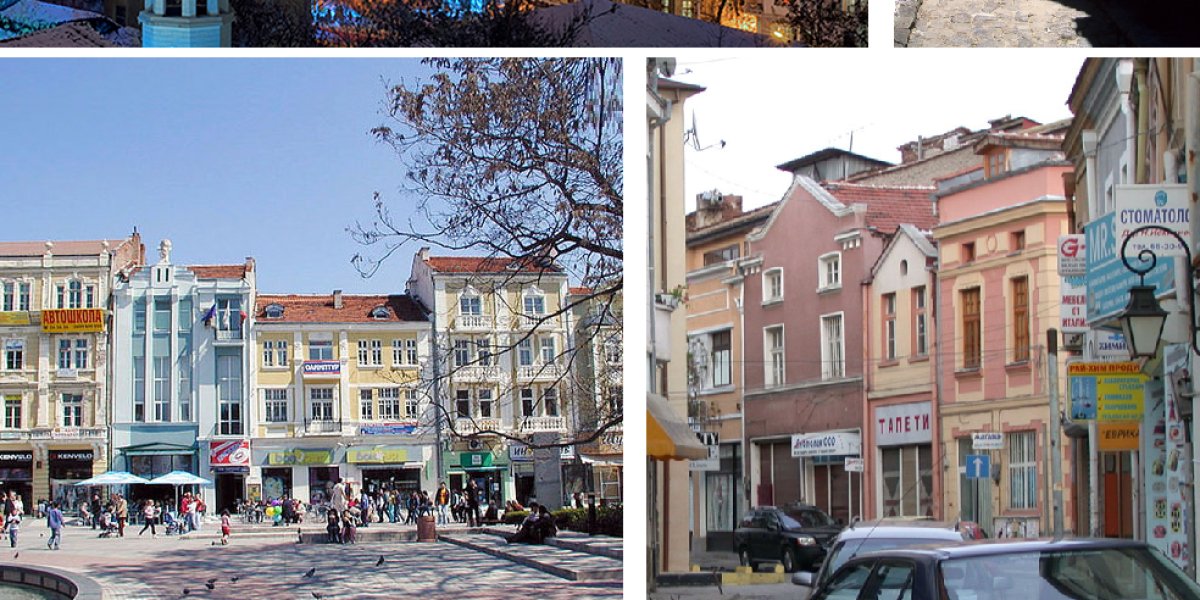
Walk seven minutes west back into the heart of the city — past stone fountains, tile-roofed mansions and waiters setting up for the evening — to Independence Square, the social heart of Varna. The Neoclassical theatre with its caryatid columns rises over the square; you don't need to enter, just sit on the steps and watch the city's evening corso, an old Black Sea promenade ritual still alive here. This is where every Varna generation, from teenagers to grandfathers, meets at dusk.
Tip: Between 16:00 and 17:30 the low sun turns the theatre's white facade gold — that is the photographer's hour. Stay until 21:00 in summer for the square's musical fountain show; it runs at 21:00 and 22:00 nightly.
Open in Google Maps →19:30
Food
Walk three minutes north along Slivnitsa Boulevard to Staria Chinar — 'The Old Plane Tree' — set in a hidden courtyard under a vast plane tree strung with lanterns at dusk. This is Bulgarian dining in its full evening form: order the kavarma (slow-cooked pork-and-vegetable clay pot, €11) and a glass of Mavrud, the dark red wine from Asenovgrad (€5). The courtyard fills by 20:30 with locals already on their second glass.
Tip: Reserve a courtyard table for 19:30 — by 20:30 every chair is taken. And here is the pitfall: along Knyaz Boris one block south, waiters with glossy five-language menus will pull you into pizzerias charging €20 for frozen-topping pizzas — only foreigners eat there. If a menu has photos of the food, walk on.
Open in Google Maps →09:00
Park
Take a five-minute taxi from any central hotel to the main southern entrance of Sea Garden, opposite the Festival and Congress Centre. Eight kilometres of plane trees, fountains and Soviet-era busts stretch along the cliff above the Black Sea — start here and walk north with the sea always on your right. At nine you'll meet only joggers, grandfathers playing chess at stone tables, and old men feeding the park's resident cats.
Tip: Take the lower cliff path (Alea Karaivanova), not the upper boulevard — fewer cyclists, dramatic sea views, and around the kilometre-two mark there's the one spot where the sea, the city skyline and the cathedral domes all fit into a single frame.
Open in Google Maps →10:30
Museum
Continue ten minutes along the cliff path — the small Art Deco aquarium sits right above the beach, built in 1932 as one of the first aquariums in Eastern Europe. Inside, every species in the tanks lives in the Black Sea outside the window: turbot, sturgeon, sea horses, stingrays. Forty-five minutes is enough; the appeal is the historic building and the Black Sea biology lesson, not the size of the collection.
Tip: Buy the combined ticket with the adjoining Natural History Museum ten metres away — €7 instead of €10 separately. Skip the dolphinarium further north: it's a 1980s-era concrete pool and the welfare standards are well below modern aquariums.
Open in Google Maps →11:45
Museum
Walk fifteen minutes south along the seafront promenade, past the rose garden and the old Sea Garden swimming pool, to the southern tip of the park — the Naval Museum sits in a colonial-style 1923 building. Out front in the open-air park rests the Drazki ('Brave'), the 1907 torpedo boat that fired the first Bulgarian shot of the First Balkan War in 1912, striking the Turkish cruiser Hamidiye and entering naval legend. Indoor halls cover the Bulgarian Black Sea fleet from 1879 to today.
Tip: The outdoor exhibition with the Drazki, submarine torpedoes and seaplanes is free, and arguably more interesting than the indoor halls. Children can climb on most of the deck guns; no one will stop you.
Open in Google Maps →13:30
Food
Walk five minutes west to Slivnitsa Boulevard — Stastlivetsa, 'The Lucky Man', is a Varna institution where naval officers, shop owners and Sea Garden joggers all eat the same kebapche-and-shopska-salad lunch. The menu is a forty-page volume of every Bulgarian classic ever written down: order the kavarma in clay pot (€8) or the Black Sea sprat (tsatsa) deep-fried whole (€7), with a Kamenitza beer at €2.
Tip: Order the tsatsa — eat them whole, heads and all, with lemon and a sprinkle of paprika; this is the dish every Varna grandmother makes. Skip the imported salmon on page 12: you're on the Black Sea, the local fish is the point.
Open in Google Maps →15:30
Landmark
Walk ten minutes downhill toward the sea — the long Varna Pier juts 200 metres into the Black Sea from the foot of the cliff below Sea Garden. In summer the beach below is wall-to-wall umbrellas, but the pier itself stays breezy and quiet. Walk to the end, sit on the wooden benches, watch swimmers below and fishermen casting at the rail — this is where Varna ends and the sea begins.
Tip: Walk all the way to the end of the pier and turn around — that view, back at the cliffs, the cathedral spires and the green Sea Garden, is the postcard photo of Varna. In summer you can swim off the side ladders for free; central beach umbrellas cost €5 a day, two thirds the price of the Golden Sands resort umbrellas.
Open in Google Maps →19:30
Food
Take a twelve-minute taxi south over the Asparuhov Bridge to Mr. Baba in Varna's fishermen's quarter of Asparuhovo — a wood-and-rope decorated seafood house that locals consider the city's best mussel kitchen. The midi (Black Sea mussels) come in a clay pot with white wine, garlic, lemon and parsley at €9 a pot; the grilled tsipura (sea bream) is €18 and weighed at your table. The dining room opens onto the sea breeze, the wine is a local Traminer from Khan Krum.
Tip: Order the midi-in-clay-pot and the grilled tsipura, and ask for the Khan Krum Traminer — not the imported Italian list. And the pitfall to avoid: those brightly lit cocktail bars along the Sea Garden steps where waiters wave laminated €15 cocktail menus at sundown — the same drinks cost €5 anywhere inside the city. If you can't read the price in Cyrillic on a printed menu, you're being charged the tourist tariff.
Open in Google Maps →
Trip builder
Plan this trip around Varna
Turn this guide into a bookable rail itinerary with FlipEarth.
Keep exploring
Related cities
More in the same country
FAQ
Frequently asked questions
How many days do you need in Varna?
Most travelers enjoy Varna in 1 days, with enough time for headline sights and a slower meal or museum stop.
What's the best time to visit Varna?
The easiest season for most travelers is May-Sep, especially if you want good weather and manageable crowds.
What's the daily budget for Varna?
A practical starting point is about €70 per person per day before hotels, then adjust based on museums, dining, and transport.
What are the must-see attractions in Varna?
A good first shortlist for Varna includes Archaeological Museum of Varna (Exterior), Roman Thermae of Odessos.