City Guide
Nessebar
Bulgarie · Best time to visit: May-Jun, Sep.
Day-by-day plan
Choose your pace
Durée du voyage
09:00
Landmark
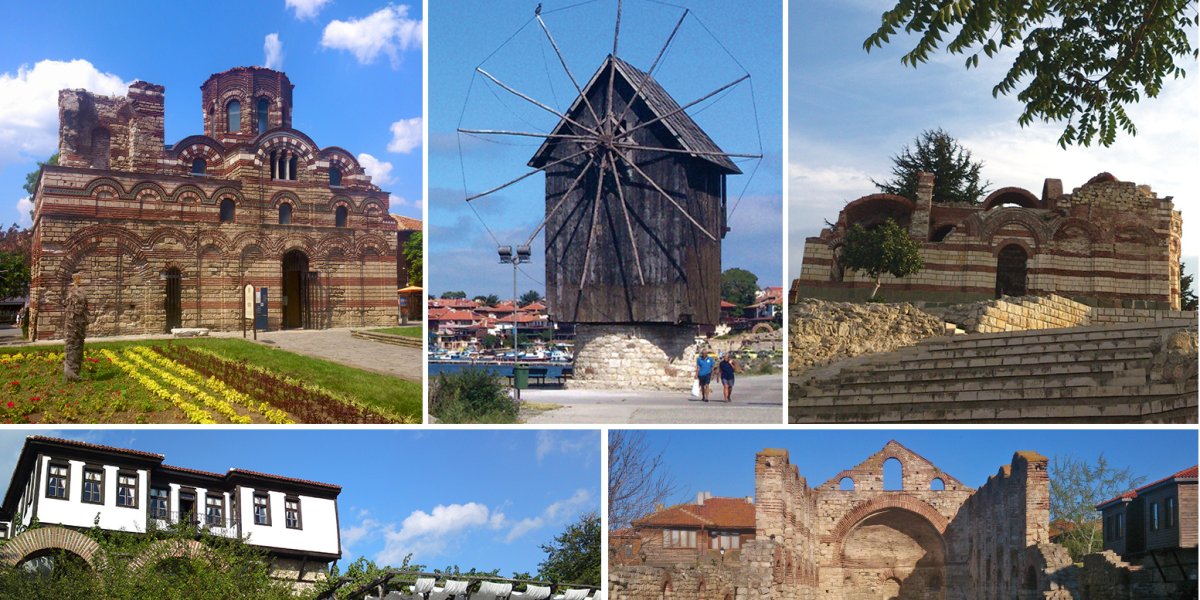
Start at the wooden windmill straddling the narrow stone causeway — the postcard arrival shot of Nessebar. At 09:00 the sun lifts from the eastern horizon directly behind the silhouette, turning the timbers gold and the bay silver, while the cruise-ship crowds are still 90 minutes away. Cross the cobbled isthmus slowly: this is the only spot on earth where you can frame the entire walled UNESCO peninsula in a single shot.
Tip: Stand on the south seawall facing east at 08:50 — the rising sun puts the windmill in pure silhouette against the water and the small fishing harbor enters the lower frame. The mainland parking lot fills with tour buses around 10:30, killing both the light and the angle within minutes.
Open in Google Maps →09:50
Religious
Walk east through the medieval Western Gate, 7 minutes along Mesembria Street — the cobbled spine of the Old Town that follows the original Roman cardo. The 13th–14th century Pantocrator is the most photogenic façade in Bulgaria: alternating red-brick and white-stone bands wrapped in ceramic discs glazed turquoise and ochre, all caught crisply by the late-morning sun. Circle the building twice — the southern wall with its four blind arches and the eastern apse with the brick swastika frieze are the two shots people remember.
Tip: The four ceramic discs on the southern wall are original 14th-century work — bring a long lens to catch the turquoise glaze. The interior is now a small commercial icon gallery and is genuinely skippable; spend that time walking the exterior instead.
Open in Google Maps →11:00
Religious
A 4-minute walk northeast through quiet residential lanes brings you to the roofless skeleton of the Old Bishopric — the spiritual heart of Byzantine Mesembria from the 5th century. The triple nave still rises in massive pink-stone arches open to the sky, framed by the Black Sea behind it. Climb the small grass mound on the northern side: the postcard frame catches the arches against pure horizon, with no modern building in sight.
Tip: Visit before noon — the lawn becomes the assembly point for cruise tour groups around 12:30, after which the open nave is full of headsets and umbrellas. The northwest corner is the only spot where you can include all three apses and the sea in one frame.
Open in Google Maps →12:30
Food
Walk 3 minutes south on a side lane to Mehana Chuchura, a stone-walled tavern set one street back from the tourist tide. Order kebapche (grilled minced-meat skewers, 8 BGN ≈ 4 EUR) with a shopska salad (cucumber, tomato, raw onion, grated sirene cheese, 7 BGN ≈ 3.5 EUR) and a cold Kamenitza beer — Bulgaria's most beloved cheap lunch combination. Total spend lands around 12 EUR per person; the grilled meat here is the local benchmark, smoked over real charcoal in the back courtyard.
Tip: Ask for the handwritten daily board in Bulgarian — it's 20–30% cheaper than the laminated English tourist menu and lists the morning's fresh catch. Arrive by 12:30 to claim a table in the back courtyard; the front terrace fills with tour groups by 13:15 and service slows to a crawl.
Open in Google Maps →14:00
Religious
From lunch, walk 8 minutes south down the cobbled lanes to the cliff edge — the path opens onto the most photographed ruin on the Bulgarian coast. The unfinished 14th-century Church of St. John 'the Unblessed' (Aliturgetos = 'never consecrated') stands alone above the surf, its red-brick fishbone masonry burning copper in the afternoon sun against the deep blue Black Sea. After circling the church, walk slowly back through the southern lanes — this is the quietest, oldest quarter of the Old Town, with timber-overhang houses leaning over the cobbles, fishermen mending nets at the harbor, and tiny ruined chapels (St. Paraskeva, St. Theodore, St. Sophia) tucked into every block.
Tip: The iconic angle is from the rocks about 20 m below the church on the seaward side — descend by the stone path on the eastern flank only (the western face is crumbling and slippery). At 16:30 in summer the western wall glows red-gold; bring a wide lens to fit the silhouette against the open sea.
Open in Google Maps →18:30
Food
Continue along the south seafront promenade for 4 minutes to Restaurant Neptun — a Nessebar institution with a wooden terrace built directly over the rocks, watching the sun fall behind the medieval city walls. Order the grilled tsatsa (whole crispy Black Sea sprat eaten head-and-all, 18 BGN ≈ 9 EUR), the mussels Plakia (white wine and tomato, 24 BGN ≈ 12 EUR), and a glass of dry Mavrud red from Plovdiv. Budget around 30–35 EUR per person; reserve a sea-side terrace table for 18:30 to catch the final sun lighting the apse of St. John Aliturgetos in the distance.
Tip: Order grilled tsatsa from the fixed-price menu — NEVER 'sea bass by the kilo'. The 'fish by weight' offer is the single most common Nessebar tourist trap: one modest fish can produce a 60–80 EUR bill. Decline the unrequested bread/olive starter (it's optional and silently adds ~4 EUR), check the bill line by line against the menu, and ignore anyone offering parrot photos on the promenade — the bird's 'fee' triples the moment the picture is taken.
Open in Google Maps →
Trip builder
Plan this trip around Nessebar
Turn this guide into a bookable rail itinerary with FlipEarth.
Keep exploring
Related cities
More in the same country
FAQ
Frequently asked questions
How many days do you need in Nessebar?
Most travelers enjoy Nessebar in 1 days, with enough time for headline sights and a slower meal or museum stop.
What's the best time to visit Nessebar?
The easiest season for most travelers is May-Jun, Sep, especially if you want good weather and manageable crowds.
What's the daily budget for Nessebar?
A practical starting point is about €65 per person per day before hotels, then adjust based on museums, dining, and transport.
What are the must-see attractions in Nessebar?
A good first shortlist for Nessebar includes Old Wooden Windmill at the Isthmus.