City Guide
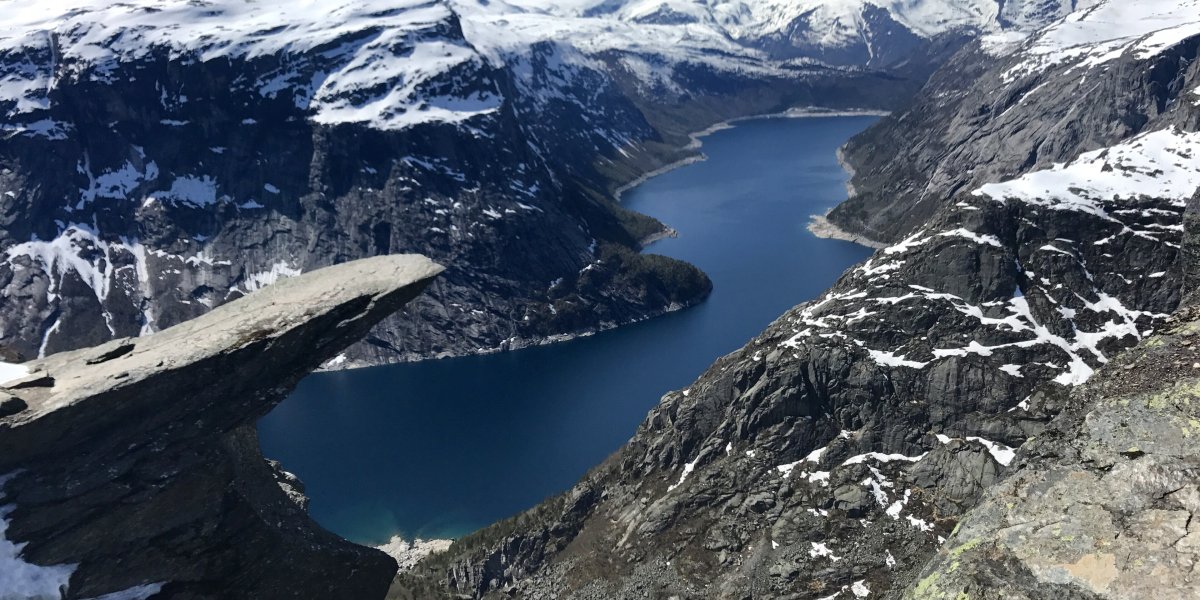
Trolltunga
Norvège · Best time to visit: Jun-Sep.
Day-by-day plan
Choose your pace
Durée du voyage
04:00
Landmark
Leave Odda by 03:30 and drive 12 km north up the deserted valley road to Skjeggedal — the official Trolltunga car park lies in shadow under the rusted skeleton of the Mågelibanen, a 1928 funicular once billed as Northern Europe's steepest, built to haul hydro engineers up the cliff. Catch the 04:30 Trolltunga Shuttle up the gravel service road to Mågelitopp (P3); this single decision compresses the 28 km classic hike into an 18 km power day and is the only way to be standing on the tongue before the first guided groups arrive.
Tip: Book the shuttle at trolltungashuttle.no the day before — slots disappear by 18:00 and there is no walk-up sale at the cabin. Pay the 300 NOK parking fee at the kiosk, not on the dashboard app (it doesn't read this valley).
Open in Google Maps →05:00
Park
Step off the shuttle at 1,200 m into thin alpine air and follow the red-T markers east — within fifteen minutes the last birches give way and you emerge onto the southern edge of Hardangervidda, Europe's largest mountain plateau. The strategic genius of starting here is twofold: you skip the brutal 1,100 m climb that ends most hikers' Trolltunga ambitions, and the first alpenglow on the Folgefonna glacier across the valley is yours alone, since hikers leaving Skjeggedal at dawn won't reach this elevation until 09:00.
Tip: Stay on the painted T-route — the plateau looks open but hides bogs and snow patches well into July. The first kilometre is the wettest; gaiters or genuinely waterproof boots are not optional, and trail runners will end the day with frozen feet.
Open in Google Maps →08:00
Landmark
The final approach drops over polished glacial slabs and skirts the milky turquoise gleam of Ringedalsvatnet before depositing you at the lip of Norway's most photographed cliff — a horizontal slab of gneiss jutting twenty-five metres over 700 m of empty air. At 08:00 you'll share the tongue with maybe five other early movers; by 11:00 the photo queue stretches forty deep and the magic is gone. Lie flat with your boots dangling — your photographer crouches three metres back on the safe ledge.
Tip: The iconic side-profile shot is taken from the small grassy mound 30 m south of the tongue, not from the rock itself — that's why every postcard angle looks the same. Wind gusts up here hit 60 km/h even in July; pack a hard shell, not just a fleece.
Open in Google Maps →11:00
Food
Forty minutes back along the return trail, a flat granite shelf drops cleanly toward the green-glacial Ringedalsvatnet — the only natural lunch table on the mountain and the unanimous local picnic stop. Unwrap the smørbrød you collected from Odda Bakeri at dawn: a prawn-and-mayo on rugbrød (45 NOK) and a fjord-cured salmon roll with dill (55 NOK), washed down with thermos coffee. Budget 120-150 NOK total — there is not a single shop, hut, or vending machine between the trailhead and Trolltunga.
Tip: Order your hiker box at Odda Bakeri by 16:00 the day before (they open at 06:00) — they prep insulated boxes only on request, and walk-ins after 07:00 get the leftover pastry case. Ask for two pieces of kvikk-lunsj chocolate — the Norwegian hiking ritual.
Open in Google Maps →14:00
Landmark
Back at Mågelitopp, skip the return shuttle and step onto the steep walking path that traces the line of the abandoned funicular straight down the mountainside — four kilometres of staircase descent with the entire Ringedalsvatnet valley unrolled below you like an open atlas. The 1928 cable towers still march down the cliff in rusted formation, slowly disappearing into the heather, and the perspective looking back up the line from the bottom is unlike anywhere else in Norway — pure industrial-age cathedral.
Tip: Hard on the knees; trekking poles cut the impact by half and most hikers underestimate this section. Allow 90 minutes if your legs are fresh, two hours after Trolltunga — the trail ends right at your Skjeggedal car, so the shuttle ticket is genuinely one-way.
Open in Google Maps →19:30
Food
Drive the final 12 km back into Odda and walk straight into Smelteverket — the cathedral-scale hall of the town's old zinc smelter, scrubbed of the soot and converted into the only proper sit-down restaurant for fifty kilometres. Order the slow-braised reindeer with juniper-cream sauce and lingonberries (385 NOK) and a side of brunost-glazed mashed potato (95 NOK); pair it with a Hardanger pear cider on tap. Budget 450-550 NOK with one drink, and you will earn every bite.
Tip: Book by midday at smelteverket.no — the hiker rush hits at 20:00 and walk-ins are sent to the bar counter. Avoid the pizzerias clustered along Røldalsvegen near the bus stop: triple the price, frozen bases, and the one stretch in Odda where locals genuinely never eat — that's the tourist-trap row of this valley.
Open in Google Maps →
Trip builder
Plan this trip around Trolltunga
Turn this guide into a bookable rail itinerary with FlipEarth.
Keep exploring
Related cities
More in the same country
FAQ
Frequently asked questions
How many days do you need in Trolltunga?
Most travelers enjoy Trolltunga in 1 days, with enough time for headline sights and a slower meal or museum stop.
What's the best time to visit Trolltunga?
The easiest season for most travelers is Jun-Sep, especially if you want good weather and manageable crowds.
What's the daily budget for Trolltunga?
A practical starting point is about €180 per person per day before hotels, then adjust based on museums, dining, and transport.
What are the must-see attractions in Trolltunga?
A good first shortlist for Trolltunga includes Skjeggedal Trailhead & Mågelibanen Shuttle, Trolltunga Rock, Mågelibanen Funicular Descent Trail.