City Guide
Geiranger
Norvège · Best time to visit: May-Sep.
Day-by-day plan
Choose your pace
Durée du voyage
08:00
Landmark
Start at the top of the world. The Skywalk platform juts out at 1,500 m with Geiranger a thumbnail on the water 1.5 km straight below. At 08:00 the morning light hits the snow patches sideways and the tour buses haven't started rolling — by 10:00 the platform is shoulder-to-shoulder. Drive the 5 km Nibbevegen toll road yourself (160 NOK) or grab the early summer shuttle (Geiranger Skywalk Bus, 09:00 from the harbor).
Tip: The platform faces north toward Geiranger — keep the morning sun behind you for clean shots without lens flare. Even in mid-July it sits near freezing at the top with wind; bring a windbreaker or you will not last 20 minutes. The toilet block at the parking lot is the last clean one until you're back in the village.
Open in Google Maps →10:00
Landmark
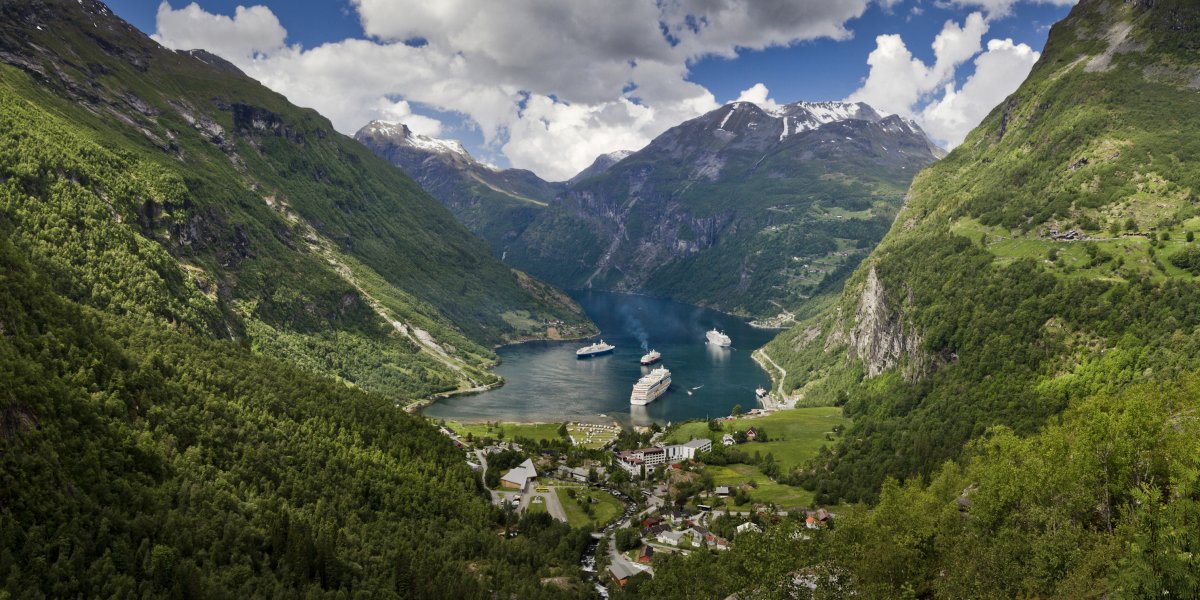
Drive 20 minutes back down Route 63 toward the village — the signed pull-off appears at the second sweeping bend. This is THE Geiranger photograph: a wedge of rock that juts over the fjord, cruise ships reduced to bath toys 600 m below. The famous overhang is a five-minute downhill walk from the car park, not the railed terrace where the buses stop. The descent matters: do it before lunch while your knees and the light are both fresh.
Tip: The Instagram rock is reached by a small worn path BELOW the official viewing terrace — leave the main platform on the left and follow the footworn trail down through the birches for three minutes. Most tour groups never find it and shoot from the safe railing. Stay back from the edge: it's a sheer 600 m drop, no fence, and the granite gets slick after morning dew or any drizzle.
Open in Google Maps →11:30
Food
Drive 8 minutes down into the village and park at the harbor — Naustkroa is the old converted boathouse 50 m from the cruise pier, the red-stained building at the end of the wharf. Order the creamy fjord fish soup with shrimp, salmon and dill (185 NOK) and the bacalao with potatoes and olives (245 NOK). Service is counter-style, plates land in ten minutes, and you're a two-minute walk from the cruise boarding gate.
Tip: Order at the counter — table service runs 30 minutes slower and you don't have it. The waffle with brown cheese (gjetost) and sour cream (95 NOK) is the local snack to share — much better than the cruise-pier kiosk version. Skip the souvenir bottles of aquavit at the shop next door; the village Joker supermarket carries the same brands at roughly half the price.
Open in Google Maps →13:00
Landmark
Walk 3 minutes from Naustkroa along the wharf to the cruise pier — the 13:00 round-trip Seven Sisters cruise (Fjordservice) sails daily May to September. The 90-minute loop traces the north wall: the Seven Sisters (Dei Sju Søstrene) tumble down 250 m in seven parallel streams; opposite, the Suitor (Friaren) faces them in a single thick column. Abandoned mountain farms cling to ledges where livestock once had to be roped so they wouldn't fall off. Afternoon light catches the spray and the waterfalls throw rainbows.
Tip: Board in the first wave and claim the upper outer deck on the LEFT (port) side — that's where Seven Sisters appears in close-up. The right side faces Suitor and the abandoned farms; you can only have one good side and most people don't realize until it's too late. The English commentary plays on the open-deck speakers and a printed map is at the cabin door — don't pay extra for the audio guide.
Open in Google Maps →16:00
Landmark
From the pier, drive 15 minutes up Route 63 north of the village — the Eagle Road (Ørnevegen) carves 11 hairpins into the wall of the fjord; the viewpoint sits at the top of bend 11. Late afternoon is the whole point: the western sun fills the fjord head, lighting the village gold while the Storsæterfossen plume pours past the platform edge. Stay 30 to 40 minutes — the light deepens through 18:00 in summer.
Tip: The official platform is small and gets buried under tour buses around 14:00–15:00; arrive after 15:30 once they've descended for the cruise terminals. For the iconic shot of the road snaking up the fjord wall, walk 50 m back DOWN the road from the platform and shoot from the second hairpin — the platform itself doesn't show the switchbacks at all. The pitfall here is the souvenir van at the parking lot selling 'genuine reindeer leather' bracelets for 300 NOK — they're machine-stamped cowhide imported from elsewhere.
Open in Google Maps →19:00
Food
Drive 15 minutes back to the village — Brasserie Posten occupies the yellow 1888 post office on the harbor, two doors from where you parked at lunch. Order the slow-braised reindeer with juniper and lingonberry (385 NOK) or the fjord trout pan-seared in brown butter with Jerusalem artichoke (320 NOK). The dining room looks straight at the cruise pier; ask for a window table when you reserve and time the meal for the long Nordic dusk that runs past 22:00 in midsummer.
Tip: Reserve at least 48 hours ahead in July and August — Geiranger has more cruise passengers than dinner seats, and walk-ins get a 90-minute wait. Skip the wine list (markups in Norway are brutal) and ask for the local Aass amber on tap instead. The pitfall on this harbor: don't be tempted by the places advertising 'local fish' in five languages on chalkboards — they're cruise-ship overflow, charging 600 NOK for thawed cod on a paper plate.
Open in Google Maps →Aller au jour
09:00
Landmark
Board the 09:00 sightseeing boat from the village pier — the 1.5-hour round trip glides past Knivsflåfossen (the Bridal Veil) and Dei Sju Systrene (the Seven Sisters waterfall), with abandoned cliff farms perched 250 m up the rock face. The 09:00 sailing leaves before the cruise ships disgorge their tour groups at 10:30, so the open upper deck stays empty and the morning sun hits the south wall of the fjord head-on.
Tip: Sit on the right (starboard) side as you leave the pier — Seven Sisters and her would-be Suitor (Friaren) waterfall face you on the way out, and the boat does not swing around to give the port side the same view. Book the night before at geirangerfjord.no to skip the pier-side queue.
Open in Google Maps →11:30
Museum
A 4-minute walk uphill from the pier — the cedar-clad centre sits on the hillside with windows running the length of the fjord. Multimedia rooms explain why this stretch of water won UNESCO status: glacial geology, the abandoned cliff-farm life, and the 1934 Tafjord rockslide that wiped out two villages 50 km away. Going indoors now beats trying to fit a museum in after a long hike later.
Tip: Skip the introductory cinema if you're short on time and go straight to the rockslide-and-tsunami room on the lower level — it covers the constant geological threat that hangs over every fjord village, and you won't find this exhibit anywhere else in Norway.
Open in Google Maps →13:00
Food
Walk 5 minutes back down toward the harbor — Posten occupies the village's old post office on the main square, with a covered terrace looking straight onto the cruise dock. Order the bacalao (salt-cod stew, 265 NOK / €24) which is the Norwegian classic served with a Sunnmøre twist, or the reindeer burger (285 NOK / €26) if you want something more dramatic. Budget €25-35 per person.
Tip: Arrive by 12:45 to grab a terrace table before the cruise-ship lunch wave hits at 13:15 — after that the wait stretches past 45 minutes. The fish soup starter (165 NOK) is generous enough to split as a second course.
Open in Google Maps →14:30
Park
From the brasserie, cross the bridge past the campground (8-minute walk) and pick up the trailhead — Fossevandring is a 327-step steel stairway that climbs alongside the Storfossen cascade, with cantilevered viewing platforms hanging out directly over the falls. Afternoon is when the snowmelt volume peaks and the sun angle throws rainbows through the spray on the third platform.
Tip: Wear shoes with proper grip — the steel grating gets slick from spray after 14:00 on warm days. Carry a windbreaker; the air on the upper platforms is a full 5°C colder than the village. Don't stop on the steps for photos at the busy crossings — descend to the next platform first.
Open in Google Maps →16:30
Religious
Walk back down to the waterfront and follow the shoreline path west for 10 minutes — the white octagonal wooden church (1842) sits on a slight rise above the village with the graveyard wall looking straight down the fjord. The interior is plain Norwegian Lutheran; what you came for is the angle from the cemetery's southwest corner — the postcard image of Geiranger framed by ridges on both sides.
Tip: Stand at the southwest corner of the graveyard wall — that's the exact angle every commercial photo of Geiranger is shot from, and it costs nothing, unlike Flydalsjuvet which charges 60 NOK for a similar view tomorrow. The church is usually unlocked in summer; donations 20 NOK in the wall box.
Open in Google Maps →19:30
Food
Walk back along the waterfront 8 minutes to the village square — Olebuda occupies the upper floor of an 1898 trading house, dark wood and white linen, with windows facing the fjord. The kitchen does refined Norwegian: try the slow-cooked lamb shoulder from local Norangsdal farms (425 NOK / €38) or the Atlantic halibut with brown butter and almond (475 NOK / €43). Budget €60-80 per person.
Tip: Reserve at least 24 hours ahead in season — only 40 seats upstairs and cruise nights book out solid. The downstairs Café Olè serves the same kitchen at half the price if you missed the reservation window. Pitfall: avoid the harbor-side chain restaurants near the cruise dock — bland food at double the village price, with US-style tipping aggressively pushed even though tipping is not the Norwegian norm.
Open in Google Maps →08:30
Landmark
A 25-minute drive south on Rv63 climbs the toll road to 1500 m and ends at the Geiranger Skywalk — a steel platform cantilevered out over thin air with the entire fjord laid out 1500 m below. Morning is non-negotiable here: cloud builds over the summit by 11:00 most days and erases the view completely, so the 08:30 arrival window is when the sightline down the full length of Geirangerfjord stays clean.
Tip: The toll booth (175 NOK per car) opens at 08:00 — be through it within the first 20 minutes to have the platform to yourself before tour buses roll in at 09:30. Bring a fleece even in July; it's reliably 5°C up there with wind. Don't waste time at the lower roadside viewpoints; the Skywalk is the only spot with the open south-facing sightline.
Open in Google Maps →10:30
Landmark
A 20-minute drive back down Rv63 toward the village — pull off at the marked layby above the village. Flydalsjuvet is the protruding rock ledge you've seen in every Norway travel poster, with a free path leading to the natural boulder and a separate paid platform behind. The lower morning sun still lights the south face of the fjord without the heat-haze that builds after midday.
Tip: Skip the paid viewing platform (60 NOK) — the free boulder 100 m further down the marked path has the better, lower angle and zero queue. Do NOT climb onto the protruding rock itself; people have died falling off the photo angle, and a sturdy fence now blocks the worst spot. Have someone take the shot from the rear path instead.
Open in Google Maps →12:30
Food
Drive back down to the village and turn off onto the gravel road climbing the north hillside — Westerås is a 250-year-old working farm with a restaurant in the converted summer barn, perched 250 m above the fjord. They serve genuine farm cooking: rømmegrøt (sour-cream porridge with cured meats and flatbread, 215 NOK / €19) and the seterpølse sausage plate from their own animals (255 NOK / €23). Budget €25-35 per person.
Tip: Order the rømmegrøt to share as a starter, then the fenalår (cured lamb leg) plate — together they're the most authentic Sunnmøre farm meal in the valley. Reservations aren't taken; arrive by 12:30 or you'll wait, since this is also the trailhead for the next stop and hikers crowd in from 13:00.
Open in Google Maps →14:00
Park
The trailhead is the Westerås parking lot — a 40-minute uphill hike on a well-graded path crosses sheep pasture and birch forest before opening onto Storseterfossen, one of the few waterfalls in Europe where the trail passes behind the cascade along a natural rock ledge. The afternoon snowmelt makes the curtain of water at its loudest and densest right when you arrive.
Tip: Put your phone and camera in a dry bag or zip-locked pocket before the final 30 m of trail — the spray behind the falls soaks everything in seconds. The ledge is narrow and one-way in practice; let descending hikers cross through before you walk under. The return down takes 30 minutes, half the uphill time.
Open in Google Maps →17:00
Landmark
Drive back through the village and head north on Rv63 — the road climbs the 11 hairpin bends of Ørnevegen (the Eagle Road), and the stone viewing platform at the top looks back across the fjord at Seven Sisters waterfall and the village 620 m below. Late afternoon is the key window: the western sun lights the south wall of the fjord and the falls turn silver-white, exactly opposite to the morning shadow you saw from the boat.
Tip: Drive UP the Eagle Road, not down it — going up you're on the outside lane with the views, going down you're pinned to the inside cliff wall and stuck behind buses. Park at the upper main lot, not the lower switchback turnouts; the proper platform with the safety railing is at the very top, and the lower pullouts only show side angles.
Open in Google Maps →19:30
Food
Drive back down the Eagle Road into the village (15 minutes) — Hotel Union sits on a small rise above the harbor with its dining room running the full length of the fjord-facing wall. The kitchen does a three-course set menu (665 NOK / €60) that rotates seasonally: typically Atlantic cod, slow-roasted reindeer from Sunnmøre, and cloudberry parfait. The wine cellar is the deepest in Geiranger. Budget €70-90 per person.
Tip: Ask the host for a window table on the fjord side when you reserve — the south-facing windows catch the long Norwegian summer dusk over the water until past 22:00. Pitfall: ignore the touts handing out flyers for fjord-view dinner cruises near the dock — the food is microwaved and the boats don't actually leave the harbor mouth.
Open in Google Maps →
Trip builder
Plan this trip around Geiranger
Turn this guide into a bookable rail itinerary with FlipEarth.
Keep exploring
Related cities
More in the same country
FAQ
Frequently asked questions
How many days do you need in Geiranger?
Most travelers enjoy Geiranger in 1 days, with enough time for headline sights and a slower meal or museum stop.
What's the best time to visit Geiranger?
The easiest season for most travelers is May-Sep, especially if you want good weather and manageable crowds.
What's the daily budget for Geiranger?
A practical starting point is about €180 per person per day before hotels, then adjust based on museums, dining, and transport.
What are the must-see attractions in Geiranger?
A good first shortlist for Geiranger includes Geiranger Skywalk at Dalsnibba, Flydalsjuvet Viewpoint, Geirangerfjord Sightseeing Cruise.