City Guide
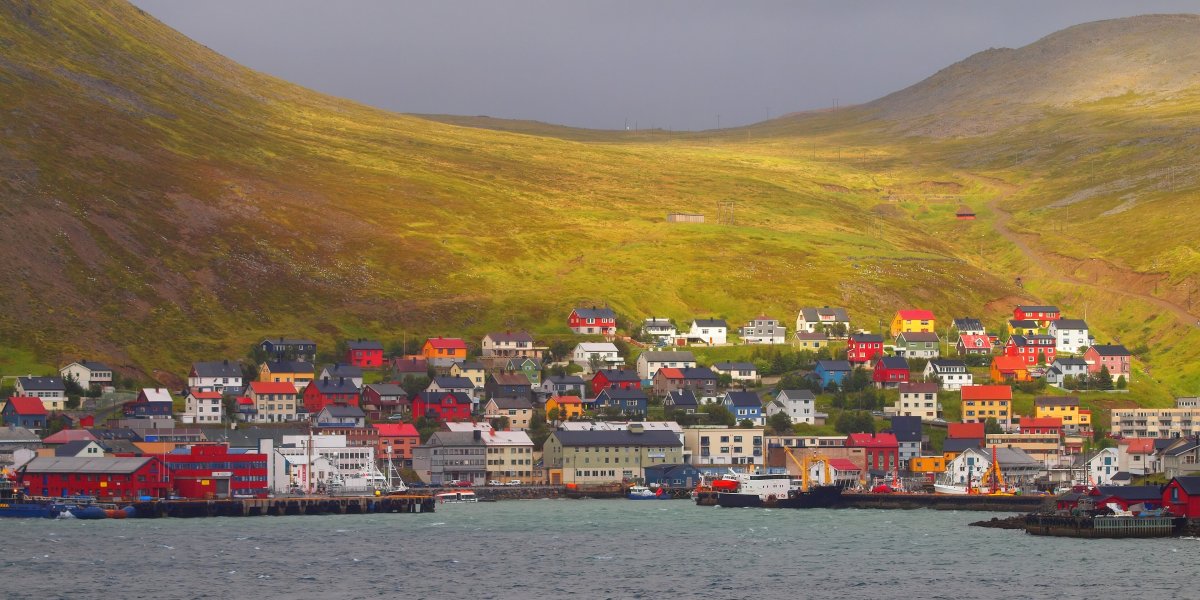
Honningsvag
Norvège · Best time to visit: May-Aug.
Day-by-day plan
Choose your pace
Durée du voyage
09:00
Landmark
Step off the Hurtigruten gangway or your hotel doorstep onto the working quay where coastal steamers have called since 1893 — the entire town is a five-minute crescent around this harbor. Trail the wooden boardwalk south past the red-and-ochre warehouses to the bronze Fishermen's Monument, a quiet sculpture honoring the men this town has buried at sea for a century. At 09:00 the cruise tenders haven't yet swarmed in, the Storbukt ridge across the bay still wears its morning shadow, and the low Arctic light rakes the painted sheds at exactly the angle painters chase up here.
Tip: Stand at the monument with your back to the water — the framing of red sheds against Storbukt is cleanest before 10:00, after which two cruise ships typically discharge 3,000 passengers onto this same 200-meter stretch. Skip the souvenir tents along Storgata; the same sealskin keychains and trolls cost a third less at the Joker supermarket two blocks inland.
Open in Google Maps →10:30
Religious
Walk five minutes uphill from the boardwalk along Storgata, past the schoolyard, to a small white wooden chapel that should not exist. In October 1944 the retreating Wehrmacht burned every building on Magerøya island under Operation Nordlicht — every house, every boat shed, every warehouse — and for some reason spared this 1885 church alone. For two brutal winters returning fishermen and their families lived inside it while the town was rebuilt around them. Walk the gravel ring once, read the bronze plaque on the south wall that names the families who sheltered in the cellar, then step inside if the door is open — the original 19th-century altar triptych still hangs above the nave.
Tip: The wooden interior glows best from the south windows around 10:30; by 11:15 the first excursion bus fills the small nave in two minutes. Locals consider flash photography of the altar disrespectful — and unnecessary, the natural light here is the point. The plaque is in Norwegian; the keyword to look for is 'brent' (burned) and 'reddet' (saved).
Open in Google Maps →12:00
Food
Drop three minutes downhill back to Storgata to Corner Spiseri, the workaday counter where Hurtigruten crews actually eat between port calls — wood-paneled, cafeteria-paced, no nonsense. The fiskesuppe (NOK 195 / €17) is the only order that matters here: a thick cream-and-cod chowder stocked with shrimp and root vegetables, served with brown bread and butter that the kitchen bakes that morning. If you're hungry add the reindeer slider plate (NOK 220 / €20). Budget €20-30 per person.
Tip: Arrive at 12:00 sharp — between 12:30 and 13:30 the cruise excursion buses dump 200 people onto Storgata and Corner is the first door they hit. Order at the counter, not from a server; counter orders turn around in under ten minutes. Do not order king crab here — they serve it frozen, and you'll want the live-tank version tonight.
Open in Google Maps →13:30
Landmark
From Corner Spiseri it's a 25-minute drive north on E69, the only road that exists on this island — by Snowman shuttle, taxi, or rental — to the Kirkeporten Hotell carpark at Skarsvåg, which calls itself the northernmost fishing village in the world. From the trailhead a stamped boardwalk-and-stone path crosses tundra moss for roughly 1 kilometer to a natural rock arch perched on a sea cliff. Step through the arch and the famous frame appears: the dark profile of the Nordkapp cliff itself sits inside the stone window like a painting hung on the horizon. This is the photograph every postcard steals — and almost no cruise tour stops here.
Tip: Frame the Nordkapp horn dead center inside the arch — stand about four meters back from the opening, crouch slightly, and let the top of the arch brush the cloud line. Mid-afternoon means the sun is behind you and the cliff face lights up dark gold instead of going to silhouette. Wear waterproof boots: the path is wet peat bog even in July and the rounded stones are slick — every season the Skarsvåg medics carry someone out with a twisted ankle.
Open in Google Maps →16:00
Landmark
Back in the car for 15 minutes further north on E69 — the road keeps narrowing, the tundra keeps flattening, and then it simply ends. You arrive at one of Europe's true geographic icons: a 307-meter slate-black cliff dropping straight into the Arctic Ocean, with nothing between you and the North Pole but 2,100 kilometers of polar sea. Walk past the dome of North Cape Hall directly to the steel Globe at the plateau's edge — this is the photograph you came for — then keep going. A gravel rim path runs 400 meters west to the Thai Monument and a quieter cairn; the package tours never leave the Globe, so the views out over the open Barents Sea from here are yours alone.
Tip: Follow the rim path past the Globe to the Thai Monument — there is no guardrail and the drop on your right is sheer 307 meters straight down, which is precisely why no tour bus brings their passengers here. Buy the plateau ticket online at visitnordkapp.no for NOK 270 (€24) instead of NOK 320 at the gate. Entry runs all night in summer; if you have the option to come back at 23:30 for the midnight sun (May 13–July 29), the sun swings due north and lights the cliff face from below — a different photograph entirely.
Open in Google Maps →20:00
Food
Drive 35 minutes south back to Honningsvåg harbor — the same boardwalk you started on this morning, now under low golden Arctic light — and walk the wooden quay to Sjøhuset, the old timber warehouse converted into the town's serious king-crab table. Order the king crab legs (NOK 595 / €52, half a crab) — they crack them tableside with wooden mallets and serve them with melted Arctic butter, lemon wedges, and dense rye bread. Start with a bowl of bacalao (NOK 285 / €25) if you want something hot first. Budget €60-80 with one beer.
Tip: Reserve before 17:00 or you will lose the harbor-window long tables — those are the only seats that catch the midnight sun across the water. Ask explicitly for crab from 'dagens fangst' (today's catch), not the freezer reserve; both are on the menu at the same price and the fresh is noticeably sweeter. Pitfall: ignore the 'king crab safari + dinner' combo packages hawked on the cruise pier at €280 — the safari boats run overloaded and the dinner is identical to walking in here for €60. The same trick repeats with the 'meet a Sami reindeer herder' photo packages on the dock; the costume is theater and the reindeer is a rented prop.
Open in Google Maps →Aller au jour
09:00
Religious
Begin at the town's only wartime survivor — when the retreating Germans razed Honningsvåg in October 1944, they spared this small white wooden church, and 150 locals huddled inside through the first scorched-earth winter. The pine interior still smells faintly of pitch, and the Arctic-blue stained glass behind the altar throws cold morning light across the floor. Five quiet minutes here grounds you before the museum two streets away.
Tip: Slip in before 09:30 to read the small WWII reconstruction panels by the entrance — most cruise groups arrive after 10:30 and walk straight past them. The framed black-and-white photo of the church standing alone in the ashes is the most powerful image in town.
Open in Google Maps →09:45
Museum
Walk three minutes south past the harbor masts to the converted fishing-supply warehouse on Holmen pier. Three floors trace how the Sami, fishermen, and Hurtigruten built a life at 71° north — the Pomor trade exhibit alone explains why Russian samovars sit in Norwegian kitchens. Visit now, while you still have fresh eyes; this is the geographic and historical anchor for everything that follows.
Tip: Go upstairs first and start with the 1944 forced-evacuation room — it is the museum's emotional core and you want silence for it. The 'Children of the Earth' scale models on the same floor preview the monument you'll stand in front of tonight.
Open in Google Maps →12:00
Food
Climb four minutes from the museum up Fiskerveien — Corner sits at the bend where Honningsvåg's two main streets meet. The Arctic fish soup is the town's quiet ritual: thick cream broth with cod, salmon and Lyngen shrimp, served with sourdough still warm from the oven. Locals eat here from noon; the cruise wave hits at 13:00.
Tip: Order the Arctic fish soup (NOK 235) and the reindeer carpaccio to share (NOK 195) — skip the burgers, which are competent but generic. Book the window banquette online the night before; on cruise days every table is gone by 12:15.
Open in Google Maps →14:00
Landmark
Drive or take the FFR bus 25 minutes north on E69 — you'll climb out of the fjord onto open Magerøya tundra, with reindeer often grazing at the roadside. Skarsvåg, the world's northernmost fishing village, is the trailhead for a 45-minute walk across spongy moor to Kirkeporten, a natural rock arch that frames the distant North Cape plateau through its window. This is the photograph almost no one knows about.
Tip: Stand on the seaward side of the arch, crouch low, and frame the Cape cliffs through the rock window — afternoon sun is behind you here. Wear waterproof boots: the last 200 m of trail is boggy even in July, and trail runners will soak through by the time you turn around.
Open in Google Maps →17:00
Landmark
Twenty more minutes on E69 brings the plateau into view — 307 m of black slate falling straight into the Arctic Ocean. The Globe monument stands at the cliff edge, the Children of the Earth reliefs face northwest, and the panoramic underground Hall plays an immersive Arctic-year cinema in 225° sweep. Stay through the evening: from 11 May to 31 July the sun never sets, and the midnight glow flattening across the ocean is what people fly here for.
Tip: Walk past the Globe and follow the small unmarked footpath west along the cliff edge — five minutes brings you to a viewpoint where Knivskjellodden, the actual geographic northernmost point of mainland Europe, juts 1.5 km further into the sea than where you're standing. Almost no cruise visitor finds this spot.
Open in Google Maps →20:30
Food
Three minutes inside the Hall complex — Kompasset's floor-to-ceiling windows face due north, so the Arctic Ocean fills the glass while you eat. The set Arctic menu plates the day's geography: king crab from the fjord below, reindeer from the tundra you crossed, cloudberry parfait from the cliff moss. Time the meal for 21:00 so the midnight sun is at its softest and lowest as dessert arrives.
Tip: Reserve the 3-course Arctic menu (NOK 745) at least 48 hours ahead — without a booking you'll be redirected to the Grotten cafeteria one floor down, which is the area's worst tourist trap: instant soup and frozen waffles at triple price for cruise day-trippers. After dinner, return to the Globe at 23:30 — the plateau empties as the last tour bus leaves at 23:00, and you'll often have the edge of Europe entirely to yourself.
Open in Google Maps →09:00
Entertainment
Walk three minutes down to Honningsvåg Harbor's main pier where your skipper waits in a red survival suit, holding yours. The RIB skims out to Sarnesfjorden where the world's largest crabs — legs spanning up to two meters — are hauled from 200 m down; you'll hold them on deck before they're boiled in seawater at a fjord-side cabin and cracked open in front of you. The cold spray is part of the deal — this is Arctic theatre, not a passive boat tour.
Tip: Book the 09:00 departure rather than the afternoon one — the sea is calmer before noon and the smaller morning group means you actually get to lift a live crab rather than just watch. Wear thermal layers under the suit: wind chill at 30 knots on the open fjord is brutal even in July.
Open in Google Maps →12:30
Food
From the safari pier, walk sixty seconds along the wooden quay — Brygge's red-painted timber facade is the first building you reach on the harbor. After two hours of crab, order something lighter: the bacalao, salt-cod stew in tomato and olives, has been simmering in this kitchen since 1989. Window seats look straight out at the same fjord you just sailed.
Tip: Order the bacalao (NOK 245) with a small aquavit — this is what Honningsvåg fishermen actually eat for lunch. Skip the king crab roll on the menu; you've eaten the real thing this morning, and the lunch version uses imported frozen meat at four times supermarket price.
Open in Google Maps →14:00
Neighborhood
Drive 45 minutes west on Fv889 — the road tunnels through bare granite and emerges at a hidden cove where 130 people still fish haddock and saithe as they have for four centuries. Walk the harbor path: drying racks of stockfish lean in the wind, eider ducks nest beneath the boats, and the ochre Sami warehouse at the end is the fishermen's coffee room. Half an hour here recalibrates your sense of scale before the cliffs.
Tip: Stop at the white roadside marker for 'Stappan Sjøprodukter' to watch the bird-safari skippers loading their cameras and tripods — you'll meet them again on the boat. Use the public WC at the village harbor before boarding; there is no toilet on the open bird boat for the full two hours.
Open in Google Maps →15:30
Entertainment
Walk three minutes from the village center to the wooden safari dock — the open boat departs precisely on the half-hour. Three steep sea stacks rise vertically 280 m from the ocean, blanketed each summer with 80,000 puffins, gannets, kittiwakes, and razorbills; the noise alone is unforgettable. The skipper noses the bow to within 30 m of the rock wall so the puffins whirl past at face level.
Tip: Sit on the port side (left as you board) — that's the side facing the stacks once the boat circles. Bring a 200 mm or longer lens; phone cameras vanish against the dark cliff. White-tailed sea eagles often arrive around 17:00 to hunt young puffins, a sight nature documentaries wait weeks to film.
Open in Google Maps →18:30
Landmark
Back in town, walk the harbor promenade from the Hurtigruten quay along Storgata to the church square — five painted blocks of working boathouses, not Instagram bait but actual sheds with halibut hooks and crab pots stacked outside. By 18:00 the cruise ships have sailed and the town finally exhales — locals come out for evening coffee on the benches above the marina. Light at this hour is the warmest you'll see all day.
Tip: Walk to the end of the eastern breakwater for the postcard frame: colorful boathouses in the foreground, snow-streaked Storfjellet mountain behind, an anchored fishing trawler in between. The harbor faces south, so even at 19:00 in midnight-sun season the sun stays low and golden on the wooden facades.
Open in Google Maps →20:00
Food
Two minutes' walk up Storgata from the church — Nøden's name means 'the necessity' and locals call it the town's living room. Order the slow-braised reindeer with cloudberry jus and crushed lingonberry potatoes, the dish that won this small kitchen a national mention in 2019. The pub side stays warm and loud; the dining room is quiet and faces the harbor lights.
Tip: Order the reindeer stew (NOK 385) and a Mack Arctic Ale (NOK 95) — skip the pasta dishes, which are filler for tour groups. Tourist-trap warning for Storgata: several souvenir-shop restaurants advertise 'reindeer tasting menus' at NOK 800+ that turn out to be reheated supermarket meat. Always check the venue actually has a working kitchen — Nøden cooks fresh daily from a single Karasjok herder, and the owner will tell you which one if you ask.
Open in Google Maps →
Trip builder
Plan this trip around Honningsvag
Turn this guide into a bookable rail itinerary with FlipEarth.
Keep exploring
Related cities
More in the same country
FAQ
Frequently asked questions
How many days do you need in Honningsvag?
Most travelers enjoy Honningsvag in 1 days, with enough time for headline sights and a slower meal or museum stop.
What's the best time to visit Honningsvag?
The easiest season for most travelers is May-Aug, especially if you want good weather and manageable crowds.
What's the daily budget for Honningsvag?
A practical starting point is about €200 per person per day before hotels, then adjust based on museums, dining, and transport.
What are the must-see attractions in Honningsvag?
A good first shortlist for Honningsvag includes Honningsvag Harbor & Fishermen's Monument, Kirkeporten Arch, North Cape Plateau (Nordkapp).