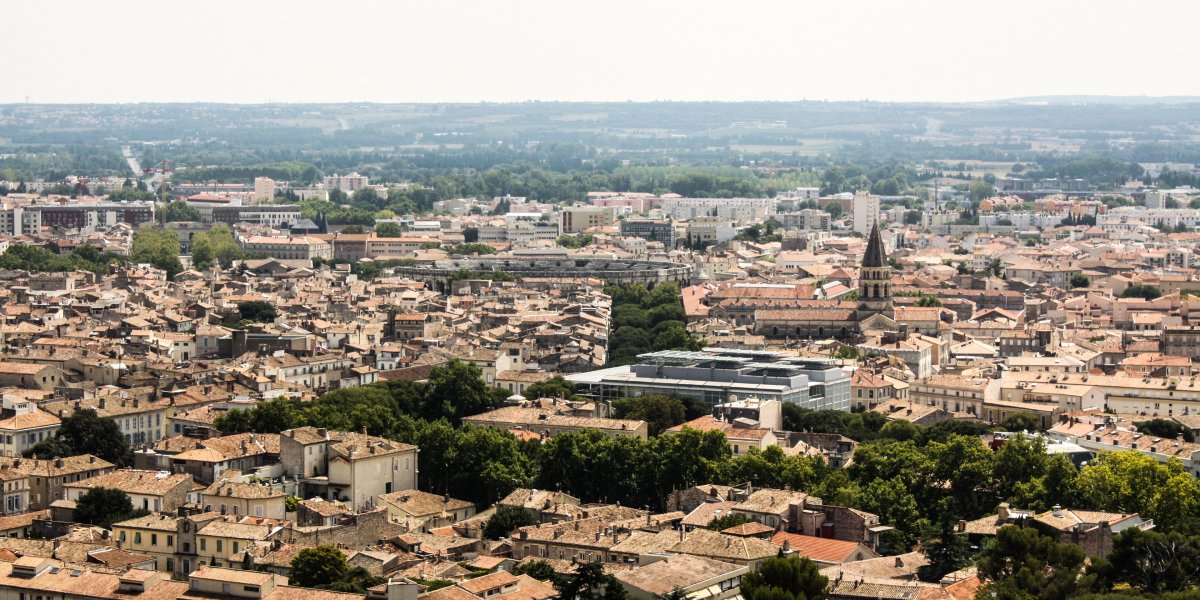
City Guide
Nimes
France · Best time to visit: Apr-Oct.
Day-by-day plan
Choose your pace
Durée du voyage
09:00
Landmark
A 5-minute walk north from Nimes-Centre station drops you straight at the southern facade of this 1st-century Roman amphitheater — the best-preserved one on Earth, more intact than Rome's Colosseum. Circle the two tiers of stacked arches in honey-colored limestone while the morning sun catches the eastern face exactly as the Roman engineers intended 2,000 years ago.
Tip: Walk the perimeter counterclockwise from Place des Arenes; the southwest corner where Boulevard de la Liberation meets the facade gives you the postcard shot with no cars in frame. Be there before 9:30 — by 10:00 the coach tours dump 300 people at the north gate.
Open in Google Maps →10:45
Landmark
Exit the Arenes north up Boulevard Victor Hugo for 6 minutes — you'll pass the Esplanade fountain on your right and the temple's columns rise above the rooftops ahead. This is the only fully intact Roman temple left standing anywhere on the planet, completed in 4 AD and later the architectural template for Thomas Jefferson's Virginia State Capitol.
Tip: Skip the temple interior and instead cross the square to Norman Foster's Carre d'Art glass museum opposite — ride the lift to its rooftop cafe terrace (free to enter) for the only elevated angle where you can frame the Roman temple against modern glass. Best photo at 11:00 when sunlight strikes the Corinthian capitals head-on.
Open in Google Maps →12:30
Food
Three minutes east through the pedestrian shopping streets, the brick halles building hides the city's culinary heart. Sixty stalls of cheesemongers, fishmongers and charcutiers ring a central counter zone where the same producers serve their goods cooked — oysters, brandade and pelardon goat cheese side by side.
Tip: Head straight to Brandade Raymond at the back-right corner — their salt-cod-and-potato spread on grilled bread is €9 and the recipe hasn't changed since 1879. Pair it with a glass of Costieres de Nimes red (€4) from the wine bar two stalls over. Arrive by 12:30 sharp; by 13:00 every counter has a queue and most close at 13:30.
Open in Google Maps →14:00
Park
Walk 10 minutes northwest along Quai de la Fontaine — a canal-lined boulevard of plane trees and 18th-century townhouses leads you straight to the gates. This was Europe's first public garden (1745), built around the Roman spring that founded Nimes; the Temple of Diana ruins sit just inside on the left, half-swallowed by ivy and at their most photogenic in slanting afternoon light.
Tip: Take the left fork at the entrance straight to the Temple of Diana first — stand inside the roofless shell at 14:15 when the sun cuts through the broken vault. Then follow the zig-zag terraces up the hill rather than the central staircase; the side paths are quieter and pass two small Roman fountains the tour groups miss entirely.
Open in Google Maps →15:30
Landmark
Continue up the garden's stone staircase, 8 minutes through cypress and pine, until the octagonal Roman tower appears on the city's highest point. Built around 15 BC to watch over the Via Domitia trade road, its top platform gives you the only view that pulls every stop of your day into a single frame — Arenes, Maison Carree, terracotta rooftops, and the Cevennes ridge to the north.
Tip: Climb the 140 interior steps — the €3.50 ticket is the only one worth buying today. On the upper deck go counterclockwise and look south first: the Arenes look like a copper coin embedded in the city. The afternoon haze typically clears by 16:00 — this is the sharpest view of the day before the sun drops into the Cevennes.
Open in Google Maps →19:30
Food
Descend the gardens via the eastern staircase and walk south through Rue Auguste and the old town for 15 minutes — narrow lanes, fountain squares, the early-evening cafe murmur — until you reach Boulevard Victor Hugo. This locals' bistronomy room is where Nimois eat the regional dish most central restaurants tourist-trap: Camargue bull, slow-braised in red wine and black olives, done properly.
Tip: Reserve 48 hours ahead — the 30-seat room fills nightly; ask for a table away from the door. Order the gardiane de taureau (€22) and the lemon-and-almond tart (€9). Pitfall: every restaurant ringing Place des Arenes with fairy lights and English-only menus is a €30-pizza tourist trap — walk the extra five minutes here where the locals actually are.
Open in Google Maps →Aller au jour
09:30
Landmark
Start the day at the gates the moment they unlock — this is the world's best-preserved Roman amphitheater, built around 70 AD and still hosting ferias and concerts every summer. The same vaulted corridors that once led gladiators to the sand now lead you to the central arena. Clap once at the elliptical center: the wall returns your sound in three distinct layers, the exact acoustics Roman senators heard.
Tip: Buy the Pass Nîmes Romaine (13 EUR) right at this first window — it bundles the Arena, the Maison Carrée and the Tour Magne for less than three separate tickets. Once inside, climb directly to the top tier (level IV) before the heat or crowds build: it is the only angle that captures the full elliptical arc, and the postcard shot is invisible from ground level.
Open in Google Maps →11:30
Museum
Exit the Arena's north gate and the rippling glass façade across Boulevard des Arènes is your next stop — a 90-second walk. Opened in 2018 by Elizabeth de Portzamparc, the toga-fold cladding shimmers in the late-morning sun and 5,000 artifacts excavated from Nîmes alone trace 25 centuries of the city — including the only intact Penthesilea mosaic in France. Finish on the rooftop terrace: there is no better view of the Arena than from directly above it.
Tip: Take the elevator straight to the third floor and work your way down — tour groups always cluster at the entry hall, so reverse the flow and you will have the mosaic rooms to yourself. The rooftop café La Table du 2 has a separate side entrance for non-museum visitors — locals come here for a pre-lunch rosé with the Arena framed below.
Open in Google Maps →13:00
Food
From the museum walk north along Rue de la République through the pedestrianized old town — a 7-minute stroll past Roman fragments still embedded in medieval walls. The covered market is where every Nîmois shops; the producers behind every counter live within 30 km. Grab a stool at one of the bistro counters inside and order what was on the chopping board behind you ten minutes earlier.
Tip: Order brandade de Nîmes at any of the in-market counters along the central aisle (around 12 EUR) — the salt cod whipped with olive oil and garlic is the city's signature dish, and no Paris bistro version comes close. Pair with a 4 EUR glass of Costières de Nîmes rosé. Sit down before 13:15 — the food counters close their kitchens by 14:00 and the market itself shuts at 14:30.
Open in Google Maps →15:00
Landmark
Leave Les Halles by the south door and walk down Rue Général Perrier — five minutes later the Corinthian columns rise from the corner like a hallucination. Completed around 4 AD, this is the only fully intact Roman temple anywhere in the world; Thomas Jefferson modeled the Virginia State Capitol on its exact proportions. Inside, a short 3D film explains why this temple survived when every other in Gaul was demolished — UNESCO finally listed it in 2023.
Tip: Already covered by your morning Pass Nîmes Romaine — no need to re-queue. Approach from the southwest corner around 15:30: the raking afternoon light strikes all six portico columns at once, and the Carré d'Art's glass façade reflects the temple in full. That reflection is the photo every guidebook misses.
Open in Google Maps →16:00
Museum
Walk thirty seconds across the square — the glass-and-steel building staring back at the Roman temple is your next stop. Norman Foster designed Carré d'Art in 1993 as a deliberate dialogue across 2,000 years: identical proportions, the same colonnade idea, opposite material. The contemporary collection inside leans Boltanski, Messager and post-1960 European art — but the real reason to come is the rooftop café.
Tip: Take the glass elevator straight to the top floor — the rooftop café Ciel de Nîmes is free to enter without a museum ticket, and its terrace is the only place in town where you can drink a glass of Lirac with the Maison Carrée framed at eye level. Sit on the east side for golden-hour reflection on the temple's columns.
Open in Google Maps →19:30
Food
A 6-minute walk south from Carré d'Art through the pedestrian lanes of Rue de la République brings you to Skab. The bistro has carried a Michelin star for years at neighborhood-bistro prices — the dining room is small, the kitchen open, the menu rewritten weekly with whatever came from Les Halles that morning. Expect Camargue bull, salt-marsh lamb, Pélardon goat cheese and almond desserts that taste like an entire Provençal afternoon.
Tip: Order the 4-course chef's menu (around 65 EUR) — à la carte costs nearly the same with less variety, and the cheese course features the Pélardon des Cévennes that defines this corner of France. Reserve 2-3 days ahead through their website; walk-ins almost never get in. Pitfall on the walk back: avoid the restaurants directly facing the Arena (Le Lisita and its neighbors) — they charge Michelin prices for microwaved brandade aimed squarely at first-time tourists who don't know better.
Open in Google Maps →09:00
Landmark
Take the Edgard bus B21 from Nîmes Gare Routière (45 minutes, 1.50 EUR) — by car it is 25 minutes via the D979. The three-tiered Roman aqueduct rises 49 meters out of the gorge, the tallest ever built by Rome — 50 km of stone-perfect plumbing that fed the city its drinking water for five centuries. Cross the bridge on the lower tier, scramble down to the riverbank for the canonical photo angle from beneath, then circle back through the museum on the left bank.
Tip: Enter via the left bank (rive gauche) — the official museum and the most dramatic upward angle of the aqueduct are both on that side, while tour buses default to the right. Arrive by 09:30 sharp: the first coach groups roll in at 10:30 and by noon the riverbank is full. Pack water from Nîmes — café prices at the site are tourist-trap level.
Open in Google Maps →13:00
Food
Return to Nîmes (45 min by bus, 25 min by car) and walk west from the Maison Carrée along Rue de Sauve for 5 minutes to this neighborhood institution. Thirty seats, white linen, market-driven cooking — the lunch menu is rewritten every week according to what showed up at Les Halles that morning. This is where Nîmois bring their out-of-town family when they want to show off without ostentation.
Tip: Order the 23 EUR three-course lunch menu (du marché) — it runs less than half what dinner costs and shows the kitchen at its most playful. The gardiane de taureau (Camargue bull stew with black olives) is the must-order if it appears; ask for an extra spoon of the sauce to soak with bread. Call them by 10:00 the same morning — that nearly always works for a lunch table.
Open in Google Maps →14:30
Park
Walk west on Quai de la Fontaine for 4 minutes — the canal on your right was dug in the 18th century to drain the sacred Roman spring at the foot of Mont Cavalier. Inaugurated in 1745, these were the first public gardens in France, laid out around the Nemausus spring that gave the city its name. Climb to the lower terrace to the Temple of Diana — actually a Roman nymphaeum half-collapsed, half-swallowed by ivy, the most photogenic ruin in Nîmes.
Tip: Enter through the main gate by the canal and walk clockwise — the Temple of Diana sits on the right-hand lower terrace, and at 15:00 the southwestern light hits the ruined arches from inside, lighting them rather than shadowing them. Skip the central baroque fountain (overrun with school groups) and head straight up the stone staircase behind it toward the tower.
Open in Google Maps →16:00
Landmark
From the Temple of Diana, follow the zigzag path up Mont Cavalier — a 12-minute uphill walk through umbrella pines that smells, in summer, exactly like the south of France. The Tour Magne is the only surviving piece of the original Roman city wall — a 32-meter octagonal watchtower built before Christ. Inside, 140 stone steps spiral to the top, where the entire Languedoc plain opens out: the Arena to the south, Mont Ventoux on a clear day to the northeast.
Tip: Already covered by yesterday's Pass Nîmes Romaine — bring the ticket. Climb between 16:00 and 16:30: the light is angled, the day-trippers have already left, and the south-facing platform catches the Arena in a single sweep of late-afternoon gold. Bring water — there is no café anywhere on the hill.
Open in Google Maps →17:15
Religious
Descend the east side of Mont Cavalier through Rue de la Lampèze — a quiet 12-minute walk down through residential streets into the medieval old town. The cathedral was consecrated in 1096; the Romanesque frieze along the upper west façade depicts Adam and Eve being expelled, in stone reliefs that survived the religious wars almost unbroken. Inside, the nave is dim, cool and silent — Nîmes's only true respite from the Languedoc afternoon heat.
Tip: Slip around to the cathedral's north side to find Place aux Herbes — the medieval square the cathedral opens onto, ringed with cafés the locals actually use rather than the tourists. Order an espresso at one of the terrace tables (around 2 EUR) and watch the late-afternoon market wind down — it is the most authentic 30 minutes you will have in Nîmes.
Open in Google Maps →19:30
Food
Walk north from the cathedral up Rue de l'Aspic for 5 minutes to Rue Littré — the white-tablecloth dining room beside Les Halles has been the city's serious dinner address for three decades. The brandade de Nîmes here is the version Michelin inspectors quietly recommend; the gardiane de taureau comes with black olives from a family grove an hour north. The terrace garden, hidden inside a 17th-century courtyard, is the seat to ask for May through September.
Tip: Book the 45 EUR three-course menu — the gardianne de taureau is the order, and ask the sommelier for a glass of red Costières de Nîmes (the local appellation, around 12 EUR) to drink with it. One pitfall warning for the walk back: ignore the souvenir stalls along Rue de l'Aspic charging 9 EUR for jars of Picholine olives — the same olives sold at Les Halles this morning for 3 EUR. Buy them from the market on your way out of town tomorrow.
Open in Google Maps →
Trip builder
Plan this trip around Nimes
Turn this guide into a bookable rail itinerary with FlipEarth.
Keep exploring
Related cities
More in the same country

FAQ
Frequently asked questions
How many days do you need in Nimes?
Most travelers enjoy Nimes in 1 days, with enough time for headline sights and a slower meal or museum stop.
What's the best time to visit Nimes?
The easiest season for most travelers is Apr-Oct, especially if you want good weather and manageable crowds.
What's the daily budget for Nimes?
A practical starting point is about €85 per person per day before hotels, then adjust based on museums, dining, and transport.
What are the must-see attractions in Nimes?
A good first shortlist for Nimes includes Arenes de Nimes, Maison Carree, Tour Magne.