City Guide
Granada
Espagne · Best time to visit: Mar-May, Sep-Nov.
Day-by-day plan
Choose your pace
Durée du voyage
09:00
Religious
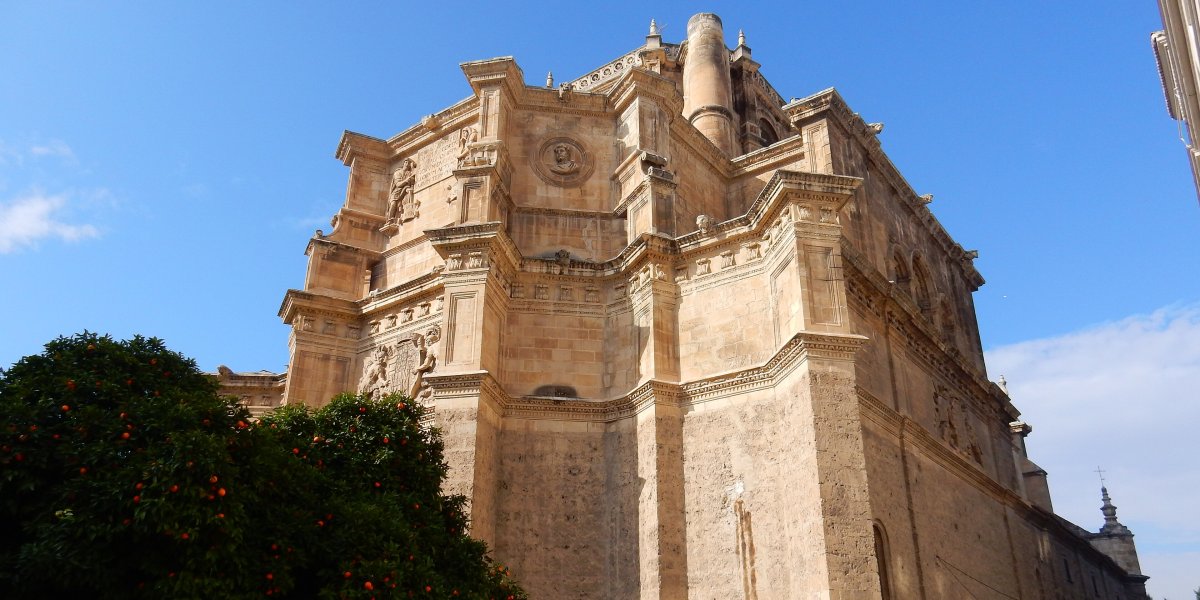
From any city-center hotel, most streets lead to Plaza de las Pasiegas within ten minutes. The Cathedral's Renaissance facade fills the square — five stories of honey-colored stone that the early-morning sun throws into sharp relief. Walk around to narrow Calle Oficios for the Gothic exterior of the Royal Chapel, where Ferdinand and Isabella rest behind iron grilles.
Tip: Stand at the southeast corner of Plaza de las Pasiegas where the full facade fits in one wide-angle frame without distortion. The alley Calle Oficios between Cathedral and Royal Chapel is one of the city's most dramatic corridor shots — morning shadow carves every detail in the stone.
Open in Google Maps →10:15
Neighborhood
Walk north through Plaza Nueva — the Darro river appears on your right as the street narrows into cobblestone. Carrera del Darro follows the water beneath the Alhambra's towers, past the 11th-century El Bañuelo bathhouse and medieval stone bridges, ending at Paseo de los Tristes where the full palace panorama opens above the tree line. With the morning sun behind you, every photo of the fortress is perfectly exposed.
Tip: Stop on Puente de Cabrera, the small stone bridge halfway along — it frames the Comares Tower between old houses on both banks. Morning light here is ideal: the sun is at your back and the Alhambra glows without lens flare. This is the shot you will send home.
Open in Google Maps →12:00
Food
You are already here — the promenade opens at the end of Carrera del Darro. Order a caña (small draft beer, €2.50) at any terrace bar facing the Alhambra and a free tapa appears — croquetas, albondigas, fried aubergine, whatever the kitchen made that morning. Two rounds is a complete lunch beneath the Comares Tower for under €10.
Tip: Never order food from the menu — just keep ordering drinks and the free tapas escalate in size with each round. Point at what your neighbor is eating and the waiter will bring you the same. This is how locals eat lunch in Granada.
Open in Google Maps →13:00
Neighborhood
From the eastern end of Paseo de los Tristes, follow Cuesta del Chapiz uphill for five minutes and fork left onto Camino del Sacromonte — whitewashed cave entrances begin immediately. Homes burrowed into the hillside with chimneys poking from the earth, cactus gardens flanking painted doors, and views east over the raw Valparaíso valley. Flamenco was not born on a stage — it started in these cave living rooms inside the rock.
Tip: The lower 500 meters of Camino del Sacromonte has the best cave facades and widest valley views — beyond that the scenery plateaus and the return adds 40 minutes. Hawkers near the bottom sell flamenco tickets aggressively; authentic evening shows start at €25, so anything cheaper is a bait-and-switch.
Open in Google Maps →15:00
Landmark
Retrace to Cuesta del Chapiz and climb into the Albaicín — follow any ascending alley toward San Nicolás through whitewashed streets barely wide enough for two, past jasmine-draped walls and carved Moorish doorways. The hour-long climb is the appetizer; the main course arrives when the labyrinth spills onto a stone terrace and the Alhambra fills the entire horizon — red ramparts, cypress gardens, Sierra Nevada snowcaps. Arrive around 16:00 when the westering sun turns the palace walls to deep amber.
Tip: Stand at the far-left end of the terrace for the cleanest composition — no lamp posts, just palace and mountains. Afterward, wander downhill toward Calderería Nueva and stop at any tetería for a glass of mint tea (€3) while the sunset glow lingers behind you.
Open in Google Maps →19:00
Food
Descend through the Albaicín to Calderería Nueva — the Moroccan tea-and-spice street hung with brass lanterns — then five minutes further south to Calle Almireceros off Plaza Nueva. Bodegas Castañeda, open since the 1890s, is all dark wood, hanging jamón legs, and vermouth barrels behind the bar. Order the montadito de lomo en manteca (pork-loin sandwich, €3.50), a bowl of salmorejo (cold tomato cream, €4.50), and a vermut de grifo (draft vermouth, €2.80) — budget €15–25.
Tip: Arrive at 19:00 to claim a table — by 20:30 it is standing room only and the montaditos sell out. Stay downstairs at the bar counter where the atmosphere lives. Avoid the restaurants lining Plaza Nueva that post food photos and bark menus at passersby — Granada's real tapas bars never need to advertise.
Open in Google Maps →Aller au jour
08:30
Landmark
From Plaza Nueva, walk up the shaded Cuesta de Gomérez — the 15-minute climb through a canopy of elm trees builds anticipation beautifully. Enter the Nasrid Palaces at the first timed slot of the day: with soft morning light streaming through carved stucco and reflecting off mirror-still pools, the Court of the Myrtles and the Court of the Lions feel almost private. Cross to the Alcazaba watchtower afterward for a sweeping panorama of Granada, the Albaicín, and the snow-capped Sierra Nevada.
Tip: Book the 08:30 Nasrid Palaces time slot at least 2 months ahead on the official Alhambra website — tickets sell out weeks in advance, especially in spring and autumn. Visit Nasrid Palaces first, then Alcazaba. The morning sun illuminates the interior of the Comares Hall most beautifully before 10:00, creating golden reflections on the honeycomb ceiling that vanish later in the day.
Open in Google Maps →11:00
Park
Exit the Alcazaba and follow the signed path east through the Alhambra's upper grounds — a 10-minute stroll past trimmed hedges and cypress alleys. The Generalife was the summer retreat of the Nasrid sultans, and its terraced water gardens are among the most photographed in Europe: long channels of running water lined with arching fountains, rose bushes, and orange trees. The Patio de la Acequia is the centerpiece — sit on the stone bench at the far end for the perfectly symmetrical shot.
Tip: By 11:00 tour groups flood the Nasrid Palaces but the Generalife stays comparatively peaceful. Walk past the main courtyard and climb to the upper Jardines Altos — almost no one goes up there, and the elevated view over the entire Alhambra complex against the Sierra Nevada is arguably the single best photograph in Granada.
Open in Google Maps →12:30
Food
Exit the Alhambra through the main gate and walk down the Cuesta de Gomérez — a steep, leafy 15-minute descent through elms that drops you right at Plaza Nueva. Bodegas Castañeda has been pouring wine behind its dark-wood bar since the 1930s, and every drink comes with a free tapa — the Granadian tradition at its purest. Order a glass of local Alpujarras wine (€3) and a half-ración of their legendary jamón ibérico (€8) while standing elbow-to-elbow with locals.
Tip: Arrive by 12:30 to beat the lunch rush — by 13:30 it's standing room only and you'll wait for a gap at the bar. Stay at the counter rather than sitting at a table: free tapas flow fastest here and the atmosphere is best. Two glasses of wine with free tapas plus one ración of jamón is a perfectly satisfying lunch for under €12.
Open in Google Maps →14:00
Museum
From Bodegas Castañeda, walk west along Calle Reyes Católicos for 7 minutes — you'll pass the imposing Renaissance facade of Granada Cathedral on your left before reaching the Royal Chapel entrance on Calle Oficios. This intimate chapel holds the marble tombs of Ferdinand and Isabella, the monarchs who completed the Reconquista and sent Columbus to the New World. Descend to the crypt to stand inches from their lead coffins, then visit the sacristy to see Queen Isabella's personal art collection, including works by Memling and Botticelli.
Tip: The €3 audioguide transforms the visit — without it the tombs are just stone, with it they become a story of ambition, love, and empire. The chapel is least crowded between 14:00 and 15:30 when most visitors are still at lunch. Photography is not permitted inside, so take your time looking rather than reaching for your phone.
Open in Google Maps →15:30
Neighborhood
Step out of the Royal Chapel, turn left, and in 2 minutes you reach the entrance of the Alcaicería, the reconstructed Moorish silk market — a quick atmospheric walk through its narrow lanes of hanging lanterns and painted ceramics. Exit onto Calle Reyes Católicos and duck through the horseshoe arch into the Corral del Carbón, a 14th-century Nasrid caravanserai and the only surviving example in the Iberian Peninsula. Its quiet courtyard, centered on a stone fountain under a perfectly proportioned Moorish archway, is one of Granada's most underrated corners.
Tip: The Corral del Carbón is free, almost always empty, and photographs beautifully in the late afternoon when the arch frames warm golden light. Stand in the center of the courtyard facing the entrance for the best composition. The Alcaicería is worth a 10-minute stroll for atmosphere, but don't buy anything — prices are double what you'd pay in shops just a few streets away.
Open in Google Maps →19:30
Food
Walk south from the Corral del Carbón through the quiet backstreets of Realejo — once Granada's Jewish quarter, now a neighborhood of hidden plazas and mural-covered walls. The 10-minute stroll along Calle San Matías delivers you to Damasqueros, a 20-seat restaurant where chef Lola Marín reinvents Andalusian classics with modern precision. The rabo de toro (braised oxtail, €18) collapses at the touch of a fork, and the salmorejo with Iberian ham shavings (€9) is the finest version in the city.
Tip: Reserve at least 3 days ahead — there are only five tables and it fills every night. The tasting menu (€48) is exceptional value for this quality. Avoid the tourist restaurants lining nearby Calle Navas — despite the crowds, most serve microwaved tapas at inflated prices with persistent touts outside. Realejo's quiet side streets hide Granada's best serious kitchens.
Open in Google Maps →09:00
Neighborhood
From Plaza Nueva, take the cobblestone lane that hugs the River Darro eastward — this is the Carrera del Darro, and it may be the most beautiful urban walk in Spain. Ancient stone bridges cross the stream below, 11th-century Arab bathhouse ruins peek through ivy on your left, and the Alhambra looms above on the right, framed by cypress trees. The lane opens into the Paseo de los Tristes, a wide promenade with cafe terraces directly facing the fortress — the views here at 9 AM, with empty benches and soft morning light, are staggering.
Tip: Walk this before 10:00 — by midmorning the narrow path fills with guided tour groups and the intimacy vanishes. Pause at the second stone bridge, Puente de Cabrera, to photograph the Alhambra towers reflected in the Darro. The cafes on Paseo de los Tristes charge a view premium; a quick standing espresso is fine, but save your real appetite for lunch in the Albaicín.
Open in Google Maps →10:30
Landmark
From the Paseo de los Tristes, take Cuesta del Chapiz uphill into the Albaicín — the 15-minute climb winds through jasmine-scented whitewashed alleys, past carved wooden doors and tiny plazas where neighbors share morning coffee. This UNESCO-listed quarter is a Moorish labyrinth, and getting slightly lost among its callejones is the entire point. Emerge at the Mirador de San Nicolás for the most iconic view in Andalusia: the entire Alhambra spread across the facing hill, backed by the snow-streaked Sierra Nevada.
Tip: Skip the famous sunset visit — the plaza becomes dangerously overcrowded and pickpockets work the distracted crowd every evening. At 10:30 in the morning you'll share the viewpoint with perhaps a dozen people instead of hundreds. The best photo angle is from the left side of the plaza, where you can frame the Alhambra with the San Nicolás church bell tower in the foreground.
Open in Google Maps →12:30
Food
Descend from the Mirador through the Albaicín's winding callejones — a gentle 5-minute downhill walk brings you to Casa Torcuato on Calle Pagés, a no-frills tapas bar where neighborhood locals have gathered for decades. In true Granada fashion, every drink (caña €2.50) arrives with a generous free tapa that rotates daily — croquetas, grilled prawns, patatas bravas. Add a ración of their albóndigas en salsa de almendras (meatballs in almond sauce, €7) to round out a deeply satisfying and almost absurdly cheap lunch.
Tip: Sit at the bar for the fastest service and the fullest atmosphere — table service is slower and you miss the theatre of the kitchen. Two beers with free tapas plus one shared ración is a filling lunch for under €10 per person. This is what real tapas culture looks like: no menu photos outside, no English-language touts, just locals eating extremely well for almost nothing.
Open in Google Maps →14:00
Museum
From Casa Torcuato, walk east along Camino del Sacromonte — a 20-minute uphill path through prickly-pear cactus and whitewashed cave dwellings, with the Alhambra visible across the valley on your left. The Museo Cuevas del Sacromonte is a collection of ten restored hillside caves showing how the Roma community has lived, worked, and created art in these dwellings for over 500 years. Each cave recreates a different workshop — basket-weaving, ceramics, forge work — and the entrance terrace offers a panorama that rivals San Nicolás with none of the crowds.
Tip: Visit between 14:00 and 15:30 when most tourists are still at lunch and you may have entire caves to yourself. The caves stay naturally cool inside — a welcome relief on warm afternoons. Walk to the highest terrace at the back of the museum for a view that sweeps from the Alhambra to the Generalife to the Darro valley in one unbroken panorama. Bring water for the uphill approach.
Open in Google Maps →16:00
Shopping
Walk back downhill from Sacromonte through the Albaicín's quiet residential streets — a 20-minute descent drops you at the top of Calle Calderería Nueva, a narrow lane lined with Moroccan tea houses, spice shops, and hanging brass lanterns. This is Granada's living connection to its North African heritage. Duck into a tetería for a pot of sweet Moorish mint tea (€3) and a plate of honeyed pastries while sitting on cushioned benches surrounded by mosaic tiles and the scent of orange blossom.
Tip: Tetería As-Sirat near the top of the street is the most atmospheric — ask for the upstairs room with floor cushions and tilework walls. The spice shops here sell excellent saffron and ras el hanout at fair prices, making far better souvenirs than anything in the Alcaicería. Skip the hookah-tourist bars clustered at the bottom of the street near Plaza Nueva — overpriced and charmless.
Open in Google Maps →20:00
Food
Climb back into the Albaicín from the top of Calle Calderería — a 10-minute walk through quiet residential lanes brings you to Jardines de Zoraya on Calle Panaderos, a candlelit garden restaurant with a dedicated flamenco stage. This is the finest way to close two days in Granada: a serious Andalusian dinner in a jasmine-draped courtyard followed by raw, intimate flamenco performed by artists from the Sacromonte Roma community. Order the berenjenas con miel de caña (fried aubergines with cane honey, €8) and the carrillada ibérica (slow-braised Iberian pork cheeks, €16).
Tip: Book the dinner-and-show package (from €55) at least 4 days ahead — it sells out every night in season. Request a garden table and arrive at 20:00 to eat at a relaxed pace before the 21:30 show. This is genuine flamenco, not a tourist performance. Avoid the cave flamenco shows that touts aggressively push on Plaza Nueva and Carrera del Darro — most charge €30+ for a cramped 25-minute set with mediocre performers and a hard sell on overpriced drinks.
Open in Google Maps →Aller au jour
08:30
Landmark
Take the C30 minibus from Plaza Isabel la Católica (€1.40, every 10 minutes) or walk up the Cuesta de Gomérez through the Puerta de las Granadas, a 20-minute climb through an elm forest. Enter through the Puerta de la Justicia and head directly to the Nasrid Palaces — your timed entry at 08:30 is non-negotiable, and being first inside means the Court of the Myrtles reflecting pool is a perfect mirror with no one in the frame. The morning sun cuts low through the muqarnas ceilings of the Hall of the Abencerrajes, throwing honeycomb shadows across the marble floor. After the palaces, climb the Alcazaba's Torre de la Vela for a 360-degree panorama of the city, the Albaicín, and the Sierra Nevada, then walk through the free Palace of Charles V — its circular Renaissance courtyard is the most striking architectural contrast you'll see all trip.
Tip: Book the 08:30 Nasrid Palaces slot on the official Patronato de la Alhambra website at least 2 months ahead — they sell out every single day. Stand at the northeast corner of the Court of the Lions for the most symmetrical shot. Skip the audioguide; the architecture speaks for itself.
Open in Google Maps →11:00
Park
From the Alcazaba, follow the signed path east through the Alhambra's upper gardens — a 10-minute walk through cypress-lined avenues with birdsong overhead. The Generalife was the sultans' summer escape, and the Patio de la Acequia — a long reflecting pool flanked by arching water jets, with roses and orange trees on each side — is the most serene space in the entire complex. By 11:00, large tour groups haven't yet reached this end, and you can sit on the upper terraces in near-silence, looking back at the Alhambra's red walls catching the late-morning light.
Tip: Most visitors stay in the lower courtyard — climb all the way up to the Jardines Altos for the best aerial view of the Acequia and the Alhambra towers behind it. The water staircase (Escalera del Agua) at the very top, where water flows down the stone handrails, is one of the most poetic details in all of Islamic garden design.
Open in Google Maps →12:30
Food
Exit the Generalife through the main gate and turn left onto Paseo del Generalife — La Mimbre is a 5-minute downhill walk, tucked under chestnut trees with a wide open-air terrace. This is where Granadinos bring visiting family, not a tourist trap. Order the habas con jamón (broad beans sautéed with Trévelez cured ham, €12) — the ham comes from the highest village in mainland Spain and tastes different here than anywhere else — and the remojón granadino (salt cod with orange, olive oil, and pomegranate, €9), a dish born in this city. Budget €15–20 per person.
Tip: Sit on the terrace overlooking the valley — the indoor dining room is forgettable. Arrive before 13:00 to beat the post-tour rush. No reservation needed for weekday lunch; weekends, call ahead.
Open in Google Maps →14:00
Park
From La Mimbre, continue downhill on Paseo de los Mártires — a 10-minute walk past quiet residential streets with rooftop views of the city below. Carmen de los Mártires is Granada's most beautiful hidden garden: a romantic 19th-century estate with a lake, roaming peacocks, a French parterre, an English landscape garden, and a Nasrid-style courtyard — all perched just below the Alhambra walls with almost no visitors. After the garden, stroll down into the Campo del Príncipe, the main square of the Realejo (the old Jewish quarter), grab a coffee at one of the terrace cafés, and let the afternoon settle in.
Tip: The garden closes at 18:00 in winter and 20:00 in summer — check the sign at the gate. The best photo is from the upper terrace looking across the French garden with the Alhambra's Torre de la Vela rising above the treetops. This is the most peaceful 30 minutes you'll have in Granada.
Open in Google Maps →19:30
Food
From Campo del Príncipe, walk south along Calle Molinos into Realejo's quietest streets — a 5-minute stroll. Damasqueros is a Michelin-recommended restaurant in a converted Realejo townhouse, serving modern Granadian cuisine rooted in Sierra Nevada and Vega de Granada ingredients. The slow-cooked suckling pig with Pedro Ximénez reduction (€22) is extraordinary — caramelized and falling apart — and the artichoke velouté with truffle oil (€14) is the kind of simple dish that stays in your memory. The tasting menu (€45) is outstanding value for this level of cooking. Budget €30–45 per person.
Tip: Reserve at least 3 days ahead — the restaurant seats about 30 and fills every night. Ask for the interior courtyard table if the weather is warm. Avoid the tourist-menu restaurants along Plaza Nueva on the walk back to your hotel — they survive on foot traffic, not food quality.
Open in Google Maps →09:00
Landmark
Start at Plaza Nueva and walk east along the Carrera del Darro — Granada's most beautiful street, where the Darro river runs below medieval stone walls and the Alhambra towers above the tree line to your right. Five minutes in, step through the small wooden door at number 31 into El Bañuelo, one of the oldest and best-preserved Arab bathhouses in Spain. At 09:00 you will likely have it entirely to yourself — stand under the star-shaped skylights and watch the morning light pierce through in geometric patterns onto the stone below. Continue to Paseo de los Tristes, a wide promenade with the most dramatic low-angle view of the Alhambra rising directly above.
Tip: El Bañuelo is missed by 90% of visitors walking this street because the entrance is a small, unmarked wooden door — look for number 31 on the left side. The best photo of the Alhambra from Paseo de los Tristes is from the far eastern end, where the fortress reflects in the river at its widest point.
Open in Google Maps →10:30
Landmark
From Paseo de los Tristes, take the steep cobblestoned Cuesta del Chapiz up into the Albaicín — a 15-minute uphill walk through whitewashed streets past jasmine-covered walls and hidden carmenes (private walled gardens with fruit trees). The Mirador de San Nicolás offers the most famous view in Granada: the entire Alhambra complex framed against the snow-capped Sierra Nevada. At 10:30 the light is front-facing on the Alhambra's red walls, the morning haze has lifted, and the sunset crowds are still hours away. Wander the surrounding streets — Calle del Agua, Placeta de San Miguel Bajo — to feel the Albaicín at its most intimate and unhurried.
Tip: Don't stand at the main railing where everyone clusters — walk 30 meters left of the church to a low wall with the identical view and no crowd. Bill Clinton called this the most beautiful sunset in the world, but mid-morning has better light for photography and a tenth of the people.
Open in Google Maps →12:00
Food
From the Mirador, turn right along the church wall and follow Callejón de las Tomasas — the restaurant terrace is 30 meters ahead on your right. El Huerto de Juan Ranas is one of the rare restaurants where the view genuinely matches the food: the terrace sits directly across the valley from the Alhambra, close enough to see the texture of the Nasrid walls. Order the croquetas de jamón ibérico (€9) — made in-house daily and shatteringly crisp — and the grilled Iberian pork secreto with romesco (€16), rich and perfectly charred. Budget €20–25 per person.
Tip: Reserve a terrace table for 12:00 on their website — midday slots are far easier to get than sunset. The lower terrace has the clearest, most unobstructed sightline to the Alhambra. This is one of the few view restaurants in Granada where the kitchen takes the food as seriously as the panorama.
Open in Google Maps →14:30
Museum
From the restaurant, follow Camino del Sacromonte east — a 20-minute walk along a gently climbing dirt path through prickly pear cactus and whitewashed cave dwellings with painted chimneys. This walk is one of Granada's most atmospheric stretches, and you will feel the city change character beneath your feet. The museum is an ethnographic site set inside real caves, recreating how the Roma community has lived in Sacromonte for centuries — their forge, weaving, cooking pots, and the birth of cave flamenco. The upper caves open onto a hillside with sweeping valley views.
Tip: The caves at the top of the complex have the best views — don't turn back at the middle level. Ask the staff about the difference between a natural cave and a dug cave; it changes how you see every whitewashed doorway on the walk back. The 'flamenco shows' marketed to tourists along the lower Sacromonte path are mostly overpriced imitations — for the real thing, see the dinner tip.
Open in Google Maps →19:30
Food
Retrace your steps along Camino del Sacromonte and descend through the lower Albaicín — a 25-minute downhill walk through quiet streets scented with jasmine. Arrayanes is a Moroccan-Granadian restaurant in a small townhouse on Cuesta Marañas, run by a Moroccan family with deep roots in the city. After a full day in the Arab and Roma quarters, this is the meal that ties it all together. The lamb tagine with prunes, almonds, and cinnamon (€14) has been slow-cooked for hours, and the pastela (sweet-savory filo pie with chicken dusted in cinnamon, €12) is a dish you will not find this good outside of Fez. Budget €20–25 per person.
Tip: Reserve by phone — they don't do online bookings and seat only about 30. After dinner, book the 21:30 show at Cueva de la Rocío on Camino del Sacromonte (€25, reserve 2 days ahead) — the most authentic and least commercial cave flamenco in the city. Avoid the touts offering flamenco tickets on Carrera del Darro; those shows are staged for tour buses.
Open in Google Maps →10:00
Religious
From most city center hotels it is a short walk south — the massive Renaissance facade is visible from Gran Vía de Colón. Arrive 5 minutes before the 10:00 opening at the side entrance on Calle Oficios, which is quieter than the main door. This is the first Renaissance cathedral built in Spain, designed by Diego de Siloé on the site of the city's former main mosque. The nave is enormous and luminous, with soaring white columns and a golden capilla mayor that catches the morning light flooding through the stained glass. Stand in the center of the rotunda and look up — the scale was designed to make you feel small, and it works.
Tip: Use the Calle Oficios entrance to skip the queue at the main door. Look up at the painted panels above the high altar — they are by Alonso Cano, Granada's own Baroque master who also designed the cathedral's facade. The cathedral is closed on Sunday mornings for services; plan accordingly.
Open in Google Maps →11:15
Museum
Exit the Cathedral through the Calle Oficios door — the Royal Chapel entrance is directly across the narrow street, a 1-minute walk. This is where Ferdinand and Isabella, the monarchs who completed the Reconquista and sent Columbus to the Americas, are entombed in carved Carrara marble sarcophagi so detailed you can see the veins on Isabella's clasped hands. The sacristy upstairs holds the queen's personal art collection, including works by Rogier van der Weyden and Memling — paintings most visitors walk past without realizing their significance. In many ways, this small chapel is the room where modern Spain began.
Tip: No photography allowed inside — put your phone away and look closely at the wrought-iron screen (reja) separating the nave from the royal tombs; it is one of the finest pieces of Gothic metalwork in Spain. The audio guide (€3 extra) is genuinely worth it here; the story of Ferdinand and Isabella's double tomb is more dramatic than most novels.
Open in Google Maps →12:30
Food
Exit the Chapel and walk north on Calle Oficios, then turn right toward Calle Elvira — a 4-minute walk through the pedestrian zone. Bodegas Castañeda is one of Granada's oldest bodegas, with wine barrels lining the walls, vermouth on tap, and locals packed three-deep at the bar by lunchtime. Order a vermut de grifo (draft vermouth, €2.50) and you will receive a free tapa — this is the Granada tradition at its purest. Add a montadito de lomo con queso (pork loin and melted cheese on toast, €3.50) and berenjenas con miel de caña (fried aubergines drizzled with cane honey, €6), a dish quintessentially Granadian that you will taste nowhere better. Budget €12–15 per person.
Tip: Stand at the bar like the locals — table service is slower and you miss the theatre. Arrive at 12:30 for easy bar space; by 14:00 it is shoulder-to-shoulder. Order multiple rounds of drinks to collect multiple free tapas — three beers mean three tapas, and your lunch is essentially covered.
Open in Google Maps →14:00
Neighborhood
From Castañeda, walk south on Calle Reyes Católicos for 3 minutes and duck through a narrow arched entrance on your left into the Alcaicería — a web of tight alleys that was once Granada's great Moorish silk market. Browse the ceramics, hand-painted Fajalauza pottery, leather, and spice stalls, then exit south and cross the street to the Corral del Carbón, a 14th-century caravanserai — the only one surviving intact in all of Spain. Its horseshoe-arched entrance and quiet courtyard are hauntingly atmospheric. Use the remaining time to stroll through Plaza Bib-Rambla, settle into a café with a coffee, and let the city wash over you one last time.
Tip: In the Alcaicería, walk past the first row of shops to the stalls at the back — prices are better and sellers less aggressive. Look for Fajalauza ceramics with blue-and-green pomegranate motifs, Granada's signature craft and a far better souvenir than anything sold near the Alhambra. Avoid eating around Plaza Bib-Rambla — the restaurants ringing the square survive on foot traffic, not food quality.
Open in Google Maps →19:00
Food
From Plaza Bib-Rambla, walk west along Calle Mesones for 3 minutes to Plaza del Campillo. Restaurante Chikito sits on the square where Federico García Lorca and his literary circle, El Rinconcillo, gathered in the 1920s — the walls still hold photographs from that era. This is a Granada institution and the right place for a farewell dinner. Start with the rabo de toro (slow-braised oxtail in red wine, €16) — it falls apart at the touch of a fork — and the ensaladilla rusa (€8), made here with a care that elevates a humble dish. Finish with piononos (sweet pastry rolls from nearby Santa Fe, €4), Granada's signature dessert. Budget €25–30 per person.
Tip: Ask for a terrace table on the plaza — perfect for a long, unhurried farewell dinner watching the evening paseo. Order à la carte and ignore the tourist menus posted outside. The piononos are made from the original Santa Fe recipe; Chikito is one of the few restaurants in the city that serves them year-round.
Open in Google Maps →
Trip builder
Plan this trip around Granada
Turn this guide into a bookable rail itinerary with FlipEarth.
Keep exploring
Related cities
More in the same country

FAQ
Frequently asked questions
How many days do you need in Granada?
Most travelers enjoy Granada in 1 days, with enough time for headline sights and a slower meal or museum stop.
What's the best time to visit Granada?
The easiest season for most travelers is Mar-May, Sep-Nov, especially if you want good weather and manageable crowds.
What's the daily budget for Granada?
A practical starting point is about €45 per person per day before hotels, then adjust based on museums, dining, and transport.
What are the must-see attractions in Granada?
A good first shortlist for Granada includes Mirador de San Nicolás.