City Guide
Cesis
Lettonie · Best time to visit: May-Sep.
Day-by-day plan
Choose your pace
Durée du voyage
09:00
Landmark
Begin at the western edge of the castle park at 9 AM, when the eastern walls of the 1209 Livonian Order stronghold catch the first golden light — the only hour the entire ruin photographs without a single visitor in frame. Walk the outer rampart slowly: every block of dolomite was hauled here by the Sword Brothers, and the western tower still leans exactly as it has since the Polish siege of 1577. You will not step inside — the view from the moat is the better one anyway, because here you see the castle as the besieging armies once did.
Tip: Stand at the small wooden footbridge over the south moat at 09:25 — morning mist rises off the pond and the two surviving towers double perfectly in the water. After 10:30 the Riga day-trip coaches arrive and the angle is ruined until evening.
Open in Google Maps →10:30
Park
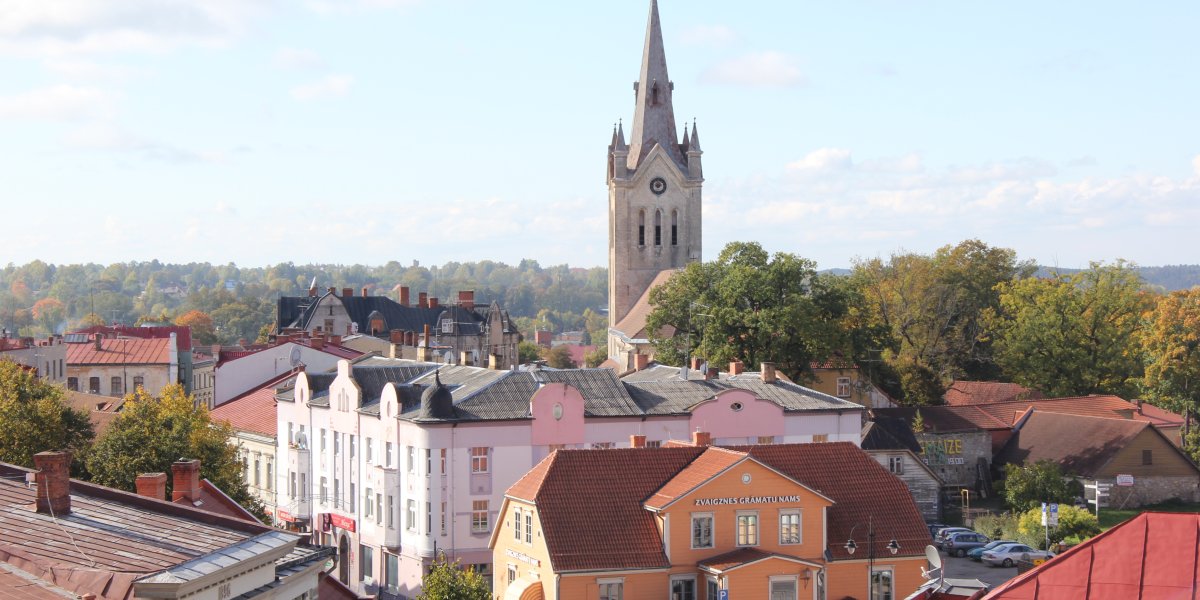
Cut through the wooden gate at the south end of the ruins — a 3-minute walk down the gravel path lined with linden trees planted by Count Sievers in 1812. Pils Parks unfolds around you as a perfect 19th-century romantic landscape: two ponds, a stone bridge, and the orange-pink New Castle rising at the far end. Walk the loop counterclockwise — the western pond gives you the only frame where medieval ruin, manor, and the squat 18th-century brewer's tower line up in one shot.
Tip: The conical brewer's tower is the most photographed building in Cesis, but everyone shoots it head-on. Walk 40 metres past it, turn back, and shoot through the willow branches — that is the framing every Latvian postcard uses and no tourist ever finds.
Open in Google Maps →12:30
Food
Exit the park at the southeast iron gate onto Valnu iela — a 4-minute walk along the surviving fragment of the old town wall. This is Latvia eaten exactly as Latvians eat it: a fluorescent-lit kafejnica where two grandmothers ladle from trays and you pay six euros for the meal a grandmother would have made you. Order the pelekie zirni ar speki (grey peas with bacon, €4.50) and one karbonade (pork cutlet, €3.80) — the grey peas in particular are the national dish almost no Riga restaurant cooks properly anymore.
Tip: Arrive before 12:15 or after 13:15 — local office workers flood the tray line 12:30 to 13:00. At the counter end, grab the small ceramic cup of homemade kvass (€1.20) — fermented rye-bread drink, the closest thing Latvia has to a national soda.
Open in Google Maps →13:30
Neighborhood
From the cafe door, cross Valnu iela and walk one block south onto Rigas iela — you are inside the old town in ninety seconds. Rozu laukums (Rose Square) is the heart of it: a triangular cobbled plaza framed by ochre, mustard, and faded-rose wooden houses, none of them younger than 1780. Wander the spiderweb of Liela Skolas, Liela Livu and Palasta streets — no two houses share a foundation level, because each was built on the slope to catch its own angle of afternoon sun.
Tip: Find the wooden house at Liela Livu iela 11 with the carved lion door knocker. Touch the lion's nose — locals say it brings marriage luck, but the real reward is the lane behind it, which leads to a hidden inner courtyard holding the only surviving medieval well in the city.
Open in Google Maps →16:00
Religious
Walk three minutes northeast from the lion-door lane — you cannot miss the red-brick spire piercing the rooftops. Finished in 1284, Sv. Jana is the oldest medieval cathedral outside Riga, and every Livonian Order Master is buried somewhere beneath its floor. Circle the entire exterior counterclockwise: in late-afternoon light the eastern wall glows brick-red against the sky, and a single Gothic side door — locked since the Reformation — still bears the carved date 1530.
Tip: Walk one extra minute past the church to the small stone marker at the corner of Liela Skolas and Palasta — it sits on the exact spot where Cesis was founded in 1206, and almost no tourist ever notices it.
Open in Google Maps →19:00
Food
Walk back northwest toward the castle ruins — seven minutes along Liela Katrinas, which becomes Maza Lipinkalna right at the restaurant door. Named for the year Cesis received town rights, 1221 sits in a vaulted cellar beneath the castle's old grain storehouse — the one proper sit-down kitchen in town. Order the wild boar with juniper and forest mushrooms (€24) and the chilled rye-bread soup with cream (€7); the boar is hunted in the Gauja National Park twelve kilometres from this table, and the soup is the chef's grandmother's recipe.
Tip: Reserve same-day before 17:00 — there are only 28 seats and locals fill them by 19:30. Pitfall warning: avoid the rooftop terrace cafes around Rozu laukums advertised as 'Castle View' in English — they exist purely to trap day-trippers, charge €18 for a bowl of borscht from frozen ingredients, and have no Latvian clientele. Rule of thumb in Cesis: any menu printed only in English, walk away.
Open in Google Maps →
Trip builder
Plan this trip around Cesis
Turn this guide into a bookable rail itinerary with FlipEarth.
Keep exploring
Related cities
More in the same country
FAQ
Frequently asked questions
How many days do you need in Cesis?
Most travelers enjoy Cesis in 1 days, with enough time for headline sights and a slower meal or museum stop.
What's the best time to visit Cesis?
The easiest season for most travelers is May-Sep, especially if you want good weather and manageable crowds.
What's the daily budget for Cesis?
A practical starting point is about €60 per person per day before hotels, then adjust based on museums, dining, and transport.
What are the must-see attractions in Cesis?
A good first shortlist for Cesis includes Cesis Medieval Castle (Cesu viduslaiku pils).