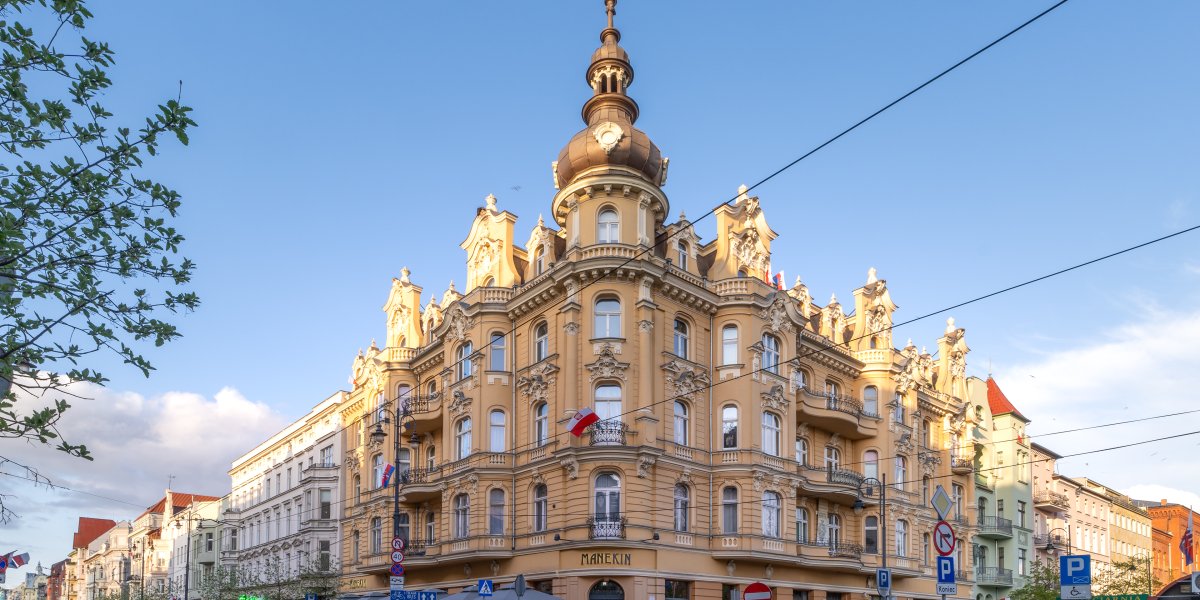
City Guide
Bydgoszcz
Pologne · Best time to visit: May-Sep.
Day-by-day plan
Choose your pace
Durée du voyage
09:00
Landmark
From the train station it is a flat 12-minute walk south on ul. Dworcowa, ending you on the north edge of the reconstructed heart of the city — pastel townhouses frame three sides, the Gothic spire of the Cathedral of St. Martin and St. Nicholas rises two blocks north, and a sober black memorial wall on the east side marks the spot where the Nazis carried out public executions in September 1939. The square was almost entirely flattened in the war and rebuilt facade by facade in the 1950s. Mornings before 10:30 the cafe waiters are still setting out chairs and the square is yours.
Tip: Walk to the southeast corner where ul. Mostowa drops out of the square — that single vantage frames the cathedral spire above the pink-and-cream facades with no wires or signage in the shot. Skip the ground-floor tourist kiosk; the genuinely interesting old shopfronts are one alley back on ul. Magdzińskiego.
Open in Google Maps →11:00
Neighborhood
Leave the square at its southwest corner and walk 4 minutes down ul. Mostowa — just before the bridge, drop down the staircase on your right onto the footbridge that floats you across to the island. The Brda splits here into two narrow channels, leaving a leafy 6.5-hectare strip that was once the city's grain-milling and royal-minting quarter. Red-brick granaries from the 1840s have been restored into museums and the lawns between them are where Bydgoszcz reads, sunbathes and pushes prams on a warm afternoon. Two pedestrian bridges — the iron one east and the wooden Most Jezuicki west — give you the island's two best angles.
Tip: Walk to the western tip of the island and stand on Most Jezuicki looking back east at 11:30 — that is the reflection shot, with the red granary mirrored in the still mill-channel and almost nobody on the bridge. The eastern bridge is busier and the sun is in your lens; west is the quiet, correctly-lit side.
Open in Google Maps →13:00
Food
Cross back to the north bank on the small footbridge — 4 minutes uphill to a low-key pierogi counter a half block off the Old Market Square. Dumplings are hand-folded in the front window: order the pierogi ruskie (potato-curd-onion, ~28 zł / €6.50 for ten) and a side plate of pierogi z kapustą i grzybami (cabbage and forest mushroom, ~30 zł / €7), both topped with crisp skwarki. Wash it down with a glass of kompot (stewed fruit drink) for 6 zł. Cash works, card is faster — a full lunch lands at about €8.
Tip: Arrive at 13:00 sharp — the office lunch wave clears by 13:30 and the second pan of ruskie comes out fresh around then. Ask for the half-and-half plate so you can taste two fillings on one order, and skip the bigos here — the cabbage is fine but it is not what they are best at.
Open in Google Maps →14:30
Landmark
From the restaurant, walk south down ul. Mostowa for 3 minutes, cross the Mostowa Bridge, then turn left onto the south-bank promenade — within 50 meters the three half-timbered 18th- and 19th-century grain warehouses lean out over the water in front of you. This is the postcard view of Bydgoszcz: timber and white plaster reflected in the slow Brda, lumber once floated from this very quay all the way down to Gdańsk. The interiors are part of the Regional Museum but you only need them from outside — the building is the picture.
Tip: The non-negotiable angle is from the middle of Mostowa Bridge looking southeast at around 15:00 — the sun is behind your right shoulder and lights all three timber facades at once, with the reflection still glassy before the afternoon breeze picks up. For the water-level shot, take the stairs down to the lower riverside walkway on the south bank; ignore the 8-zł 'panorama balcony' inside the granary cafe, the view from the bridge is identical and free.
Open in Google Maps →16:30
Landmark
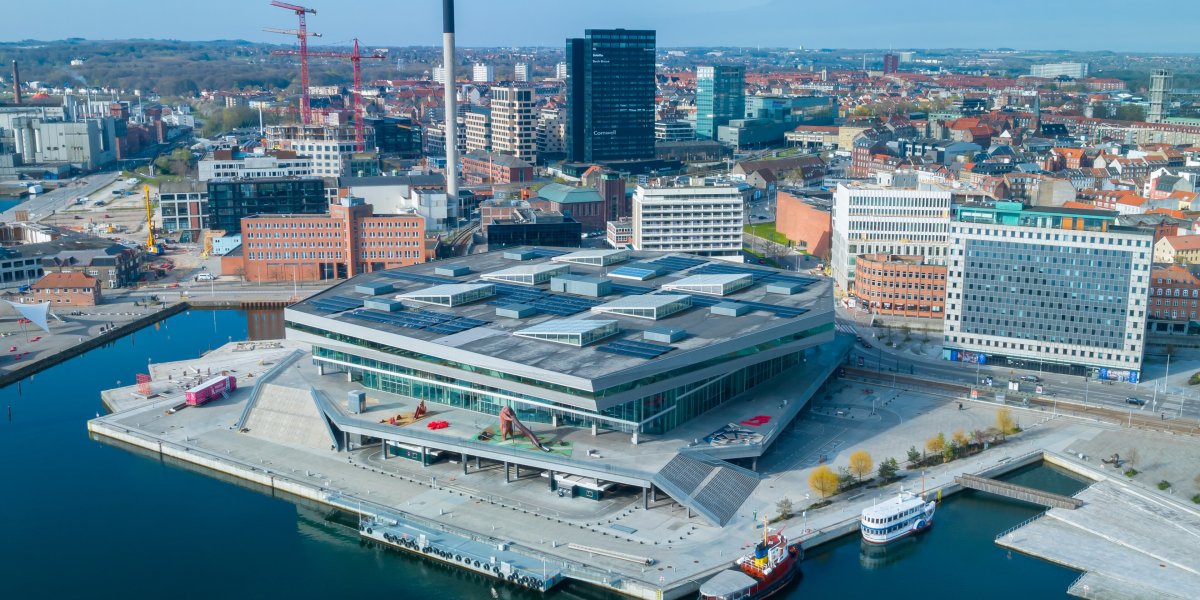
Walk west along the south bank for 2 minutes back toward Mostowa Bridge — and there he is, suspended 7 meters above the Brda on a single wire. Jerzy Kędziora's bronze figure 'Przechodzący przez rzekę,' installed in 2004, leans into a step that never lands; from certain angles he genuinely appears to be walking on air. Directly behind him the bowed glass shells of Opera Nova curve out of the south bank like beached whales. It is the strangest, most quietly haunting skyline in Poland, and at this hour it belongs entirely to whoever bothered to come to Bydgoszcz.
Tip: Stand on the north end of Mostowa Bridge between 17:00 and 17:30 in summer — the low sun lights the bronze warmly and throws a real human-sized shadow on the water below the figure, which is the photograph everyone wants but most people miss because they shoot from below. After the shot, walk one more minute east to circle Opera Nova at ground level.
Open in Google Maps →19:00
Food
From the bridge it is a 90-second walk north up ul. Mostowa — a wood-paneled, candle-lit Polish bistro on the right that locals book for Friday dinners. Order the żurek staropolski served inside a hollowed-out sourdough loaf (~24 zł / €5.50), then the pierogi z kaczką — duck-filled dumplings glazed with caramelized onion (~36 zł / €8.50) — and finish with golonka po bawarsku, slow-braised pork knuckle with horseradish and dark beer mustard (~58 zł / €13). They pour Bydgoszcz-brewed unfiltered lager on tap. A full sit-down dinner for one comes in around €28-30.
Tip: Call from 17:00 onward and ask for a window seat on the upper floor — same-day works on weeknights and you watch the wrought-iron lanterns along ul. Mostowa come on as you eat. PITFALL: avoid every restaurant with a glass-walled terrace directly facing the river under Mostowa Bridge — they charge 40-50% above town prices for a tourist-target menu (the same żurek that is 24 zł here is 42 zł there), and the kitchens are weaker. If Weranda is full, walk one block further north on ul. Mostowa rather than down to the riverside terraces.
Open in Google Maps →
Trip builder
Plan this trip around Bydgoszcz
Turn this guide into a bookable rail itinerary with FlipEarth.
Keep exploring
Related cities
More in the same country
FAQ
Frequently asked questions
How many days do you need in Bydgoszcz?
Most travelers enjoy Bydgoszcz in 1 days, with enough time for headline sights and a slower meal or museum stop.
What's the best time to visit Bydgoszcz?
The easiest season for most travelers is May-Sep, especially if you want good weather and manageable crowds.
What's the daily budget for Bydgoszcz?
A practical starting point is about €120 per person per day before hotels, then adjust based on museums, dining, and transport.
What are the must-see attractions in Bydgoszcz?
A good first shortlist for Bydgoszcz includes Old Market Square (Stary Rynek), Granaries on the Brda (Spichrze nad Brdą), Crossing the River (Przechodzący przez rzekę) and Opera Nova.