City Guide
Brno
Tchéquie · Best time to visit: May-Sep.
Day-by-day plan
Choose your pace
Durée du voyage
09:00
Landmark
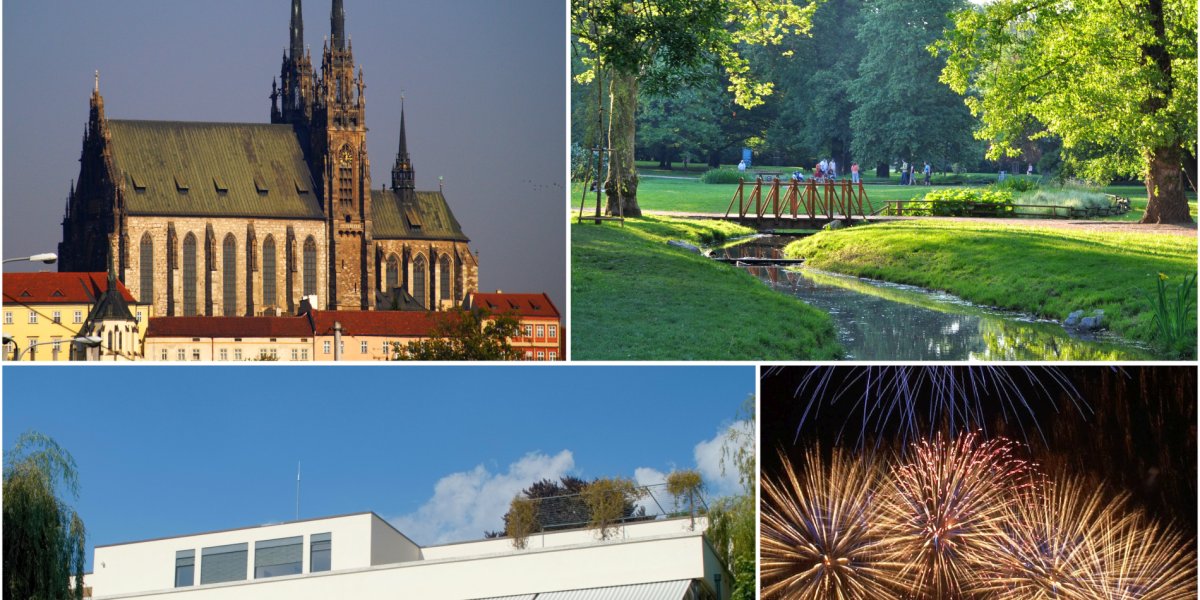
Reach Černopolní street on tram 3 or 5 from the main station (Dětská nemocnice stop, then a 6-minute uphill walk). Mies van der Rohe's 1929 white-glass manifesto for modern living stands here in defiantly horizontal lines — the world's first private home with a fully-glazed living wall that slides into the basement on motorized rails. Without setting foot inside, walk the slope below the villa on Schwarzfeldova: from there the cantilevered terrace appears to float weightlessly above the city, framed by the wooded ridge. This is the exact angle every architecture textbook reprints, and the morning sun on the south façade is what makes the marble onyx wall glow through the glass.
Tip: Interior tours sell out weeks ahead and the villa shuts Mondays — but you don't need them. The defining photograph is taken from Schwarzfeldova Street below, not from the gated entrance on Černopolní; arrive before 09:30 and you'll have the slope to yourself before the architecture-pilgrim groups arrive at 10:00. Buy a 90-minute ZÓNA 100/101 tram ticket (€1.50) at any yellow machine — it covers both legs of your tram journey today.
Open in Google Maps →11:00
Landmark
Walk south from Villa Tugendhat through Lužánky Park — Brno's oldest public garden, opened to the public in 1786 — a 35-minute power-stride past horse chestnut alleys and rose beds, emerging at the foot of Špilberk hill. Climb the wooded southern slope to the bastions of this 13th-century Habsburg fortress, infamous as the 'prison of nations' under Franz Josef and a Gestapo interrogation cell during WWII. The casemates need a ticket but the rampart walk and southern bastion are free — loop the perimeter clockwise for Brno's only true 360° panorama: Petrov's spires due east, the red-tiled Old Town below, the green sprawl of Wilson Forest folding north toward Austria.
Tip: Take the steeper Žlutý kopec footpath from the south rose garden rather than the gentle Husova ramp — it adds eight minutes but delivers you directly onto the bastion with no ticket booth in sight, and gives the most photographed angle: white walls rising out of cherry blossom (late April) or autumn vines (mid-September). Carry water — the slope has no kiosks until you descend, and midday wind on the bastion is deceptively dehydrating.
Open in Google Maps →13:00
Food
Descend Špilberk's eastern face down Pellicova street, then onto Joštova — a 12-minute downhill walk that drops you across the road from the Masaryk University law faculty. Forky's bright open kitchen sits on the corner: this is the homegrown Brno fast-casual chain — born here, multiplied across the Czech Republic from this very block — where bowls are assembled in front of you in 90 seconds and eaten at high counters alongside law students cramming for afternoon tutorials. The fastest authentic refuel before the medieval loop.
Tip: Order the rotating 'Bowl of the Week' written on the chalkboard above the counter — it's what regulars eat and never appears on the app menu (typically 165 CZK / €7). Pair with the housemade ginger-lemon-mint lemonade (49 CZK / €2) — far better than the Cokes most tourists grab. Skip the office-lunch crush by arriving exactly at 13:00 once the 12:30 wave clears; the queue moves in two minutes flat. Card accepted, no tip expected.
Open in Google Maps →14:00
Religious
From Forky's, cross Husova boulevard and climb Petrská street south — a 10-minute walk along medieval crooked houses, with the twin neo-Gothic spires guiding you the whole way. The 13th-century basilica was reshaped in 1909 with the Czech Republic's most photogenic Gothic Revival façade, perched on the highest rock in the old town. Without entering, circle the cathedral counterclockwise and descend into Denisovy sady, the Italian-Renaissance terraced garden draped over Petrov's south face since 1818 — from its lowest balustrade, the spires fly above you against open sky and the Brno-střed valley spreads out below. The afternoon light here lands directly on the sandstone face of the cathedral, turning it honey-gold by 15:30.
Tip: Brno's most-told story: the cathedral bells ring noon at 11:00 sharp — a 1645 trick where the citizens convinced the besieging Swedish general that if he didn't take the city by noon, his army would never take it; the bell-ringer rang twelve at eleven, the Swedes left, and the cathedral has rung 'noon' an hour early ever since. You've missed today's, but listen for the regular hourly chime at 15:00. The iconic spire photograph is NOT from the cathedral square (scaffolding poles and parked cars) — it's from the lowest stone staircase of Denisovy sady, looking up: the spires line up perfectly with the stair's vanishing point.
Open in Google Maps →16:00
Neighborhood
Exit Denisovy sady north onto Biskupská street, descending into Cabbage Market (Zelný trh) in 5 minutes — you'll smell the flower stalls before you see them. This is Brno's medieval heart, walked in one continuous loop. The Cabbage Market has sold produce uninterrupted since 1293, still arranged around the baroque Parnassus Fountain (1695). Slip into the Old Town Hall passage on the market's north side to find Brno's twin mascots: a stuffed crocodile (the so-called 'Brno Dragon') hung from the ceiling since 1608, and a wooden cartwheel carved from a single tree and rolled 50 km in a single day on a tavern bet in 1636. End at Freedom Square (Náměstí Svobody), where the black-granite astronomical clock — locals call it 'the penis clock' for obvious reasons — drops a single glass marble every day at 11:00. By late afternoon the square fills with after-work crowds and the limestone façades catch the lowering western light.
Tip: The Old Town Hall passage is free and stays open until 18:00 — don't pay anyone offering 'guided tours' to show you the dragon and wheel; they hang in plain sight on the public path. You've already missed today's marble-drop at the clock (11:00 daily), so simply photograph the obelisk itself — the marble queues form 45 minutes early anyway. PITFALL WARNING: avoid any restaurant on Freedom Square or Masarykova whose menu is printed in six languages with photographs — they're tourist traps charging €25 for mediocre microwave dumplings and €8 for a beer that costs €2 elsewhere. Locals eat exclusively on the side streets — Jakubská, Solniční, and Veselá.
Open in Google Maps →19:30
Food
From Freedom Square, exit north onto Jakubská street — a 3-minute walk past the late-Gothic St. James Church (St. Jakub's), and you'll spot the copper brewing vats through Pegas's front windows before you reach the door at Jakubská 4. This is Brno's beloved hotel-brewery — a high-ceilinged beer hall where the unfiltered Pegas Světlý lager is brewed on-site in those same copper kettles, and waiters in white aprons carry six half-liter steins fanned out in one hand. The food is exactly what every Moravian grandmother cooks: roast pork, bread dumplings, cabbage, paprika cream sauces, no irony. Sit at a shared oak table and let the room fill in around you with locals after the workday.
Tip: Reserve a table by calling +420 542 210 104 the morning of — Pegas is no longer a secret and Friday/Saturday nights fill by 18:30. MUST-ORDER: 'Svíčková na smetaně' (beef sirloin in cream-vegetable sauce with bread dumplings and cranberries, 245 CZK / €10) — paired with a half-liter of their cloudy Pegas Světlý (55 CZK / €2.30). Skip the goulash; the svíčková is what they've perfected over thirty years. Budget €18-25 per person with two beers and tip. Tipping in Czech beer halls: round up to the nearest 10 CZK on the bill or add ~10%; hand it to the waiter verbally ('na čtyři sta' = 'four hundred please') rather than leaving coins on the table.
Open in Google Maps →Aller au jour
09:00
Religious
Start at the foot of Petrov Hill and walk five minutes up the cobbled path through the old garrison houses — the twin Gothic Revival spires rise above the rooftops as you climb. Inside, the dim baroque interior glows under stained glass; the bells famously ring noon at 11 a.m., a trick that once fooled a Swedish army into lifting the 1645 siege. Step out to the cathedral terrace afterward for the city's best free panorama — Špilberk Castle looms straight ahead, your afternoon destination.
Tip: Arrive at 9:00 sharp to climb the south tower (84 narrow steps) before the morning haze burns off — by 11 a.m. the bells ring noon and the terrace fills with travelers fooled by Brno's most famous trick. The southwest corner of the terrace gives the cleanest shot of Špilberk framed by the Gothic spire.
Open in Google Maps →10:45
Religious
Walk five minutes downhill along Petrská to Kapucínské náměstí — you will pass the modest baroque facade of the Capuchin Church on your right. Beneath it lies one of Central Europe's strangest sights: thirty mummified monks and townspeople, naturally preserved by the crypt's dry airflow, lying exactly where they were placed in the 18th century. Above their heads runs the Latin warning: 'What you are, we once were; what we are, you will be.'
Tip: Skip the audio guide and pause in the second chamber on the right at the figure of Baron Trenck — he asked to be buried in chains and rope, and most groups march past in five seconds. Stand there alone after the crowd moves on; this is the room that earns the visit.
Open in Google Maps →12:30
Food
Walk seven minutes north on Masarykova into the heart of the old town — Stopkova sits on Česká street under a baroque facade that has poured Pilsner Urquell since 1910. Sit in the front bar room (vaulted, locals only) rather than the back hall, and order the svíčková (marinated beef in cream sauce with bread dumplings, ~280 CZK) or smažený sýr (fried Hermelín cheese, ~190 CZK). A 0.5 L tank-fresh Pilsner is non-negotiable.
Tip: Ask the waiter for 'tankové pivo' — Stopkova is one of fewer than 100 pubs in the country still serving unpasteurized Pilsner straight from steel tanks. The taste is softer, sweeter, and impossible to find abroad. No reservation needed before 13:00; after that the lunch rush fills both rooms.
Open in Google Maps →14:00
Museum
After lunch walk ten minutes west on Husova — the bunker's plain steel door is set into the foot of Špilberk hill, easy to miss without the small black sign. Built 1944 and repurposed in the Cold War for the Communist Party elite, the tunnels stay 10 °C year-round; you descend through gas locks, dormitories, and a still-functional ventilation room with original Soviet manuals on the desk. The guide hands you a flashlight at the start and kills the lights in one chamber — that single minute of darkness is the moment you came for.
Tip: Book the English tour online the night before — same-day slots vanish in summer. Bring a light jacket: the tunnels are 10 °C even in August, and your sweat from the morning climb will turn icy within minutes of going underground.
Open in Google Maps →16:00
Landmark
From the bunker entrance, walk five minutes up the zigzag path through Špilberk Park — the air thickens with lime trees and the city falls away behind you. The 13th-century castle dominates the western skyline, served as a Habsburg dungeon for political prisoners (Italian carbonari, Polish nobles), and hides a brutal but unmissable casemates exhibit underground. End on the eastern bastion for the sunset view back over Petrov.
Tip: Time the eastern bastion ramparts for 18:30-19:00 in summer — that's when the setting sun lights Petrov's spires directly opposite, giving you Brno's defining photograph with no foreground tourists. The southern bastion is closer to the parking lot and stays crowded with selfie groups; walk all the way around to the east.
Open in Google Maps →19:30
Food
Walk fifteen minutes down from Špilberk through the historic core to Jezuitská — Pavillon occupies a glass-and-steel functionalist pavilion built in 1928 by Bohuslav Fuchs, one of the architects who made Brno a modernist capital. The menu is precise modern Czech: roasted pikeperch with celeriac (~520 CZK), or wagyu tartare from South Moravian cattle (~390 CZK). Sit upstairs by the window where the curtain wall floods the room with the last green light from the park.
Tip: Reserve at least three days ahead — Pavillon has 40 seats and locals book it for occasions, especially Friday-Saturday. Pitfall warning for Brno: avoid any restaurant on Masarykova between Freedom Square and the main station that posts English menus in the window — they cost double, serve frozen dumplings, and exist only for foot traffic. Always step one street off the central axis.
Open in Google Maps →10:00
Museum
From the city center, take tram 9 north to Dětská nemocnice (about 10 minutes), then walk five minutes uphill on Černopolní — the villa appears modestly from the street, hiding the fact that it tumbles four levels down into the garden. Mies van der Rohe completed it in 1930 for the Tugendhat family, who fled the Nazis in 1938; the famous onyx wall glows amber when the morning sun hits it, and the chromed cruciform columns disappear into floor-to-ceiling glass that retracts into the floor. UNESCO lists it as one of only four 20th-century buildings on the World Heritage list.
Tip: Book the 'extended tour' (90 min, includes the technical basement with the original heating-ventilation room) at least four weeks ahead via tugendhat.eu — the standard tour skips the engineering marvel that made the disappearing wall-of-glass possible. Photography is allowed only with a separate paid permit booked at the same time.
Open in Google Maps →12:00
Food
Walk seven minutes east through the leafy streets of Černá Pole to Zemědělská — Café Era is another Bohuslav Fuchs functionalist gem from 1929, a sky-blue and white pavilion that survived the war hidden in plain sight. The kitchen serves seasonal Czech-Moravian bistro food; order the beef goulash with bramboráky potato pancakes (~260 CZK) and a local Lucky Bastard pale ale. Sit on the terrace if the weather is warm — the curved corner window is one of the most photographed details in Brno's modernism circuit.
Tip: Skip the dessert counter (tourist-pricing on cake) and ask for the daily lunch menu chalked inside the door — locals get a soup-plus-main Czech lunch for under 250 CZK that's never on the printed menu. The terrace fills by 12:30; arrive at 12:00 to claim a corner table.
Open in Google Maps →13:45
Museum
Tram 1 from Hlavní nádraží to Mendlovo náměstí takes 12 minutes — you arrive at the Augustinian Abbey where, in 1856, an obscure friar named Gregor Mendel began crossing pea plants in the monastery garden and quietly founded the science of genetics. The museum displays his original microscope, hand-drawn pedigrees and a reconstructed greenhouse; the garden itself is open behind the abbey. Almost no tour groups make it here, which is why it stays one of Brno's most rewarding hours.
Tip: After the museum, walk through the garden and find the small stone marker where Mendel's original 28,000 pea plants grew — it's against the southern wall, unsigned, and almost everyone misses it. Then duck into Starobrno Brewery next door (founded 1325, still operating) for a tasting flight at ~120 CZK.
Open in Google Maps →15:45
Landmark
Take tram 1 back to Šilingrovo náměstí, then walk five minutes east through the old town to Radnická — pass through the Gothic portal and look up at the deliberately crooked central spire, the carver's revenge on a city council that underpaid him. Inside the courtyard hang Brno's two emblems: a stuffed crocodile that the city insists is a 'dragon' (a 1608 gift from a Turkish ambassador) and a wooden wagon wheel a wheelwright built in a single day on a 100-mile bet. Climb the 173 steps of the tower for the best rooftop panorama in the old city.
Tip: Pay separately for the tower at the inner gate (60 CZK) — it's not bundled into the courtyard entry. Climb at 16:00 to catch the western sun lighting Petrov's spires across the rooftops; by 17:00 the cathedral is already shadowed and the photo flattens.
Open in Google Maps →17:00
Museum
Walk five minutes north on Husova — Pražák Palace is the 19th-century neo-Renaissance home of the Moravian Gallery's modern art collection. Czech cubism, surrealism, and Brno's own functionalist photography (Drtikol, Sudek, Funke) hang on three floors of restored parquet halls. Thursday's late opening to 19:00 lets you finish the modernism story you started at Tugendhat that morning.
Tip: Go straight to the second-floor photography rooms — Brno was, alongside Prague, the center of interwar Czech avant-garde photography, and the prints here are first-generation gelatin silver. The temporary exhibition on the ground floor is usually skippable; the permanent modernism collection is the reason to come.
Open in Google Maps →19:30
Food
Walk eight minutes south on Husova to Kopečná — Borgo Agnese sits in a quiet courtyard beneath Špilberk that Brno locals consistently vote the city's best dinner restaurant. The kitchen is Italian-Moravian: handmade ricotta-and-spinach culurgiones (~340 CZK), or grilled South Moravian lamb with rosemary jus (~590 CZK). The wine list leans into small Mikulov-region producers — ask the sommelier for a Pálava, a Moravian aromatic white, by the glass.
Tip: Reserve a courtyard table for warm-weather evenings (March-October) — the indoor room is fine but the candlelit courtyard is what locals remember. Pitfall warning: ignore taxi touts loitering around Freedom Square at night who quote 'flat rates' to anywhere in the city — they charge three times Bolt or Liftago, both of which work flawlessly in Brno. Always order via app.
Open in Google Maps →
Trip builder
Plan this trip around Brno
Turn this guide into a bookable rail itinerary with FlipEarth.
Keep exploring
Related cities
More in the same country
FAQ
Frequently asked questions
How many days do you need in Brno?
Most travelers enjoy Brno in 1 days, with enough time for headline sights and a slower meal or museum stop.
What's the best time to visit Brno?
The easiest season for most travelers is May-Sep, especially if you want good weather and manageable crowds.
What's the daily budget for Brno?
A practical starting point is about €70 per person per day before hotels, then adjust based on museums, dining, and transport.
What are the must-see attractions in Brno?
A good first shortlist for Brno includes Villa Tugendhat (Exterior View), Špilberk Castle (Ramparts & Bastions).