City Guide
Bled
Slovénie · Best time to visit: May-Sep.
Day-by-day plan
Choose your pace
Durée du voyage
07:30
Landmark
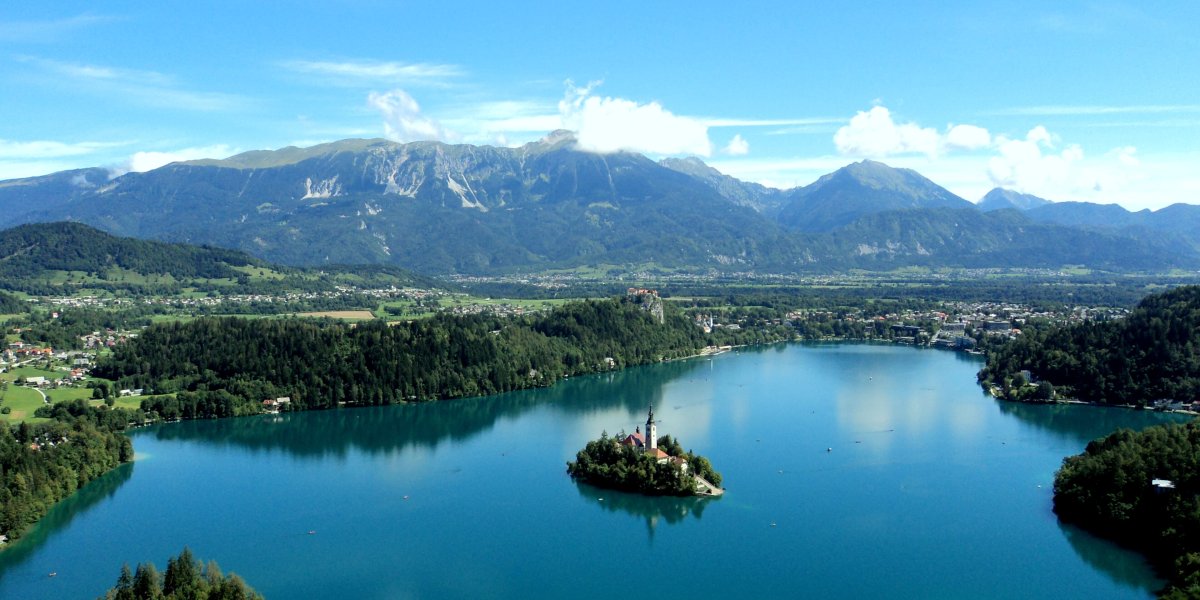
From the unmarked trailhead opposite the Camp Bled reception, a steep 20-minute climb on switchbacks and wooden steps through pine and beech delivers you to the upper viewpoint at 685 m — Slovenia's most photographed angle. The teardrop lake, the island church floating dead-center, and the Julian Alps as a wall of stone behind: this is the postcard, made real. At this hour the eastern sun catches the spire and the alps while the lake is still pre-tourist glass — by 10:00 day-trip buses release climbers and the small railing becomes a queue.
Tip: Take the steeper left-fork trail to the upper 'Mala Osojnica' viewpoint, not the lower 'Ojstrica' — Ojstrica's view is partially blocked by trees while Mala Osojnica is the clean postcard angle. The trailhead has no signage from the road; look for the small wooden marker directly opposite the Camp Bled reception driveway, then climb until you see a wooden bench wedged between two pines.
Open in Google Maps →10:00
Landmark
Descend the same trail, cross the Camp Bled lot, and follow the lakeside path 600 m east to the Velika Zaka pier — 15 minutes total, with the alps mirrored in the water beside you. A pletna is a hand-built, flat-bottomed wooden boat rowed standing by a single oarsman; the licence passes father-to-son across 23 registered families and no engine has ever touched these hulls. The 20-minute crossing drops you at the foot of the 99-step staircase to the Church of the Assumption, where the medieval wishing bell still rings — grooms traditionally carry brides up the steps for luck.
Tip: Share a pletna (€18 pp round trip) — boats only depart with at least 6 passengers, so hop into the first full one rather than waiting for your 'own.' The €18 covers the boat only; church entry plus the bell ring is €15 extra at the island. Half an hour ashore is plenty — any longer and you'll miss your pletna's scheduled return slot and the next available seat goes to whoever's at the dock.
Open in Google Maps →13:00
Food
The pletna returns you to Velika Zaka; from there it's a 25-minute (2 km) walk along the south lakefront, past the rowing club, until the cream-yellow Park Hotel rises on your right at the lake's eastern shoulder. This terrace invented Kremšnita in 1953 — a 7 cm square of warm vanilla custard under cold whipped cream and puff pastry — and still hand-cuts roughly 600 a day in summer. Pair it with a beef goulash bowl (€11) or the trout open-sandwich (€9) on the lake-side terrace; this is the indulgence Bled was built for, eaten where it was invented.
Tip: Order the Kremšnita 'pol-pol' (half-and-half) alongside the Grmada (Slovenian layered trifle) for €10 — you taste Bled's two signature desserts without committing to one. Sit only on the outdoor lake-side terrace; the indoor café faces a hotel corridor and entirely misses the point. Skip the espresso here (mediocre) and order the local Cockta soda instead — it's the Slovenian Yugoslav-era cola, made in nearby Rogaška.
Open in Google Maps →14:30
Landmark
Leave Park Hotel, cross the lakefront promenade, and follow the brown 'Blejski Grad' signs uphill — a steep 15-minute climb on a paved path through pine. Perched 130 m above the lake on a sheer limestone cliff, Slovenia's oldest castle (first chronicled in 1011) earns its entry fee purely for the upper terrace, where you stand directly above Bled Island with the Julian Alps fanning out behind. The afternoon sun now lights the island church head-on from the west — exactly the angle every postcard uses, and the reason to climb at this hour rather than the morning.
Tip: Buy your €15 entry at the self-service machine at the lower gate to skip the manned-counter queue at the top — most groups don't realise the machine exists. The genuine 'postcard' photo is from the small terrace just past the castle chapel, not the crowded upper viewing platform: at the lower level the church spire centers neatly between two alpine peaks without the castle wall cutting your frame. Skip the museum rooms inside; they're 19th-century reconstructions and a time-trap for a power-walk day.
Open in Google Maps →17:00
Park
Descend the castle path back to the shore, then turn left onto the wooden boardwalk that hugs the eastern lake — the official 6 km loop. Walk the eastern and southern stretches (about 4 km) past the swan pier, Festivalna dvorana, and Casino Bled; this is the most atmospheric portion at this hour, with golden light raking across the spire and the alps turning rose then violet. By 19:00 the day-trippers have boarded their buses, the pletna fleet is moored, and you share the path with local runners and the resident swan pair.
Tip: For the cleanest sunset frame of the island, stop at the small wooden pier directly below Festivalna dvorana between 19:30–20:00 in summer — the spire aligns with the saddle between Stol and Begunjščica peaks, and the lake holds the color for a solid 20 minutes. Ignore the 'authentic boat ride' touts who station themselves here in summer; they charge double the Pletna rate for a wooden rowboat with none of the family-licence heritage.
Open in Google Maps →19:30
Food
From the Festivalna dvorana pier, 5 minutes back along the promenade brings you to Vila Prešeren — a yellow Belle Époque villa with white shutters and a lake-edge terrace 3 m from the water. The kitchen leans modern Slovenian: lake trout fillet with buckwheat groats (€24) and beef cheek braised in Teran wine (€26) are the signatures, and both come from suppliers within 30 km. Book a lakeside table for 19:30; the final sunset glow over the island arrives precisely with the appetizers.
Tip: Specify a 'lakeside terrace' table when reserving (call or email a day ahead) — interior tables miss the entire view and the staff won't reseat you once seated. Order the trout with ajdovi žganci (buckwheat groats) — it's the Slovenian pairing locals eat at home and that tourist menus never list. Crucial pitfall: avoid the stretch of identical pizzerias on Cesta Svobode just north of Vila Prešeren — they cater purely to tour groups at double the going rate, microwave their dough, and Italians genuinely cross the border specifically to mock the pizza here.
Open in Google Maps →Aller au jour
09:00
Landmark
Walk up Grajska cesta from the eastern lakefront — a 15-minute climb on a forested switchback that ends at Slovenia's oldest castle, perched 130 metres above the water. Arrive right at opening (8:00) so the upper balcony is empty: from here the entire lake, the tiny island church and the snow-tipped Julian Alps line up in one frame — the shot you came to Bled for. Don't skip the working printing press in the lower courtyard, where you can stamp your own keepsake on handmade paper for €4.
Tip: Walk the inner ramparts counterclockwise — the small balcony above the wine cellar is the only one where the island sits perfectly framed between the two lime trees, and it almost never has anyone on it because most groups stop at the first viewpoint. Skip the castle restaurant; lunch is much better in town.
Open in Google Maps →11:30
Landmark
Descend the castle path back to the lakefront and walk west along the shore for ten minutes to the Mlino jetty — a quieter, prettier launch than the noisy Park Hotel pier. The pletna is a flat-bottomed wooden boat rowed by a single standing oarsman, a license passed down through 23 local families since 1740. The 20-minute crossing is silent except for the oar, and the island — framed by 99 stone steps and a single bell tower — rises slowly into view as if pulled from a music box.
Tip: Climb the steps and ring the church's wishing bell three times — locals say the wish only counts if you pull the rope without bracing it against your body. Pletnas wait exactly 30 minutes on the island; don't dawdle in the gift shop or you'll be the family that misses theirs and has to wait an hour for the next.
Open in Google Maps →13:30
Food
From the Mlino pier walk the lakeside path back east to the bell tower and turn one block inland — the wood-panelled tavern with the climber's bell over the door has been feeding locals since 1903. Skip the ground-floor pub and head upstairs to the gostilna proper. The kranjska klobasa (Carniolan sausage, €11) is the protected-name original served with stone-ground mustard and warm bread, and the štruklji s skuto (rolled cottage-cheese dumplings, €9) is the dish your grandmother would have made if she'd been Slovenian.
Tip: No reservations for lunch — arrive by 13:00 to claim a window table upstairs before the post-castle wave at 13:30. Order a glass of cviček (€3.50), Slovenia's low-alcohol house wine made nowhere else; it cuts through the sausage like nothing else on the menu.
Open in Google Maps →15:30
Park
Leave Pri Planincu and pick up the paved lakeshore path heading west — within five minutes the road noise fades and the path narrows to a tunnel of beech and weeping willow that hangs right over the water. Locals power-walk this stretch every evening; for the next 3 km you'll have the castle slowly rotating behind your right shoulder and reed beds on your left where mallards and the occasional swan family glide out. The afternoon light is now angling across the lake from the west, turning the water from glass to gold.
Tip: About 1 km past Mlino there's an unmarked wooden bench under a leaning willow — locals call it 'klop za poljub' (the kissing bench) because the island sits dead centre between its two arms. It's the best free photo in Bled and the only frame where no other tourist will be in your shot.
Open in Google Maps →18:00
Landmark
At the western end of the promenade, follow the brown wooden sign 'Ojstrica / Mala Osojnica' inland — a steep 25-minute climb through pine forest on a path that turns into stone steps for the final stretch. Hard, sweaty, worth every breath. The summit is a bare rock platform 130 metres above the lake, and by 18:30 in summer the sun is sitting behind your left shoulder, gilding the castle cliff and turning the lake into a hammered-copper mirror. This is the exact angle every Slovenian Tourist Board photo is shot from — except now you're standing in it.
Tip: Take the Mala (small) summit, not Velika — Velika is higher but the island disappears behind treetops. Bring a phone torch: the descent in dusk is genuinely dark and the steps are slick even when dry. Wear shoes with grip, never sandals — every summer evening someone slips on the way down.
Open in Google Maps →20:00
Food
Walk back along the lake's southern edge to the Prešeren promenade — twenty minutes with the lake silver on your left and the castle floodlit on the cliff above. Vila Prešeren is the lakefront villa whose terrace sits literally over the water; at this hour the tables fill with locals who came for a glass of wine and the view, not the menu. Order the Bohinj lake trout fillet with buckwheat (€24) — the fish is from the family-run farm one valley over — and finish with a slice of the house kremšnita (€6), which the staff will swear is better than Park Hotel's. You'll decide for yourself tomorrow.
Tip: Reserve a terrace table 24 hours ahead and ask specifically for 'prva vrsta' (front row) — the second row is one step up and loses the water-level view. Avoid the cluster of restaurants with English-only menus and photo-illustrated dishes along the small-boat harbour: they're priced for tour groups, the trout is frozen, and the bread basket is €4 a head.
Open in Google Maps →08:30
Park
A 10-minute taxi or the seasonal shuttle from Bled bus station drops you at the gorge entrance — be at the ticket window at opening (8:00) and you'll have the first kilometre of boardwalk almost to yourself. Cut into the limestone in 1893, the wooden walkway clings to the cliff a metre above water so impossibly turquoise you'll keep stopping to check it's real. The 1.6 km route ends at the 13-metre Šum waterfall, then loops back through a quiet forest path that most tour groups skip entirely.
Tip: Book the timed-entry ticket online the night before — walk-up has been abolished in peak season and the 9:00 slot is the last that's still calm before the tour buses arrive at 10:00 sharp. Take the return forest loop instead of doubling back on the boardwalk — it adds 15 minutes and you'll lose the crowds completely.
Open in Google Maps →11:30
Neighborhood
Back in town, walk uphill from the bus station along Ljubljanska cesta into the quiet upper village — five minutes brings you to St Martin's Parish Church, the candy-pink neo-Gothic spire you've been seeing from every angle of the lake. Inside are 1930s frescoes by Slavko Pengov, Slovenia's most loved 20th-century muralist; the small square in front is where locals actually sit on weekday mornings, away from the postcard lakefront. Stop into Pekarna Planika next to the bookshop for a warm potica (walnut-and-honey roll) to carry.
Tip: St Martin's is open 09:00–18:00 but the interior lights only come on for services — visit late morning when sun pours through the south windows and the frescoes glow without any artificial light. Skip the souvenir shops along Cesta Svobode: identical mass-produced Bled magnets at triple the price of the small bookshop next to the church.
Open in Google Maps →13:00
Food
Walk five minutes downhill on Cesta Svobode — the green wooden facade with hanging flat-irons on the wall is easy to miss, which is precisely why locals like it. Peglez'n means 'the iron' (the building was a 19th-century laundry), and the chef cooks the lake-and-forest kitchen most foreigners walk past. Order the Bohinj lake trout pan-fried whole with brown butter and pumpkin-seed oil (€19), and start with a bowl of jota — the Slovenian sauerkraut-and-bean stew (€8) that tastes like winter in a spoon even in May.
Tip: Reserve the night before for the courtyard table under the old chestnut — it's the only outdoor seat that catches the breeze off the lake and disappears at 13:15 on a sunny day. Ask for the pumpkin-seed oil on the side; drizzling it over the trout afterwards is how locals eat it, and the staff smile when you ask.
Open in Google Maps →15:00
Landmark
Cross the lake road from Peglez'n and pick up the signposted forest path that climbs gently for 25 minutes through beech woods to a grassy clearing on the south shore — Straža, the lake's only viewpoint you can reach in dress shoes. The angle is the mirror image of yesterday's Mala Osojnica: now the castle dominates the left frame and the Karavanke ridge stretches behind. In winter this is Bled's tiny ski slope; in May the meadow is wildflowers and you'll likely share it with one couple and a grazing roe deer.
Tip: The €7 summer toboggan down the 520-metre track delivers you back to the lakefront promenade in 90 seconds and saves your knees the descent — locals consider it a tourist gimmick but it's genuinely fun and ends in the right place. Skip the chairlift up (€15); the woodland walk is the better half of the experience and you don't get it from a swinging metal chair.
Open in Google Maps →17:00
Park
Pick up the paved lakeside path heading east from the foot of Straža — within ten minutes the pink awning of Park Hotel hangs into view, the building where pastry chef Ištvan Lukačević invented kremna rezina in 1953. Pull up a chair on the terrace café (Slaščičarna Park) for one slice of the original — a fragile cube of vanilla custard and whipped cream pressed between two thin sheets of caramelised puff pastry, still made each morning to the exact gram weight of the 1953 recipe. The castle catches the last copper light across the water; this is the picture you'll come home with.
Tip: Order 'ena kremšnita in espresso' (€5.50 + €2) and eat the cake within 90 seconds of arrival — the pastry softens fast and the texture is half the magic. Skip the boxed 'Bled cream cakes' sold at every souvenir shop; they're made by a separate factory with stabilisers and locals laugh at them.
Open in Google Maps →19:30
Food
A 10-minute walk back along the eastern lakeshore brings you to Atelje, the small bistro tucked into Ljubljanska cesta where chef Uroš Štefelin (a Hiša Franko alumnus) cooks an unfussy four-course tasting (€42) that changes weekly with whatever the Pokljuka forest and the local fishermen brought that morning. Expect smoked Bohinj trout with horseradish cream, hand-rolled žlikrofi with lamb from the Pokljuka pastures, and a final spoon of buckwheat-and-honey ice cream that sends you off with the taste of Slovenia still on your tongue.
Tip: Book at least three days ahead — Atelje has 24 seats and locals reserve birthdays here. Ask for the orange-wine pairing from Goriška Brda (€25); it's a course on its own. Final warning before you leave Bled: ignore anyone offering 'last pletna ride of the night' on the way back — licensed boats stop at sunset, and the few that don't are unlicensed operators charging €40 a head for a rushed loop in the dark.
Open in Google Maps →
Trip builder
Plan this trip around Bled
Turn this guide into a bookable rail itinerary with FlipEarth.
Keep exploring
Related cities
More in the same country
FAQ
Frequently asked questions
How many days do you need in Bled?
Most travelers enjoy Bled in 1 days, with enough time for headline sights and a slower meal or museum stop.
What's the best time to visit Bled?
The easiest season for most travelers is May-Sep, especially if you want good weather and manageable crowds.
What's the daily budget for Bled?
A practical starting point is about €120 per person per day before hotels, then adjust based on museums, dining, and transport.
What are the must-see attractions in Bled?
A good first shortlist for Bled includes Mala Osojnica Viewpoint, Pletna Boat to Bled Island, Bled Castle.