City Guide
Batumi
Géorgie · Best time to visit: Jun-Sep.
Day-by-day plan
Choose your pace
Durée du voyage
09:00
Neighborhood
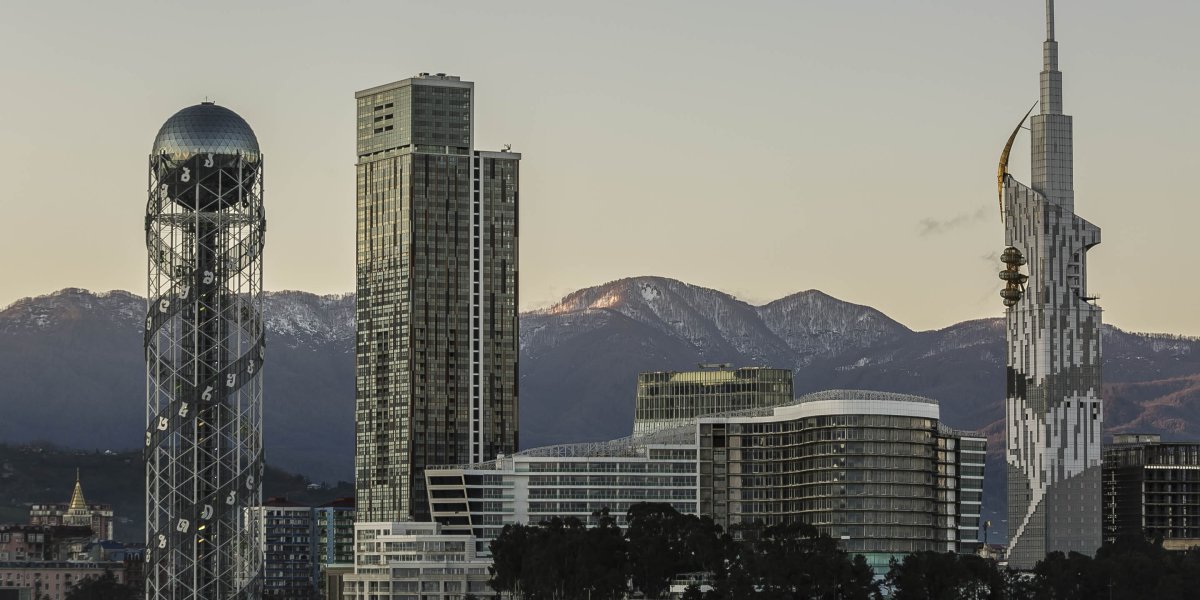
Step into Europe Square right at opening hour, when the cool morning light catches Batumi's wild architectural mash-up — the Astronomical Clock building, the Ferris wheel embedded into a residential facade, and the gilded Medea atop her column holding the Golden Fleece. Wander southwest into Old Batumi's narrow lanes of carved wooden balconies and pastel Belle Époque facades, then pause at the 25-meter Chacha Tower (a clock tower that once dispensed free chacha brandy from its taps) before turning toward lunch.
Tip: Shoot Medea from the southeast corner of the square with the Golden Fleece backlit by the rising sun — the gold leaf catches the light. Skip all building interiors here: Batumi's magic is its skyline, not its rooms.
Open in Google Maps →11:30
Food
Five-minute walk south through Old Batumi's lanes to an unmarked ground-floor spot on King Parnavaz Street — Sakhli #11 is the address Georgians themselves give you when you ask where to eat real Adjarian khachapuri. Order the No. 1 size (about 18 GEL, €6): a boat-shaped bread filled with molten sulguni cheese, topped with butter and a raw egg yolk you stir in yourself at the table. Pair with a glass of tarragon-green Tarkhuna lemonade.
Tip: Pinch a corner of the crust, tear, dip into the molten center — never use a fork. Order the small No. 1 if you're solo and have a long walk ahead; the No. 4 is for couples to share and will weigh you down for hours.
Open in Google Maps →12:30
Neighborhood
Walk two blocks west from the restaurant and hit the sea — the famous 7-km palm-lined Boulevard begins right at your feet. Stroll south past dancing fountains, the open-air Chess Pavilion where summer masters play under the magnolias, Soviet-era teahouses, and the long arc of pebble beach with the Lesser Caucasus visible inland. Stay on the inner shaded path during the afternoon sun — it runs through magnolia, bamboo, and old-growth pines and is several degrees cooler than the exposed seafront.
Tip: Skip the rentable boulevard bikes — the path is too crowded with strollers and you'll miss the small sculptures and pavilions tucked along the way. The Singing Fountain near the central section runs a choreographed show every hour on the hour after 14:00; catch one and keep walking.
Open in Google Maps →15:30
Landmark
Continue south along the boulevard for 10 minutes — the two 8-meter steel-mesh figures rise above the seawall, slowly drifting toward each other on a continuous 10-minute rotation cycle, passing through one another's bodies before separating again. Inspired by Kurban Said's tragic Azerbaijani-Georgian love story, the sculpture peaks visually between 16:00 and 18:00 when the western sun lights up the lattice and casts long shadows across the seawall.
Tip: Stand on the seaward (west) side and shoot the figures mid-passage with the Black Sea behind them — the inland side stays crowded with tour groups. Watch one full cycle: the 30-second moment when they overlap and seem to embrace is the shot everyone comes for.
Open in Google Maps →17:30
Landmark
Walk south along the boulevard another 10 minutes into Miracle Park — the 130-meter twin-helix tower wrapped in 33 silver Georgian letters rises beside its sister Chacha Tower and a seafront Ferris wheel. Skip the upper viewing pod (overpriced, slow elevator, and the queue eats 45 minutes); the tower is best read from below, especially after 19:00 when the LEDs pulse the alphabet to life letter-by-letter against the deepening blue dusk.
Tip: Shoot from the boardwalk 80 meters south of the tower base — the wet sand reflects the lit letters and visually doubles the tower's height. Stay until the Ferris wheel lights up too; it adds a second light source for full-dark shots after 21:00.
Open in Google Maps →19:30
Food
Five-minute walk inland from Alphabet Tower to a stone-fronted Adjarian villa one block off the boulevard. Order lobiani (red-bean bread, ~18 GEL), badrijani nigvzit (eggplant rolls with walnut-pomegranate paste, ~22 GEL), and a 0.5L carafe of dry Saperavi (~25 GEL); finish with churchkhela (walnut-grape-juice candy strings) for the walk back. Reserve the courtyard tables by 18:00 in high season — the indoor cellar room fills last but loses the breeze.
Tip: Pitfall warning: avoid the touts along the central boulevard waving Russian/English 'tourist menus' at 2-3x markup, and the 'free chacha' pourers near Miracle Park who quietly add €5/shot to your bill. Authentic Georgian places list prices in GEL on a printed menu and serve chacha by the small table carafe — never by squirt-bottle shots.
Open in Google Maps →Aller au jour
09:30
Landmark
Start in Batumi's most theatrical plaza, a Venetian fantasy completed in 2010 with mosaic-tiled arcades, frescoed building fronts, and an Italianate clock tower watching over the open square. At 09:30 the cafes are still setting up tables and the morning sun lights the eastern facades in honey gold — perfect for photos before tour groups arrive after 11:00. Walk the four corners to find the mosaic panels of the four seasons set high above the arches.
Tip: Stand at the northwest corner with the clock tower framed behind you to catch the entire square in one shot — this angle disappears once the cafe parasols open around 10:30. Skip the overpriced cafes inside the square (40 GEL for a coffee) and grab one later at Café Retro.
Open in Google Maps →11:00
Landmark
From Piazza Square head west two blocks down Memed Abashidze Avenue — a five-minute walk past wooden-balconied old houses and cobbled side streets — to arrive at Batumi's grandest plaza. The 30-meter Medea statue rises from a central column holding the Golden Fleece, a tribute to the Jason and the Argonauts myth set on these very shores. Eclectic early-1900s facades ring the square: Belle Epoque, neo-classical, and Georgian art nouveau jostling shoulder to shoulder.
Tip: Circle to the back (eastern) side of Medea's column — the morning sun catches the Golden Fleece in reflection from that angle, while the tourist crowds gather only at the western front. Avoid the horse carriages parked along the south edge; they charge 50 GEL for a 10-minute loop that you can walk in five.
Open in Google Maps →12:30
Food
Walk three blocks east from Europe Square along Memed Abashidze — past wooden balconied houses and shaded cobbled side streets — and duck into this beloved family-run khachapuri institution. Order the Adjaruli khachapuri (18 GEL): a boat-shaped bread filled with molten sulguni cheese and a raw egg yolk dropped in just before serving. Mix the egg, butter, and cheese together at the table with a fork, then tear off the crust ends to dip — this dish was born in Adjara region, and Café Retro serves one of the city's most beloved versions.
Tip: Locals never use a knife. Tear the crust ends first, stir them into the egg-butter-cheese center, then eat the boat from outside in. Skip the touristy 'mixed cheese-and-meat' variant — purists know the original Adjaruli is the only way. Order an estragon (tarragon) lemonade for 6 GEL as the bright herbal foil this rich dish demands.
Open in Google Maps →14:30
Landmark
From lunch walk five minutes west through palm-shaded paths to where the Old Town meets the seafront at Miracle Park. The 130-meter Alphabet Tower spirals upward with all 33 letters of the Georgian alphabet embedded along its double helix — paying tribute to one of only fourteen original scripts still in use today. Take the elevator to the top observation deck for a 360° view across the Black Sea and Caucasus foothills, then settle into the boulevard for an afternoon stroll south along the long pebble beach.
Tip: Buy the elevator ticket (10 GEL) at the small kiosk to the left of the entrance, not the central one — the central queue runs 30 minutes long while the side kiosk is usually empty. From the top, look northeast for the Caucasus mountains; the boulevard's full 7 km arc is visible looking south. Rent a boulevard bike (5 GEL/hour) at the south Miracle Park gate if your legs are tiring.
Open in Google Maps →18:00
Landmark
From the Alphabet Tower stroll 30 minutes south along the seafront promenade — past sculpture gardens, palm-shaded cafes, and the dancing fountain plaza — to reach Batumi's most poetic landmark. Tamara Kvesitadze's 8-meter steel figures of the Azerbaijani boy and Georgian princess from Kurban Said's novel slowly slide through each other in a 10-minute hydraulic cycle, embracing and then passing on. At 18:00 in summer the figures glow against the orange Black Sea sky — exactly the angle every iconic photo of Batumi wants to capture.
Tip: Stand on the seaward side facing east — the sculptures backlight beautifully against the sea at sunset, while the land-side angle puts the sun directly behind the figures and blows out your photo. Watch one full 10-minute cycle to see them meet, merge, and pass through; most visitors leave after the embrace and miss the more poignant moment of separation on the other side.
Open in Google Maps →20:00
Food
Walk inland three blocks east from Ali and Nino to this elegant restaurant in a stone-vaulted basement that feels like an old Kakheti wine cellar. Order the kharcho (walnut-thickened beef stew, 22 GEL), the chakapuli (spring lamb stewed in tarragon and white wine, 32 GEL), and a glass of qvevri-fermented saperavi — Georgia is the 8,000-year-old cradle of wine. The khinkali soup dumplings are best eaten by hand: bite a small hole in the top, slurp the broth, then eat the rest.
Tip: Reserve a courtyard table by phone before 17:00 — the indoor room is fine but the courtyard with live duduk player after 21:00 is the experience worth seeking. Beware the bulk 'Georgian wine' served in carafes at the touristy seafront cafes near Ali and Nino — that's industrial wine at triple price. Heraclie stocks small estate qvevri producers like Pheasant's Tears, the real heritage of the region.
Open in Google Maps →09:00
Park
Take a 15-minute taxi (or marshrutka #31 from Europe Square) 9 km north along the coast road to one of the world's most extraordinary botanical collections. Founded in 1912 by Russian botanist Andrei Krasnov on a subtropical headland jutting into the Black Sea, the 111-hectare garden spans nine geographic zones — East Asian bamboo groves, Himalayan rhododendrons, Mexican cacti — descending from a cliff-edge gazebo down to a hidden pebble cove. Arrive at opening to walk the higher Caucasus and Japanese sections before the heat builds and cruise-ship tour buses begin arriving around 11:00.
Tip: Enter through the upper (south) gate at Mtsvane Kontskhi, not the lower one — the upper entrance puts you at the cliff viewpoint immediately and lets you walk gently downhill through the entire garden. From the lower exit at the seafront you can grab a return taxi to the city. The reverse direction is uphill in 30°C heat and most visitors regret it bitterly.
Open in Google Maps →13:00
Food
Taxi back into central Batumi — 15 minutes — and walk one block east of Europe Square to this small Georgian dumpling specialist. Order ten kalakuri khinkali (3 GEL each): twisted soup dumplings filled with spiced beef and pork in broth — bite a small hole in the top, slurp the hot broth first, then eat the rest by hand. Pair with a plate of pkhali (spinach and walnut pâté with pomegranate seeds, 9 GEL) and a glass of saperavi (8 GEL).
Tip: Count the pleats on top of each khinkali — proper ones should have 19 to 28 folds, a measure of the cook's skill. Never use a fork; locals will silently judge you. The kalakuri (city-style) khinkali with mixed pork and beef is the original recipe; skip the cheese and mushroom variations until you've eaten the classic at least once.
Open in Google Maps →15:30
Landmark
Walk five minutes east of lunch back toward where the Old Town meets the seafront. This 25-meter neo-Renaissance clock tower was originally designed to dispense free chacha — Georgian grape moonshine — from spouts at its base for 15 minutes a day, the wild city-branding brainchild of former president Saakashvili. The taps no longer flow, but the eccentric ornamental tower remains, its white limestone facade gleaming against the afternoon sky and pastel Old Town backdrop.
Tip: Photograph the tower from the southwest corner to frame it against the pastel Old Town buildings rather than the modern hotels to the north. Skip the touristy 'chacha tasting' stalls that have set up around the tower base — they sell low-grade industrial spirit at triple the price; save your tasting for a proper marani (wine cellar) at dinner tonight.
Open in Google Maps →17:00
Entertainment
Walk three blocks east from Chacha Tower toward the old port to the cable car base station on Gogebashvili Street. The 2.5-kilometer Argo cable car carries you in 9 minutes up to a 252-meter ridge above Batumi — the only spot in the city where you see the full arc of skyscrapers, the 7 km pebble beach, the green Caucasus foothills, and the Black Sea horizon all in one frame. At 17:00 the sun begins angling west into the sea — stay through sunset around 20:00 and the city lights start flickering on below.
Tip: Sit on the right-hand side of the cabin going up for the panoramic boulevard view; the left side faces inland hills. Return tickets are valid all day, so buy them once and ascend whenever you like. Walk past the cafe at the top to the second viewpoint terrace — almost no one bothers, and it gives the cleanest sunset frame without cable-car cables crossing your shot.
Open in Google Maps →20:00
Food
Take the cable car back down — nine minutes — and walk five minutes south to this rustic stone-walled tavern that locals consider one of Batumi's last authentic restaurants. Sit in the candlelit courtyard under grape vines and order the ojakhuri (sizzling pork and potatoes in a clay pot, 24 GEL), badrijani nigvzit (eggplant rolls with walnut-pomegranate paste, 14 GEL), and a 1-liter clay jug of homemade saperavi (40 GEL). Finish with churchkhela — candle-shaped walnut strings dipped in concentrated grape must — for dessert.
Tip: Reserve the courtyard the day before by phone — the indoor stone room is fine but the candlelit vine-covered courtyard is what you came for. Order the wine in the clay jug rather than glasses; it works out cheaper and the clay vessel is part of the ritual. The chacha here is made by the owner's cousin in Kakheti — ask for the homemade rather than the labeled bottles on the shelf.
Open in Google Maps →22:00
Entertainment
Walk six minutes south from dinner onto the New Boulevard's lake-side promenade where Batumi closes its day in choreographed light and water. The Dancing Fountains shoot jets up to 70 meters into the air in synchronized sequences set to classical, Georgian polyphonic, and pop scores — laser beams and colored lights animate the spray against the night sky. Shows run on the hour at 22:00 and 23:00 in summer; the Georgian folk polyphonic sequence is the one you came for.
Tip: Stand on the boulevard (eastern) side of the lake facing west — the fountain choreography is oriented toward this side and the seafront angle puts you behind the displays. Stay for one full 15-minute cycle including the polyphonic singing segment. Avoid the lake-side restaurants here completely — they charge triple Batumi prices for tourist-trap food and watered-down chacha; the same locals you saw at Lurji Sakhli would never set foot in them.
Open in Google Maps →
Trip builder
Plan this trip around Batumi
Turn this guide into a bookable rail itinerary with FlipEarth.
Keep exploring
Related cities
More in the same country
FAQ
Frequently asked questions
How many days do you need in Batumi?
Most travelers enjoy Batumi in 1 days, with enough time for headline sights and a slower meal or museum stop.
What's the best time to visit Batumi?
The easiest season for most travelers is Jun-Sep, especially if you want good weather and manageable crowds.
What's the daily budget for Batumi?
A practical starting point is about €120 per person per day before hotels, then adjust based on museums, dining, and transport.
What are the must-see attractions in Batumi?
A good first shortlist for Batumi includes Ali and Nino (Statue of Love), Alphabet Tower.