City Guide
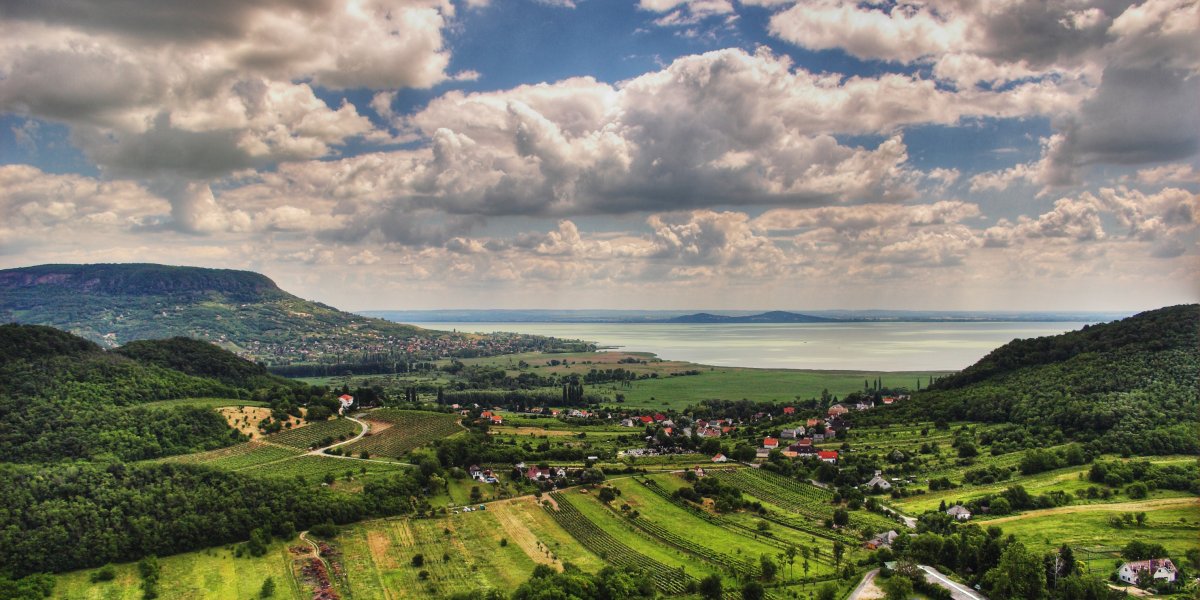
Lake Balaton
Hongrie · Best time to visit: Jun-Sep.
Day-by-day plan
Choose your pace
Durée du voyage
09:00
Neighborhood
Step off the early train at Balatonfüred station and walk five minutes downhill toward the masts — this lakeside promenade, lined with plane trees planted by Rabindranath Tagore, Indira Gandhi and dozens of other writers who came here to take the cure, is the most elegant introduction to Balaton. Morning light skates flat across the water onto the pastel facades of Hungary's oldest spa town, and the harbour's white sailboats are still tied up; by noon they will have scattered to the open lake. Walk the full kilometre east to Vitorlás tér, loop past the ochre dome of the Kerek-templom (Round Church), then double back along the water toward the BAHART ferry pier.
Tip: Each plane tree has a small bronze plaque with the name and year of its planter — the Tagore tree (1926) sits at the eastern end of the promenade and is the one worth a photo, ideally before 10:30 when the e-bike rental traffic takes over the path.
Open in Google Maps →11:00
Landmark
Board the 11:00 BAHART passenger ferry at Balatonfüred — the 35-minute crossing is the only way to feel Balaton's true scale, and the abbey's twin ochre towers rise into view about ten minutes in, exactly the postcard angle. From Tihany port, climb the 220 zig-zag steps of András lépcső straight up the cliff to the abbey courtyard. Skip the interior; the iconic image is from outside, on Pisky sétány — the cliff-top walkway running north along the rim with the lake 80 m below and the towers framed against open sky.
Tip: Walk Pisky sétány from south to north and stop at the third wooden bench on the right (the one beside a small carved cross) — that is the only point where both abbey towers stack against the open lake instead of the village rooftops, and the late-morning sun is still behind you, not in the lens.
Open in Google Maps →13:00
Food
Walk three minutes south from Pisky sétány through the lavender-lined Visszhang utca to this thatched-roof tavern with a vine-covered courtyard — locals from Aszófő and Örvényes drive over for Sunday lunch here while the tour groups stay closer to the abbey square. Order the halászlé, the fiery paprika fisherman's soup made with pike-perch from the lake (2,800 HUF / ≈€7), and the langalló, a wood-oven flatbread topped with sour cream, smoked bacon and red onion (2,400 HUF / ≈€6); add a glass of Badacsony Olaszrizling and you eat well for €18.
Tip: Don't reserve — walk in at 12:55 and ask for the back garden under the old walnut tree (left side as you enter); the front terrace looks prettier but catches the full midday sun, and the kitchen consistently sends plates out 10 minutes faster to the shaded back tables because the staff prep there.
Open in Google Maps →14:30
Park
From the tavern, walk south on Kossuth Lajos utca for eight minutes — the road dips suddenly and Belső-tó appears below you, an emerald volcanic crater lake perched 25 m above the main lake's surface and ringed by reeds, frog song and grazing buffalo. Loop the path counter-clockwise (1.8 km) until you reach Levendula Ház Látogatóközpont, the lavender visitor centre on the western flank — late June through mid-July the surrounding fields are violet-purple and humming with bees; outside that window the dried-lavender workshop and the rooftop terrace are still the right reason to come.
Tip: Order the lavender-and-acacia-honey ice cream at the Levendula Ház outdoor counter (€2.50, sold nowhere else on the peninsula) and eat it on the rooftop terrace — that is the one angle in Tihany where the inner lake sits in the foreground and the abbey towers float in the distance behind, a composition no postcard sells.
Open in Google Maps →17:00
Landmark
Walk back northeast through the village along Csokonai utca for 20 minutes (1.5 km, a gentle uphill past geranium-painted cottages) to Echo Hill, the bare rocky outcrop facing the abbey's western façade head-on. You arrive at the precise moment of the day when the low sun strikes the abbey's ochre stone like a struck match — every minute past 17:00 in summer (16:00 in shoulder season) the colour intensifies, then suddenly fades. Locals come here at dusk to test the legendary echo: shout a short phrase toward the abbey and you get back up to six syllables — fewer than the 15 of legend, since the new village rooftops broke the acoustic line, but still uncanny.
Tip: Stand on the second-from-top boulder (the flat one with the chisel-cut cross) and shout toward the southeast tower of the abbey rather than straight at the building — that single angle is the only one whose echo still bounces cleanly back to the hilltop instead of dispersing over the village.
Open in Google Maps →19:00
Food
Walk 200 m downhill from Echo Hill to this veteran terrace restaurant — it has held the same wooden-railed perch facing the abbey for over 50 years, and the terrace catches the very last red light on the towers as the lake darkens behind. Order the fogas (Balaton zander) fillet, pan-seared with brown butter and capers (€24), and the somlói galuska for dessert (€7) — three kinds of sponge layered with walnut, rum and dark chocolate, the dish a Hungarian friend would order for you without asking. A glass of Szentesi Olaszrizling from the Badacsony hills opposite (€6) closes the loop on the day.
Tip: Reserve the day before for a railing-side table at the 19:15 second seating (the 18:00 sunset crowd leaves by then) — and on your walk back down to the port, do not stop at the three restaurants on Batthyány utca with English chalkboards out front: they all charge close to double for inferior frozen fogas served as 'fresh from the lake', a Tihany-specific tourist trap that even the Hungarian guidebooks now flag by name.
Open in Google Maps →Aller au jour
09:00
Religious
Climb the cobbled ramp to the twin yellow towers crowning the peninsula — this is the postcard image of Balaton itself. Founded in 1055, the abbey holds the Founding Charter, the oldest surviving document of the Hungarian language, and its Baroque interior is still scented with beeswax and wood. Arrive at opening: the morning sun pours through the eastern windows directly onto the gilded altar, and you'll have the crypt to yourself before the 10:30 tour buses pull in from Budapest.
Tip: Skip the main entrance queue by using the side ticket office on Batthyány utca, then walk straight to the crypt of King Andrew I before anyone else descends — it's the only royal tomb in Hungary still in its original location.
Open in Google Maps →11:15
Neighborhood
Exit the abbey courtyard south and follow Pisky sétány along the ridge — five minutes of cobbles past geranium-stuffed windows and 18th-century fishermen's cottages with reed-thatched roofs. The lane opens onto Echo Hill (Visszhang-domb), where a single shouted word once bounced seven times off the abbey's north wall (modern buildings have killed it down to two, but locals still try). The mid-morning light from the east still rakes the lake flat and silver — your best wide-angle frame of Balaton is from the wooden bench at the hill's edge.
Tip: The yellow thatched cottage at Pisky sétány 9 (Folk Museum) opens its courtyard for free — duck inside for the carved porch, the photo every guidebook misses.
Open in Google Maps →12:30
Food
From Echo Hill, walk 200 metres along Visszhang utca — the restaurant's vine-shaded terrace is on your right, looking straight down at the lake. This is where the abbey's gardener eats: order the halászlé (Balaton fish soup with carp and paprika, €8) and the fogas fillet — Balaton pikeperch, lightly breaded, served with cucumber salad (€16). Skip the imported wines and ask for a small carafe of dry Olaszrizling from the Káli basin (€5).
Tip: Arrive before 12:30 — by 13:00 the terrace fills with a German tour and the kitchen slows; the four corner tables on the lake side are first-come, first-served.
Open in Google Maps →14:15
Museum
Walk west out of the village along Kossuth utca for twelve minutes — the path drops gently past walnut trees, with the Inner Lake glinting on your left. The Lavender House (Levendula Ház) sits on a hillside above Tihany's lavender fields, planted in 1926 by a French monk who recognised the volcanic soil's resemblance to Provence. Early afternoon is the right moment: the midday sun saturates the purple to its deepest violet, and the interactive exhibition on peninsula geology is a cool, dark refuge from the heat. In late June and early July the field outside is in full bloom — walk the wooden boardwalk before you go inside.
Tip: Don't buy lavender oil at any harbour kiosk — those are imports from Bulgaria sold at triple price; the gift shop here is the only place selling oil distilled from this exact field, with the harvest year on the bottle.
Open in Google Maps →16:00
Park
Cross the road from Lavender House and descend the wooden stairs to the Inner Lake (Belső-tó) — a perfect 25-metre-deep volcanic crater filled with reeds, frogs, and grey herons. Walk it counter-clockwise: the back side of the trail rounds a meadow where the abbey's twin towers reappear over the reed beds, exactly framed between two oak trees, and the late-afternoon sun is now behind you for that shot. The full loop is 45 minutes on level ground — a deliberate low-energy break after a morning of climbing.
Tip: The wooden fishing pier on the southern shore is unmarked and rarely used — walk to its end for a sunset reflection of the abbey towers in the still water around 17:30.
Open in Google Maps →19:00
Food
Climb back up to the village — fifteen minutes uphill on Cserhegyi út — to a 200-year-old wine cellar dug into the volcanic rock. Ferenc Pince has been run by the same family since the 1820s, with whitewashed vaulted ceilings and a vine-shaded terrace facing west. Order the slow-roasted lamb shank with paprika potatoes (€18) and a glass of Kéknyelű, a rare white grape grown almost nowhere outside Balaton. The host will pour a complimentary pálinka at the end — it would be impolite to refuse.
Tip: Reserve at least one day ahead for an outdoor table (call directly, not via booking sites). Pitfall warning: avoid the harbour-side fish-soup stalls below the village — most use frozen Asian pangasius dyed with paprika; real Balaton halászlé only comes from village kitchens like this one or Echo Restaurant.
Open in Google Maps →08:30
Park
Take the morning train from Balatonfüred to Badacsonytomaj station (35 minutes), then walk up Római út fifteen minutes to the Kisfaludy parking trailhead. From here a marked yellow path climbs the volcanic mesa — through chestnut woods, past the Rose Stone (Rózsakő, where local legend says couples who sit back-to-back will marry within a year), up to the Kisfaludy Lookout and the basalt organ pipes at the summit (437 m). Start early: the path is in full shade until 11:00, the morning haze burns off the lake by the time you reach the top, and you'll be descending before the day-trippers begin their climb.
Tip: Take the loop trail (yellow up, blue down) instead of going up and back — the descent passes the Klastromkút spring where you can refill your bottle with cold mineral water, and emerges directly behind Kisfaludy Ház just in time for lunch.
Open in Google Maps →12:00
Food
The trail spills out onto a stone terrace 200 metres above the lake — Kisfaludy Ház has stood here since 1798, originally the press house of the romantic poet Sándor Kisfaludy. The view is the most famous panorama in Hungary: the entire Tihany peninsula floats in the centre of the blue. Order the venison stew with Szilvásgombóc plum dumplings (€16) and a glass of the house Szürkebarát (Pinot Gris from grapes grown on the slope below) — €4 a glass. The terrace seats face directly south, perfect for the high midday sun.
Tip: The first row of terrace tables (numbered 1–6) is reserved on a first-arrival basis — walk around the back of the building rather than queueing at the front entrance and ask the maître d' there directly.
Open in Google Maps →14:00
Food
Walk eight minutes downhill along the wine road — Laposa's modern stone-and-glass tasting pavilion is built into the hillside on the left, like a half-buried bunker with a long terrace facing the lake. This is Balaton's most celebrated young winery, run by the third generation of the Laposa family. The four-wine flight (€18) walks you through the volcanic terroir: Olaszrizling, Kéknyelű, the rare Budai Zöld, and Hárslevelű. Mid-afternoon is the deliberate moment — the basalt-radiated heat coaxes maximum aroma out of the glass.
Tip: Ask for the Bazaltbor Kéknyelű reserve — it isn't on the standard flight menu but they'll add a pour for €4 if you mention it; this grape is grown on only 30 hectares worldwide, all on this hillside.
Open in Google Maps →16:00
Museum
Continue down the hill into Badacsony village (fifteen minutes on foot, the lake widening below you the whole way) — the small lakeside museum is one block from the train station. József Egry was the painter of Balaton light: his canvases capture the silvery, almost biblical haze that hangs over the water at exactly this hour. A quick visit is enough — twenty paintings, all of them facing the same lake you've just been hiking above. Afterwards your eye sees the real lake differently.
Tip: Don't miss the unsigned upstairs room — it holds Egry's preparatory sketches with handwritten notes on light conditions, and the museum guard will unlock it on request.
Open in Google Maps →17:30
Neighborhood
From the museum, walk five minutes south toward the lake — the harbour pier extends 200 metres into the water, the longest unbroken westward view on the entire northern shore. The basalt cliff of Badacsony Hill is now directly behind you, glowing red in the evening light, while the sun sets over the open water to the west — this is the only point on the lake where you can see both spectacles at once. Wander the wooden boardwalk to the lighthouse, then back via the small marina where the white sails are returning for the night.
Tip: Stand at the very end of the pier at 19:15 in May-September — the sun drops behind the Tihany peninsula in the centre of your frame, with sailboats silhouetted in front; the spot is unknown to tour groups, who all crowd the train-station beach 500 m east.
Open in Google Maps →19:30
Food
Stroll back along the lakefront ten minutes to Római út — Bonvino's bistro terrace overlooks the harbour you've just walked. This is the locals' choice for a serious evening meal: a four-course tasting menu (€38) built around the day's catch and Badacsony wines, with a kitchen run by a chef who trained in Vienna and came home for the wine. Order the grilled fogas with brown butter and the chocolate-Pinot Noir cake; ask the sommelier to pair each course with a different cellar from the slope above.
Tip: Reserve at least 48 hours ahead in summer; ask for table 14 on the corner of the terrace — it has the harbour view without the live-music speakers. Pitfall warning: never buy bottles labelled 'Tokaji' from the souvenir stalls along Római út — Tokaj is 400 km away and these are mass-bottled wines from anywhere; only buy from named Badacsony cellars (Laposa, Szeremley, Istvándy, Bazaltbor) with the producer's address printed on the label.
Open in Google Maps →
Trip builder
Plan this trip around Lake Balaton
Turn this guide into a bookable rail itinerary with FlipEarth.
Keep exploring
Related cities
More in the same country




FAQ
Frequently asked questions
How many days do you need in Lake Balaton?
Most travelers enjoy Lake Balaton in 1 days, with enough time for headline sights and a slower meal or museum stop.
What's the best time to visit Lake Balaton?
The easiest season for most travelers is Jun-Sep, especially if you want good weather and manageable crowds.
What's the daily budget for Lake Balaton?
A practical starting point is about €120 per person per day before hotels, then adjust based on museums, dining, and transport.
What are the must-see attractions in Lake Balaton?
A good first shortlist for Lake Balaton includes Tihany Bencés Apátság (Tihany Benedictine Abbey) & Pisky sétány, Visszhang-domb (Echo Hill) at Golden Hour.