City Guide
Trabzon
Turquía · Best time to visit: May-Sep.
Day-by-day plan
Choose your pace
Duración del viaje
09:00
Religious
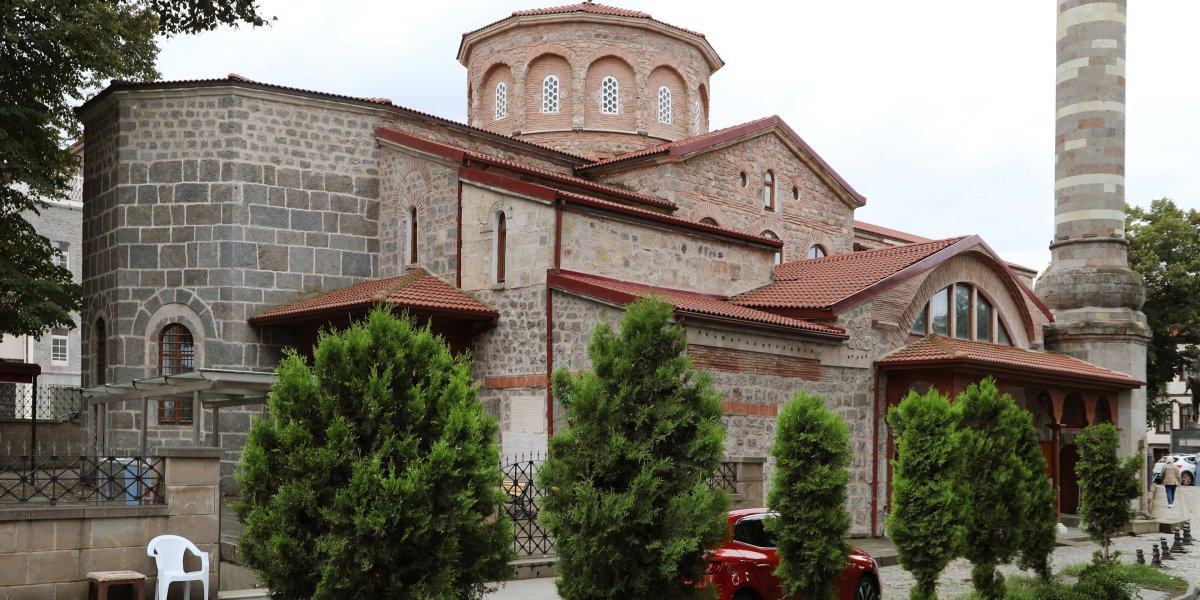
From the dolmuş drop on Soğuksu Caddesi, walk two minutes downhill toward the sea — the church suddenly appears on a green bluff above the Black Sea, framed by cypress and the morning mist still lifting off the water. Built in the 1250s under the Komnenos emperors of Trebizond, it's one of the very few Byzantine churches outside Istanbul to keep both its carved southern porch and freestanding bell tower intact. Since the 2013 reconversion to a working mosque the famous interior frescoes are partially veiled — but the exterior, with its low dome catching the eastern light, is when this place feels most like a 13th-century survivor.
Tip: Walk to the south side of the bell tower garden — it's the only angle where you can frame the dome with the Black Sea behind it, and you have to be there before 10:30 when tour-bus dolmuşes from the cruise terminal arrive. The carved relief of Adam and Eve on the southern porch lintel (12th-century Pontic Greek work) is the detail every guidebook mentions but nobody actually finds — it's directly above the central archway.
Open in Google Maps →11:00
Landmark
Hop a coastal-road dolmuş for the 3 km east, then climb the steep stone stairs up through the Zağnos Valley — you'll pass directly under the arches of the Ottoman aqueduct that still spans the ravine. Ortahisar ("Inner Castle") is the Byzantine acropolis where the emperors of Trebizond actually lived and were crowned, perched on a rock spur with sheer drops on three sides. The walls are mostly gone but Ortahisar Fatih Camii — formerly the Panagia Chrysokephalos, the gold-domed coronation cathedral — still anchors a maze of cobbled lanes where laundry hangs between Byzantine and Ottoman stone.
Tip: Slip behind the mosque to the small platform on the eastern wall — you'll see the entire Zağnos aqueduct arching across the gorge below, the single best free view in the old town. Most visitors miss it because the entrance through the side alley looks like someone's back garden; just keep walking, locals don't mind.
Open in Google Maps →13:00
Food
Walk five minutes south down from the castle gate to Maraş Caddesi — the charcoal smell hits before you see the sign. Open since 1856, this is where Trabzon goes for fast pilaf: long-grain rice cooked in chickpea-and-lamb broth, mounded onto a tin plate, crowned with shredded slow-braised beef. You order at the counter, eat at long shared tables under green-tile walls, and you're back on the street in under thirty minutes — exactly the kind of place built for a power-walk day.
Tip: Order the kuru fasulye + pilav + tas kebabı combo (~€6) with a glass of cold ayran — the recipe hasn't changed since the Crimean War. Skip the dessert here and grab a piece of Trabzon-style hazelnut helva from the helvacı next door for €1. Ignore the glass-fronted "traditional restaurants" on Uzun Sokak with English menus outside — Kalkanoğlu has no menu in English because it doesn't need one.
Open in Google Maps →14:30
Park
Catch a dolmuş marked "Köşk" from Meydan (10 min, €0.50) or walk the leafy 3 km uphill along Soğuksu Caddesi — the road climbs through chestnut trees with the city falling away below. The pavilion itself is a wedding-cake of a white neo-baroque mansion, built in 1890 for a wealthy Pontic Greek banker named Karayannidis, then gifted to Atatürk during his 1930 Black Sea tour and preserved exactly as he left it. Skip the interior (we agreed: exteriors only) and walk the terraced gardens — old cedars, hydrangea beds, and a south-facing lawn where the mansion floats against the green Pontic foothills like a ship at anchor.
Tip: Walk the gardens clockwise: the postcard angle is from the lower south lawn, where you frame the white facade against the dark conifers — the afternoon light hits the eastern wing perfectly between 15:30 and 16:30. Avoid the so-called "panorama café" just outside the lower gate; it's the only overpriced spot on the hill (€5 for tea that's €0.50 anywhere else).
Open in Google Maps →17:00
Landmark
From the Köşk's upper gate, take the ridge path east for thirty minutes — the trail threads through hazelnut orchards with the entire city dropping away to your left, ships sliding into the harbor like toys. Boztepe ("Grey Hill") is the eastern peak that every Trabzonlu climbs in the evening: from up here the Hagia Sophia you stood beside this morning is a tiny white dot on the far western shore, the old town spreads in red-roofed terraces below, and the Pontic mountains pile blue and endless to the south. Tea gardens cover the plateau, families are everywhere, and nobody is in a hurry.
Tip: Walk past the obvious tea gardens with the colored umbrellas to the western stone parapet just below the TV tower — it's unsigned and most tourists don't find it, but it's the only spot where you get Hagia Sophia, the harbor cranes, and the mountains in a single frame. Order a small glass of Rize çay (€0.50) and stay; the light goes golden around 19:00 in summer, peach by 19:45.
Open in Google Maps →19:00
Food
Two minutes' walk from the parapet along a lit garden path brings you to a glass-walled terrace restaurant suspended over the city. Run by the municipality and packed with Trabzon families on weekend evenings, this is where to end the day with proper Black Sea cooking and the best view in town: hamsi tava (fresh fried anchovies, the dish that defines this entire coastline) served sizzling in their iron pan with mısır ekmeği (dense yellow cornbread), and kuymak — molten cornmeal-and-Trabzon-cheese fondue scooped up with the bread. Sunset paints the sea behind your plate; the city lights come up while you're still eating.
Tip: Order hamsi tava (€10), kuymak (€6), and mısır ekmeği (€2) — that's the Black Sea trinity and anything else means you missed the point. Arrive by 18:30 to lock in a railing table for sunset; after 19:00 you'll be seated inland. Pitfall warning: avoid the harbor-front fish places near Atatürk Alanı that display giant plastic hamsi at the entrance — they triple-charge tourists for previously-frozen catch. Also skip any "fresh trout from Sumela" offered by roadside touts on the way down; real Trabzon trout doesn't travel in plastic buckets.
Open in Google Maps →Saltar al día
09:00
Religious
From central Trabzon, a 50-minute drive south through misty Pontic forests and tea-terraced hills delivers you to the Altındere National Park gate; from there a paved 30-minute climb (or a 2-euro shuttle) brings you face-to-face with the 4th-century monastery glued to a vertical cliff above the gorge. Inside the Rock Church, blackened 14th-century frescoes of Christ Pantokrator and the Mother of God still glow cobalt and ochre under the natural skylight, while clouds drift past the cave mouth. The whole place feels less like a building than a hallucination.
Tip: Arrive at the park gate before 09:30 — cruise-ship tour buses unload from 10:30 and the narrow Rock Church becomes impossible to photograph. The cliff-face shot every photographer wants is taken from the second outdoor staircase looking up-right toward the painted façade with the gorge falling away below; the morning sun lights it until 11:00, after which it falls into shadow.
Open in Google Maps →12:30
Food
On the road back to Trabzon, your driver pulls off the highway at the mountain hamlet of Hamsiköy — every Trabzonlu makes this pilgrimage. Order the village's namesake sütlaç (rice pudding baked over woodfire until the top caramelises, ~3 EUR) and a plate of stream-caught alabalık (trout grilled in butter, ~7 EUR), eaten outside under walnut trees with cool yayla wind in your hair.
Tip: Skip the first three roadside spots with bus-coach parking — they cater to tour groups. Walk into the village proper and find the small house opposite the stone fountain; ask for 'sütlaç fırından' so they bring it warm with the caramelised skin still intact. One serving per person — it's richer than it looks.
Open in Google Maps →15:00
Landmark
Ask the driver to drop you directly at Köşkü on the way into the city — the pavilion sits 5 km southwest of centre on a pine-covered hill. The 1903 mansion, built for a Pontic Greek banker and gifted to Atatürk in 1937, stands brilliant white among hundred-year-old magnolias. The terraced rose garden behind the house offers the prettiest free vista of the Black Sea you'll find in Trabzon.
Tip: The interior is a single one-way loop and the upstairs dims after 16:00 — do the rooms briskly and head straight to the lower garden terrace. The stone bench under the magnolia on the far-left edge frames the cleanest shot of the white façade against the sea, with no other visitor in frame; almost no one walks down that far.
Open in Google Maps →16:30
Park
A 7-minute taxi from Atatürk Köşkü climbs the back of Boztepe ridge, the long green spine that rises directly above the old town. The summit terrace is rimmed with çay gardens where Trabzonlu families gather to watch the city lights come on and the muezzins begin their evening call from a dozen mosques at once. Order a tulip glass of black tea (~1 EUR) and stay through dusk.
Tip: Skip the crowded main viewing platform — walk 80 metres east along the ridge to the small wooden tea garden tucked behind the cypresses. From there the minarets of Ortahisar line up perfectly with the harbour cranes, the sky lights up gold around 19:45 in midsummer (18:00 in May), and you'll share the bench with cats and old men, not tourists.
Open in Google Maps →20:00
Food
From Boztepe, walk down the stone staircases through Çukur district — 15 downhill minutes past shuttered Ottoman houses and lit minarets — straight onto Maraş Caddesi. Cemil Usta has been the local institution for Black Sea cooking since 1993; on a Saturday night every table is locals. Order hamsili pilav (anchovies layered over butter-and-pine-nut rice, baked in a clay pot, ~8 EUR) and karalahana çorbası (black-cabbage and cornmeal soup, ~2.5 EUR) — the two dishes that define this coast. Average bill 22–28 EUR a head with a glass of ayran.
Tip: Reserve in advance for an upper-floor window table — the view down Atatürk Alanı is the best in the room. Ignore the 'fish of the day' at the front display (priced by weight, dollar-denominated, easy to overpay); stay on the printed Black Sea menu. Pitfall: avoid the laminated-menu fish restaurants along the Sahil Caddesi seafront promenade — they triple their prices for foreigners and the fish is no fresher than what Cemil Usta serves inland.
Open in Google Maps →09:00
Religious
From Atatürk Alanı, take a yellow dolmuş marked 'Ayasofya' — 10 minutes west along the coast for less than a euro. The 13th-century imperial church of the Trebizond Empire sits on a low grass terrace looking out to the Black Sea, its conical dome and four-sided porch unmistakable from the road. Inside, recently restored frescoes — the miracles of Christ, the Genesis cycle, a serene Mother of God in the apse — still hold their lapis blues despite 800 years of Ottoman whitewash and Soviet-era neglect.
Tip: Enter right after the 09:00 reopening (post-dawn prayer) — for forty minutes you'll have the frescoes essentially alone. The Marriage at Cana on the south wall is the painting Byzantinists travel for; the side-light at 09:15 makes the blues luminous. Remove shoes at the entrance, women cover hair (scarves are provided at the door), and photography without flash is permitted.
Open in Google Maps →11:00
Museum
A 15-minute dolmuş back along the coast drops you in Zeytinlik, the old Greek-Armenian quarter rising above the harbour. Set inside the 1900 mansion of banker Konstantinos Kapayannidis, this is the prettiest house museum in eastern Turkey — stencilled ceilings by Italian painters, an oval ballroom, and an iron spiral staircase cast in Liège. The ground floor holds the city's archaeology: gold coins of the Comnenian emperors, a bronze Hermes pulled from the Tabakhane gorge.
Tip: Closed Mondays. Skip the basement ethnography rooms (often half-lit) and concentrate your time upstairs — the painted ceiling of the second-floor selamlık is the highlight, best shot straight up from the centre of the room before the 11:30 school groups arrive. English captions are scarce; the room with the Comnenian coins sits to the right at the top of the staircase.
Open in Google Maps →13:00
Food
An 8-minute walk down narrow Zeytinlik lanes into the heart of Çarşı bazaar deposits you in front of the wood-fired oven Hüsnü Usta has tended on Kunduracılar Caddesi for over forty years. Order kuşbaşılı pide (boat-shaped flatbread topped with diced grass-fed beef and kaşar cheese, ~5 EUR) and a side of Akçaabat köfte (charcoal-grilled meatballs from the next town along the coast, ~6 EUR), washed down with a glass of icy ayran. Average bill 8–12 EUR a head.
Tip: Arrive by 13:00 sharp — by 13:30 there's a queue out the door of municipal workers on lunch break. Ask for 'az yağlı' (less buttery) if the standard pide feels heavy, and pair with ayran rather than Coke. The meatballs are best shared; one pide per person is exactly the right portion.
Open in Google Maps →14:30
Shopping
Step out of the restaurant straight into the artery of Trabzon's old bazaar. Wander Semerciler Sokağı (saddlemakers' lane) past coppersmiths still hammering tin-lined pots, then duck into the 16th-century Taşhan caravanserai — its inner courtyard is now full of jewellery workshops weaving Trabzon hasırı, a fine gold mesh found nowhere else in Turkey. Next door, the vaulted Bedesten cloth hall sells local hazelnuts, dried fish and tea by the kilo.
Tip: For the gold mesh bracelet (the classic Trabzon souvenir), the workshops inside Taşhan charge half the price of the polished storefronts on Kunduracılar Caddesi — and they are the same artisans, often the same families. Pay by card to get the live daily gold rate; the marked gram price is non-negotiable, so don't bother haggling — that's a tourist-shop tell. Look for the maker's punch on the clasp.
Open in Google Maps →16:30
Neighborhood
From Taşhan, walk west five minutes across the iron Tabakhane Bridge spanning a 60-metre-deep gorge — the same crossing the Comnenian emperors built to defend their citadel. On the far side rises Fatih Camii, formerly the Panagia Chrysokephalos (Golden-Headed Virgin), the cathedral where Trebizond's Greek emperors were crowned for two and a half centuries. Wander the lanes behind it: stone houses with carved wooden mashrabiya balconies, hanging laundry, children playing football against a 1,200-year-old wall.
Tip: Walk to the south end of Tabakhane Bridge and look straight down — you'll see the original Byzantine citadel walls embedded in the cliff, glowing copper at 17:30. Inside Fatih Mosque, look up at the gold-painted dome (the Greek original was sheet gold, hence Chrysokephalos). Ignore the men loitering outside Taşhan offering 'private guided tours of the old city' — the quoted rate triples once you're walking, and these lanes are perfectly safe and self-explanatory.
Open in Google Maps →19:30
Food
From Ortahisar walk 10 minutes north-east through Çarşı, emerging onto Kahramanmaraş Caddesi just behind Atatürk Alanı. Galo is the city's standard-bearer for proper Black Sea home cooking — wooden tables, white linens, locals in shirtsleeves. Order hamsi tava (a cast-iron pan of Black Sea anchovies fried in cornmeal, ~5 EUR), kuymak (woodfire-stirred cornmeal-and-aged-cheese fondue eaten with bread, ~4 EUR) and a tall glass of cherry compote. Average bill 18–25 EUR a head — the meal you will remember from Trabzon.
Tip: Hamsi (Black Sea anchovy) is in season November–March; in summer kitchens substitute frozen fish or use istavrit (horse mackerel) — ask 'taze mi?' (is it fresh?) and trust the answer. Kuymak must be eaten the instant it arrives, while the cheese is still pulling threads. Pitfall: avoid the rooftop 'panoramic restaurants' touted around Atatürk Alanı — they're standard menus at double the price for a view that is better and free from Boztepe.
Open in Google Maps →
Trip builder
Plan this trip around Trabzon
Turn this guide into a bookable rail itinerary with FlipEarth.
Keep exploring
Related cities
More in the same country
FAQ
Frequently asked questions
How many days do you need in Trabzon?
Most travelers enjoy Trabzon in 1 days, with enough time for headline sights and a slower meal or museum stop.
What's the best time to visit Trabzon?
The easiest season for most travelers is May-Sep, especially if you want good weather and manageable crowds.
What's the daily budget for Trabzon?
A practical starting point is about €60 per person per day before hotels, then adjust based on museums, dining, and transport.
What are the must-see attractions in Trabzon?
A good first shortlist for Trabzon includes Ortahisar (Trabzon Inner Castle & Fatih Mosque), Boztepe Panorama.