City Guide
St Andrews
Reino Unido · Best time to visit: May-Sep.
Day-by-day plan
Choose your pace
Duración del viaje
09:00
Landmark
Start where golf was born. The first foursomes are still teeing off when you arrive, so the Swilcan Bridge — the small humpback stone arch every Open champion has crossed on the 18th — is yours for an unhurried photo, with the Royal & Ancient Clubhouse filling the frame behind. Walk it, then turn north and step onto West Sands: two miles of pale, hard-packed sand sweeping to the Eden estuary, the beach where the opening scene of Chariots of Fire was filmed.
Tip: Tee times begin around 06:30 in summer, so by 09:00 the golfers have moved up the course and the 1st/18th area is quiet for ten minutes between groups. Stand on the bridge's east (clubhouse) side for the canonical photo. If it's Sunday the Old Course closes to golf entirely and locals stroll the fairways — your luckiest possible day. To clock real distance, walk 1.5 km up West Sands before turning back; the wet sand near the waterline is firmer than the dunes.
Open in Google Maps →11:15
Landmark
Walk south down The Scores for ten minutes, the North Sea cliffs on your left the whole way, past the squat British Golf Museum (skip it) toward the spire of St Salvator's. This is Scotland's oldest university (founded 1413) and the cloistered quad where Prince William first noticed Kate Middleton in 2001 — the chapel tower rises behind a tall stone arch, with mossed flagstones underfoot and undergraduates in red gowns drifting past on a teaching day. On the cobbles outside the archway, look for the initials "PH" set into the stone: Patrick Hamilton was burned alive on this exact spot in 1528, and the standing student superstition is that stepping on the letters dooms your exam results.
Tip: The quad is working university space — pass quietly through the arch from North Street; nobody will stop you, but it's not a tourist site. The best shot is from inside the quad looking back at the archway with the chapel tower framed above it; mid-morning light hits the stone at a clean side angle. Skip the gift shops on Market Street — overpriced cashmere; the genuine wool comes from Johnstons of Elgin, not here.
Open in Google Maps →12:30
Food
Cut south through College Street to Market Street, then a few steps east to the corner of Union Street — five minutes door to door. Cromars is the town's award-winning chipper, fried strictly to order with beef-dripping batter, and the only place locals will queue at lunchtime. Order the haddock supper (£12) with a side of mushy peas (£3), or — if you want the regional curiosity — the smoked Pittenweem haddock fishcake (£6).
Tip: The queue swells from 12:45 and snakes onto the pavement; arrive by 12:30 and you walk straight to the counter. Always haddock, not cod — the boats land it ten miles down the coast at Pittenweem that morning. Two stools inside, or take the paper-wrapped parcel down to East Sands later. Refuse the offer of curry sauce; ask for the proper malt vinegar instead.
Open in Google Maps →13:30
Landmark
From Cromars, walk north down Castle Street straight toward the sea — five minutes, and the ruins drop into view as the lane tips toward the coast. A 13th-century bishop's fortress on a cliff above the North Sea, this is where Cardinal Beaton was murdered in 1546 and his body hung from a window, and where the besiegers and besieged dug rival tunnels through solid rock to break the year-long siege that followed — you can still crawl through the mine and counter-mine, the only such surviving pair in Europe. The Bottle Dungeon is the other unforgettable thing: a seven-metre flask-shaped pit cut into living rock, where prisoners were dropped through the neck and forgotten.
Tip: Buy the joint Castle + Cathedral ticket at the kiosk here for £15 — saves £2 versus two singles. Do the mine tunnel first while you still have the energy; it's narrow, low, lit only at intervals, and unforgettable. The best exterior shot is from the rocky path east of the entrance, looking back with waves breaking under the keep. The cliff is windy even in July — keep your hat in your hand, not on your head.
Open in Google Maps →15:15
Religious
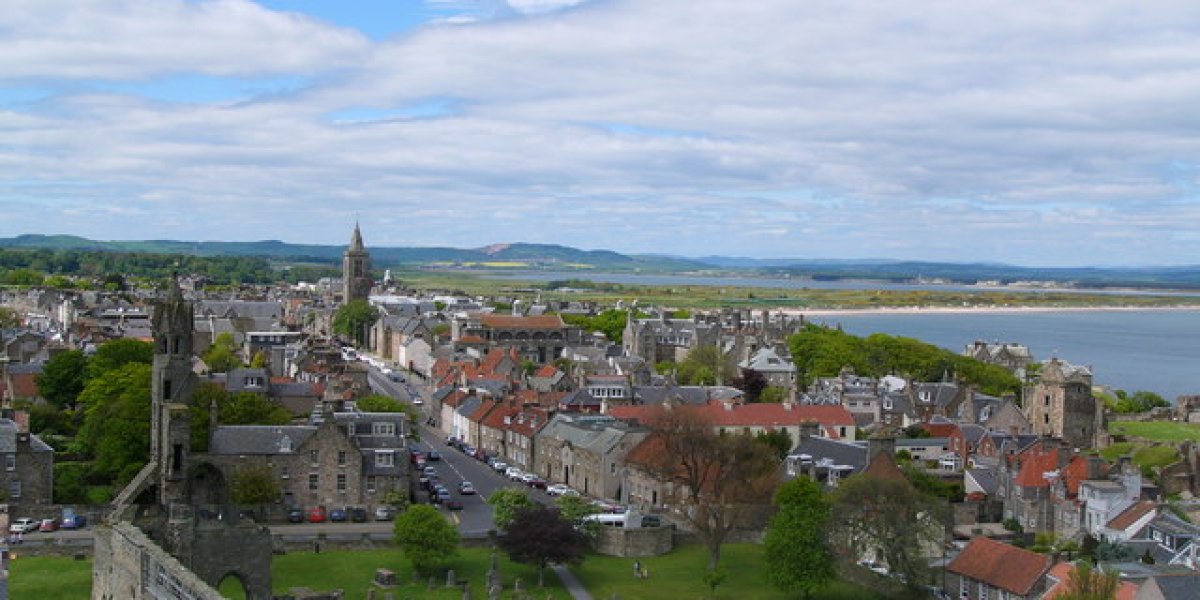
Follow the coastal Scores path east from the castle, then dip onto North Street — seven minutes, the cathedral's east gable looming over the rooftops the whole way. Consecrated in 1318 as the largest cathedral in Scotland, it was torn apart in a single afternoon of Reformation fury in 1559, and what stands now is more dramatic than any intact church: two soaring gable ends, skeletal arches marching down a roofless nave, and a tilting graveyard of weathered slate that slopes toward the sea. Climb the 157 spiral steps of St Rule's Tower — the squat 12th-century survivor on the cathedral lawn — for the only proper aerial view of St Andrews, with the Old Course laid out to the west, East Sands curling below, and the entire ruined nave directly beneath your feet.
Tip: The tower is a tight one-way spiral with no passing places — start the climb just before 16:00, when coach groups have left and you'll have it almost alone. At the top, face northwest first: the composition is Cathedral nave in the foreground, the Old Course middle distance, West Sands beyond. After descending, exit through the East Cliff gate down to St Andrews Harbour and East Sands for a final 1 km of beach before dinner — the harbor at golden hour is the photo nobody talks about.
Open in Google Maps →19:00
Food
Walk back from the harbor up Castle Street and turn west on South Street — eight minutes through the town's prettiest stretch of Georgian frontage, fanlights glowing as the dusk comes in. The Adamson lives in a tall 1813 house named for John Adamson, the doctor who took Scotland's first calotype photographs from this address, and the dining room still has its original cornicing and shuttered windows. Order the pan-roasted Scottish salmon (£24) with crushed Jersey Royals and brown shrimp butter, or the 35-day dry-aged sirloin (£32) from Buchanan's farm eight miles down the road; finish with the dark chocolate fondant (£9), which arrives still molten in the centre.
Tip: Reserve at least 24 hours ahead in summer — the room is small and books out, especially Friday and Saturday. Ask specifically for a front-room table rather than the back extension; better natural light, original 1813 fireplaces, and the South Street view. Pitfall warning for the area: ignore the cluster of restaurants ringing the cathedral on North Street and along the harbor approach — they're priced for tourists and the food is unmemorable. The Adamson, five minutes inland, is what St Andrews residents actually book. Avoid the kilted "clan tartan ancestry" shops on Market Street too — every name maps to the same three printed swatches.
Open in Google Maps →
Trip builder
Plan this trip around St Andrews
Turn this guide into a bookable rail itinerary with FlipEarth.
Keep exploring
Related cities
More in the same country




FAQ
Frequently asked questions
How many days do you need in St Andrews?
Most travelers enjoy St Andrews in 1 days, with enough time for headline sights and a slower meal or museum stop.
What's the best time to visit St Andrews?
The easiest season for most travelers is May-Sep, especially if you want good weather and manageable crowds.
What's the daily budget for St Andrews?
A practical starting point is about €120 per person per day before hotels, then adjust based on museums, dining, and transport.
What are the must-see attractions in St Andrews?
A good first shortlist for St Andrews includes The Old Course, Swilcan Bridge & West Sands, St Salvator's Quad & North Street, St Andrews Castle.