City Guide
Santiago de Compostela
España · Best time to visit: Apr-Oct.
Day-by-day plan
Choose your pace
Duración del viaje
09:00
Landmark
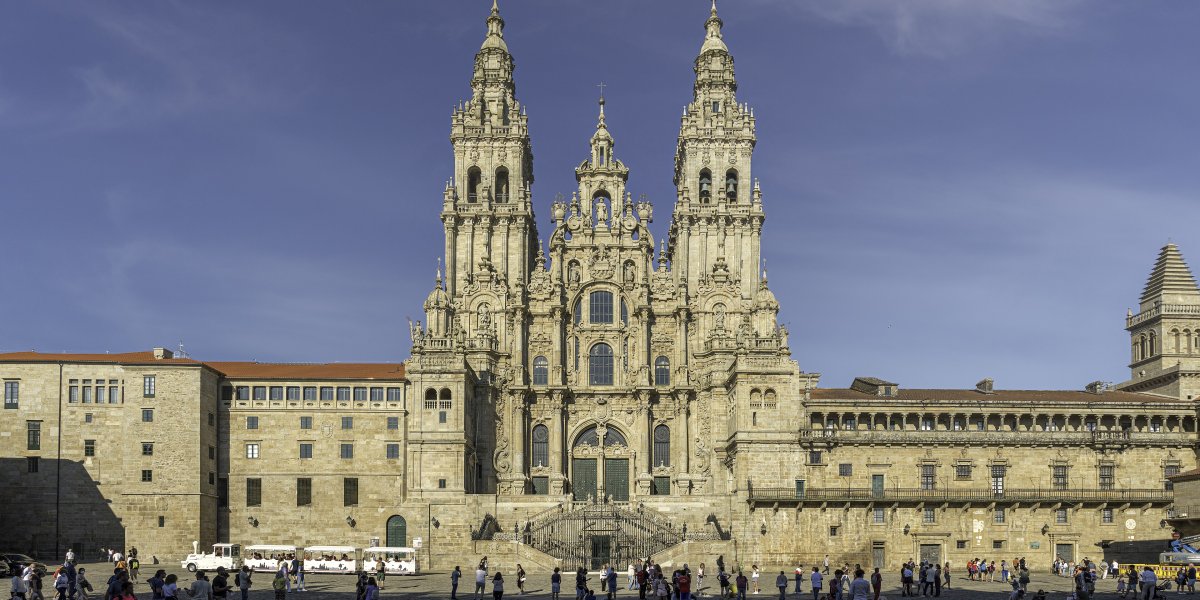
Begin the day at the most emotionally charged square in Spain — the literal end of the Camino. At 09:00 the granite is still cool and damp, the tour buses haven't arrived, and you'll see the morning's first pilgrims stagger in with backpacks, walking sticks, and tears. Stand in the centre of the square (the bronze scallop shell embedded in the stone) and let the Baroque facade of the cathedral fill your entire field of view — this is the photograph that justifies the trip.
Tip: Position yourself with your back to the Pazo de Raxoi (the town hall on the west side) — that is the only angle where the full cathedral facade fits in frame without a wide lens. Pilgrims tend to arrive in waves between 09:30 and 11:00; the genuinely moving moment is when groups embrace and collapse onto the stones.
Open in Google Maps →10:30
Religious
Exit Praza do Obradoiro on the south side and circle the cathedral clockwise — a 600-metre walk that takes you through the three other squares hugging the basilica, each with a totally different character. Praza das Praterías has the oldest surviving facade and a horse fountain locals fill water bottles from. Praza da Quintana is split into two levels by a stone staircase where students sit drinking wine at midnight; the sealed Holy Door (Porta Santa) here only opens in Jubilee years. Praza da Acibechería closes the loop with the Benedictine monastery.
Tip: On the Quintana facade, find the bearded statue locals call 'O Barbas' on the lower right of the Holy Door — touching his foot is a tradition older than the cathedral guides admit. Skip the cathedral interior tour today: the queue eats 90 minutes and the outside is the experience.
Open in Google Maps →12:30
Food
From Praza da Acibechería walk south-east down Rúa das Casas Reais for 6 minutes — a downhill granite street lined with butchers and old hardware shops that feels like 1955. The market itself is eight stone pavilions where Galician fishermen and farmers have sold since 1873. Order a half-ración of pulpo a feira (octopus on wood plates with paprika and olive oil, around €12) at the bar of Pulpería A Carretilla, and a Galician empanada slice (€3-4) from any of the bakery stalls. Eat standing at the counter with a glass of Albariño (€2.50) — this is exactly how Santiagueses do Friday lunch.
Tip: Pavilion 5 has the seafood stalls — buy a few percebes (goose barnacles) raw and the cooks at Mariscomanía next door will steam them for you for €2. Avoid the sit-down restaurants surrounding the market on Rúa Ameas; they double the price for a worse version of what's inside.
Open in Google Maps →14:30
Neighborhood
Leave the market heading west into the heart of the casco vello, weaving down Rúa Nova and Rúa do Vilar — the two parallel arcaded streets that pilgrims have walked into the cathedral for nine centuries. The granite paving is grooved by millions of footsteps; on a sunny afternoon it glows silver-grey. Loop through Praza de Cervantes (the medieval public square where executions happened), past the Casa do Cabido (a building only 3 metres deep — built purely as a stage backdrop in 1758), and down Rúa do Franco, the loud tapas street where every doorway has a different smell of garlic and grilled pimientos.
Tip: Look up — the cast-iron galerías (glassed-in balconies) above Rúa do Vilar are a regional speciality you'll only see in Galicia and northern Portugal. The narrow alley Rúa da Conga, halfway down, frames the cathedral bell tower perfectly — most-photographed alley in the city, easily missed.
Open in Google Maps →17:00
Park
From Rúa do Franco walk south for 5 minutes through Porta Faxeira and you arrive at the city's lung. Take the upper path called the Paseo da Ferradura (Horseshoe Walk) — a tree-lined promenade carved into the hillside that wraps around the park. Halfway along is the bench that holds the most famous view of Santiago: the entire cathedral rising above the rooftops of the old town. This is the postcard. At 18:00-19:00 in summer the late sun strikes the cathedral facade head-on and the granite turns honey-gold; in winter the same effect happens around 17:30.
Tip: Walk to the very end of the Paseo (past the eucalyptus grove) for the secondary viewpoint with no other tourists — locals call it 'Mirador da Ferradura.' Bring a takeaway Estrella Galicia from any kiosk; drinking on the bench at sunset here is a Santiago rite of passage.
Open in Google Maps →20:00
Food
Walk back north into the old town for 10 minutes via Rúa do Vilar — the streets are now lit by warm yellow lamps and the granite is at its most cinematic. O Curro da Parra is a small modern Galician kitchen on Rúa da Conga, run by a chef who trained at Casa Marcelo and dropped the white-tablecloth pretence. Order the croqueta de pulpo (€3 each), the sardine 'lacón' tart (€9), the slow-cooked pork cheek with parmentier (€16), and a bottle of Mar de Frades Albariño (€28). This is the dinner that makes you want to extend the trip to two days.
Tip: Reserve at least 24 hours ahead — they have ten tables and Rúa do Franco's overflow finds them. Skip every restaurant on Rúa do Franco itself: the menus-of-the-day with photos in the window are the city's biggest tourist trap, frozen seafood at triple price, and waiters who chase you down the street to fill the terrace.
Open in Google Maps →Saltar al día
09:00
Religious
Enter through the south Praterías door right at 09:00 — you will have the granite vaults nearly to yourself for almost an hour before the noon Pilgrim's Mass crowds arrive. Walk straight to the transept to stand beneath the Botafumeiro ropes, then descend to the silver crypt where the Apostle James is said to rest. This early hour is the only time the cathedral feels like a place of prayer rather than a monument.
Tip: The Pórtico da Gloria behind the western door is now only accessible through the separate Museo Catedral ticket — don't waste time queuing at the west façade looking for it. The Botafumeiro only swings on major feast days and at Friday 19:30 Mass; on a regular weekend you will see it hanging motionless.
Open in Google Maps →11:30
Museum
From the south door walk 60 seconds around the cathedral's flank to the museum entrance on Praza do Obradoiro. The restored Pórtico da Gloria — Master Mateo's 12th-century polychrome masterpiece — is the single most important piece of medieval sculpture in Spain; book the timed slot online before arriving. Finish on the cathedral rooftop tour if you can add 30 minutes, because walking the granite tiles above the nave is something almost no visitor does.
Tip: Book the 11:30 Pórtico slot at catedraldesantiago.es the night before — on-site tickets for the restored polychrome are often sold out by 10:00. The rooftop tour is a separate €12 add-on; go for the 12:00 slot to catch the bells.
Open in Google Maps →13:30
Food
Duck two minutes south down Rúa da Raíña, passing under the arcaded stone colonnade where pilgrims shelter from the Galician rain. A smoky, tin-ceilinged tapas bar where retired Galician men hold court — no menu, no English, no reservations. Order zamburiñas a la plancha (grilled scallops, €9), a ración of pimientos de Padrón (€6), and ask for Ribeiro poured into the white ceramic cups. Expect €15-20 per person.
Tip: Arrive at 13:25 sharp — by 14:00 it is elbow-to-elbow and you will wait 40 minutes. Pay cash; the hand-written slip of paper they give you is the bill, and tipping is not expected. Closed Sundays.
Open in Google Maps →15:00
Landmark
A two-minute walk north from the bar, slipping under the arch of Pazo de Xelmírez onto the vast granite square. From 15:00 to 17:00 the low western light hits the Baroque cathedral façade straight on — this is when every photograph of Santiago is taken. Sit on the stone at the plaza's west side opposite the cathedral and watch pilgrims collapse in tears after 800 km on the Camino; no other plaza in Europe carries this emotional current.
Tip: The far-right corner (northwest, under the Hostal dos Reis Católicos) is the only spot where you can frame the full cathedral façade without the parked taxis cutting through. Stand there — don't stand dead-centre where the guidebook photo implies you should.
Open in Google Maps →17:00
Religious
Cross Praza da Inmaculada on the cathedral's north flank — a three-minute walk to Spain's second-largest monastery after El Escorial. Ninety percent of visitors to Santiago never enter this building because it is tucked behind the cathedral and carries no line. The double-tiered main altar is Galician Baroque at its most theatrical, and the silence of its cloister is the deliberate opposite of the cathedral next door.
Tip: The audioguide is pointless — walk straight to the left retablo (the Virxe do Socorro) where the gilded Solomonic columns reach 14 metres; this is the piece other Baroque altars in Spain copied from.
Open in Google Maps →20:00
Food
Exit the monastery and descend Rúa das Hortas for four minutes — the street drops steeply past stone houses with geranium balconies. Marcelo Tejedor's Michelin-starred kitchen serves Galician ingredients through an Asian lens at a single long communal oak table. No reservations ever — start queuing outside the black door at 19:45. Must-orders: the maíz empanada with anchovy (€10), the pulpo dim sum (€14), and the steamed bao with pork jowl (€12).
Tip: Skip the restaurants along Rúa do Franco with hawkers waving laminated menus outside — they target tourists with pre-cooked pulpo reheated in microwaves at triple the market price. Any place in Santiago that needs to shout for your attention is not where locals eat. If Casa Marcelo's queue is over ten people by 19:45, walk one block to Abastos 2.0 (same quality, open kitchen, also no reservations).
Open in Google Maps →09:30
Neighborhood
A seven-minute walk east from the cathedral through Rúa do Preguntoiro, descending the granite stairs past medieval taverns. Galicia's second-busiest food market after Madrid's — arrive before 10:30 to see fishermen's wives still arranging percebes (goose barnacles) and centolla (spider crabs) on crushed ice. Buy a wedge of tetilla cheese (€4) and membrillo paste from the dairy aisle in Nave 5, then eat them on the market steps with a coffee from the corner stand.
Tip: Closed Mondays and on Sunday afternoons — plan for Saturday morning, which is the loudest and fullest of the week. In Nave 4 you can buy raw seafood and take it next door to the Mariscomanía counter, where they cook it for you for €5 per kilo — the tourist board does not advertise this.
Open in Google Maps →11:30
Museum
Walk five minutes north through Parque de San Domingos de Bonaval, a leafy former convent park where cats nap on medieval tombstones laid flat into the grass. The museum lives in a 13th-century Dominican convent and holds Galicia's most famous architectural curiosity: Domingo de Andrade's triple-spiral granite staircase, where three people can ascend simultaneously without ever meeting. Skip the ethnographic exhibition rooms on the upper floors — the staircase and the adjacent church nave (where Rosalía de Castro is buried) are the reason to come.
Tip: Enter the triple staircase from the ground floor on the right as you come in — do not take the normal visitor route, which sends you up the wrong flight. Closed Mondays and Sunday afternoons.
Open in Google Maps →13:30
Food
Retrace your path west through the old town via Rúa da Troia and Rúa do Vilar — a 12-minute walk downhill through arcaded streets back toward the cathedral. A tight, azulejo-tiled corner bar run by the same family for four decades; their pulpo á feira (octopus with smoked paprika and rock salt, €15) is cut on a wooden board in front of you by an apron-clad woman with a pair of scissors. Add a glass of cold Albariño (€3) and a plate of pan de millo (dense Galician corn bread).
Tip: Seats are first-come only — if the tiny front room is full, stand at the wine barrel by the door and eat there (this is the local way, not a backup). Pulpo is sold out some days by 14:30, so if you want it, order it first before anything else.
Open in Google Maps →15:30
Landmark
Fifty metres from the bar through Rúa de Xelmírez — you emerge into the cathedral's eastern plaza, split in two by a broad granite staircase (Quintana dos Vivos above, Quintana dos Mortos below). The Porta Santa (Holy Door) is only opened during Jacobean Holy Years; the next opens in 2027 and is currently sealed. Around 16:00 the plaza clears as tour groups move on, and the 24 carved stone figures above the Holy Door catch perfect sidelight for photos — this is the angle of the cathedral almost no one takes home.
Tip: At exactly midnight every night the bells of the Berenguela clock tower strike — if you return after dinner, the plaza is usually empty and the sound reverberates off all four granite walls. Worth the late detour.
Open in Google Maps →17:30
Park
Walk west down Rúa do Franco, past Praza do Toural — eight minutes uphill to the eucalyptus-lined city park. Take the upper path (Paseo dos Leóns) all the way to the Paseo da Ferradura lookout on the western edge. From here, between 18:00 and sunset, the three cathedral towers float above the granite rooftops catching progressively pinker light — this is the photograph you came to Santiago to take, and no tour bus stops here.
Tip: The best bench is the third one from the south end of Paseo da Ferradura, behind the statue of 'As Dúas Marías.' Lean slightly right to frame the spires between the two tallest trees — that is the composition on every Galician postcard.
Open in Google Maps →20:00
Food
Descend from the park through Porta Faxeira — a 10-minute walk back into the old town via Rúa Nova to a discreet white-tablecloth dining room above a ground-floor tapas bar. Chef José Manuel Reboredo serves seasonal Galician cooking with a restrained hand that locals trust more than the Michelin-starred rooms in town. Order the cigala tartare (€19), the black-garlic pork cheek (€22), and finish with the tocinillo de cielo (€7).
Tip: Do not buy 'pilgrim certificates,' 'Compostela scrolls,' or wooden Santiago staves from the souvenir shops lining Rúa do Vilar at night — they are mass-produced in China and cost ten times what locals pay at the artisan workshops on Rúa Nova. The real Compostela is free and issued only at the Pilgrim Reception Office on Rúa Carretas, and only to those who have walked the last 100 km.
Open in Google Maps →
Trip builder
Plan this trip around Santiago de Compostela
Turn this guide into a bookable rail itinerary with FlipEarth.
Keep exploring
Related cities
More in the same country
FAQ
Frequently asked questions
How many days do you need in Santiago de Compostela?
Most travelers enjoy Santiago de Compostela in 1 days, with enough time for headline sights and a slower meal or museum stop.
What's the best time to visit Santiago de Compostela?
The easiest season for most travelers is Apr-Oct, especially if you want good weather and manageable crowds.
What's the daily budget for Santiago de Compostela?
A practical starting point is about €95 per person per day before hotels, then adjust based on museums, dining, and transport.
What are the must-see attractions in Santiago de Compostela?
A good first shortlist for Santiago de Compostela includes Praza do Obradoiro.