City Guide
Santander
España · Best time to visit: Jun-Sep.
Day-by-day plan
Choose your pace
Duración del viaje
09:00
Religious
Begin in the silent Old Town before the city stirs — the cathedral stands on the spot where Santander began, two churches stacked on top of one another: the 12th-century Iglesia del Cristo crypt at street level, and the soaring Gothic upper church above. Enter through the cloister: the low, vaulted crypt with its glass floor revealing Roman foundations is the city's oldest stone, and at this hour you may have it entirely to yourself. The painter and tomb of Menéndez Pelayo, Santander's most famous son, rests in the upper church.
Tip: Use the cloister entrance on Calle Somorrostro, not the main facade — it opens at 09:00 sharp, fifteen minutes before the front, and you'll walk in with the canons rather than queuing. The morning sun hits the south rose window between 09:15 and 09:30 — stand in the upper nave for the best shaft of colored light onto the stone floor.
Open in Google Maps →10:30
Landmark
Exit the cathedral cloister and walk five minutes east along Calle Somorrostro until the city falls away and the Bay of Santander opens before you — Renzo Piano's Centro Botín floats on stilts above the water like a pair of pebbles dressed in 270,000 mother-of-pearl ceramic discs that shift color with the light. Cross the elevated footbridge over the Pereda gardens, circle the cantilevered terraces around the building's belly, and walk to the end of the pier — this is the photo that proves you were in Santander. The gardens themselves were reclaimed from the highway Piano had buried to give the city its waterfront back.
Tip: The iconic shot is from the elevated walkway approaching from Pereda gardens at around 11:00 — the sun is high enough behind you to make every disc of the facade glint. Skip the interior (we're doing exteriors today); instead take the spiral ramp down to the under-belly terrace for a free panoramic view of the bay that most day-trippers miss entirely.
Open in Google Maps →12:30
Food
Walk two minutes east along Paseo de Pereda from Centro Botín — you'll spot the crowded marble counter through the windows before you see the sign. Casa Lita is Santander's pintxo institution since 1995, a wood-and-tile bar where the day's twenty-plus pintxos are arrayed on the counter for you to point at — eat standing, like the dockworkers and bankers who share the space. Order the rabas de calamar (crisp golden squid rings, €9) and a pintxo of bonito del norte with piquillo pepper (€3), washed down with a Cantabrian albariño. Lunch costs €12-18 and takes thirty minutes flat — exactly the rhythm for a power-walk day.
Tip: Don't sit at the small tables outside — the bar counter is faster, cheaper (no surcharge), and is where the regulars eat. Point to whatever the local in the suit just ordered. Skip dessert: you'll want the appetite for tonight.
Open in Google Maps →14:00
Landmark
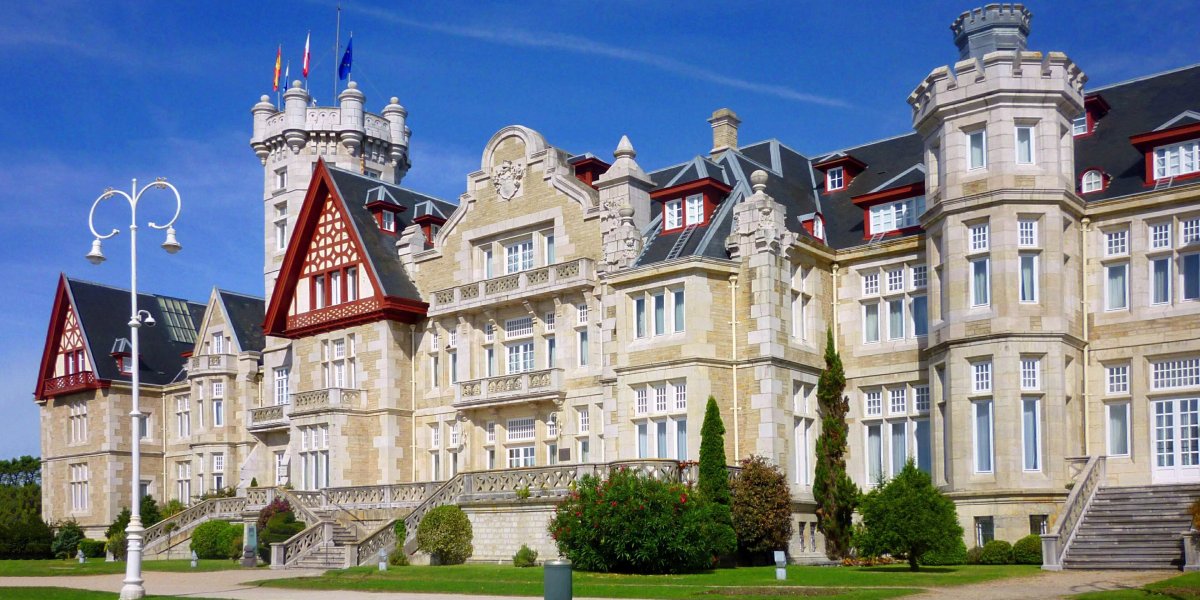
From Casa Lita follow the seafront promenade east for 25 minutes — past Puertochico marina with its bobbing white masts, past the sardine fishermen mending nets at the Barrio Pesquero corner — until the road ends at the wrought-iron gates of the Magdalena peninsula. The Eduardo VII English-Tudor palace at the top was a 1908 gift from Santander's citizens to King Alfonso XIII as a summer residence, and the entire 25-hectare cape is now a free public park. Walk the outer loop counterclockwise: the open-air seal and penguin pools on the north shore (a legacy of Alfonso's exotic gifts), the replicas of Magallanes' three caravels at the eastern point, the wild Atlantic cliffs, and the palace lawns with their views back over the bay to the city.
Tip: Take the counterclockwise loop — start north past the seals, swing around the caravels at the eastern tip, then approach the palace from its grand garden facade with the afternoon sun behind you (best angle for photos). The little Camello cove on the south side has the calmest water if you want to dip your hands in the Cantabrian Sea — a small ritual that costs nothing.
Open in Google Maps →17:00
Neighborhood
Exit the peninsula's north gate and walk ten minutes along the El Camello cove path — Sardinero unfolds with its 1.5-kilometer crescent of golden sand and the white Belle Époque silhouette of the Gran Casino at the far end. This is where the Spanish royal court came to bathe a hundred years ago, and the wedding-cake architecture along Avenida Reina Victoria — Hotel Real on the hill, the Hotel Sardinero, the casino itself — survives almost untouched. Walk the wooden boardwalk the full length of Primera Playa, climb the steps to the Piquío gardens between the two beaches for the postcard view back over the whole arc, and finish with a coffee on the casino terrace.
Tip: The Piquío gardens (between Primera and Segunda playas) at 18:00 is the single best vantage point in Santander — the low west-falling sun lights the Casino's white facade gold and catches the entire beach arc in raking light. Walk the boardwalk barefoot for the last 200 m: this is what Spaniards mean by 'el lujo de Sardinero.'
Open in Google Maps →19:30
Food
Walk west along Avenida Reina Victoria — the seafront promenade with golden-hour views back over the bay, a 25-minute stroll past dog-walkers and the last surfers coming in — until you reach Plaza de Cañadío in the old town. Cañadío has been Santander's reference table since 1980, founded by the legendary Paco Quirós, the kitchen still defines what Cantabrian cooking means: anchoas de Santoña in olive oil (€18, the gold standard of Spanish anchovies), solomillo Cañadío with foie and Pedro Ximénez sauce (€28), and a rabas plate that locals argue is the city's best (€16). Average dinner €40-50 with a glass of Verdejo. The dining room is dark wood, white tablecloth, and Cantabrian businessmen — exactly the Santander dinner you came for.
Tip: Reserve the day before — Cañadío fills by 20:30, especially Friday-Saturday. Ask for a table in the back dining room, not the front tapas bar. Pitfall warning: avoid the multilingual-menu restaurants along the Sardinero promenade and the 'típico cántabro' spots clustered near the cruise port — they charge €25 for frozen rabas that cost €9 here. The real Santander eats inland from the water, between Plaza de Cañadío and Calle Hernán Cortés; anywhere with photos of the food outside is for tourists, not locals.
Open in Google Maps →Saltar al día
09:00
Religious
Start at the bay's spiritual anchor before the city wakes. Santander's cathedral is two churches stacked together: a 13th-century Romanesque crypt below and a Gothic upper nave above, joined by the only cloister in Spain that opens directly onto the sea. The first hour of opening is when the south transept's rose window pours coloured light onto the stone — by 11:00 the cruise crowds arrive and the silence is gone.
Tip: Enter through the lower crypt door on Calle Somorrostro first (free, often missed) — the 1200s Romanesque arches and tomb of Santander's two patron saints are far older and more atmospheric than the upper church, but 80% of visitors walk straight past the entrance.
Open in Google Maps →10:30
Shopping
Exit the cathedral's east side and walk three minutes down Calle Hernán Cortés — the iron-roofed market hall appears between the old town houses. Built in 1904, this is where Santander's cooks still shop daily, two floors of Cantabrian seafood, picón cheeses, and the holy anchoas de Santoña. The morning catch is on display by 10:30 and the fishmongers shout prices in Cantabrian Spanish — you are watching a working market, not a museum.
Tip: Buy one small jar of anchoas de Santoña from any fishmonger on the ground floor (about €8-12 for 12 fillets). These salt-cured anchovies are the best in the world and impossible to find this fresh elsewhere — the supermarket version back home is a different fish entirely. Ask for 'aceite de oliva' (in olive oil) over 'aceite de girasol' (sunflower).
Open in Google Maps →12:00
Food
Five-minute walk east along Paseo de Pereda — the wide tree-lined boulevard facing the bay — past the Banco de Santander headquarters to Paseo de Pereda 37. Casa Lita is Santander's pintxos temple, a glass case stacked with thirty miniature works of art on toast. Order at the bar, eat standing, watch locals come and go. Must-try: pincho de solomillo (beef tenderloin with foie, €3.80), bombita de patata (potato bomb stuffed with chorizo, €2.50), and a half-ración of rabas de calamar (fried squid rings, €14). Budget €20-25 with a glass of Albariño.
Tip: Eat standing at the bar — table service adds a 20% surcharge for the same food. Arrive by 12:15 to beat the local 13:30 rush. Point at what you want in the glass case; the bartender remembers each item to charge correctly at the end. Keep your toothpicks — they count them.
Open in Google Maps →13:45
Museum
Walk three minutes back west along the seafront promenade — Renzo Piano's silvery double-shell hovers over the bay on stilts, impossible to miss. This is Piano's only building in Spain (2017), and the architect spent eight years choosing the exact tiling so that afternoon sun reflecting off the water would shimmer back up onto its underside. That phenomenon peaks between 14:00 and 16:00, which is precisely why we are arriving now. The exhibitions inside change quarterly; the building itself is the permanent masterpiece.
Tip: Skip the lift and take the external spiral walkway up to the rooftop terrace — the view of the entire bay framed by the suspended pavilion is the photo you came to Santander for. Free access to the terraces beneath the building even without a museum ticket, but the rooftop requires entry.
Open in Google Maps →16:30
Park
Step out of Centro Botín — the redesigned Pereda gardens flow directly from the building's base, deliberately blurring where art ends and park begins. Walk east along the Paseo Marítimo toward Puertochico harbour, stopping at the bronze Raqueros sculpture — four boys frozen mid-leap into the bay, recreating the local tradition of diving for coins thrown by tourists from steamships in the 1930s. By 17:30 the light angles sideways across the bronze; it is the most photographed object in Santander, and now you understand why.
Tip: Continue past the Raqueros to Puertochico's small fishing harbour for a pre-dinner caña (€2 small beer) at any terrace bar — locals do this every evening at 19:00, and you'll watch them watch the boats come in. The sunset reflects off the cathedral towers behind you between 20:30 and 21:00 in summer.
Open in Google Maps →20:30
Food
Five minutes inland from Puertochico, hidden on the quiet Calle Casimiro Sainz — locals' choice for serious Cantabrian cooking since 1965. The dining room is dark wood and white tablecloths; the front bar serves the same kitchen at half the formality. Must-order: cocochas de merluza al pil pil (hake throats in emulsified garlic oil, €24, the regional dish), rabas de la casa (€18), and a side of pimientos de Isla (Cantabrian peppers, €9). Budget €45-60 with wine. Cantabrian whites from Costa de Aiala pair best.
Tip: Reserve 24 hours ahead — La Bombi is full every weekend by locals celebrating. Ask for 'la sala del fondo' (the back room) over the front bar for atmosphere. Pitfall warning for this zone: avoid the bright pintxo bars on Calle Hernán Cortés near the cathedral — they charge €4 per pintxo for what costs €1.80 at Casa Lita, and many cruise tourists fall into this exact trap two streets from here.
Open in Google Maps →09:00
Landmark
Catch bus 1 or 2 from Jardines de Pereda — 15 minutes along the bay — then walk through the peninsula's main gate up the gentle rise to the palace. Built 1908-1912 as a gift from Santander's citizens to King Alfonso XIII, who summered here for two decades and made the city a Belle Époque resort. The English-influenced architecture (turrets, half-timbering, sea-facing terraces) is unique in Spain — the queen, Victoria Eugenia, was Queen Victoria's granddaughter and wanted Brighton on the Cantabrian sea. The 09:30 first tour means an empty palace and golden east light flooding the formal dining room.
Tip: Book the guided tour online via fundacioncomillas.es the night before (€3) — same-day tickets sell out by 11:00 in July and August. Tours are in Spanish only, but ask for the English printed booklet at the entrance desk; it covers every room. Wear shoes that grip — the polished parquet floors require slippers for the upper rooms and you'll get them at the door.
Open in Google Maps →11:30
Park
Exit the palace's south door and follow the clockwise cliff path around the peninsula. You'll pass the small free zoo (seals and penguins at the rocky shore, fed at 12:00), then the Galeón replica ships at Playa de los Bikinis — three wooden hulls reconstructing Juan de la Cosa's 1493 voyage, a strange and wonderful sight. The eastern tip is the lookout: open Atlantic to your front, the entire arc of Santander Bay behind. The full loop is 2 km on level paths.
Tip: Time the loop so you reach Playa de los Bikinis around 12:00 to catch the seal feeding — children gather, the seals perform, and it lasts about 15 minutes. Check the tide table beforehand: at low tide you can walk out to the rocky islets off the eastern point, but at high tide the path is cut off and you'll have to backtrack.
Open in Google Maps →13:30
Food
From the peninsula's northern gate, cross the small bridge toward Playa del Sardinero — La Caseta sits at the southern end of the first beach in a small white-and-blue pavilion that originally pumped seawater to the early-1900s spa. The dining terrace overlooks the sand. Cantabrian seafood at its purest: arroz con bocartes y almejas (rice with anchovies and clams, €26 per person, minimum two), anchoas de Santoña sobre tostada con tomate (€14), bonito del norte encebollado (white tuna with onions, €22). Budget €40-50 with wine.
Tip: Reserve the terrace at least one day in advance and specifically request 'la terraza, no el interior' — the indoor room loses the entire reason you are here. The rice dish needs 30 minutes to cook to order, so place that order the moment you sit down or you'll wait through lunch.
Open in Google Maps →15:30
Park
Step straight from the restaurant onto the sand. El Sardinero is two kilometres of Atlantic beach split by the Piquío promontory into Primera and Segunda playa — northern Spain's surf capital, where Belle Époque promenades meet wetsuited beginners. The Real Casino del Sardinero behind you (1916, free to enter the lobby) was where Alfonso XIII's court gambled at night. Walk the full length north toward Segunda Playa for fewer crowds and the rock pools the locals know about.
Tip: Don't rent sun loungers at Primera Playa (€8) — walk 15 minutes north through the Piquío gardens to Segunda Playa, where the same sand is free of crowds and the cliff-foot rock pools at low tide are dramatic. The water here is genuinely cold even in August (17-19°C); locals swim in 10-minute bursts.
Open in Google Maps →17:30
Landmark
Take bus 2 from Sardinero (10 minutes) or walk 30 minutes uphill via Avenida del Faro — the lighthouse appears at the very edge of the continent, white tower against raw Atlantic cliffs. Built 1839, still active. The real prize is the Cabo Mayor cliff walk extending west beyond the lighthouse: 1.5 km of unrailed path along gorse-covered headlands, with the sea churning 50 metres below. By 18:30 the western sun lights the cliff faces directly and the entire coastline glows ochre — this is the photograph people miss because they turn back at the lighthouse.
Tip: Walk 400 metres past the lighthouse west to find Eduardo Sanz's iron sculpture 'Galerna' (a storm wave frozen in metal) — almost no tourists make it this far, but the sculpture frames the open Atlantic perfectly. Stay on the marked path; sections of cliff edge are unstable and there are no railings.
Open in Google Maps →20:30
Food
Bus 1 or 2 back to the centre (15 minutes), getting off at Plaza Cañadío — the most alive square in Santander at this hour, ringed by terraces and lit by hanging globes. The restaurant sits on the south corner, opened by the same Quirós family since 1980 and the bridge between traditional and modern Cantabrian cooking. Must-order: ensalada de bonito en escabeche (€19), albóndigas de calamar en su tinta (squid meatballs in their own ink, €21), arroz cremoso de carabineros (creamy rice with red prawns, €28). Budget €50-65 with wine.
Tip: After dinner, cross to any terrace on Plaza Cañadío and order an orujo de hierbas (Cantabrian herbal grappa, €4) — this is the local nightcap and the plaza is where Santander ends every Saturday. Pitfall warning: avoid the taxi rank on Plaza Pombo two blocks south, where late-night fares are routinely inflated; walk one block to Calle Castelar and flag a passing taxi instead, or use the FreeNow app for a metered fare.
Open in Google Maps →
Trip builder
Plan this trip around Santander
Turn this guide into a bookable rail itinerary with FlipEarth.
Keep exploring
Related cities
More in the same country
FAQ
Frequently asked questions
How many days do you need in Santander?
Most travelers enjoy Santander in 1 days, with enough time for headline sights and a slower meal or museum stop.
What's the best time to visit Santander?
The easiest season for most travelers is Jun-Sep, especially if you want good weather and manageable crowds.
What's the daily budget for Santander?
A practical starting point is about €110 per person per day before hotels, then adjust based on museums, dining, and transport.
What are the must-see attractions in Santander?
A good first shortlist for Santander includes Centro Botín & Jardines de Pereda, Palacio de la Magdalena & Peninsula.