City Guide
San Sebastián
España · Best time to visit: Jun-Sep.
Day-by-day plan
Choose your pace
Duración del viaje
09:00
Landmark
Begin at the untamed western edge of the bay. Bus 16 from the city center drops you at the Ondarreta roundabout — from there walk five minutes toward the crashing waves at the end of the coastal path. Three rusted-steel claws by Eduardo Chillida grip the volcanic rock as Atlantic swells detonate beneath your feet, sending geysers of spray through blowholes carved into the stone terrace. This is raw, elemental San Sebastián: not the polished beach-town postcard, but iron and ocean locked in an eternal arm-wrestle. Stand on the terrace, feel the thud of the waves through your shoes, and watch the mist catch the morning light.
Tip: The platform is yours before 09:30 — by mid-morning tour groups arrive and the terrace gets slippery with foot traffic. Walk to the farthest sculpture (the one closest to the cliff face) and shoot back toward the bay for the best composition: iron, spray, and the full sweep of La Concha behind you. On days with strong northwest swell the blowholes produce chest-high geysers — spectacular for photos but guard your camera.
Open in Google Maps →10:15
Landmark
From the sculptures, follow the coastal path uphill along the cliffside — you'll pass beneath huge Norfolk Island pines with the bay opening up behind you (10-minute walk to the funicular base station). The century-old funicular, built in 1912 and one of the oldest in Spain, creaks up the hillside in three minutes and delivers you to the single most famous view in the Basque Country: the entire scallop-shell curve of La Concha Bay laid out below, Santa Clara island floating in the center, Monte Urgull guarding the far shore, and the city's belle-époque rooftops glittering between green hills and blue water. The retro amusement park at the summit has a time-stopped charm — peeling paint, hand-cranked rides, and a stone tower from which the panorama extends to the French coast on clear days.
Tip: The funicular runs every 15 minutes from 10:00 in summer (€4.25 round trip, cash or card). Walk to the viewpoint right of the amusement park entrance — no fences, no rides cluttering the frame, just the full bay. Morning light hits the city face-on, making the white buildings glow. Skip the amusement park rides (overpriced and underwhelming) but the Torreón lookout tower is free and adds altitude to the panorama.
Open in Google Maps →12:00
Landmark
Take the funicular back down and step onto Ondarreta Beach. Walk east along the sand — it merges seamlessly into La Concha Beach as you round the Miramar Palace headland, the former summer residence of the Spanish royal court perched above the rocks. The 2 km promenade unfurls with its iconic white iron railing, one of Europe's most recognizable waterfront silhouettes. The bay is impossibly calm — sheltered by the two mountains, the water here is turquoise and flat while the open Atlantic rages just beyond the headlands. You'll pass elegant Edwardian facades, the old bathhouse pavilion, and locals leaning on the railing exactly as they have for over a century.
Tip: The most photogenic railing shot is in the stretch between Miramar Palace and the Hotel de Londres y de Inglaterra — the rail curves with the bay and Monte Urgull fills the background. Walk on the lower promenade (closer to the sand) for the classic railing-framing-the-bay composition, then switch to the upper sidewalk near the hotel for the full beach panorama with both mountains in frame.
Open in Google Maps →13:15
Food
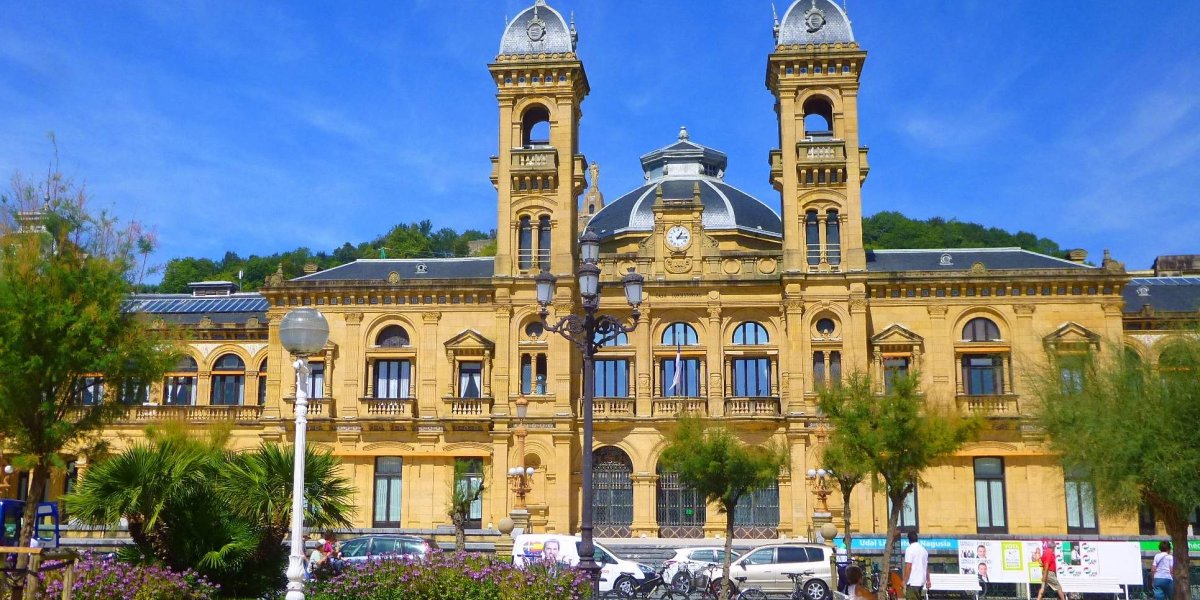
At the eastern end of the promenade, cut through the Alderdi Eder gardens past the grand city hall and duck into the Old Town via Calle Mayor — you'll feel the energy shift from seaside calm to narrow-street bustle in one block (8-minute walk). La Cuchara de San Telmo is not a grab-and-go pintxos bar — it's a tiny kitchen turning out miniature masterpieces to order. The blackboard menu changes daily, but the signatures endure: foie gras with apple reduction (€3.80) that melts on your tongue, and slow-braised veal cheeks in red wine (€3.50) that fall apart at the sight of a fork. Stand at the zinc counter, order a glass of txakoli poured from height to aerate it, and eat four pintxos in quick succession.
Tip: Arrive at 13:00 sharp or prepare to queue — this bar is tiny and word has spread. There are no tables; this is standing room only, which is exactly what you want for a fast, intense lunch. Budget €12-18 for 4-5 pintxos and a drink. Don't bother deciphering the blackboard; ask the bartender 'qué hay bueno hoy?' and trust whatever they hand you.
Open in Google Maps →14:30
Neighborhood
Step out of the bar and you're already deep in it — La Cuchara sits on Calle 31 de Agosto, the spine of the most pintxos-dense square kilometer on Earth. Walk south to Plaza de la Constitución, the neighborhood's formal heart: look up at the numbered balconies painted above each window — this was the city's bullring until the 1840s, and each balcony was a numbered seat sold to spectators. Thread west through Calle Fermín Calbetón, where more Michelin-trained chefs work per meter than any street in Europe, past the ornate baroque facade of the Basilica of Santa María del Coro, and down to the fishing port where painted boats bob in the harbor beneath Monte Urgull's fortress walls and the Sagrado Corazón statue at its peak.
Tip: The balcony numbers on Plaza de la Constitución are original 19th-century paint — most visitors walk through without ever looking up. The fishing port at the northern edge of the Old Town is the best free viewpoint of Monte Urgull. If you have energy left, the path up Monte Urgull starts at the Aquarium end of the port (30 minutes to the summit, free) and rewards with a closer-in bay view than Igueldo — and no crowds.
Open in Google Maps →19:30
Food
From anywhere in Parte Vieja, walk to Calle Fermín Calbetón 20 — no more than three minutes from the plaza. Casa Urola is what happens when a pintxos bar hires a serious chef: the ground floor is a standing-room counter of creative bites, but the upstairs dining room serves proper plates that rival the city's Michelin restaurants at a fraction of the price. The grilled turbot with pil-pil sauce (€28) is the dish San Sebastián locals argue about — silky, buttery, and impossibly simple. If fish isn't your thing, the seasonal wild mushroom risotto (€18) is umami made visible. A bottle of Getariako Txakolina on the table, the evening light through the window, and you understand why this tiny city has more Michelin stars per capita than anywhere on the planet.
Tip: Reserve the upstairs dining room — call or email a day ahead, or try your luck at 19:15 before the rush. The ground floor is standing-only pintxos and gets shoulder-to-shoulder by 20:00. Budget €35-50 per person with wine. After dinner, walk three minutes to the port and look back at Monte Urgull lit against the night sky — that's your farewell image of the city. Avoid the seafront restaurants along Paseo del Muelle: tourist menus, inflated prices, and frozen fish disguised with heavy sauces.
Open in Google Maps →Saltar al día
09:00
Landmark
From the harbor at Paseo del Muelle, climb through the stone archway into Monte Urgull's forested trails — the port and fishing boats shrink below you with every switchback. The shaded path leads to the 12th-century Castillo de la Mota and the Cristo de la Mota statue at the summit, where the full crescent of La Concha bay suddenly unfurls beneath you. At 9 AM you will have the summit virtually to yourself, with cool morning air and the city still waking up below.
Tip: Enter from the port side (Paseo del Muelle, not the Old Town entrance) — the eastern trail is shadier, quieter, and has better views on the ascent. At the summit, face west for the full sweep of La Concha bay with Monte Igueldo closing the frame. Descend via the southern path to drop directly into the Old Town.
Open in Google Maps →10:45
Religious
Descend Monte Urgull's south face — a 5-minute walk down stone steps through the forest drops you directly behind the basilica on Calle 31 de Agosto. The dramatic Baroque portal is the finest church façade in the Basque Country, and the cavernous interior holds a venerated Black Virgin statue and a soaring nave that hushes even the loudest visitors. The mid-morning light through the upper windows creates shafts of gold across the stone floor.
Tip: Stand directly centered in front of the main entrance and look up — the ornate Baroque portal with its carved saints is the best photograph. Inside, look for the ship models hanging from the ceiling: traditional ex-votos from Basque sailors who survived storms at sea. Give your eyes a full minute to adjust to the dim interior before reaching for your camera.
Open in Google Maps →11:30
Museum
Turn left out of the basilica and walk 2 minutes north along Calle Iñigo to Plaza Zuloaga — the museum's striking modern extension of perforated metal panels appears ahead. Half 16th-century Dominican convent, half cutting-edge contemporary wing, San Telmo tells the story of Basque society from prehistoric cave dwellers to the modern era with arresting honesty. The former church nave contains monumental murals by José María Sert depicting Basque life — they alone are worth the visit.
Tip: Go straight to the Sert murals in the old church nave on the ground floor — they are the museum's masterpiece and most visitors rush past them toward the upper galleries. The top floor contemporary section has a window overlooking Monte Urgull you just climbed. Closed Mondays; open 10:00–20:00 Tuesday–Sunday. Free on Tuesdays.
Open in Google Maps →13:00
Food
Exit the museum and walk 2 minutes south into Calle 31 de Agosto — the scent of searing foie and sizzling garlic pulls you in before you choose your first bar. Bar-hop three legendary stops: La Cuchara de San Telmo for their slow-braised veal cheeks (carrillera de ternera, €3.50), Gandarias for a seared foie pintxo (€4), and finish at La Viña for the original burnt Basque cheesecake (tarta de queso, €3.50) that started the global trend. Order one pintxo and one txakoli — the local white wine, always poured theatrically from height — at each bar; three stops is the perfect lunch.
Tip: Do not sit at La Cuchara de San Telmo — stand at the bar and order hot pintxos from the chalkboard menu (they rotate; carrillera and foie are staples). At La Viña the cheesecake sells out by 14:30 on weekends, so do not save it for last. The best pintxos bars have no English menus and no photos on the wall — those are the signs you are in the right place.
Open in Google Maps →15:00
Landmark
Walk south through Alameda del Boulevard for 5 minutes, past the Alderdi Eder gardens with their vintage carousel and towering tamarind trees, and the perfect crescent of La Concha bay opens before you. The iconic white-railed promenade curves along what is routinely ranked Europe's finest urban beach — the sand is golden, the water improbably turquoise, and Monte Igueldo rises across the bay like a painted backdrop. Take your shoes off, wade in if the season permits, and walk the promenade at the pace the city intended: slowly.
Tip: The best photograph of La Concha is from the eastern end near the Real Club Náutico — frame the white railing in the foreground with the beach curving toward Monte Igueldo in the background. In summer, rent a paddleboard from the beach kiosks (€15/hour) for an unforgettable view of the city from the water. Isla de Santa Clara, the small island in the center of the bay, is reachable by public ferry in summer (€4 round trip).
Open in Google Maps →19:30
Food
Walk 8 minutes back through the Alderdi Eder gardens into the Old Town, entering through the archway on Calle Mayor that leads into Plaza de la Constitución — the plaza glows beneath its arcade lights at dusk. Casa Urola serves refined Basque cuisine with seasonal obsession: the wild mushroom risotto (risotto de hongos, ~€22) is silky and intense, and the txuleta — a thick-cut dry-aged Basque ribeye shared between two (~€28/person) — is one of the best steaks in northern Spain. Reserve the upstairs dining room for a table overlooking the plaza's illuminated 18th-century arcades.
Tip: Reserve by phone at least a day ahead and request the upstairs dining room — the ground floor is louder and lacks the plaza view. After dinner, linger in Plaza de la Constitución; the numbered balconies above the arcades were originally box seats for bullfights held in the square. Avoid the pintxos bars on Calle del Puerto near the port — they target tourists with inflated prices and pre-made pintxos sitting under heat lamps. The real bars are on 31 de Agosto and Fermín Calbetón.
Open in Google Maps →09:00
Landmark
Take Bus 16 from Boulevard to Ondarreta's western end (10 minutes), or walk 25 minutes along the full promenade — the three rusted iron sculptures appear as you round the final rocky headland. Eduardo Chillida's Wind Comb is one of Spain's greatest public artworks: three iron claws grip the volcanic rock where the open Atlantic crashes against the coast, and on rough mornings the waves shoot through blowholes in the stone terrace like geysers. The morning sun from the east backlights the spray and illuminates the sculptures against the dark cliff — a sight no photograph fully captures.
Tip: Stand on the lower stone terrace for the most powerful perspective — the waves detonate below your feet through vents designed by architect Luis Peña Ganchegui. On windy days bring a waterproof phone case; the spray reaches higher than you expect. The flat rocks around the sculptures are where locals gather for morning yoga — arrive by 09:00 and the scene is quietly beautiful.
Open in Google Maps →10:00
Landmark
Walk 5 minutes uphill from the sculptures along the seaside path — the funicular station appears at the base of the mountain, marked by its weathered wooden entrance. The century-old funicular (operating since 1912) creaks to the summit in under 3 minutes, where the defining panorama of San Sebastián unfolds: the full crescent of La Concha, the green dot of Isla de Santa Clara, Monte Urgull across the bay, and the Cantabrian coastline stretching east toward France. At the top a charmingly weathered 1920s amusement park still runs — its tiny roller coaster is the oldest in Spain.
Tip: The funicular opens at 10:00 in summer (11:00 off-season) — time your arrival from Peine del Viento to be first in line. Walk past the amusement park to the Torreón, the old stone watchtower at the very peak, for the unobstructed 360° postcard shot. The rickety roller coaster costs €2 and the view from its apex — windswept and slightly terrifying — is absurdly good.
Open in Google Maps →11:45
Landmark
Take the funicular back down and walk 12 minutes east along Ondarreta beach — the palace's English-style gardens climb the headland that divides Ondarreta from La Concha. Built in 1893 as the summer residence of the Spanish royal family by English architect Selden Wornum, Miramar sits on the most enviable plot of land in the city. The grounds are free, immaculately maintained, and offer the only elevated vantage where you can see both La Concha and Ondarreta beaches at once.
Tip: Walk through the gardens to the cliff-edge lookout on the north side — Isla de Santa Clara floats directly ahead, with surfers on Ondarreta to your left and swimmers on La Concha to your right. This is a local favorite for morning runs and picnics; you will see almost no tourists here. The palace interiors are closed to the public, but the gardens and the view are the real attraction.
Open in Google Maps →13:00
Food
Descend Miramar's eastern garden steps to the promenade — Branka's glass-walled terrace appears 3 minutes ahead, cantilevered over the bay with unobstructed views of La Concha. The grilled turbot (rodaballo a la brasa, ~€24) is the star of a menu built around the morning's catch, or go lighter with the Basque seafood rice (arroz de pescado, ~€18) while the bay glitters below your table. This is where locals bring visiting friends to show off their city — the view alone is a course.
Tip: Arrive right at 13:00 — the terrace tables fill fast on sunny days and they do not take terrace reservations. Sit outside even if there is a slight breeze; the indoor section has the same menu but none of the magic. Ask for the txakoli to be poured at your table in the traditional high-pour style — it is part of the experience.
Open in Google Maps →14:30
Religious
Follow the promenade east for 15 minutes past the grand belle-époque buildings lining the bay — at Alderdi Eder gardens turn south, and the cathedral's 75-meter neo-Gothic spire guides you the final 200 meters. The largest church in the Basque Country rises above the Centro district with soaring stained-glass windows that cast pools of colored light across the nave in the afternoon sun. Step outside afterward and stroll south along the Boulevard — San Sebastián's elegant main artery of 19th-century buildings, boutiques, and café terraces, perfect for a farewell coffee.
Tip: The afternoon light between 14:00–16:00 makes the stained glass glow at its richest — this is the ideal window to visit. The Boulevard south of the cathedral is the best stretch for local shopping: look for Basque espadrilles (alpargatas) and local cheese at the specialty shops on Calle de Garibai. Use the free hours before dinner to rest at your hotel or wander the Centro streets at your own pace — this is your farewell afternoon, not a race.
Open in Google Maps →19:00
Food
Walk north 8 minutes through the Centro shopping streets, cross the Boulevard, and enter the Old Town through the archway on Calle Narrica — the restaurant sits on a quiet square steps from the old port. Kokotxa holds a Michelin star for its modern reinventions of Basque tradition: the signature kokotxas — hake jowls slow-cooked in pil-pil sauce until the collagen melts into a silky emulsion (~€32) — is the dish that named the restaurant and the finest version you will ever taste. Pair with the seasonal tasting menu (€85) to surrender entirely to chef Dani López's kitchen.
Tip: Book at least a week ahead — this is one of the hardest reservations in the Old Town, especially on weekends. If the tasting menu feels like too much commitment, the à la carte kokotxas plus one starter is a perfect farewell meal. Skip the 'guided pintxos tour' groups hawking tickets at the port entrance — they charge €50+ to walk you into bars you can enter free, and the bars they choose are rarely the best ones.
Open in Google Maps →
Trip builder
Plan this trip around San Sebastián
Turn this guide into a bookable rail itinerary with FlipEarth.
Keep exploring
Related cities
More in the same country
FAQ
Frequently asked questions
How many days do you need in San Sebastián?
Most travelers enjoy San Sebastián in 1 days, with enough time for headline sights and a slower meal or museum stop.
What's the best time to visit San Sebastián?
The easiest season for most travelers is Jun-Sep, especially if you want good weather and manageable crowds.
What's the daily budget for San Sebastián?
A practical starting point is about €70 per person per day before hotels, then adjust based on museums, dining, and transport.
What are the must-see attractions in San Sebastián?
A good first shortlist for San Sebastián includes Peine del Viento, Monte Igueldo, Paseo de La Concha.