City Guide
Merida
España · Best time to visit: Mar-May, Sep-Nov.
Day-by-day plan
Choose your pace
Duración del viaje
09:00
Landmark
From the old town, walk 20 minutes north along Avenida de Extremadura — the city peels open into meadow and the arches appear before you reach them, brick-and-granite columns rising from the grass like a half-erased thought. Thirty-eight pillars survive of the aqueduct that once carried water from Lake Proserpina into Augusta Emerita; locals named them Los Milagros (The Miracles) because they refused to fall. Come now, while the light still rakes from the east and storks circle the topmost arches.
Tip: Free, unfenced, almost always empty before 10am. Walk between the columns and look straight up — that is the photo. From the southwest corner the arches frame perfectly against the morning sky; by noon the sun is overhead and the texture flattens out entirely.
Open in Google Maps →10:30
Landmark
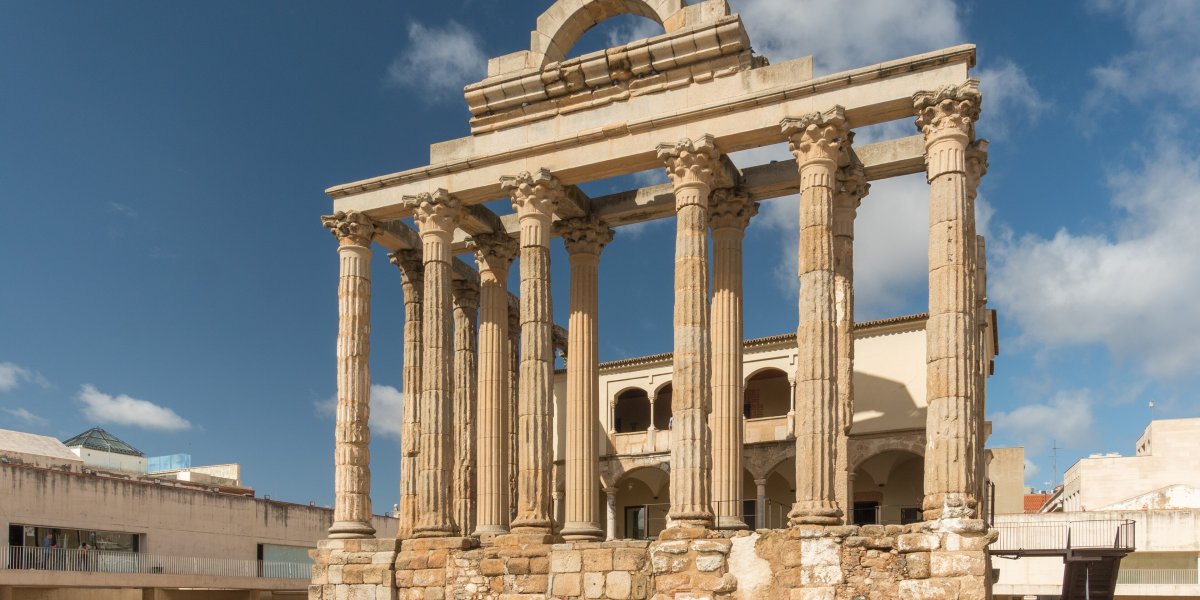
Walk south down Calle Marquesa de Pinares — fifteen minutes through quiet residential blocks until the road opens onto a 1st-century Roman temple wedged inside a 16th-century palace. The columns of 'Diana' (misnamed — it was actually the imperial cult) frame a Renaissance courtyard the Count of los Corbos built straight into the ruins. Continue 200 metres to Arco de Trajano, a 15-metre granite arch the city still drives traffic past.
Tip: Enter Templo de Diana from the south side — that angle catches columns + Renaissance palace + sky in one frame, and you understand instantly how thoroughly Romans and Habsburgs piled on top of each other here. Skip the explanatory plaques; the visual story is the entire point.
Open in Google Maps →13:00
Food
Two blocks east to Calle de San Francisco — a tile-floored tapas bar packed with framed black-and-white photographs of old bullfighters and ham legs hanging from the ceiling. Order the migas extremeñas (€6 — fried breadcrumbs with chorizo and grapes, the dish shepherds invented and Merida perfected) and a pringá-stuffed montadito (€3.50, slow-cooked pork shoulder on bread). Wash it down with a glass of Ribera del Guadiana red for €2.50.
Tip: Arrive at 13:00 sharp — by 13:30 every barstool is full and you wait 20 minutes for the bartender's eye. Order standing at the bar rather than sitting at a table; the bar tab runs €4-5 cheaper for the exact same plates. Skip the menú del día — the individual tapas are the whole reason to come.
Open in Google Maps →14:30
Landmark
Walk east 12 minutes through the old quarter, past Arco de Trajano again — round one corner and the rebuilt scaenae frons of the theatre rises in front of you, two tiers of marble columns the consul Agrippa raised in 16 BC. The amphitheatre next door once held 15,000 spectators watching gladiators die on its sand; both share a single combined ticket. This is the most-photographed Roman ruin in Spain, and afternoon light from the south brings every column and statue into sharp relief.
Tip: Buy the €18 combined ticket at the Theatre entrance rather than the Roman Art Museum kiosk — the line is half as long. Climb to the upper cavea (top row of seats) for the postcard shot. Every guidebook tells you to stand centre-stage, but the elevated angle looking down at the columns is what makes the photograph.
Open in Google Maps →17:00
Landmark
Eight-minute walk southwest, downhill toward the Guadiana — the river opens up and 792 metres of Roman granite arches into view, the longest surviving Roman bridge anywhere on earth. Walk the full length and back, then enter the Alcazaba, the 9th-century Moorish fortress the Umayyad Caliphate built straight on top of the Roman river-gate. From the ramparts the bridge fans out below you, and the late sun catches every one of the sixty arches.
Tip: Cross the bridge fully (both ways = 1.6 km — earn it) and shoot the photograph from the south bank at 18:30, when the sun drops behind the Alcazaba and the granite turns the colour of honey. The Alcazaba closes at 18:30 in low season and 21:00 in summer — check the time before you cross or you'll be locked out.
Open in Google Maps →20:00
Food
Walk back north along Calle Castelar — eight minutes to a 24-seat dining room named for the mythical king of Alba Longa, grandfather of Romulus. The kitchen does modern Extremaduran with serious technique: presa ibérica de bellota (€24 — acorn-fed Iberian black pig, a cut you genuinely cannot eat properly outside this region) and torta del Casar al horno con miel (€14 — local raw-sheep cheese baked whole and drizzled with rosemary honey). End with a small glass of pacharán for €4.
Tip: Reserve before 18:00 the same day — the room holds only 24 and locals fill it by 21:00. Critically, avoid the strip of tourist restaurants on Plaza de España one block over: menus written in five languages with food photos = microwaved frozen plates at 40% markup, the single biggest tourist trap in Merida.
Open in Google Maps →
Trip builder
Plan this trip around Merida
Turn this guide into a bookable rail itinerary with FlipEarth.
Keep exploring
Related cities
More in the same country
FAQ
Frequently asked questions
How many days do you need in Merida?
Most travelers enjoy Merida in 1 days, with enough time for headline sights and a slower meal or museum stop.
What's the best time to visit Merida?
The easiest season for most travelers is Mar-May, Sep-Nov, especially if you want good weather and manageable crowds.
What's the daily budget for Merida?
A practical starting point is about €110 per person per day before hotels, then adjust based on museums, dining, and transport.
What are the must-see attractions in Merida?
A good first shortlist for Merida includes Acueducto de los Milagros, Templo de Diana and Arco de Trajano, Teatro Romano and Anfiteatro de Merida.