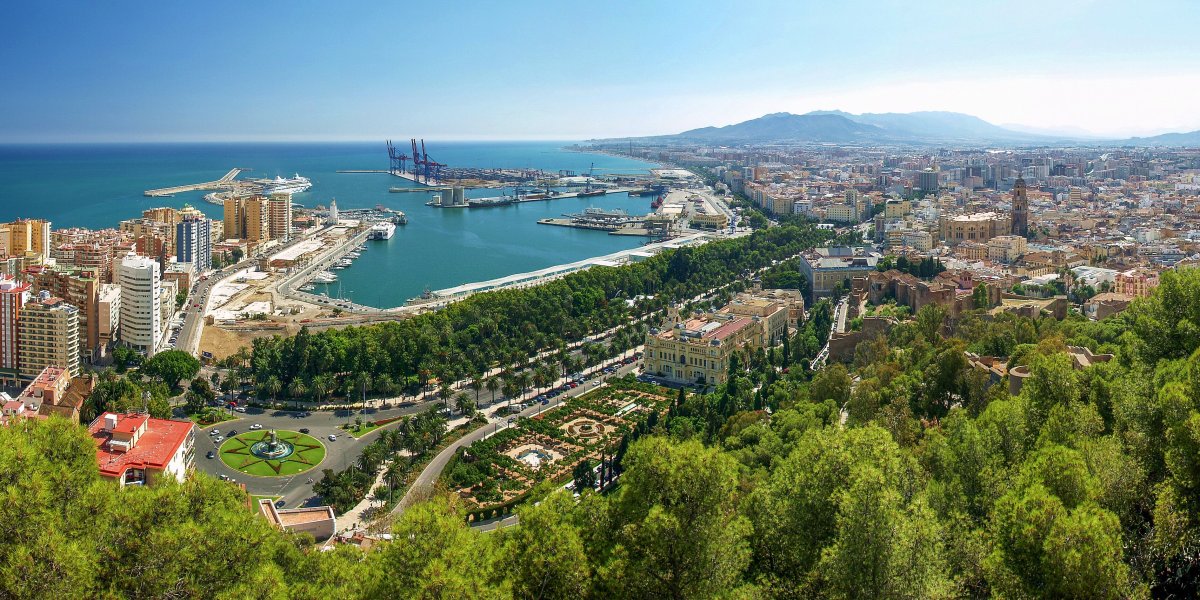
City Guide
Málaga
España · Best time to visit: Mar-Jun, Sep-Nov.
Day-by-day plan
Choose your pace
Duración del viaje
09:00
Landmark
From the old town center, walk north along Calle Granada past winding tapas bars and wrought-iron balconies — a 10-minute stroll into the widening sunlight of Málaga's grandest square. Picasso was born at No. 15 on this plaza; a bronze statue of the artist sits on a bench in the northwest corner, the most photographed spot in the city. At 09:00 the east-facing facades glow warm in the early light and the square is still yours alone — by noon it fills with tour groups and selfie sticks.
Tip: Stand behind the bronze Picasso statue and shoot toward the birthplace building at No. 15 for the classic composition — morning light falls directly on the facade. Skip the Picasso Foundation interior (small exhibition); the exterior plaque and statue tell the story in two minutes.
Open in Google Maps →10:00
Landmark
Exit the plaza's southeast corner and walk down Calle Alcazabilla, a wide pedestrian boulevard lined with orange trees — 5 minutes until the fortress walls loom above you. The 11th-century Moorish Alcazaba rises directly over a Roman theatre built under Emperor Augustus, two thousand years of civilization stacked vertically in a single frame. Don't enter the fortress (skip the ticket queue); the most powerful view is from the theatre seating below, where double fortress walls and watchtowers align above ancient Roman columns.
Tip: The best photo angle is from the southeast corner of the Roman Theatre looking northwest — the Alcazaba's layered walls frame perfectly above the columns. Before 10:30 the theatre is in full open sun with no harsh shadows on the stonework. Ignore the 'guided tour' touts at the entrance; you're not going in.
Open in Google Maps →11:15
Religious
Walk west along Calle Alcazabilla, which becomes Calle Molina Lario as it opens onto the cathedral square — 8 minutes past street musicians and café terraces with the spire growing taller at every step. Locals call her 'La Manquita' — the one-armed lady — because the south tower was never completed; the funds were diverted to support American independence instead. Admire the baroque north facade from Plaza del Obispo where fountain and palm trees frame the stone carvings, then circle around to Calle Cister to see the famous missing tower — the asymmetry is strangely beautiful.
Tip: For the best exterior shot, stand in Plaza del Obispo facing north — the fountain, palms, and Cathedral align in one frame. At 11:00 the sun is high enough that shadows recede from the intricate baroque reliefs on the main facade, revealing details invisible at other hours.
Open in Google Maps →12:00
Food
Walk west from the Cathedral through narrow Calle Especería — the scent of frying fish pulls you forward — 5 minutes to the market's magnificent entrance, a 14th-century Moorish horseshoe arch preserved within an 1879 iron-and-glass hall. Head to the tapas bars ringing the interior and order standing at the counter like a local. The boquerones fritos (crispy fried anchovies, €6) are the city's edible signature — nowhere does them better — and the gambas al ajillo (sizzling garlic prawns in olive oil, €9) arrive still bubbling in a clay cazuela. Wash it down with a cold Cruzcampo on draft and you're fueled up in 30 minutes.
Tip: The tapas bars on the far end facing the spectacular stained-glass window of the Málaga skyline are where locals cluster — avoid the tourist-facing counters near the entrance. Arrive before 12:30; by 13:00 every stool is taken. Point at what looks good behind the glass; the countermen will guide you. Budget €12-18 for a generous standing lunch with beer. Closed Sundays.
Open in Google Maps →13:30
Neighborhood
Exit the market heading east on Calle Atarazanas, which flows into the top of Calle Marqués de Larios — Málaga's grand pedestrian boulevard paved in marble and flanked by 19th-century facades. Stroll 10 minutes south through its length until the street opens onto the waterfront. The multicolored glass cube of Centre Pompidou Málaga glitters at the pier entrance — no need to go inside, the exterior is the art. Walk the full promenade: fishing boats on your left, the Alcazaba rising behind you, and the Mediterranean stretching toward Africa ahead.
Tip: Walk all the way to La Farola lighthouse at the pier's end and look back — the Alcazaba, Cathedral tower, and Gibralfaro castle align in a single panoramic sweep. After 14:00 the afternoon light turns the fortress walls golden against the blue water. This is the one photo that captures all of Málaga in a single frame.
Open in Google Maps →19:00
Food
Walk back north along the Paseo del Parque promenade beneath towering century-old ficus trees — 10 minutes through the most beautiful urban parkland in southern Spain, golden at this hour. El Pimpi's vine-covered courtyard appears on your left, tucked beneath the Alcazaba walls. This has been Málaga's living room since 1971, where every local has a story and sherry barrels line the walls signed by visiting celebrities. Order the berenjenas con miel de caña (fried eggplant drizzled with cane honey, €9.50) — the dish that defines Málaga cooking — followed by pimientos asados (roasted red peppers, €8) and a glass of sweet Málaga wine drawn straight from the barrel.
Tip: Book a courtyard table for 19:00 on their website — this gets you golden-hour light on the Alcazaba walls above while you eat. Ask for 'vino de Málaga dulce' from the barrel (not the bottled version) — it costs €3 and tastes like liquid raisins. Avoid the restaurants lining Plaza de la Merced's west side: they charge double for inferior tapas and target tourists with picture menus and sidewalk greeters. El Pimpi is 5 minutes away and a different world in quality.
Open in Google Maps →Saltar al día
09:00
Landmark
Take bus 35 from Paseo del Parque — it climbs to the castle gate in ten minutes, saving your legs for the day ahead. This 10th-century Nasrid fortress crowns the highest point in Málaga, its double ring of walls enclosing a panorama that stretches from the port and the bullring below to the faint outline of Africa's Rif Mountains on clear mornings. Walk the full rampart circuit for what may be the finest rooftop view of any Spanish coastal city.
Tip: Buy the combined ticket with the Alcazaba (€5.50) at the entrance to skip queuing twice. The southeast rampart is the signature photograph — bullring, port, and sea perfectly aligned — but only before noon, when the light still has depth and the shadows give the scene dimension.
Open in Google Maps →10:45
Landmark
Descend through the pine-shaded path connecting Gibralfaro to the Alcazaba — a fifteen-minute downhill walk with glimpses of terracotta rooftops through the trees. The 11th-century Moorish fortress unfolds in layered terraces: first the outer walls studded with Roman column fragments, then the upper palace with horseshoe arches, fountains, and intimate garden courtyards that echo the Alhambra in miniature without the crowds. Pause at the Cuartos de Granada — the best-preserved Nasrid chambers — where the stucco work and tile patterns rival anything in Granada.
Tip: The inner palace courtyard around 11:00 is nearly empty — morning tour groups are still at Gibralfaro and day-trippers haven't arrived. The Roman Theatre is visible from the exit platform below; photograph it from there rather than walking down separately — the elevated angle with the Alcazaba walls behind it is a far better shot.
Open in Google Maps →12:30
Food
Exit the Alcazaba's main gate and turn right — El Pimpi's vine-draped terrace is two minutes along Calle Alcazabilla, directly facing the Roman Theatre. This barrel-lined bodega has been Málaga's living room since 1971, where politicians, flamenco singers, and generations of families have gathered under ceilings hung with cured ham. Order the salmorejo — a silky cold tomato soup thicker and richer than gazpacho (€5) — followed by espetos de sardinas, sardines charcoal-grilled on bamboo skewers the ancient fisherman's way (€8).
Tip: Ask for the upper terrace overlooking the Roman Theatre — it fills by 13:00 but is half-empty at 12:30. Skip the tourist menu; order two or three half-raciones to share instead for more variety at half the price. Budget €15-20 per person with a glass of the house sweet Málaga wine.
Open in Google Maps →14:00
Museum
Walk three minutes through Calle Granada and turn left into Calle San Agustín — the museum's Renaissance facade of the Palacio de Buenavista appears on your right. This is where Picasso's story begins: 285 works donated by his family spanning student sketches to late cubist experiments, housed in a 16th-century palace whose Mudéjar ceiling and marble columns are works of art themselves. The collection moves chronologically, so the early academic paintings in the first rooms make the radical later works genuinely startling.
Tip: After the paintings, take the stairs to the basement — beneath the palace lie Phoenician city walls from the 7th century BC, discovered during the renovation and rarely visited. Early afternoon is the quietest window; morning tour buses have departed and the galleries feel like a private collection.
Open in Google Maps →16:00
Religious
Continue west along Calle San Agustín for seven minutes — the street opens into Plaza del Obispo and the Cathedral's towering Renaissance facade fills the frame. Locals call it 'La Manquita' — the one-armed lady — because its south tower was never completed, the funds famously diverted to support American independence in the 18th century. Inside, Pedro de Mena's choir stalls are considered among the finest carved wood in Spain, and the vaulted nave soars forty meters overhead.
Tip: Book the rooftop tour (Cubiertas, additional €6) — you walk across the cathedral roof at golden hour for an unobstructed sunset panorama over the old town, the port, and the sea. The northwest corner of the roof gives the cleanest shot with Gibralfaro in the background. Closed to tourists during Sunday morning mass.
Open in Google Maps →19:30
Food
Stroll ten minutes down Calle Marqués de Larios — Málaga's elegant pedestrian boulevard lined with 19th-century facades — then turn left into the quieter Calle Álamos. This intimate tapas restaurant seats barely forty in a tile-and-wood dining room where the chef personally introduces each dish. The rabo de toro — oxtail braised for hours until it falls apart (€14) — is definitive Andalusian cooking, and the tataki de atún rojo with soy reduction (€13) rivals anything on the coast.
Tip: Reserve for 19:30 — the room fills completely by 20:00 and walk-ins are turned away. The tasting menu of six tapas (€32) is the best way to experience the full range. Avoid the restaurants on Calle Larios itself — they charge double for tourist-grade food; this spot three streets back is where local chefs eat on their night off.
Open in Google Maps →09:00
Shopping
From the old town, walk five minutes west along Calle Atarazanas — the market's stunning 14th-century Moorish horseshoe arch, originally a gate of the Nasrid shipyards, announces the entrance. Inside, the iron-and-glass hall bursts with color: towers of tropical fruit, glistening whole fish on crushed ice, pyramids of olives in every cure, and a magnificent stained-glass window at the far end that catches the morning sun. This is not a tourist market — it is where Malagueño home cooks do their daily shopping, and the energy at 09:00 is electric.
Tip: Head straight to the bar counters at the back — Bar Atarazanas serves gambas al ajillo (garlic prawns, €6) and boquerones fritos (fried anchovies, €5) pulled from the fishmonger stalls meters away. Go before 10:00 while the selection is fullest. The market closes at 15:00 and is closed on Sundays.
Open in Google Maps →10:30
Museum
Walk south through Calle Atarazanas and cross the tree-shaded Paseo del Parque — twelve minutes of subtropical gardens bring you to the port, where the Pompidou's multicolored glass cube rises from the promenade. Málaga's branch of the Paris original occupies a striking subterranean gallery beneath the cube, rotating world-class exhibitions alongside a permanent collection featuring Frida Kahlo, Francis Bacon, and Chagall. The spaces are compact and sharply curated — you absorb everything without museum fatigue.
Tip: The glass cube is Málaga's most photographed modern structure — shoot it from the east side of the promenade in the morning when sunlight passes through the colored panels and projects onto the ground. The permanent collection alone takes forty-five minutes; check the temporary exhibition online before visiting, as the strongest shows justify the combined ticket (€9).
Open in Google Maps →12:30
Food
Walk east along Muelle Uno's palm-lined waterfront — ten minutes of yacht-spotting and sea breeze bring you to this white-tablecloth terrace anchoring the western end of Malagueta Beach since 1936. Generations of Malagueño families have celebrated here with platters of fried fish and cold beer overlooking the Mediterranean. The fritura malagueña — mixed fried seafood impossibly light and greaseless (€16) — is the essential order, and the arroz caldoso de marisco (soupy seafood rice, €18) is rich enough to split.
Tip: Sit on the seaside terrace — the railing tables have an unbroken view of the beach and the Mediterranean. Arrive by 12:30 to beat the 13:00 rush; no reservation needed at this hour. Budget €20-25 per person with a beer or tinto de verano.
Open in Google Maps →14:00
Landmark
Step off Antonio Martín's terrace and you are already on the sand — Málaga's city beach stretches east in a gentle curve, backed by a palm-lined promenade and the unmistakable MALAGUETA letter sign that has become the city's unofficial emblem. This is a digestive walk along the shore with your feet in the water, watching locals play paddle tennis and fishermen mending nets at the eastern end. The dark, coarse Mediterranean sand and the light bouncing off the water in early afternoon make for the kind of effortless photographs that look better than anything posed.
Tip: The MALAGUETA letter sign at the center of the beach is the iconic Instagram shot — the queue is shortest before 14:30 when the post-lunch crowd hasn't arrived. Walk east to the breakwater for a quieter stretch with a panoramic view back toward the port and Gibralfaro Castle on the skyline.
Open in Google Maps →15:30
Neighborhood
Walk fifteen minutes back west along the promenade and turn inland at the CAC Málaga contemporary art center — you are now in Soho, Málaga's creative quarter, where entire building facades have been transformed into enormous canvases by international street artists. The MAUS project (Málaga Arte Urbano Soho) has curated dozens of large-scale murals across this once-neglected industrial neighborhood, and new work appears regularly. Wander Calle Casas de Campos and Calle Tomás Heredia for the densest concentration of pieces.
Tip: The Obey (Shepard Fairey) mural on Calle Casas de Campos and the D*Face piece on Calle Vendeja are the two most celebrated works — find these first, then explore freely. The CAC Málaga gallery is free and worth a quick stop if a strong show is running. Avoid the restaurants along the port promenade back toward the center — they triple prices for mediocre paella aimed at cruise-ship passengers; eat inland instead.
Open in Google Maps →19:00
Food
Walk eight minutes north from Soho through Calle Nosquera into Plaza Jerónimo Cuervo — the warm glow and murmur of conversation guide you to this beloved neighborhood restaurant that feels like dining inside an art gallery. Local paintings cover every wall, candles crowd every surface, and on select evenings the tables are pushed aside for live flamenco or jazz — included with your meal. The solomillo al Pedro Ximénez — pork tenderloin in a sweet wine reduction that caramelizes at the edges (€16) — pairs beautifully with a red from the Ronda hills.
Tip: Check their website for live music nights — flamenco performances happen several times a week and are included with dinner, making this one of the best-value cultural evenings in Málaga. Reserve for 19:00 to guarantee a good table before the second seating fills up. Budget €28-35 per person with wine.
Open in Google Maps →
Trip builder
Plan this trip around Málaga
Turn this guide into a bookable rail itinerary with FlipEarth.
Keep exploring
Related cities
More in the same country
FAQ
Frequently asked questions
How many days do you need in Málaga?
Most travelers enjoy Málaga in 1 days, with enough time for headline sights and a slower meal or museum stop.
What's the best time to visit Málaga?
The easiest season for most travelers is Mar-Jun, Sep-Nov, especially if you want good weather and manageable crowds.
What's the daily budget for Málaga?
A practical starting point is about €70 per person per day before hotels, then adjust based on museums, dining, and transport.
What are the must-see attractions in Málaga?
A good first shortlist for Málaga includes Plaza de la Merced & Picasso's Birthplace, Alcazaba & Roman Theatre.