City Guide
Kinderdijk
Países Bajos · Best time to visit: Apr-Sep.
Day-by-day plan
Choose your pace
Duración del viaje
09:00
Landmark
Step off the Waterbus 202 from Rotterdam Erasmusbrug — straight ahead 200 m past the ticket gate stands the squat brick Wisboom building, the 1868 steam-powered pumping station that signaled the slow retirement of the windmills it sits beside. Arrive at opening: the first morning ferries land here at 09:00, but the coach tours from Amsterdam don't reach the site until 11:00, giving you two clean hours of low-angled light on dewy sails. Read the polder model from this single vantage — water below, windmills west, modern station behind — and the rest of the day clicks into place.
Tip: Buy the Kinderdijk World Heritage ticket online the night before — the on-site queue at 11:30 routinely stretches 30 deep, and you cannot reach the interior dike path without it.
Open in Google Maps →10:00
Landmark
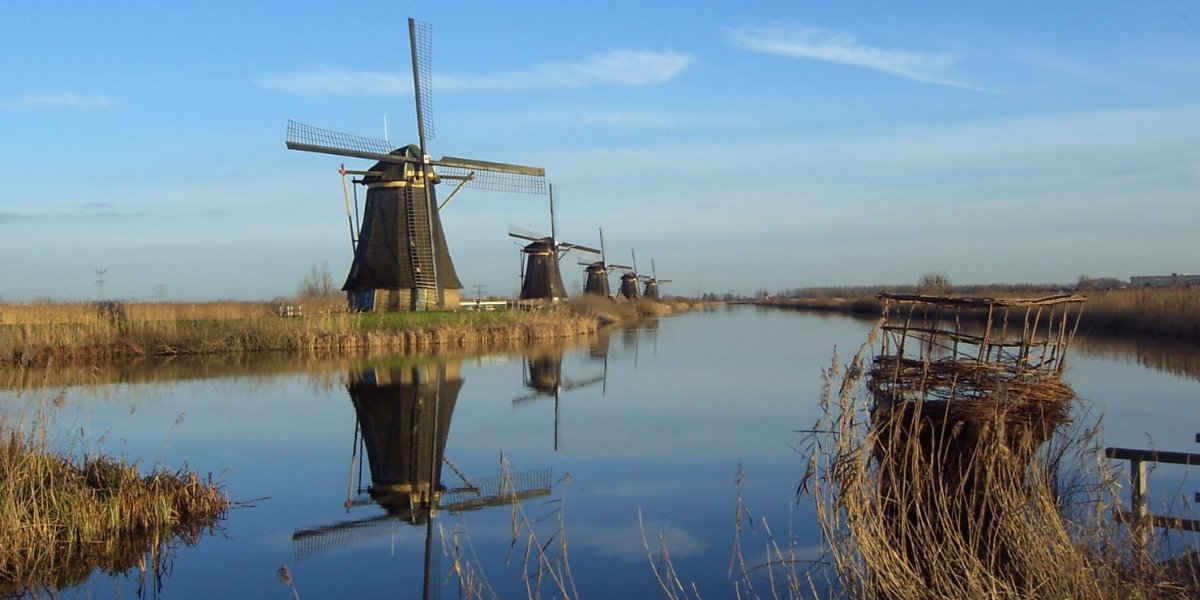
From the visitor center take the wooden footbridge across the canal and turn north along Overwaardse Molenkade — the next 1.5 km is the most photographed straight line in the Netherlands, eight thatched-sail windmills receding into the polder mist. Mid-morning light hits the eastern flank of the sails at a clean 45° angle; by midday it flattens. Walk slowly to Mill No. 5, then sit on the dike grass: the silence here is genuinely unusual for a UNESCO site, broken only by the rhythmic creak of turning sails when the wind picks up off the Lek.
Tip: The classic five-mills-receding shot is from the dike between Overwaard 4 and 5, looking south — the sun is behind you at this hour, so the sails light up rather than silhouette.
Open in Google Maps →12:30
Food
Walk back south along the same dike for fifteen minutes — the windmills now turn at your right shoulder — and cross the parking lot to Veerdam, where the wooden terrace of Buena Vista hangs directly over the Lek River. This is the locals' lunch stop, not a tour-group canteen: order the broodje kroket (€8.50) with sharp mustard or the gerookte paling — smoked eel sandwich (€13) — sourced from the IJsselmeer. It is fast, hot, and lets you watch passenger ferries thread between cargo barges while you eat.
Tip: Skip the printed tourist menu and ask for the dagschotel — there is always an unlisted soup-and-sandwich combo for €11 that the staff serve to the harbor pilots.
Open in Google Maps →14:00
Landmark
Re-enter the heritage zone and this time keep left, following Nederwaardse Molenkade north along the parallel canal — the eight Nederwaard mills are stone-built, slightly older, and stand directly opposite their wooden Overwaard cousins across the water. Afternoon light now sits behind them, throwing the sails into sharp silhouette against pale cloud — the inverse of what you photographed this morning. Continue all the way to Mill No. 8 at the northern end, then turn around: walking the return leg under the same sails at a different sun angle is the closest a flat country gets to drama.
Tip: Look for the small wooden gate marked 'Molenaarswoning' beside Nederwaard 2 — the miller still lives inside and often hangs laundry on the line; ask politely from the path and you can usually photograph the working courtyard.
Open in Google Maps →17:30
Landmark
Five minutes south of Mill No. 8 the two canals converge at a wooden swing-bridge — the Middelkade crossing, the only spot on site where you can frame mills from both rows in a single shot. Time your arrival for thirty minutes before official sunset: in summer the sun drops behind the Nederwaard row, throwing those sails into pure black silhouette while the Overwaard mills behind you stay golden. Stand on the eastern dike and wait for a gust — the moment all sixteen visible sails turn together at sunset is the photograph everyone comes here for, and almost nobody waits long enough to actually catch.
Tip: The last Waterbus 202 back to Rotterdam Erasmusbrug leaves Kinderdijk at 19:35 in summer (18:30 shoulder season) — screenshot the schedule before you settle in, or you are looking at a €45 Uber to the nearest station.
Open in Google Maps →19:30
Food
From the swing-bridge walk south along the panoramic Lek dike for twenty minutes — the polders open on your right, freighters drift past on your left, and the windmills you've spent the day among recede into one final backward glance. Restaurant De Klok sits in Alblasserdam village, a brown-café institution that has fed dike workers since the 1920s; order the stoofvlees — slow-braised beef in dark abbey beer (€24) — with house frites, or the catch of the day pulled from the Oude Maas (€28). Reserve a window table before you leave home: six tables look directly onto the river, and they fill before 19:00.
Tip: Pitfall warning — avoid the riverside pancake stalls clustered at the Kinderdijk waterbus dock; they charge €18 for a pancake that costs €8 in Alblasserdam village, and the staff aggressively push a €60 'Dutch tasting platter' that is essentially supermarket cheese and gift-shop stroopwafel.
Open in Google Maps →
Trip builder
Plan this trip around Kinderdijk
Turn this guide into a bookable rail itinerary with FlipEarth.
Keep exploring
Related cities
More in the same country
FAQ
Frequently asked questions
How many days do you need in Kinderdijk?
Most travelers enjoy Kinderdijk in 1 days, with enough time for headline sights and a slower meal or museum stop.
What's the best time to visit Kinderdijk?
The easiest season for most travelers is Apr-Sep, especially if you want good weather and manageable crowds.
What's the daily budget for Kinderdijk?
A practical starting point is about €85 per person per day before hotels, then adjust based on museums, dining, and transport.
What are the must-see attractions in Kinderdijk?
A good first shortlist for Kinderdijk includes Wisboom Pumping Station & Visitor Center, Overwaard Windmill Row Walk, Nederwaard Windmill Row Walk.