City Guide
Figueres
España · Best time to visit: May-Sep.
Day-by-day plan
Choose your pace
Duración del viaje
09:00
Landmark
From the train station, walk north up Pujada del Castell — a 20-minute uphill climb through olive groves with the fortress slowly looming above you. This is Europe's largest 18th-century bastioned fortress, with a 3-kilometre perimeter you can walk almost alone in the morning. The southwest bastion frames the entire Empordà plain all the way to the Pyrenees — a view 90% of Dalí-bound day-trippers skip because they head straight to the museum.
Tip: Take the included underground cistern tour — the vaulted water tanks beneath the moat are vast, cool, and dead silent, a surrealist setting before you even reach Dalí. Skip the audio guide and walk straight to the southwest bastion: the panorama toward Mount Canigó is sharpest before noon haze rolls in, and the morning light hits the dry moat at exactly the angle that makes the star-shaped geometry photograph properly from above.
Open in Google Maps →11:30
Landmark
Walk back downhill 20 minutes through Plaça de l'Ajuntament, and the pink wall of Torre Galatea rises in front of you. The exterior alone is the building Dalí designed as his own mausoleum: giant white eggs lining the roof, gold mannequins balancing baguettes on their heads, walls studded with hundreds of bread loaves cast in stone. The plaza out front holds a Dalí-Newton bronze and, beneath the glass geodesic dome, the artist's actual tomb — every angle here was choreographed by him personally.
Tip: Photograph the egg-and-loaf facade from the northeast corner of Plaça Gala-Salvador Dalí around 12:00 — late-morning sun rakes across the bread reliefs and the eggs cast crisp shadows on the pink wall. Walk one block east on Carrer Pujada del Castell to find the back of Torre Galatea, where a giant golden Marc Antoni statue gazes down from the roofline — the side no tour group photographs.
Open in Google Maps →12:45
Food
Three minutes around the corner onto Avinguda Salvador Dalí — a long bar piled with pintxos on toothpicks runs the full length of the room, Basque-style. The local trick: grab whatever looks good off the counter, eat standing at the bar, and they count your sticks at the end. Try the bacalao-pepper pintxo (€2.20), the foie-and-fig (€2.80), and a glass of Empordà rosé (€2.50) — in and out for €15, fifteen minutes flat if you stand.
Tip: Arrive before 13:15 — after that the museum-exit wave hits and the freshest pintxos disappear fastest. Stand at the bar rather than sitting at a table: table service is slower, pricier, and the same kitchen anyway. Ask the bartender for a croqueta de jamón hot from the kitchen (not the cold counter) — it's the one dish locals come back for, and it never makes it onto the toothpick tray.
Open in Google Maps →14:00
Landmark
Walk two minutes south to Carrer Monturiol, a quiet residential street most Dalí tourists never bother to find. Number 6 is the house where Salvador Dalí was born on 11 May 1904 — a small bronze plaque marks it — and number 24 further down was the family's second home, where he sketched in the attic as a child. The whole stretch is barely 300 metres of ordinary balconies, washing on the line, and tiled stoops: the surrealist's actual childhood, with the curtain pulled back.
Tip: Look up — both houses have small first-floor balconies with original wrought-iron railings; the one at no. 24 still has the 1908 ironwork Dalí drew as a child. The street is residential, so keep voices low and don't ring buzzers. At the end of Monturiol, duck into Cafè de la Palmera for a cortado (€1.80) — locals only, almost no English spoken, and the wall behind the counter has framed black-and-white photos of Figueres in the 1920s that the Dalí Museum gift shop sells reprints of for €15.
Open in Google Maps →15:30
Neighborhood
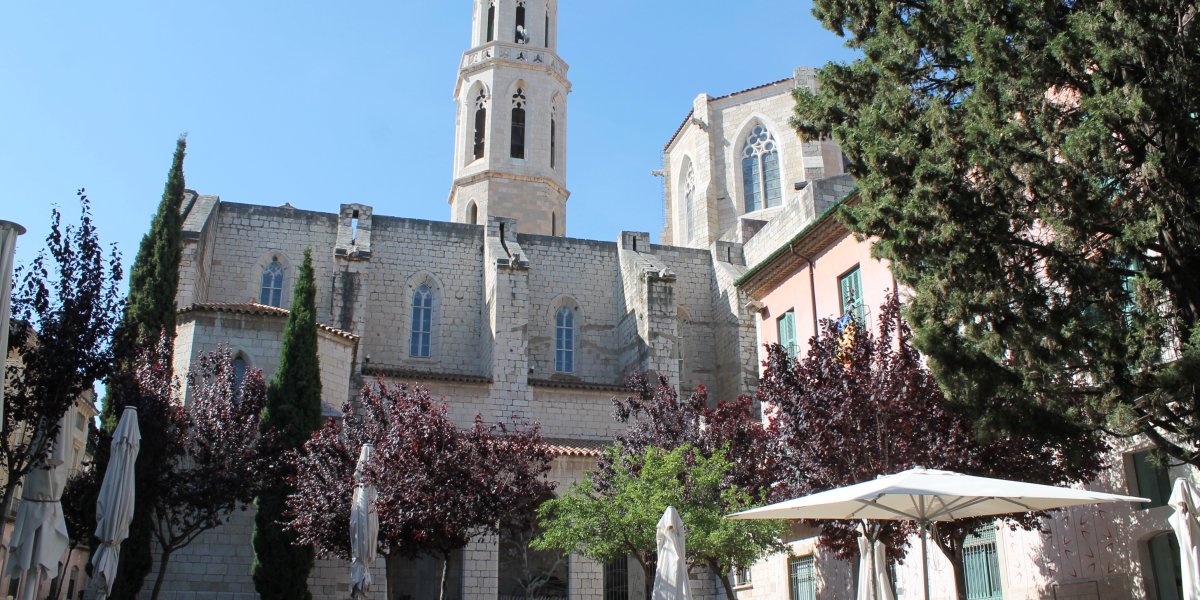
One block west sits Sant Pere Church — the bookends of Dalí's life: baptised here in 1904, his funeral held here in 1989, with the carved Gothic tympanum above the door worth five quiet minutes. From there, drift south down La Rambla, the plane-tree-lined central boulevard, passing the Monument to Narcís Monturiol (the local inventor of the first combustion submarine) at the top and the Toy Museum of Catalonia's surrealist facade halfway down. From 18:00 the avenue fills with the evening paseo — grandparents, prams, teenagers, the entire town walking the same slow loop under the trees.
Tip: Sit at Cafè Astoria mid-Rambla around 18:00 with a vermut casolà and olives (€4) — this is the single seat in town that watches the whole paseo flow past in both directions. The Toy Museum's facade photographs best from the opposite pavement around 19:00, when low sun catches the upper-window mannequin and the painted Catalan sky behind it. Don't bother going inside Sant Pere — the interior is plain compared to the tympanum outside, and afternoon mass blocks the nave anyway.
Open in Google Maps →19:30
Food
Three minutes east off La Rambla onto Carrer Lasauca: a wood-panelled dining room run by the same Catalan family since 1855. Dalí ate here for sixty years — his preferred table by the window has a small bronze plaque, and the staff remember him as 'Mestre Salvador'. Order the canelons de l'àvia (€14, the house cannelloni Dalí himself loved) and the arròs negre amb sípia (€19, squid-ink rice with cuttlefish); with a half bottle of Empordà white, plan €45 per person.
Tip: Reserve the day before — even off-season weekdays fill up — and ask for 'sala antiga' (the old dining room), where the 1900s tile floor and Dalí's preferred table still stand; the modernised annexe has none of the atmosphere. Pitfall warning: avoid every restaurant with photo-menus on La Rambla itself — they exist purely for museum tourists, and the same paella runs €22 there versus €12 one block off. Same trap for souvenirs: only the Dalí Foundation shop inside the museum sells licensed prints — every 'Dalí store' between the museum and La Rambla sells imported knockoffs at 3× the price.
Open in Google Maps →
Trip builder
Plan this trip around Figueres
Turn this guide into a bookable rail itinerary with FlipEarth.
Keep exploring
Related cities
More in the same country
FAQ
Frequently asked questions
How many days do you need in Figueres?
Most travelers enjoy Figueres in 1 days, with enough time for headline sights and a slower meal or museum stop.
What's the best time to visit Figueres?
The easiest season for most travelers is May-Sep, especially if you want good weather and manageable crowds.
What's the daily budget for Figueres?
A practical starting point is about €90 per person per day before hotels, then adjust based on museums, dining, and transport.
What are the must-see attractions in Figueres?
A good first shortlist for Figueres includes Castle of Sant Ferran, Dalí Theatre-Museum (Exterior), Casa Natal Salvador Dalí.