City Guide
Cascais
Portugal · Best time to visit: Apr-Oct.
Day-by-day plan
Choose your pace
Duración del viaje
09:00
Landmark
From the train station exit, head south past the marina — the white star-shaped walls appear within a 4-minute walk. Begin here because morning sun strikes the eastern bastion at a low angle, throwing the 17th-century walls into honey-gold relief that fades by 11:00. Loop the exterior ramparts where Portugal's last kings once summered, then slip into the cobbled inner courtyard to find Vhils' stone-carved faces hidden inside the Cidadela Arts District before tour groups arrive.
Tip: Enter through the small archway next to the marina, not the main road gate, to reach the inner courtyard while it is still empty. The free Cidadela Arts District galleries close for lunch 13:00-14:00, so absolutely see them in the morning.
Open in Google Maps →10:45
Park
Exit the Cidadela's north gate and walk uphill along Rua Visconde da Luz, the old town's cobbled spine, for 8 minutes. The park is most magical in mid-morning when free-roaming peacocks descend from their roosting trees and strut the lawns in full plumage. Wander the duck pond, the bamboo grove, and the upper terrace where the Conde Castro Guimarães palace overlooks a hidden cove below.
Tip: The peacocks gather near the iron fence by the duck pond between 10:00-11:00 — stand on the gravel path facing the water for a clean shot without other visitors in frame. Skip the indoor Conde Castro Guimarães museum; it charges €5 and offers nothing the gardens don't show better outside.
Open in Google Maps →12:00
Food
From the park's main gate, walk south down Rua António Augusto Aguiar for 5 minutes — you'll smell charcoal-grilled sardines before you see the market's tiled facade. Aim for Marisco na Praça inside the covered hall, where a glass case displays the morning's catch — pick your fish by hand and they grill it on the spot. Order grilled sardines (€8) or octopus rice (€14) with a glass of cold vinho verde (€3.50) and eat at the communal counter.
Tip: Skip the touristy outer terrace stalls and head straight to the inner Marisco na Praça counter — locals eat standing and leave in 30 minutes flat. Order only whatever is chalked under 'peixe do dia' (fish of the day); the printed menu seafood is frozen, the display case is what came off the boats this morning.
Open in Google Maps →13:30
Landmark
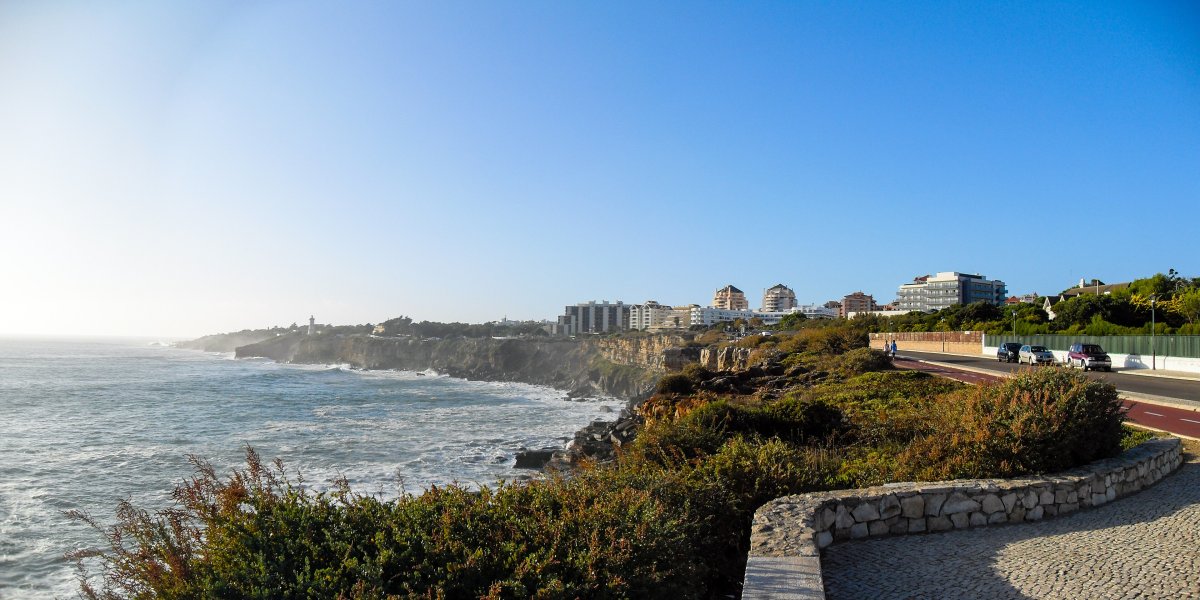
From the market, walk west along the Paredão seafront promenade past Praia da Rainha and the candy-striped Santa Marta Lighthouse — the 25-minute coastal walk is half the experience. Boca do Inferno is most dramatic between 14:00-16:00 when the afternoon sun cuts directly into the sea-eroded cavern and the Atlantic swell hits the western wall, sending plumes of spray ten meters into the air. Cross the metal footbridge above the chasm and listen for the deep boom when waves meet the cave's back wall.
Tip: After crossing the metal footbridge, descend the unmarked dirt path on your left to a flat rock ledge 3 meters above the water — it's the only angle where the cavern arch and Atlantic horizon line up in one frame. Wear closed shoes; the volcanic rock is sharp and the spray makes the ledge slippery within minutes.
Open in Google Maps →15:30
Landmark
From Boca do Inferno, follow the clifftop Estrada do Guincho westward — a 6-kilometer walk taking 90 minutes past the abandoned Forte de Crismina and a string of empty surfer coves. Arrive around 17:30 and walk the boardwalk through the dune system, where Atlantic surfers come for the most consistent swell in Iberia. The wind sculpts the white sand into peaks and the spray drifts inland; stand at the southern dune ridge for the cleanest view back toward Sintra's green mountains.
Tip: Skip the main parking-lot entrance and take the second wooden boardwalk that begins behind Bar do Guincho — it lands on the wilder southern dunes where the kite-surfers launch. Do not swim: Guincho is rated category 3 (dangerous) almost every day for its undertows, even when the surface looks calm.
Open in Google Maps →19:30
Food
From the south end of the beach, climb the short ramp to the clifftop — Furnas do Guincho is the white-and-blue building with the wraparound terrace, a 5-minute walk. Locals have come here for forty years for the arroz de marisco (€55 for two, served bubbling in a clay pot) and the terrace that faces due west into the Atlantic sunset. Order the grilled robalo (sea bass, €32 per kilo) if you want the kitchen's simplest pick, and time arrival for 19:30 to catch the sun dropping behind the horizon over your second glass of Alvarinho.
Tip: Reserve at least 48 hours ahead and specifically request 'mesa na varanda com vista para o pôr-do-sol' — a third of the tables are interior with no view at all. Pitfall: do NOT eat at the seafood restaurants ringing Cascais marina with English-only menus and waiters waving photo cards — they charge €60+ per head for re-frozen catch shipped from Spain. The 405 bus back to Cascais runs from the road outside Furnas until 22:40.
Open in Google Maps →
Trip builder
Plan this trip around Cascais
Turn this guide into a bookable rail itinerary with FlipEarth.
Keep exploring
Related cities
More in the same country


FAQ
Frequently asked questions
How many days do you need in Cascais?
Most travelers enjoy Cascais in 1 days, with enough time for headline sights and a slower meal or museum stop.
What's the best time to visit Cascais?
The easiest season for most travelers is Apr-Oct, especially if you want good weather and manageable crowds.
What's the daily budget for Cascais?
A practical starting point is about €75 per person per day before hotels, then adjust based on museums, dining, and transport.
What are the must-see attractions in Cascais?
A good first shortlist for Cascais includes Cascais Cidadela, Boca do Inferno, Praia do Guincho.