City Guide
St Ives
Royaume-Uni · Best time to visit: May-Sep.
Day-by-day plan
Choose your pace
Durée du voyage
09:00
Park
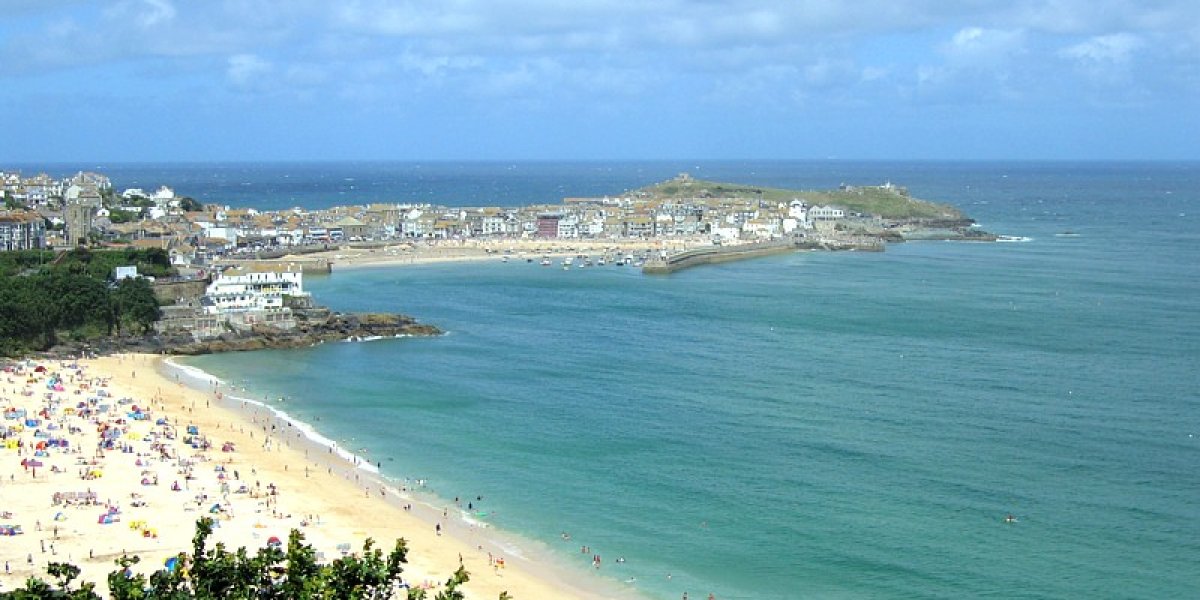
Step off the branch line train at St Ives station and walk 90 seconds down the slope — the Atlantic opens before you like a stage curtain pulling back. Porthminster's pale sand and turquoise water are your first taste of Cornwall, and arriving before 10 means the beach still belongs to dog-walkers and the rising sun. This is your one-shot Cornwall postcard before the day-trippers descend.
Tip: Stand at the eastern end by the café and shoot west back toward town — the palm trees in the foreground make people swear you've sent them photos from the Mediterranean. Coming in by car wastes the magic; take the branch line from St Erth and sit on the right-hand side for ten minutes of coastal arrival no road can match.
Open in Google Maps →10:30
Landmark
Follow the South West Coast Path north from Porthminster — 10 minutes of clifftop blue and the harbour suddenly unfolds beneath you. Walk to the very end of Smeaton's Pier, built in 1770 by the engineer behind Eddystone Lighthouse, and turn back: you'll see the entire town stacked like sugar cubes above its bay, the most-photographed angle in Cornwall. Mid-morning light is still soft, the painted fishing boats are catching the sun, and Downalong's slate roofs climb the hill behind them.
Tip: Check tide times the night before — low tide between 11:00 and 13:00 is the magic window, when you can walk on the harbour floor among the moored boats. High tide makes the boats float prettily but hides the beach completely, so half the photos people travel here for vanish.
Open in Google Maps →11:30
Religious
Walk west around Smeaton's Pier and along Wharf Road for 5 minutes — The Island (a peninsula, despite the name) rises ahead of you, a wild grassy headland crowned by a tiny 15th-century granite chapel built for the patron saint of sailors. The climb takes 8 minutes and rewards you with a 360° view: Porthmeor to the west, the harbour to the east, the open Atlantic to the north. This is the highest point in town and the moment St Ives stops being a postcard and starts feeling like a place you'll remember in your bones.
Tip: The chapel is usually unlocked — duck inside for 30 seconds (it's a single stone room with a candle, no more) — but the real moment is to sit on the seaward grass and watch kittiwakes wheel below the cliff. Bring a windproof layer even in July; the headland is fully exposed and easily ten degrees cooler than the harbour two minutes below.
Open in Google Maps →13:00
Food
Descend The Island via the western path to Porthgwidden Beach, then cut up through the Downalong fishing-cottage warren — 8 minutes of slate roofs and lanes barely wide enough for two. Pengenna on High Street is where locals queue for the best traditional Cornish pasty in town: hand-crimped each morning, beef-and-vegetable, the pastry buttery and the steam scalding. Order the traditional steak pasty (£5.50 / ~€6.50) and a slice of saffron cake (£2.80 / ~€3.30) for after, take it down to the harbour wall, and eat it sitting on the granite — that's the proper Cornish way.
Tip: Skip the harbourside chippies advertising 'World Famous Fish & Chips' with laminated photos in the window — they're £18 tourist traps aimed at coach groups, and locals will tell you so plainly. A real pasty from Pengenna costs a third of that. Arrive 13:00–13:30; the steak and the saffron buns sell out by 14:00 in summer.
Open in Google Maps →14:30
Landmark
Walk west from the harbour along Back Road West — 6 minutes through granite cottage lanes — and Porthmeor opens up: a 400-metre crescent of pale sand facing the Atlantic, with the white modernist drum of Tate St Ives anchoring its eastern end. This is the surfers' beach and the artists' beach; the same cool north-facing light that drew Hepworth and Nicholson here a century ago is exactly why the Tate built its outpost on this spot. Wander the sand barefoot, watch the longboarders take the afternoon sets, and photograph the Tate's curved façade glowing against the dunes when the sun swings west.
Tip: The Tate's rooftop terrace café is open to non-ticket-holders — take the lift to the top floor and step outside for the single best free view of Porthmeor and the Atlantic, no admission required and nobody checks. Afternoon between 15:00 and 17:00 is when the white walls glow brightest and the surf behind turns electric blue.
Open in Google Maps →19:00
Food
Stay exactly where you are — the café is built into the historic bathhouse at the back of Porthmeor Beach, your toes practically on the sand. From May to September the sun sets directly over the water in front of you between 20:45 and 21:30, painting the Atlantic gold from your plate. Order the Cornish hake (£24 / ~€28) and the local mussels with cider cream (£14 / ~€16) — both come from boats you can see from your window seat — and expect ~£40 / ~€47 per person with a glass of Cornish white.
Tip: Reserve online a week ahead and specifically request a window table on the west side — without a booking from June to August you'll be turned away. Two final warnings: the harbour pubs (Pedn Olva, the Sloop Inn restaurant) are visible and convenient but locals don't eat there, and the last train back to St Erth on summer evenings leaves around 22:40 — allow 20 minutes to walk back along the seafront after sunset and you'll catch it without rushing.
Open in Google Maps →Aller au jour
09:00
Landmark
Start where St Ives shows itself: from the harbour, follow Pednolva Walk uphill ten minutes to the granite headland locals simply call 'The Island.' At 09:00 the Atlantic light is silver-edged and the gulls own the sky — the perfect first photo of the town curling below. The tiny St Nicholas Chapel at the summit has stood here weathering Atlantic gales for 600 years.
Tip: Walk the perimeter path clockwise from the chapel — three minutes in, a hidden bench faces Porthmeor with no railing in the frame. The morning light hits the surf perfectly until 10:30, after which the sun moves behind you and the photo flattens.
Open in Google Maps →10:30
Museum
Descend the Island via the Porthgwidden side and cut up Barnoon Hill — twelve minutes through the maze of fishermen's lanes that inspired Hepworth's geometric vocabulary. The museum is her actual studio and garden, left exactly as on the day she died here in 1975: half-finished sculptures still on the workbenches, bronzes framed by subtropical foliage. One of the most intimate artist studios open anywhere in Britain.
Tip: Skip the indoor display first — the garden is east-facing and gets direct sun until noon, after which the bronze surfaces go flat. Photograph 'Four-Square (Walk Through)' from the bench in the back-left corner; the doorway frames the harbour beyond.
Open in Google Maps →12:30
Food
Five minutes back down Barnoon Hill to High Street — the pasty smell pulls you in. Pengenna has been hand-crimping Cornish pasties since the 1970s and remains the unanimous local choice. Order the Traditional Steak (£6.50) and a Cornish cream tea afterward (£5); this kitchen still uses skirt steak, swede and onion as the original tin miners ate them.
Tip: Buy your pasty and walk to the harbour wall to eat with feet dangling — but cup it with your other hand. The St Ives gulls have learned to dive-bomb tourists with surgical precision and lift the entire pasty in seconds; a fierce 'oi!' usually scares them off.
Open in Google Maps →14:00
Museum
From the harbour walk west along the seafront — five minutes past Porthmeor's surf — and the Tate appears as a curved white drum facing the Atlantic. The collection traces the St Ives modernist movement (Hepworth, Nicholson, Wallis, Frost) through galleries with sea-facing windows that frame the same coastline the artists painted. The afternoon timing is deliberate: the upper gallery uses natural light filtered through skylights, peaking 14:00-16:00.
Tip: Take the lift to the top floor first and work down — the rooftop café has the best Porthmeor view in town and is half the price of the beach café below. Ask the gallery attendant on level 3 about Alfred Wallis; they're often retired artists and the stories beat any audio guide.
Open in Google Maps →16:30
Park
Exit the Tate, descend the steps — you're already in the sand. By 16:30 the surf school packs up and the beach belongs to late-light walkers. Porthmeor faces north-northwest, so the sun arcs across the bay rather than setting into it: warm gold light on the dunes for nearly two hours, with the Atlantic surf as your soundtrack.
Tip: Walk to the western end and look back: the Tate, the houses climbing toward the Island, and the surf together make the postcard shot of St Ives. Best between 17:00 and 18:00 in summer when the granite warms to honey colour.
Open in Google Maps →19:30
Food
You don't change beaches — the café is built into the dune wall behind you, one flight up. The terrace seats fewer than thirty and faces the Atlantic head-on. Order the Pan-Roasted Day-Boat Hake with Cornish new potatoes (£24) and a glass of Camel Valley Bacchus from down the coast (£9), and watch the surfers ride the last sets as the sky goes copper.
Tip: Reserve at least three days ahead for any 19:00-20:30 slot in summer and explicitly request 'a terrace table' — the indoor seats face the wrong way. Avoid the row of harbour-front fish-and-chip restaurants on Wharf Road that look obvious; they're priced for tourists who don't know to walk five minutes for the real thing.
Open in Google Maps →10:00
Museum
Walk south on Stennack — the road climbs gently for fifteen minutes through residential St Ives, away from the postcard front. Leach Pottery sits at Higher Stennack, founded by Bernard Leach in 1920 and still firing every week. Morning timing matters: the studio potters throw between 10:00 and noon and you can watch them work the same wheels Leach used a century ago.
Tip: Buy a single small piece from the shop (mugs from £35) — each is hand-thrown and stamped with the maker's seal, identical in price to London galleries. Closed Sundays and Mondays in low season — check before you walk up. Ask the guide which contemporary apprentice made which display piece; they'll happily point them out.
Open in Google Maps →12:30
Food
Walk back down Stennack, cross under the railway and follow the signed path down to Porthminster Beach — twenty minutes, mostly downhill. The café sits directly on the sand, all glass and teak, with one of the most photographed restaurant views in Cornwall. Order the Monkfish Curry (£24) with a half-pint of Tribute (£3.50); the Indonesian-influenced menu cannot be found anywhere else in the UK.
Tip: Book a window or terrace table specifically — the back tables miss the view that defines this restaurant. Lunchtime is dramatically cheaper than dinner with the same view; locals all eat lunch here, never dinner, and arrive 12:15 to beat the 13:00 rush.
Open in Google Maps →14:30
Park
Step out of the café onto the sand. Porthminster faces south — the only St Ives beach that does — which means warm sun and calm water all afternoon, completely different from Porthmeor's Atlantic muscle. The half-mile arc of pale sand with the harbour and Godrevy Lighthouse on the horizon is the quiet, gentler face of St Ives.
Tip: Walk to the eastern stub where the rocks meet the sand — at low tide rock pools appear with anemones and tiny crabs. Tide times are posted on a wooden board by the café entrance; aim for the two-hour window either side of low tide.
Open in Google Maps →16:30
Landmark
Walk back along the coast path — ten minutes around the headland — and the harbour opens before you. By late afternoon the fishing boats have returned with the day's catch and lie tilted on the sand at low tide; St Ives is one of very few English harbours that still empties completely twice a day. Walk the full length of Smeaton's Pier (1770) to the small lighthouse for the unmatched view back to the town.
Tip: Time your pier walk for the hour before high tide if possible (check the harbour tide board) — that's when the fishing boats refloat and the scene comes alive. Avoid the 'seal trip' boat touts; the seals at Godrevy are unreliable in summer and a £20 boat round mostly delivers a long wait at sea.
Open in Google Maps →18:00
Park
Cross the town beach behind the harbour and climb the short path past the Island — five minutes — to Porthgwidden, the smallest of the four beaches. Where Porthmeor roars and Porthminster soothes, Porthgwidden is intimate: a hundred-metre sandy crescent hidden between the Island and the eastern rocks, with the iconic colourful beach huts in the cliff above. By 18:00 the day-trippers are gone and a handful of locals come down to swim.
Tip: Order a takeaway gin and tonic from Porthgwidden Beach Café (£8) and walk it onto the sand — there's a low rock bench at the eastern end where you can watch the tide creep in with the whole beach almost to yourself.
Open in Google Maps →20:00
Food
From Porthgwidden walk back to Fish Street — eight minutes through the Downalong fishermen's quarter, the oldest part of St Ives where lanes barely a metre wide twist between whitewashed cottages. Seagrass is upstairs above the harbour, intimate (twelve tables) and the chef-owner works the pass himself. Order the Cornish Lobster Linguine (£32) and the Local Day-Boat Catch (£28) — the catch changes daily based on what the boats brought in that morning.
Tip: Reserve at least a week ahead for July-August and ask for the 19:30 sitting if you can shift earlier — that's when the last harbour light comes through the windows. Avoid Fore Street's neon-lit fish-and-chip chains entirely; the locals' rule is simple — if it has a picture menu in the window, walk past.
Open in Google Maps →
Trip builder
Plan this trip around St Ives
Turn this guide into a bookable rail itinerary with FlipEarth.
Keep exploring
Related cities
More in the same country
FAQ
Frequently asked questions
How many days do you need in St Ives?
Most travelers enjoy St Ives in 1 days, with enough time for headline sights and a slower meal or museum stop.
What's the best time to visit St Ives?
The easiest season for most travelers is May-Sep, especially if you want good weather and manageable crowds.
What's the daily budget for St Ives?
A practical starting point is about €70 per person per day before hotels, then adjust based on museums, dining, and transport.
What are the must-see attractions in St Ives?
A good first shortlist for St Ives includes St Ives Harbour & Smeaton's Pier, Porthmeor Beach & Tate St Ives Exterior.