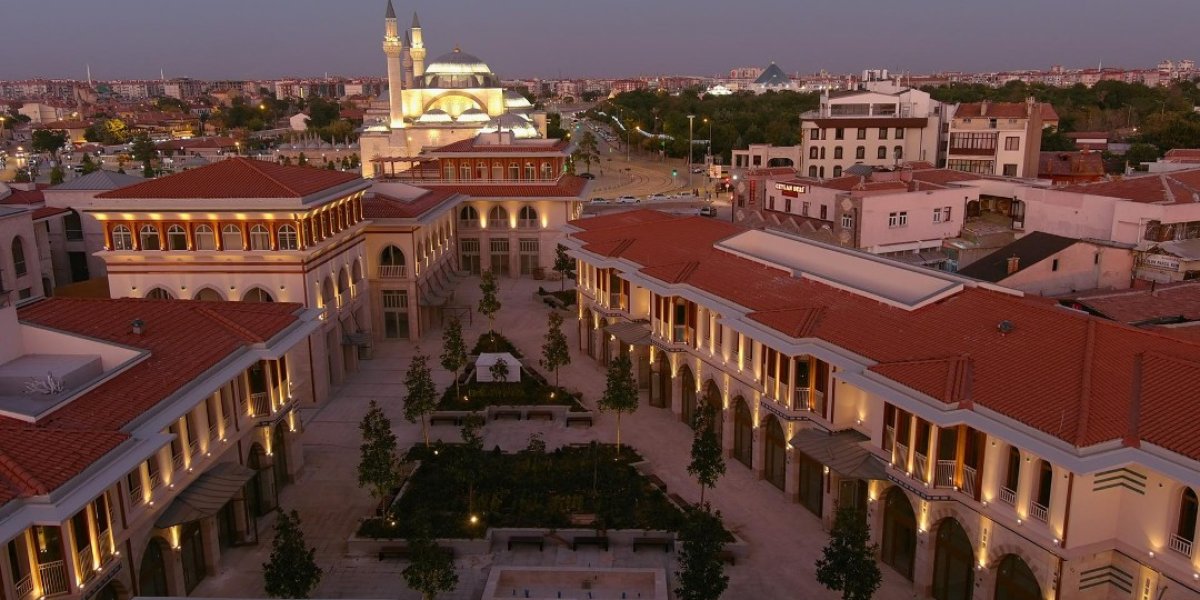
City Guide
Konya
Turquie · Best time to visit: Apr-Oct.
Day-by-day plan
Choose your pace
Durée du voyage
09:00
Religious
Begin where Konya's soul lives — approach from the south through Mevlana Park and the fluted turquoise dome of Rumi's tomb rises into view like a kingfisher's wing against the morning sky. Skip the interior queue; the real magic is the rose-filled courtyard with the ablution fountain, the old dervish cells lining the south wall, and the calligraphy carved over the silver entrance gate. Arrive at the 9:00 opening bell — the first 90 minutes belong to local pilgrims murmuring prayers, before the Cappadocia tour buses pour in around 10:30.
Tip: The east-facing turquoise dome catches the morning sun perfectly between 9:15 and 9:45 — stand at the southeast corner of the courtyard near the rose bed, frame the dome against the bare sky, and you'll capture the postcard shot before the crowds shadow it. Cover shoulders and knees; women receive a free scarf at the entrance booth.
Open in Google Maps →10:45
Religious
Exit Mevlana's gate, cross the small plaza, and Selimiye Mosque — Sultan Selim II's grey-stone Ottoman classical mosque — is fifty steps away; circle its rear courtyard for the symmetry shot most tourists miss. From here, plunge west into the covered Bedesten Bazaar along Mevlana Caddesi: copper pots, dried apricots, prayer-bead stalls, and the smell of toasted sesame. Eight minutes later you emerge at Aziziye Mosque, Konya's strangest beauty — twin baroque-Ottoman minarets with onion-bulb caps and pink-orange stonework that looks more Lisbon than Anatolia.
Tip: Aziziye is unique because it was rebuilt in 1872 in a Baroque-Ottoman fusion style that exists nowhere else in central Turkey — circle to the rear (north) side for the cleanest minaret shot framed against the sky, free of the busy market street wires. Avoid 12:00-12:30 Friday prayers when the entire bazaar shuts and the mosques close to non-worshippers.
Open in Google Maps →12:15
Food
From Aziziye's north gate, walk two minutes northeast — the smoke from the wood oven will find you before the sign does. Hacı Şükrü has been firing meter-long etli ekmek (Konya's signature thin flatbread blanketed with seasoned minced lamb, parsley and pul biber) for four generations. Order a half (yarım, ~80 TL / €2.50) per person, a glass of fresh ayran, and a Mevlana şerbeti (sour-cherry sherbet) — they slice the bread tableside with scissors and you eat it folded with your hands. Total damage: under €5.
Tip: Sit on the upstairs floor where locals eat — downstairs is the takeaway counter and you'll wait longer. Ask for it with kaşar (mild cheese) sprinkled on for the last minute in the oven — locals do this, the English menu doesn't list it, and it's the version worth flying for.
Open in Google Maps →13:30
Landmark
Continue west along Mevlana Caddesi for six minutes, dodging the dolmuş minibuses, until the boulevard opens onto Alaaddin Tepesi — an artificial mound that was the Seljuk citadel a thousand years ago, now a cypress-shaded park ringed by tea houses. Climb the south path (10 minutes, gentle) to the 12th-century Alaeddin Mosque at the summit: a low forest-of-columns interior with mismatched antique capitals pillaged from Roman ruins, and outside, the conical green-tiled türbe holding eight Seljuk sultans. Circle the hill clockwise on the upper path for a 360° panorama of the city.
Tip: The mosque's caretaker often closes the door between 14:00-14:30 for his own afternoon prayer — arrive by 13:45 or wait until 14:45. The best photo of the mosque is from the northwest path, where the green türbe dome lines up behind the mosque's stone wall with no power lines in frame.
Open in Google Maps →15:45
Landmark
Descend the hill on the north side — Karatay Madrasa sits literally across the street, recognizable by its hulking marble portal carved with knotwork that would make a Celt weep. Walk around its courtyard wall (we're staying outside today) and the late-afternoon sun warms the limestone gold. Then cut west across the small park, four minutes on foot, to İnce Minareli Medrese — 'Slim Minaret Madrasa' — whose famously elaborate stone portal is one of the great masterpieces of 13th-century Seljuk carving. The minaret itself was cut in half by lightning in 1901; the stub remains, oddly poignant.
Tip: Golden hour from 17:30 to 18:15 (Apr-Oct) sets the İnce Minare portal on fire — the deep undercut Arabic calligraphy throws dramatic shadows you simply cannot get at midday. Stand directly across the small plaza, slightly to the left, to catch the truncated minaret in the same frame.
Open in Google Maps →19:30
Food
Walk seven minutes east along Adliye Bulvarı back toward the bazaar fringe — Gülbahçesi occupies a restored Ottoman house with low cushioned divans, brass trays, and a rooftop terrace good for cooler evenings. This is Konya cuisine done properly: order fırın kebabı (slow-roasted lamb shoulder pulled in chunks over pilaf, ~280 TL / €8.50), tirit (lamb broth poured over toasted flatbread layered with shredded meat, ~180 TL / €5.50), and bamya çorbası (dried-okra soup). A full dinner with ayran and Konya's local höşmerim semolina dessert runs €18-22. No alcohol — Konya is dry by tradition; embrace the şalgam (fermented turnip juice) instead.
Tip: Reserve by 18:00 (call +90 332 351 0768) for a window table on the second floor — walk-ins after 19:30 get sent to the basement. Konya pitfall warning: the restaurants directly along Mevlana Caddesi between Mevlana Museum and the bazaar with English-only menus and photos of food on the wall charge 40-60% above local prices and serve frozen meat — always walk one block off the main pedestrian drag, where Turkish families are eating, before sitting down. Also ignore anyone outside the bazaar offering 'free tea at my brother's carpet shop' — it's a 90-minute sales hostage situation.
Open in Google Maps →
Trip builder
Plan this trip around Konya
Turn this guide into a bookable rail itinerary with FlipEarth.
Keep exploring
Related cities
More in the same country
FAQ
Frequently asked questions
How many days do you need in Konya?
Most travelers enjoy Konya in 1 days, with enough time for headline sights and a slower meal or museum stop.
What's the best time to visit Konya?
The easiest season for most travelers is Apr-Oct, especially if you want good weather and manageable crowds.
What's the daily budget for Konya?
A practical starting point is about €70 per person per day before hotels, then adjust based on museums, dining, and transport.
What are the must-see attractions in Konya?
A good first shortlist for Konya includes Alaeddin Hill & Alaeddin Mosque, Karatay Madrasa & İnce Minareli Medrese.