City Guide
Gothenburg
Suède · Best time to visit: Jun-Aug.
Day-by-day plan
Choose your pace
Durée du voyage
09:00
Religious
Take tram 3 or 9 to Masthuggstorget, then climb the stone steps to the church terrace — you will be slightly out of breath and then completely speechless. This massive Nordic Romantic brick church crowns the highest point in western Gothenburg, and its front terrace delivers the city's finest panorama: the full sweep of the Göta älv river, container ships gliding past, the Älvsborg Bridge framing the harbor mouth, and the emerging skyline of Lindholmen across the water. At nine in the morning the eastern sun backlights the cityscape while the harbor glows golden, and you will have this hilltop entirely to yourself.
Tip: The best photo position is the stone terrace directly in front of the main entrance, facing north — frame your shot between the two flanking towers to capture the harbor, the shipyard cranes, and Barken Viking in one wide-angle image. The south side is just residential rooftops; do not bother walking around.
Open in Google Maps →10:00
Neighborhood
Walk east downhill from the church through quiet Masthugget residential streets — a gentle 10-minute descent past colourful balconies that deposits you at the western entrance of Haga Nygata, Gothenburg's most beloved street. Two blocks of landshövdingehus — the unique three-storey wooden-and-brick houses found only in this city — line a cobblestoned lane packed with vintage shops, independent boutiques, and cafés spilling onto the pavement. This is where Gothenburg feels most like itself: unhurried, cozy, distinctly west-coast Swedish.
Tip: The most photogenic stretch is the first 200 metres of Haga Nygata from the western end near Linnégatan. Before 11:00, the morning sun is still low enough to reach the narrow street and light up the wooden façades in warm tones — by noon the buildings shadow each other and the charm flattens in photos.
Open in Google Maps →11:30
Food
Halfway along Haga Nygata on your left, this corner café has served the city's most famous pastry since 1996 — the hagabullen, a cinnamon bun the size of a dinner plate that has become Gothenburg's unofficial edible landmark. This is not a gimmick; the bun is genuinely excellent, crisp-edged and fragrant with cardamom. Pair it with an open-faced shrimp sandwich for a quick lunch that is pure west-coast Sweden on a plate.
Tip: Order at the counter and grab a window seat facing Haga Nygata for prime people-watching. The hagabullen (€4) is enormous — sharing one between two is sensible. The räksmörgås (open shrimp sandwich, €12) is the real lunch; treat the bun as dessert. Skip the coffee line after 12:00 on weekends — it stretches to the door.
Open in Google Maps →12:30
Landmark
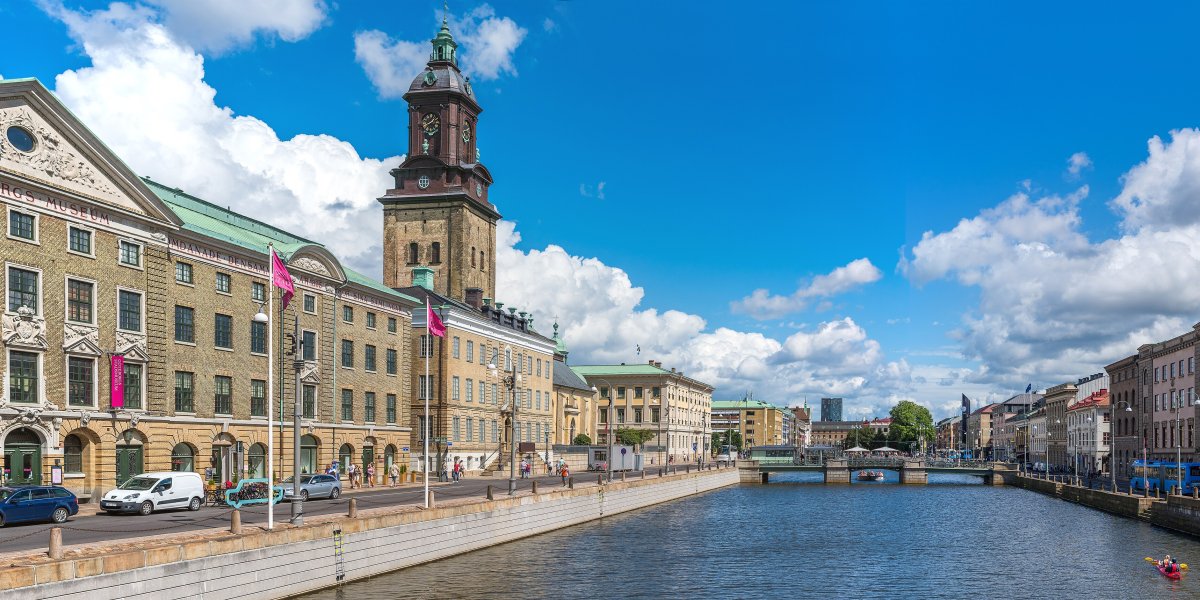
Exit Café Husaren and continue east along Haga Nygata to where the street meets the canal, then cross at Hagabron — an easy 8-minute walk along the water's edge with swans drifting past on your left. The Fish Church rises ahead: a Gothic Revival hall built in 1874 that looks exactly like a house of worship but smells entirely of the day's catch. The exterior's dramatic pointed arches and steep roofline make it one of Scandinavia's most photographed market buildings and the perfect symbol of Gothenburg's identity as Sweden's seafood capital.
Tip: The best exterior shot is from the small bridge approaching from the southwest (Rosenlundsbron) — the church's gabled façade reflects cleanly in the Rosenlund Canal on a calm day. Step inside briefly to see the fishmongers and their catch piled on crushed ice; it is a working market, not a museum, and the atmosphere is worth a two-minute walk-through.
Open in Google Maps →13:30
Landmark
From Feskekôrka, walk east along the canal to Kungsportsbron, then turn south onto Kungsportsavenyn — a 20-minute stroll down Gothenburg's grand boulevard, lined with linden trees and sidewalk cafés, that feels like a smaller, friendlier Champs-Élysées. The avenue builds to its crescendo at Götaplatsen, the cultural heart of the city, where Carl Milles' towering bronze Poseidon hoists a fish triumphantly above the fountain spray. The golden façade of the Museum of Art and the columns of the City Theatre frame the square on either side like a stage set.
Tip: Stand at the top of the steps behind the Poseidon fountain, face north, and look straight down the full length of Kungsportsavenyn — this is the single most iconic photograph of Gothenburg and the one image every visitor should take home. Early-afternoon sun (14:00–15:00) illuminates the avenue from behind you, giving the buildings a golden glow. Warning: the restaurants lining Avenyn itself are tourist-priced and mediocre without exception — walk past every single one.
Open in Google Maps →18:00
Food
From Götaplatsen, stroll back north along Avenyn for 10 minutes, then turn left onto Vasagatan — Kometen has anchored this corner since 1934 and remains the neighbourhood bistro where Gothenburgers celebrate, commiserate, and eat enormously well. The original wood-panelled dining room with its amber lighting feels like stepping into a mid-century film set. Start with Toast Skagen — hand-peeled shrimp on buttery toast crowned with vendace roe and a whisper of dill — then move to pannbiff, a pan-fried beef patty smothered in slow-caramelised onions with lingonberry on the side.
Tip: No reservation needed for two if you arrive by 18:00 on weekdays — ask for a window booth facing the tree-lined street to catch the last evening light. Toast Skagen (€14) and pannbiff med löksås (€18) together make the perfect Gothenburg farewell meal. End with a snaps of aquavit and ask the staff to teach you the drinking song — they always will. Budget €25–35 per person with one beer.
Open in Google Maps →Aller au jour
09:00
Landmark
A brisk 4-minute climb up the stone steps from Haga takes you to this 17th-century crown fortress on Risåsberget hill. At 09:00 the hilltop belongs to joggers, not tourists, and the panoramic sweep — Haga's wooden rooftops, the harbor cranes, the Älvsborg bridge — is raked by low eastern light that makes the entire city glow. This is the single best vantage point in Gothenburg, and in the early quiet it genuinely feels like a secret.
Tip: Take the stone steps from Haga Nygata up the south slope — it catches the morning sun first and takes only 4 minutes. The north path is longer and shaded until noon. Fortress grounds are open 24/7 and completely free.
Open in Google Maps →10:15
Neighborhood
Descend the cobblestone steps and Haga's main street begins at the foot of the hill, 3 minutes downhill. Gothenburg's best-preserved 19th-century wooden houses line this single lane — pastel façades sheltering vintage shops, second-hand bookstores, and candlelit cafés. Stop at Café Husaren (No. 24) for the legendary hagabulle, a cinnamon bun the size of a dinner plate (~65 SEK / 6 EUR), and the reason half the visitors come to this neighborhood.
Tip: The hagabulle sells out by mid-afternoon on weekends — at 10:15 you get fresh-from-the-oven buns and window seats. Order the classic cinnamon, not the cardamom variant; it's the original and the reason this place is famous. The western end of the street has the most photogenic houses, with climbing roses in summer.
Open in Google Maps →12:00
Food
From eastern Haga, cross Linnégatan and follow Sprängkullsgatan north for 8 minutes — the Fish Church's distinctive Gothic roof appears above the canal. This 1874 market hall is Gothenburg's seafood cathedral: order the räksmörgås (open-faced shrimp sandwich, ~145 SEK / 13 EUR) piled absurdly high with hand-peeled North Sea shrimp, or the fisksoppa with aioli and crusty bread (~160 SEK / 14 EUR). Eat standing at the counter like a local.
Tip: The counters on the left as you enter tend to have shorter queues. If the weather is fine, buy your food and eat on the canal-side benches outside — same quality, better view. Closed Sundays and Mondays; pivot to Stora Saluhallen at Kungstorget if your trip falls on those days.
Open in Google Maps →13:30
Entertainment
Walk east from Feskekörka along the canal for 10 flat minutes to the Paddan dock at Kungsportsplatsen. These flat-bottomed boats were designed to squeeze under Gothenburg's 20 low bridges — at certain points everyone on board ducks in unison — and the 50-minute loop through the 17th-century moat canals and open harbor is the city's most iconic ride. After lunch, it's the ideal way to rest your legs while the city scrolls past at water level.
Tip: Sit at the back of the boat for unobstructed photos. The 13:30 departure falls in the post-lunch lull — you'll likely get your pick of seats. Book online to save about 20 SEK off the walk-up price. Boats run April to October only.
Open in Google Maps →15:00
Museum
From Kungsportsplatsen walk north along the canal toward Lilla Bommen harbor — the tall ship Barken Viking marks the spot, 12 minutes away. The world's largest floating ship museum packs 15 decommissioned vessels into the harbor, including a Cold War destroyer, a submarine, and a lightship. Climb into the submarine Nordkaparen's periscope room and stand on the bridge of the destroyer Småland — the submarine alone is worth the ticket.
Tip: Start with the submarine Nordkaparen immediately — it's the star attraction and the narrow corridors get claustrophobic when crowded. At 15:00 the morning rush is long gone. Allow 20 minutes for the sub, then split the remaining time between the destroyer and the lightship Fladen.
Open in Google Maps →19:00
Food
Walk south from Maritiman along Östra Hamngatan to Vasagatan — 12 minutes through the canal district brings you to this glowing-neon institution, serving Swedish comfort food since 1934. Order the Wallenbergare — a butter-soft veal patty with cream sauce, lingonberries, and mashed potatoes (~225 SEK / 20 EUR) — and a local craft beer (~85 SEK / 8 EUR) in the dark-wood booths that feel like a gentler decade. Budget 300–400 SEK (26–35 EUR) per person with drinks.
Tip: No reservation needed — walk straight to the back dining room for the quietest booths. Avoid the Friday after-work rush (17:00–18:30); at 19:00 the crowd has thinned. Tourist-trap warning: the sidewalk restaurants lining Kungsportsavenyn charge 30–50% more for mediocre food aimed at visitors — skip them entirely.
Open in Google Maps →09:00
Park
From central Gothenburg, the park entrance on Nya Allén is a 5-minute walk east from Kungsportsplatsen. Europe's best-preserved 19th-century pleasure garden hides a stunning surprise: the Palmhuset, an 1878 iron-and-glass greenhouse soaring over tropical palms, orchids, and the humid scent of another continent. At 09:00 you'll have the greenhouse nearly to yourself, with soft morning light filtering through the canopy overhead.
Tip: Enter the Palmhuset first while the glass is still cool and the light is softest. The rosarium behind it is the city's most underrated photo location in summer — peak bloom runs June through July. Park entry has a small fee (~20 SEK) in summer; free the rest of the year.
Open in Google Maps →11:00
Museum
Exit the park's south gate and walk south up Kungsportsavenyn — Gothenburg's grand linden-lined boulevard delivers you to Götaplatsen in 12 minutes. Carl Milles' muscular Poseidon fountain commands the square; photograph it from the museum steps with the boulevard stretching north behind it. Inside, head straight upstairs to the Fürstenberg Gallery — an intimate salon of Scandinavian masterworks that will reshape how you see Nordic light.
Tip: Head to the Fürstenberg Gallery on the upper floor before tour groups arrive around noon — you want these paintings to yourself. The Hasselblad Center in the same building hosts world-class photography exhibitions included in your ticket. Closed Mondays.
Open in Google Maps →12:30
Food
Walk back down the boulevard — the gentle 10-minute downhill is Gothenburg at its most handsome — and turn left at Kungstorget. Under the vaulted ceiling of this 1889 market hall, fishmongers and cheese merchants compete for your attention. Try the räksallad (shrimp salad, ~135 SEK / 12 EUR) from any fish counter, or a warm smörgås with västerbottenost cheese (~95 SEK / 8 EUR) — Sweden's most prized cheese, nothing like what you find abroad.
Tip: Visit the cheese counter in the back corner and buy a wedge of Västerbottensost to take home (~80 SEK) — it's Sweden's answer to Parmigiano and barely exists outside Scandinavia. The hall closes by 18:00 most days and is closed Sundays, so this is strictly a daytime destination.
Open in Google Maps →14:30
Park
Head west from Saluhallen through Vasastan along Linnégatan — a 20-minute walk past handsome 19th-century apartment façades, the prettiest residential stroll in the city. Slottsskogen is where Gothenburg exhales: 137 hectares of ancient oaks, meadows, and a free animal park where moose, harbor seals, and Gotland ponies live at remarkably close range. Afternoon light slants through the canopy, and in summer locals picnic here until well past 22:00.
Tip: Enter from the Linnéplatsen gate for the most direct route to the animal park — the moose enclosure is the biggest draw and the animals are most active in late afternoon. The lookout near the Björngårdsvillan café gives a sweeping view back toward the harbor. Everything in the park is completely free.
Open in Google Maps →16:15
Neighborhood
Walk north from Slottsskogen's Linnéplatsen exit and you're immediately on Linnégatan, the spine of Gothenburg's most lived-in neighborhood. Independent boutiques, record shops, and unhurried cafés line the tree-shaded boulevard; the parallel side streets — Tredje Långgatan for vintage finds, Andra Långgatan for the city's best bar scene — are where Gothenburg's creative energy concentrates. This is the city at its most authentically itself.
Tip: Tredje Långgatan has the strongest independent shops; Andra Långgatan is the bar street that comes alive after dark. If you need a fika break, grab a seat at the café on Järntorget square for prime people-watching. Skip the souvenir stalls near Linnéplatsen — the vintage shops further up Andra Långgatan have better finds at lower prices.
Open in Google Maps →19:00
Food
From northern Linnégatan, walk east along Vasagatan for 10 minutes to this understated modern Scandinavian restaurant on Viktoriagatan. The weekly-changing menu is seasonal and fiercely local — the pan-fried North Sea cod with brown butter and capers (~285 SEK / 25 EUR) is a recurring masterpiece. The three-course dinner (~595 SEK / 52 EUR) is the best value in the city for cooking at this level. Budget 400–600 SEK (35–52 EUR) per person.
Tip: Reserve at least two days ahead — Koka seats only about 30 and fills nightly. Ask for a table near the open kitchen for the best experience. Tourist-trap warning: the generic 'Swedish meatball' restaurants clustered around Järntorget and Grönsakstorget are tourist-oriented and overpriced — Koka is ten minutes away and a different universe.
Open in Google Maps →
Trip builder
Plan this trip around Gothenburg
Turn this guide into a bookable rail itinerary with FlipEarth.
Keep exploring
Related cities
More in the same country
FAQ
Frequently asked questions
How many days do you need in Gothenburg?
Most travelers enjoy Gothenburg in 1 days, with enough time for headline sights and a slower meal or museum stop.
What's the best time to visit Gothenburg?
The easiest season for most travelers is Jun-Aug, especially if you want good weather and manageable crowds.
What's the daily budget for Gothenburg?
A practical starting point is about €65 per person per day before hotels, then adjust based on museums, dining, and transport.
What are the must-see attractions in Gothenburg?
A good first shortlist for Gothenburg includes Feskekôrka, Götaplatsen.