City Guide
Gaziantep
Turquie · Best time to visit: Apr-May, Sep-Oct.
Day-by-day plan
Choose your pace
Durée du voyage
08:30
Landmark
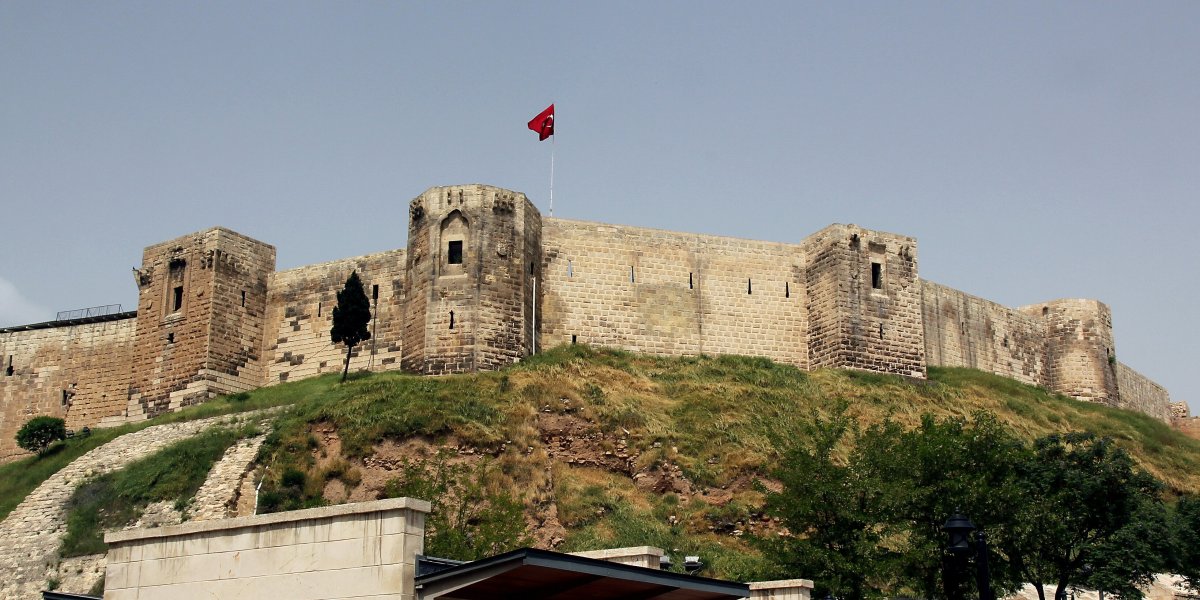
Start at the city's stone crown — the Roman-era hilltop fortress that defines Gaziantep's skyline. From the taxi drop-off on Şehitler Caddesi, walk five minutes uphill through tin-shuttered alleys just rolling open for the day; the hammering from the bazaar below is already audible. At the top, the ramparts deliver a 360° view of terracotta rooftops, three minarets, and the plains rolling east toward Syria.
Tip: Arrive before 09:00 — by 10 the stone glares white and the first tour buses unload from Adana. The northeastern bastion gives the cleanest photo (castle profile in foreground, old town behind). The 2023 earthquake closed the interior cisterns; stick to the perimeter walk, which is the better experience anyway.
Open in Google Maps →10:30
Shopping
Descend the castle's south stairs and walk seven minutes downhill along Kale Civarı — you'll hear it before you see it, the syncopated metallic ring of fifty hammers under one roof. Bakırcılar Çarşısı is the working copper bazaar where fourth-generation ustas still hand-tin pots and pound coffee mortars over open coals beneath 17th-century stone vaults.
Tip: Buy only from the workshop where you actually watched the piece being made — anything pre-polished and stacked at the front of a stall is mass-produced from Istanbul and marked up triple. A hand-hammered havan (mortar) for €12-15 is the souvenir locals give as a wedding gift. Mehmet Usta's workshop near the eastern arch is the most photogenic.
Open in Google Maps →12:30
Food
Walk two minutes west through the bazaar's south arcade to a corner doorway with no English sign and a permanent queue of locals in dusty work jackets. Metanet has served exactly one dish since 1960 — beyran çorbası, slow-cooked lamb shank over rice in a garlic-and-chili broth that Gaziantep eats for breakfast, lunch, and the morning after a wedding. One bowl, twenty minutes, and you understand why UNESCO gave this city its title.
Tip: One bowl is 200-280 TL (€6-8) — order it with extra ekmek (bread) to dip. Squeeze the lemon and stir in the chili oil before your first spoonful, not after; the older men at the communal table will silently approve. Cash only, no menu, no English. Use the alley entrance, not the parking-lot side — turnover is twice as fast.
Open in Google Maps →14:00
Neighborhood
Exit Metanet, turn left, and within sixty seconds the air shifts from lamb fat to roasted pistachio and crushed sumac. Almacı Pazarı is the working spice and dried-fruit bazaar — Antep fıstığı in five grades, sun-dried isot peppers black with smoke, pomegranate molasses, dried okra strung like necklaces. Finish across the lane at Tarihi Tahmis Kahvesi, a 1635 caravanserai turned coffeehouse where men in flat caps drink menengiç (terebinth-seed coffee) under a domed brick ceiling that has not changed in four centuries.
Tip: For pistachios, ask specifically for boz iç — the dark-emerald premium grade that locals use for baklava; vendors default to the pale yellow tourist grade unless pushed. At Tahmis, order menengiç kahvesi (€2) not regular Turkish coffee — it's the local specialty and rarely good anywhere outside this city. Sit in the inner courtyard under the dome, not the front patio with the postcard stand.
Open in Google Maps →16:30
Neighborhood
From Tahmis, walk six minutes west along narrow Hanifioğlu Sokak into the city's oldest residential quarter. Bey Mahallesi is a maze of cream-colored kıymık (cut-stone) houses with carved wooden doors, grape-vine courtyards, and stone-paved lanes barely wide enough for a donkey — the pre-1915 Armenian, Christian, and Muslim quarter, much of it survived the 2023 earthquakes intact. Loop down to the Kurtuluş Mosque, a 19th-century cathedral converted to a mosque whose soaring nave still reveals its church bones.
Tip: Late-afternoon light hits the cut stone at a low angle between 16:30 and 17:30 — the walls turn honey gold, the single best photographic window of the day. Look for carved keystones above the doorways: dates, palms, and birds were old Christian-quarter markers. Public restrooms are nearly nonexistent; duck into the free Hasan Süzer Ethnography Museum just inside the quarter and use theirs before going deeper.
Open in Google Maps →19:30
Food
From Bey Mahallesi, walk ten minutes east along Uzun Çarşı back toward the castle — by now the bazaar lanterns are lit and the smell of charcoal pulls you in before you find the door. İmam Çağdaş has been Gaziantep's culinary lighthouse since 1887: three generations of the Çağdaş family have grilled the country's definitive lamb kebab over open coals and rolled the baklava that every Turkish food writer compares all others against. The ground-floor grill room is the theater; the upstairs has tablecloths but loses the show.
Tip: Order Ali Nazik (smoked-eggplant purée under lamb, 450 TL/€13), one portion of fıstıklı kebap (pistachio-laced kebab, 620 TL/€18), and end with one piece of katmer — the warm pistachio-cream pastry, €5 — not the standard baklava. Reserve via Instagram DM on weekends; they reply. Pitfall warning: ignore the so-called 'kebab streets' off Suburcu Caddesi with their picture menus and touts in waistcoats — those are post-2015 tourist constructs charging double for half the quality, and the only Gaziantep restaurants you'll regret.
Open in Google Maps →Aller au jour
09:00
Landmark
Start at the highest point in the old city — climb the spiral path up the Roman-era fortress mound before the heat builds and the tour buses arrive. From the ramparts you see the whole honey-colored old town spread below: domes, minarets, and the copper bazaar rooftops where you will be standing in an hour. The Gaziantep Defense Heroism Panoramic Museum inside the walls tells the story of the 1920 siege through dioramas and audio — 45 minutes is enough.
Tip: Enter through the south gate (under the stone bridge near Almaci Bazaar) — the north entrance has a steeper climb and longer line. For the best photo of the castle itself, walk back down and shoot from the small footbridge over the Alleben stream — early light hits the southern wall around 09:30.
Open in Google Maps →10:30
Shopping
Walk down the castle ramp and cross the cobbled bridge — in two minutes the air starts to ring with hammers. This is one of the last living coppersmith bazaars in the Middle East: every shop has a craftsman pounding a tray or tinning a pot by hand. Wander the side alleys toward Almaci Pazari — the further you walk from the main square, the older the masters and the better the prices.
Tip: A hand-hammered tinned cezve (Turkish coffee pot) is the most portable souvenir — 400-600 TL and it lasts a lifetime. Avoid the bright shiny stalls at the entrance facing the castle; they sell machine-pressed pieces at double the price. Look for hammer marks and a slightly darker patina — that is the real handwork.
Open in Google Maps →12:30
Food
From the coppersmith alleys it is a 4-minute walk south to Uzun Carsi — you will smell the grills before you see the sign. Open since 1887, this is the kebab institution every Antepli defends as their own; order the fistikli kebab (pistachio-stuffed minced lamb, 280 TL) and the katmer (warm pistachio-cream pastry, 180 TL). The same family makes the baklava upstairs, considered by many Turks to be the best in the country.
Tip: Arrive before 12:45 — by 13:15 the queue snakes onto the street. Skip the dessert menu downstairs and walk one staircase up to the baklava counter to buy fresh fistikli baklava by weight (around 1200 TL/kg); ask for 'gun icinde yapildi' (made today) and they will bring you the morning tray.
Open in Google Maps →14:30
Shopping
Walk two minutes back north through Uzun Carsi — Almaci Pazari opens onto your right as a sudden wall of color and scent. Pyramids of crimson isot (the smoky local pepper), trays of dried mulberries and walnuts, antep fistik in every grade, sacks of sumac and dried okra strung on cords. Step into the adjoining 16th-century Zincirli Bedesten for handmade kutnu silk and antique kilim fragments without the Istanbul mark-up.
Tip: Buy 'birinci sinif' (first-grade) pistachios from a shop the locals queue at — the small green Siirt variety is what makes Antep baklava famous, 900-1100 TL/kg. The isot pepper is the must-buy: insist on this year's harvest (deep oxblood color, not faded brick), 150 TL for 250g.
Open in Google Maps →16:30
Museum
Walk north 6 minutes through Bey Mahallesi — the lanes narrow and houses turn into two-story Armenian-era mansions with carved wooden balconies. The museum occupies one of these mansions, restored to its 1900s state with original courtyard, wooden ceilings, and rooms re-created for engagement nights, henna nights and daily Antep family life. Late-afternoon light pours through the latticed windows into the courtyard — the best hour to photograph the interior.
Tip: After leaving, walk one block east on Tepebasi Sokak — you will pass three more original Armenian mansions, mostly unrestored, where you can see the carved doorways and stone window frames. Closed Mondays — if you arrive on a Monday, the Mevlevi Lodge Museum (10 minutes south) is the substitute.
Open in Google Maps →19:30
Food
From Bey Mahallesi it is a relaxed 7-minute walk south past Sirvani Mosque to Yesemek — set in a restored stone house with a vine-covered courtyard. Order alinazik (grilled lamb over smoky aubergine yoghurt, 220 TL) and yuvalama (lamb and rice meatballs in yoghurt soup, the dish locals eat on Bayram, 180 TL). With starters and ayran a full meal lands around 700-900 TL per person.
Tip: Tourist trap warning: the cluster of 'traditional' restaurants right next to the castle gate, with English-only menus and waiters waving you in, charge double for half the flavor. Yesemek does not need to flag tourists down — book ahead for the courtyard table or arrive at 19:15 to claim one before the locals do.
Open in Google Maps →09:00
Museum
Be at the doors when they open at 09:00 sharp — this is the world's largest mosaic museum and the first hour is yours alone before the tour buses from Sanliurfa arrive around 10:30. The collection rescued from the rising waters of the Birecik dam shows entire Roman villa floors reassembled at full scale: Dionysus, Achilles, the river-god Euphrates. Save 15 minutes at the end for the small darkened room holding the Gypsy Girl — the unfinished mosaic whose eyes follow you across the floor.
Tip: The Gypsy Girl is in a separate, low-lit chamber on the lower level — most visitors rush past it through the main hall. Go there first if you only have one hour. Closed Mondays. Photography is allowed without flash; the best mosaic — the Achilles fresco — is on the second-floor mezzanine, shoot from above for the full composition.
Open in Google Maps →11:30
Religious
Walk south 15 minutes along Hurriyet Caddesi back toward the old town — the streetscape shifts from modern to Ottoman as you go. The mosque is unmistakable: a vast neo-Gothic basilica with twin bell-towers, built in 1893 as the Armenian Cathedral of the Holy Mother of God and converted to a mosque after 1980. Inside, the soaring nave with its preserved Christian column capitals now serves as a prayer hall — a quiet, strange beauty you will see nowhere else.
Tip: Visit between the 11:30 and 13:00 prayer windows — empty interior and side light through the apse windows. Women should carry a scarf (loaners hang by the door); shoes off at the entrance. Walk around to the rear north wall to see the original Armenian inscription stones still in place.
Open in Google Maps →12:30
Food
From the mosque it is a 3-minute walk west to a wooden door with no English sign — locals queue from 06:00 for the city's most legendary breakfast. Order beyran corbasi (spicy lamb-rice soup that Antep men eat at dawn after a wedding, 150 TL) — fierce, garlicky, finished with vinegar and pul biber at the table. Pair it with kelle paca (lamb's head soup, 140 TL) if you are brave; a full meal with bread and ayran is around 350 TL.
Tip: Beyran is traditionally eaten on low stools — no fancy seating, that is the point. Order it 'aci' (with chili oil); saying you cannot handle the heat at Halil Usta is a small social loss. They run out of the morning broth by 14:00 — do not arrive after 13:30.
Open in Google Maps →14:30
Museum
Walk 4 minutes east through the Bey neighborhood — the museum is a restored 19th-century townhouse dedicated entirely to Gaziantep cuisine, the UNESCO Creative City of Gastronomy. Each room is a kitchen scene: the bread room with its sac oven, the spice room, the baklava room with the 40-layer pastry rolling pin. Plaques (English available) name 291 distinct local dishes — half of them you will never have heard of.
Tip: The map in the entrance hall — showing which Anatolian region gave Antep which dish — is the single best summary of Turkish food history you can see anywhere. Take a photo. Closed Mondays. The gift shop sells the only English-language Gaziantep cookbook in the city, 'Antep Mutfagi' by Filiz Hosukoglu (350 TL) — worth the suitcase weight.
Open in Google Maps →16:30
Landmark
Walk 4 minutes north — Tahmis sits inside a domed stone building from 1635, originally the customs house for silk caravans crossing into Aleppo. The restoration kept the soot-blackened beams; the menu kept the menengic (terebinth) coffee that Antepli have drunk for four centuries. Order a menengic kahvesi (40 TL) and a hot kunefe (110 TL, the cheese-and-shredded-wheat dessert served straight from the copper pan).
Tip: Sit upstairs on the small mezzanine balcony — you look straight down on the dome and the copper trays below. Menengic coffee tastes like roasted pistachios crossed with carob; pair it with kunefe, not baklava. A traditional bowed-saz player performs from 17:00 on weekends — a moment most tour groups never witness.
Open in Google Maps →19:30
Food
Step out of Tahmis and walk 2 minutes west across the small plaza — the restaurant occupies the courtyard of a restored 1900s han, stone arches lit by lanterns at dusk. The kitchen sticks to the Antep canon: ali nazik (350 TL), yogurtlu kebab on bread (320 TL), and as a finale sutlu nuriye (creamy pistachio baklava layered with milk, 220 TL). Expect 800-1200 TL per person for a full meal with raki or sira (grape juice).
Tip: Tourist trap warning for the last evening: the 'Antep baklava' shops at the airport and bus station are not the originals — and Gulluoglu in Istanbul is not from here either. The real five-generation Antep baklavaci is Koc Baklavalari (10 minutes east of Bayazhan, open until 22:00). Buy a 500g vacuum-sealed box (around 700 TL) — it survives a day of travel and tastes ten times what you will find back in Europe.
Open in Google Maps →
Trip builder
Plan this trip around Gaziantep
Turn this guide into a bookable rail itinerary with FlipEarth.
Keep exploring
Related cities
More in the same country
FAQ
Frequently asked questions
How many days do you need in Gaziantep?
Most travelers enjoy Gaziantep in 1 days, with enough time for headline sights and a slower meal or museum stop.
What's the best time to visit Gaziantep?
The easiest season for most travelers is Apr-May, Sep-Oct, especially if you want good weather and manageable crowds.
What's the daily budget for Gaziantep?
A practical starting point is about €70 per person per day before hotels, then adjust based on museums, dining, and transport.
What are the must-see attractions in Gaziantep?
A good first shortlist for Gaziantep includes Gaziantep Castle (Gaziantep Kalesi).