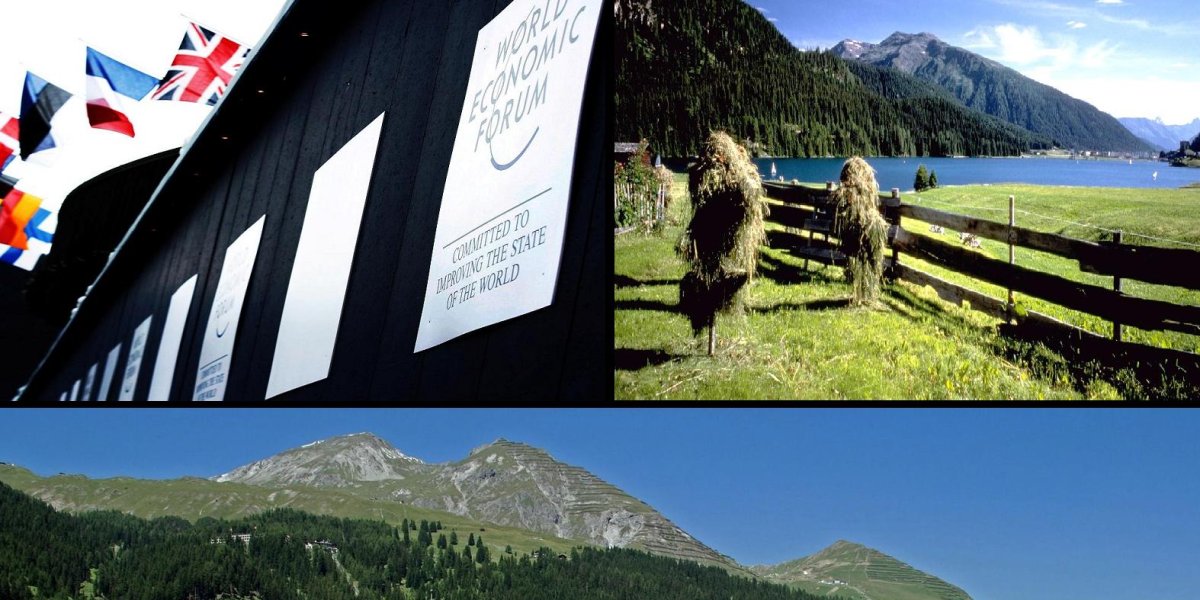
City Guide
Davos
Suisse · Best time to visit: Jun-Sep, Dec-Mar.
Day-by-day plan
Choose your pace
Durée du voyage
09:00
Landmark
Start at Davos Dorf station — the Parsennbahn valley terminal is 80 metres to your left as you exit. This is Switzerland's oldest mountain funicular (1931), and its two-stage climb lifts you to Weissfluhjoch at 2693 m in twelve minutes. From the ridge platform, the entire Landwasser valley falls away beneath your feet and the Silvretta peaks ripple east toward Austria — this is the panorama every Davos postcard chases. We climb first thing because morning haze burns off by 10:00 and the light still rakes across the glaciers at this hour.
Tip: Buy the round-trip online the night before (CHF 45 instead of CHF 52 at the counter) and take the 08:30 or 08:50 departure — by the 10:30 lift, every car carries a packed coach tour. At the top, walk five minutes east along the gravel ridge past the viewing platform to where the Silvretta glacier catches the morning sun; almost no one walks past the railing, and that's the angle worth the trip.
Open in Google Maps →11:30
Park
Descend the Parsennbahn and walk fifteen minutes north along the wooden lakeshore path from Davos Dorf station — the larch forest opens and the Landwasser valley suddenly mirrors itself in glass-still water. Davosersee is the second-largest natural lake in the Alps; circle the eastern shore, where the forest path stays shaded and locals fly-fish from the rocks in silence. After two hours above the tree line, this is the lung-resting hour the body needs before the next climb.
Tip: Walk the eastern (forest) side, not the western (road) side — the views are identical but the road side has constant traffic noise. Skip every lakeside kiosk; they charge triple what you'll pay 400 m back in the village. The wooden bench halfway down the east shore frames the Jakobshorn perfectly across the water — that's the shot.
Open in Google Maps →13:00
Food
From the south end of the lake, walk twenty-five minutes south along the Promenade through Davos Dorf — you'll pass century-old sanatorium hotels still flying their Belle Époque flags. Schneider has fed Davos since 1929 and locals queue at the counter for the Bündner Nusstorte (CHF 6 a slice, the canton's walnut-and-caramel edible flag) and warm Bündnerfleisch sandwiches on rye (CHF 14, air-dried Alpine beef with sweet mustard). Take a window stool, eat quickly, keep moving — this is the deliberate refuel, not the lingering meal.
Tip: Order a full small Bündner Nusstorte (CHF 18 for a Hausgrösse) instead of a single slice — it keeps three weeks unrefrigerated and is the one Davos souvenir worth a place in your bag. Skip their hot lunch menu; everything good here comes from the bakery counter, not the kitchen.
Open in Google Maps →14:00
Landmark
Walk five minutes south from Schneider along the Promenade — Davos's spine, a single street that stitches Dorf to Platz through a century of architectural memory. The Kirchner Museum (Promenade 82) holds the world's largest Ernst Ludwig Kirchner collection — he fled here in 1917 and painted these very peaks until 1938; we're skipping the interior today but the angular concrete-and-glass building by Gigon/Guyer is itself a Davos icon, the kind of austere modernism only this mountain town allows. Past it the Promenade tightens — wooden chalets jammed between modernist sanatorium blocks, each façade a layer of the town's century.
Tip: Stand on the small open terrace beside the museum around 14:30 and look northeast — the Schatzalp ridge with its Belle Époque sanatorium aligns perfectly above the rooftops, the shot every Magic Mountain reader takes home. Don't browse the souvenir shops on this stretch of Promenade; identical Swiss-army-knife-and-cowbell sets sell for 40% less one block off the main street.
Open in Google Maps →15:00
Landmark
Walk five minutes west from the Kirchner Museum to the Schatzalpbahn valley station, where a 1899 funicular climbs to 1861 m in four minutes — the same one Thomas Mann's characters rode in The Magic Mountain. The Berghotel Schatzalp at the top is the actual sanatorium Mann immortalised; the south-facing balconies where tubercular patients took their afternoon 'cure' still look out across exactly the valley Hans Castorp watched for seven years. Wander the alpine botanic garden (the highest in Europe, 800+ species), then walk DOWN by foot through the marked forest path — 45 minutes of dappled larch shade with the valley sliding open below. Late afternoon is when the south-facing façade catches its final warm light and the historic terraces empty out.
Tip: Buy a one-way UP ticket only (CHF 20) — walking down via the 'Schatzalp–Davos Platz' forest path is the soul of the visit and you'd otherwise pay double. Arrive at the top before 15:15 to catch the west balconies in full afternoon light; by 16:30 the sun drops behind the Jakobshorn and the historic façade flattens to grey. Pitfall warning — Davos's biggest tourist trap isn't a restaurant, it's the summit cable-car cafés: a bowl of Älplermagronen runs CHF 32 at Weissfluhjoch or Jakobshorn versus CHF 22 in the valley. Eat in town, never at altitude. And during the third week of January (World Economic Forum) every Promenade restaurant doubles its prices and block-books for delegates — avoid those dates if you're not on someone's expense account.
Open in Google Maps →18:30
Food
Step out of the forest path back into Davos Platz and walk eight minutes east along the Promenade — Gentiana has been the canton's edible embassy in Davos since 1958, wood-panelled, antler-decorated, family-run, and serving the three sacred dishes of Graubünden. Order the Capuns (chard-wrapped spätzle parcels with Bündnerfleisch and Alpine cheese, CHF 32) — what every grandmother here makes and what no Zürich kitchen gets right. The moitié-moitié fondue (CHF 38 per person) uses Gruyère and a local mountain Vacherin instead of the Fribourgeois standard, and the snail starter (CHF 22) has been on the menu for forty years.
Tip: Reserve by 16:00 — the front Stube has only nine tables and fills nightly with regulars; ask for one of the two corner tables by the green-tiled stove. Pair the Capuns with a glass of Completer (CHF 12), a near-extinct Graubünden white grown above Chur by fewer than ten producers in the world — you won't find it on a menu outside this canton.
Open in Google Maps →Aller au jour
08:30
Landmark
Start at the Jakobshornbahn base station, a 5-minute walk south of Davos Platz train station — follow the wooden signposts past the ice rink. The first cable car at 08:15 carries you to 2,590 metres before the summer haze rolls in, and by 11:00 the queue triples while the panorama softens. From the top a short ridge walk reveals the entire Landwasser valley with the Rhaetian Alps standing behind it like a silent congregation.
Tip: Buy the round-trip ticket online the night before — at the counter the 'Davos Klosters Premium Card' often gets confused with the seasonal pass and slows the line by 15 minutes. From the summit, walk to the Jatzhütte viewing platform on the south side — the Tinzenhorn pyramid aligns perfectly with the morning light and you get it without another tourist in the frame.
Open in Google Maps →11:00
Museum
Ride the cable car back down and walk 8 minutes north along the Promenade — the glass-and-concrete cube on your right is unmistakable among the wooden chalets. Ernst Ludwig Kirchner, founder of Die Brücke, fled Berlin in 1917 and painted these mountains for the last twenty years of his life; this museum holds the world's largest collection of his work, the alpine canvases that finally let him breathe. Opens Tuesday to Sunday 11:00, closed Monday — arrive on the dot and you have the upstairs gallery to yourself for thirty minutes.
Tip: Go straight upstairs first — that's where the Davos winter scenes hang, and the morning light through the skylights makes the white pigments look like fresh snow. The two postcards of his 'Sertigtal' painting in the gift shop cost 4 CHF each and are signed-edition reproductions — better than anything in the Promenade souvenir shops.
Open in Google Maps →13:00
Food
Two minutes north along the Promenade, the dark-wood arched dining room of the 1873 Morosani Posthotel is where locals come for proper Grisons food, not the snowboarder pizzerias across the street. Order the Capuns (Swiss chard rolls in herb cream with Alpkäse, CHF 28) and a glass of Jenins Pinot Noir, or the Bündner Pizokel with smoked ham and apple compote (CHF 26). Lunch budget runs CHF 35–48 per person; three-course set menu CHF 48.
Tip: Reserve a window table the day before — the Promenade-side seats catch the southern light at 13:00 and are gone by Friday. Skip the cold Bündnerteller (cured meats platter, CHF 32) at lunch — it's meant as a dinner starter and leaves you hungry within an hour at this altitude; ask instead for a half-portion of Capuns plus the Gerstensuppe (CHF 12).
Open in Google Maps →14:30
Landmark
Walk 6 minutes west from Pöstli to the Schatzalpbahn base station behind the Hotel Belvédère — the 1899 funicular climbs 300 metres in four minutes to a different century. The Berghotel Schatzalp is the sanatorium Thomas Mann turned into the Berghof of 'The Magic Mountain'; even today the south-facing terrace looks down on Davos exactly the way Hans Castorp first saw it. The Alpinum garden behind the hotel holds 800 species of alpine flora, and afternoon is precisely when the blue gentians fully open.
Tip: Take the funicular up but walk down the marked footpath through the larch forest — 35 minutes, gently downhill, you exit directly behind Hotel Belvédère onto Promenade. The Schatzalp restaurant's coffee terrace is worth a 4 CHF espresso for the view; their full menu is overpriced for what arrives on the plate — save the appetite for evening.
Open in Google Maps →17:00
Neighborhood
Emerging from the Schatzalp forest path, you are already on the Promenade — turn left and stroll slowly east through Davos's main artery. The 1481 Kirche St. Theodul on your right is the oldest building in the centre, its slender spire the silhouette in every pre-war Davos photograph. The setting sun around 17:30 in summer paints the Jakobshorn rose-gold behind it — this is the photograph you came to Davos for.
Tip: The best photo of the church with the mountain behind it is from in front of Hotel Europe across the Promenade — not from the church courtyard, where parked cars cut the foreground. Real Bündner Nusstorte (CHF 6 a slice) is at Bäckerei Schneider at Promenade 60, three doors east — twice as nutty as the airport-bound tourist tin version.
Open in Google Maps →19:30
Food
Three minutes east along the Promenade — the Schweizerhof's Bündnerstube is the carved-pine room downstairs, not the bright lobby restaurant signposted from the street. The signature is the Bündner Gerstensuppe (barley soup with shaved Bündnerfleisch, CHF 18) followed by Maluns (caramelised potato shavings with apple compote and Sennenkäse, CHF 32). The 1908 dining room glows under brass lanterns; dinner runs CHF 55–75 per person without wine, the local Malanser Riesling-Silvaner pairs cleanly with both dishes.
Tip: Reserve at least two days ahead between June and September — the Bündnerstube has only 28 seats. Ask for table 7 or 8 against the back wall, where the original 1908 Arvenholz carvings sit. Avoid the 'Schweizerhof Lounge Bar' upstairs after dinner — its CHF 24 Aperol Spritz is the standard Davos après-ski mark-up; cross the Promenade to Ex Bar for the same drink at CHF 14, and skip entirely the three 'Heidi Souvenir' shops near the tourist office where cuckoo clocks are imported and triple the Coop Pronto price.
Open in Google Maps →09:00
Landmark
From Davos Dorf train station the Parsennbahn base is a 4-minute walk west, under the Promenade overpass — follow the orange Parsenn signs. The historic 1931 funicular climbs in two stages to Weissfluhjoch at 2,693 m, the highest funicular-accessed peak in the eastern Alps and the cradle of modern downhill skiing. At 09:00 the air is still glass-clear, and the Silvretta range to the north stays sharp; by midday it dissolves into haze.
Tip: Buy the 'Parsenn round-trip + Höhenweg' combination ticket at the counter — CHF 6 extra, lets you descend on the panorama trail to Strelapass and ride the chairlift back, which 90% of day-trippers never realise is included. The postcard viewing point is 50 metres along the gravel path north of the upper station, not directly outside the doors — that platform looks straight into Klosters with the Silvretta as backdrop.
Open in Google Maps →11:30
Religious
Funicular back to Davos Dorf, then a 5-minute walk east along the Promenade — the late-Gothic stone church stands alone on a slight rise above the road. Built in 1280 and rebuilt in 1481, St. Johann holds the most unexpected treasure in the Grisons: five Augusto Giacometti stained-glass windows from 1928, fields of cobalt and crimson that ignite when the late-morning sun crosses the nave. Open daily 09:00–18:00, entry free.
Tip: Stand in the third pew on the left side at 11:30 — that's the minute the southeastern Giacometti window casts a red triangle across the altar stone, a coincidence the local pastor calls 'die alpine Rose'. No flash photography is allowed and the wardens will ask you to leave; the slow shutter shots on a phone braced against the pew back come out better anyway.
Open in Google Maps →13:00
Food
Six minutes back west on Bahnhofstrasse — Café Weber has been baking the Weber family's recipes since 1908, the corner café every Dorf local nods to. Order the daily Bündner Gerstensuppe with a Bündnerfleisch open sandwich (CHF 22 set), or the Quiche of the Day with mountain greens salad (CHF 18). Counter service, no reservations, lunch budget CHF 18–28 — sit upstairs at the wooden tables, not the Promenade window which gets too hot at midday in summer.
Tip: Skip the front display window — the seasonal Bündner Nusstorte (slice CHF 6.50) sits at the back counter and tastes nuttier because they bake twice daily and the back batch is the afternoon one. Take the corner table by the side window facing the Landwasser river — every WEF January it's where Davos councillors quietly draft their press lines, and the table is unmarked but unmistakable.
Open in Google Maps →14:30
Park
From Café Weber walk 12 minutes east along the lakeside footpath past Hotel Seehof — the Davosersee opens before you, the second-largest natural lake in the Alps at 1,560 m elevation. The 3.7-km loop trail is flat and unbroken; in the afternoon the south shore catches full sun and the mirror image of the Strela ridge floats on the water. In summer the surface temperature climbs to 18 °C and locals swim from the Strandbad on the eastern shore.
Tip: Walk the loop counter-clockwise — the first kilometre is shaded, then the south shore opens to the unobstructed reflection of the Pischahorn with no power lines in the frame. The pedalo rental at Strandbad costs CHF 25 for 30 minutes — fun but the same view is free from the wooden pier 200 metres further on, where the water is calm enough to mirror the peaks even when the lake centre is rippled.
Open in Google Maps →17:00
Park
Return along the lake's western shore to the Hohe Promenade trailhead behind Hotel Seehof — a level forest path 100 m above the town that links Davos Dorf and Davos Platz in about 50 minutes. Locals walk it at dusk because the western light reaches between the trees and turns the entire Landwasser valley below copper. The trail ends right above the Schatzalp funicular station, from where you can descend on foot into Davos Platz in another 10 minutes.
Tip: Walk the trail east-to-west (Dorf → Platz) at this hour — you walk into the sunset rather than have it at your back, and the openings in the larch trees frame the Tinzenhorn perfectly between 17:30 and 18:30. There are zero benches between km 1 and km 3 — fill a takeaway coffee at Café Weber before you start if you intend to stop and watch the light.
Open in Google Maps →19:30
Food
Descend the Hohe Promenade into Davos Platz, then catch local bus 1 (5 minutes) or walk 18 minutes back along Talstrasse to Dorf — the Hotel Davoserhof on Bahnhofstrasse holds the most consistently rated Bündner kitchen in town. The Hirschpfeffer (red-wine venison stew with house Spätzli and red cabbage, CHF 46) is the autumn signature; the year-round star is the Pizokel with bacon and caramelised onions (CHF 32). Three-course menu CHF 78, the Davos-made Monstein Riesling Silvaner (CHF 14 a glass) is the pairing the chef recommends.
Tip: Reserve the small Stübli room at the back rather than the main dining hall — it holds 14 people and is panelled with original 1898 Arvenholz pine that perfumes the air around the table. Around Davos Dorf station, avoid the three pizzeria-Italian-trattoria places facing the platform — they triple their prices during WEF week in January and never fully drop them back, so by summer the same Margherita that costs CHF 16 in Klosters runs CHF 26 here; the Davoserhof is two minutes further on foot and costs less for actual Grisons cooking.
Open in Google Maps →
Trip builder
Plan this trip around Davos
Turn this guide into a bookable rail itinerary with FlipEarth.
Keep exploring
Related cities
More in the same country

FAQ
Frequently asked questions
How many days do you need in Davos?
Most travelers enjoy Davos in 1 days, with enough time for headline sights and a slower meal or museum stop.
What's the best time to visit Davos?
The easiest season for most travelers is Jun-Sep, Dec-Mar, especially if you want good weather and manageable crowds.
What's the daily budget for Davos?
A practical starting point is about €150 per person per day before hotels, then adjust based on museums, dining, and transport.
What are the must-see attractions in Davos?
A good first shortlist for Davos includes Parsennbahn to Weissfluhjoch, Davos Promenade & Kirchner Museum, Schatzalp & the Magic Mountain.