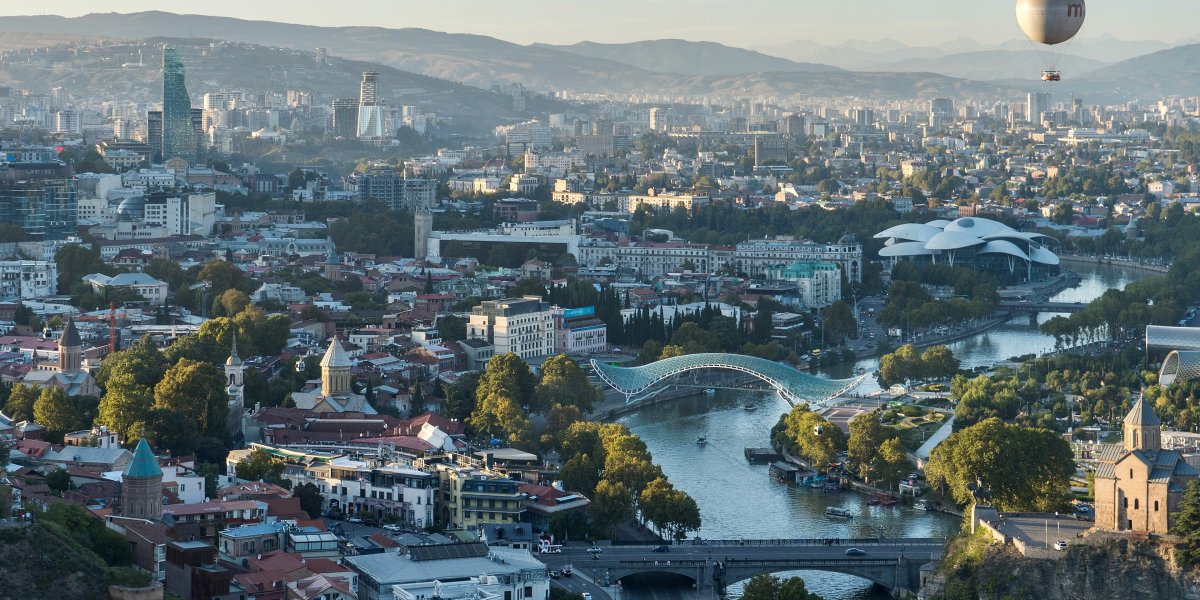
City Guide
Tbilisi
Georgia · Best time to visit: Apr-Jun, Sep-Oct.
Day-by-day plan
Choose your pace
Duración del viaje
09:00
Religious
Begin on Elia Hill, where the 84-metre Holy Trinity Cathedral rises above the city like a second mountain — the largest Orthodox church in the Caucasus, completed in 2004 but built in the ancient Georgian cruciform style. At this hour the gold central dome catches first light while the terrace is still empty of tour buses. Walk the southern perimeter first; the balcony looking across the gorge is the postcard frame that will anchor every later view of the day.
Tip: Skip the interior (the queue forms by 10am) — the real payoff is the southern terrace facing the gorge. Stand at the left end of the railing: at 9:15 you frame Metekhi Church on the cliff, the Narikala ridge, and Mother of Georgia all in one shot. That single photo is the map of your day.
Open in Google Maps →10:45
Religious
Exit Sameba's main gate and walk downhill along Ketevan Tsamebuli Avenue for 20 minutes — you'll drop through Avlabari's weathered Persian-era balconies and carved wooden doorways into the river gorge. Metekhi perches on a cliff directly over the Mtkvari, with the bronze equestrian statue of King Vakhtang Gorgasali — Tbilisi's 5th-century founder — staring across at Narikala. The viewpoint here is the city's most photographed for a reason: the Old Town sprawls below in layers of brick, sulfur dome, and copper roof.
Tip: Stand to the right of King Gorgasali's horse, not behind it — at 11am the sun angles across the gorge lighting Narikala and the sulfur domes, while Metekhi's stone wall frames you on the left. Locals get married here on weekends; if you see a bridal party, hang back five minutes for a free spectacle of drummers, chants, and wine poured straight onto the ground.
Open in Google Maps →12:00
Landmark
Cross the pedestrian Metekhi Bridge and walk five minutes along the riverbank to Rike Park — the glass cable-car station is at the park's southern edge. The three-minute ride glides directly over the river and drops you at the 4th-century fortress walls. Scramble the unrailed ramparts carefully, then follow the ridge 300 metres west to Kartlis Deda, the 20-metre aluminium Mother of Georgia holding a sword in one hand and a wine cup in the other — the national character in one statue.
Tip: Buy a Metromoney card at the Rike Park kiosk (2 GEL deposit) — the cable car is 2.5 GEL with card versus 8 GEL cash, and you'll reuse the card on the metro. Climb past the first viewing platform to the ruined church at the fortress's north end; most visitors stop 200m early and miss the cleanest ridge-to-ridge panorama with no crane or cable in the frame.
Open in Google Maps →13:45
Food
Descend the Betlemi Stairs for 15 minutes — a zigzag lane cutting through cliff-clinging wooden balconies, this is the Old Town every guidebook photographs but few people walk down. Emerge at the brick sulfur-bath domes of Abanotubani and continue two minutes west to Meidan Square. Machakhela is the Georgian fast-casual chain locals actually eat at — not the multi-language-menu houses next door — cheap, fast, and every classic done properly.
Tip: Order five kalakuri khinkali (1.2 GEL each, pepper-spiced beef and pork) and one Adjaruli khachapuri (12 GEL, boat-shaped bread with cheese and a raw egg yolk). Khinkali rule: pinch the pleated top with your fingers, bite a small hole, sip the broth first, then eat — stabbing with a fork leaks the juice and marks you as a tourist. Leave the pleated knots on the plate; the waiter counts them to check the bill.
Open in Google Maps →15:30
Shopping
Head north through the Old Town's tangled lanes — past the Jumah Mosque, Anchiskhati Basilica, and the tilted Gabriadze clock tower (look up at exactly 3pm for the puppet show) — then cross the illuminated Peace Bridge and walk 15 minutes upriver. The market sprawls over an actual stone bridge and spills into Dedaena Park: Soviet medals, painted porcelain, old Zenit cameras, silver flatware, Stalin-era propaganda posters, and handwritten Georgian love letters. The sellers are mostly pensioners liquidating family cabinets, so each object has a story if you ask.
Tip: Bargain down to 60% of the opening price — it's expected and polite, not offensive. The best finds are on the tarps laid out behind the main stalls, not on the tables: small Soviet factory pins (5-10 GEL), enamel lapel badges, and hand-painted wooden icons. Walk away once from anything you want; the seller will call you back with the real price.
Open in Google Maps →19:00
Food
Walk 15 minutes north along Davit Aghmashenebeli Avenue, the restored 19th-century stretch often called 'little Berlin' — bakery fronts, wrought-iron balconies, and the best dusk light in the city. Barbarestan's menu is pulled from an 1874 cookbook by Barbare Jorjadze, Georgia's first female cookbook author; the vaulted basement dining room feels like an archaeologist's cellar lit by candles. Order the kubdari (Svan highland beef pie) and the khashlama (slow-braised lamb) — dishes that almost no tourist restaurant below Narikala bothers to do properly.
Tip: Book three days ahead for the basement room (only 20 seats) and ask for the Pheasant's Tears Chinuri amber wine by the glass — eight grape contact, tastes like dried apricot and tea. Pitfall: ignore the 'authentic wine cellar' restaurants on Shavteli and Erekle II streets near Peace Bridge; they pour supermarket wine at 5x markup, print English-only menus, and station touts on the sidewalk who grab tourists by the elbow. Anything within 200 metres of a cable-car station is calibrated for cruise-ship lunches — Barbarestan and its sister Keto & Kote are where Tbilisi actually eats.
Open in Google Maps →Saltar al día
09:00
Landmark
Start at Rike Park and ride the aerial tramway across the Mtkvari River — the one-minute glide drops you onto the fortress ramparts with the whole Old Town scrolling out below. Come at 9 AM before the tour groups arrive from 11 onward, when the morning sun is behind you and the warm brick walls glow against a still-cool sky. Walk the full western ridge up to the restored St. Nicholas Church inside the fortress — most visitors turn back at the first viewpoint and miss it.
Tip: Buy a Metromoney card (2 GEL) at any metro station — the cable car costs 1 GEL with it but 2.50 GEL cash, and the same card works for metro and buses for your whole trip. The photo spot locals use is 30 meters past St. Nicholas Church on the southern wall, not the main viewing terrace.
Open in Google Maps →10:30
Neighborhood
Take the steep footpath down Narikala's southern slope past the Mother of Georgia statue — ten minutes of stone steps through wildflowers, with the domed brick bathhouses unfolding directly below you. Follow the narrow Legvtakhevi gorge behind the bath quarter to the hidden waterfall almost no tour buses reach, then double back to peek inside Chreli Abano, the turquoise-tiled 'king of the baths.' Book a one-hour private sulfur room if time permits — it's the single most atmospheric thing you'll do in Georgia, and Pushkin himself wrote that Tbilisi's baths were better than any he had known.
Tip: Book a private room at Bathhouse No. 5 (Gulo's) — 50 GEL per hour, half the price of Chreli Abano and where locals actually go. They provide towels but not flip-flops; bring your own. Enter from the riverside path, not the main square, to skip the touts selling overpriced 'scrubs.'
Open in Google Maps →13:00
Food
Walk eight minutes north along Abanos Street, past Meidan Square and up Shavteli, a lovely narrow lane with the Rezo Gabriadze Puppet Theatre on your right. Salobie Bia is Tbilisi's best version of a classic truckers' canteen: lobio (bean stew) served in a scorching clay pot with buttery mchadi cornbread, plus pkhali, the walnut-paste vegetable spreads in three colors that have been Georgian peasant food for a thousand years. This is what Georgians eat on weekdays, not the rehearsed supra version served to tour groups on Jan Shardeni.
Tip: Order lobio in kotani (clay pot, 12 GEL), one kubdari (Svan meat bread, 18 GEL), and one imeruli khachapuri (14 GEL) — three dishes feeds two comfortably and runs 40-50 GEL total. No reservations taken; arrive before 12:45 or after 14:00 to beat the office lunch crush.
Open in Google Maps →15:00
Religious
Walk three minutes south down Sioni Street — you'll see the cathedral's conical stone roof rising from the riverbank. Inside, look for the Cross of St. Nino, woven from grapevine bound with her own hair — Georgia's holiest relic, set in the wall to the left of the altar. Afterward wander Jan Shardeni, Erekle II, and Bambis Rigi: the compact tangle of wrought-iron balconies, secret courtyards, and Persian-influenced façades that make Tbilisi photograph like nowhere else on earth.
Tip: For the iconic painted-balcony photo everyone posts, turn off Jan Shardeni onto Chakhrukhadze Street — a row of 19th-century houses tour groups walk right past. Women need to cover shoulders and wear a skirt to enter Sioni (free wraps at the door); afternoon Orthodox services start at 17:00 and visiting becomes difficult.
Open in Google Maps →17:00
Landmark
Cross Sioni Square and drop to the river — the glass-and-steel Bridge of Peace arcs straight ahead, unmissable. Arrive at 17:00 to catch it in warm sunset light, then stay for the LED show that pulses along the canopy once full dusk settles in. Walk the curve to Rike Park on the far bank for the single best head-on view of Old Tbilisi stacked up toward Narikala like a honeycomb — the panorama every photographer comes to Georgia for.
Tip: The best sunset shot is from the middle of the bridge looking back at Sioni, not from Rike Park looking at the bridge. Skip the two silver 'pipes' in Rike Park — they were meant to be a concert hall but have been sealed off since 2012 and are a frequent letdown for anyone expecting them to be open.
Open in Google Maps →19:30
Food
Walk fifteen minutes west along Pushkin Street and climb into the leafy Sololaki district — a quiet residential grid of ruined Belle Époque mansions with sagging balconies and rose gardens behind iron gates. Shavi Lomi (Black Lion) occupies one of those mansions, and its candlelit courtyard is the city's most atmospheric dinner table. The chef reinterprets Georgian classics with quiet confidence: chakapuli (lamb slow-stewed with tarragon and tkemali plum), the pkhali trio, and amber qvevri wines from small Kakheti producers.
Tip: Reserve at least a day ahead via Instagram DM (@shavi_lomi) — the courtyard seats about 20 and fills by 18:00. Order the chakapuli (38 GEL) and the beef with walnut sauce; skip the khachapuri here (too heavy to close on). Pitfall for the area: avoid any restaurant on Jan Shardeni or Erekle II with an English-only menu and a host pulling you in from the street — they charge three times the normal rate for half the quality, and the wine they pour as 'traditional' is usually industrial bulk from a carton.
Open in Google Maps →09:00
Shopping
Start at the north end of Dedaena Park — the market spills down both sides of the Dry Bridge itself and continues under its arches toward the river. Come at 9 AM: vendors set up at 8, the strongest Soviet-era pieces disappear by 11, and the morning light filters through the chestnut trees onto the heaps of medals, Zenit cameras, hand-painted icons, and Stalin-era porcelain. It's a living archive of 20th-century Georgia — treat it as an open-air museum you can carry home from.
Tip: Always start your offer at 40% of the asking price — sellers expect it. Medals and enamel pins cluster at the north end, Persian and Azerbaijani rugs in the middle, Soviet cameras at the south. Friday 9 AM is the true sweet spot: weekend mornings have more sellers but also waves of cruise-ship tour groups that spike prices by midday.
Open in Google Maps →11:00
Museum
Walk ten minutes south down Rustaveli Avenue — wide chestnut-lined sidewalks, pre-revolutionary mansions, and the golden-domed Kashveti Church on your right. Head straight to the basement Archaeological Treasury: the 4000-year-old Colchis gold jewelry is among the oldest worked gold on earth, and even in high season there are rarely more than a dozen visitors down there. Then go up to the Soviet Occupation Hall on the second floor — sober, unflinching, and the essential context for everything you've seen in Tbilisi so far.
Tip: Buy the combined ticket (20 GEL) for the Treasury plus the Occupation Hall — the ethnographic floors above are skippable on a short visit. The Treasury is dim and gold photographs badly behind reflective glass; leave the camera in your bag and use the magnifying glasses they hand out at the entrance.
Open in Google Maps →13:30
Food
Walk ten minutes north up Rustaveli, through Rose Revolution Square and onto Kostava — Stamba Hotel occupies the former Soviet publishing house, with 15-meter ceilings, original cast-iron printing presses, and two-story bookshelves scaling the walls. The kitchen does a confident modern take on Georgian lunch: charcoal-grilled pork mtsvadi, shotis puri bread still steaming from the clay tone oven, and an adjaruli khachapuri (the egg-and-butter boat) that's genuinely better than the old-town versions. Even if you eat elsewhere, the atrium alone is worth twenty minutes.
Tip: Ask for the mezzanine above the courtyard — the best photo angle looks straight down onto the old printing press. Lunch runs 50-70 GEL per person. If the dining room is booked, Pink Bar on the same floor does lighter plates with the same view and walk-ins are usually fine.
Open in Google Maps →15:30
Neighborhood
Walk back down Rustaveli slowly, this time on the east side — start at the Opera and Ballet Theatre, whose Moorish Revival façade is the avenue's most photographed building. Duck into the Rustaveli Metro mezzanine to see the monumental Soviet mosaic of Georgian history above the escalators, then cut west into the lanes around Freedom Square for the gilded bronze of St. George slaying the dragon at the centre. This is the stretch where Georgia rewrote itself in the 1989 massacre and the 2003 Rose Revolution — every square meter has a story the façades don't tell.
Tip: The Parliament building, site of both the 1989 Soviet massacre and the 2003 Rose Revolution, has no plaque — look for the small memorial stones set into the sidewalk outside. The underground passage at Freedom Square has the city's cheapest fresh-pressed pomegranate juice (5 GEL) from the two older women near the west exit.
Open in Google Maps →17:30
Park
From Freedom Square, taxi or walk fifteen minutes up to the funicular lower station on Chonkadze Street — the century-old red-and-yellow tram climbs 727 meters in eight minutes at an improbable angle. Time your ride for 17:30 to reach the top at golden hour and stay through dusk, when the entire city grid ignites at your feet in a slow wave from Rustaveli to the river. Skip the rides; walk the viewing terrace north past the Ferris wheel for the unobstructed panorama over the Mtkvari curving out of the Caucasus foothills.
Tip: Get off at the mid-station Pantheon stop for 10 minutes — Griboedov, Ilia Chavchavadze, and Georgia's other literary greats are buried on the mountainside here, and the view is quieter than the top. The funicular runs until 23:00 but the last two cars down are packed; head back by 21:30 to get a seat by the window.
Open in Google Maps →20:00
Food
Take the funicular back down and walk ten minutes east along Chonkadze onto Pushkin Street — Azarphesha hides on a side alley behind the old post office, with no sign worth noticing. It's the natural-wine temple of Tbilisi: a dozen qvevri wines from small Kakheti producers, many of them the exact bottles that landed Georgian wine on the cover of the New York Times food section. The menu is small, seasonal, and trusted: the pheasant with pomegranate or the chicken chakhokhbili are the dishes people quote back to you years after the trip.
Tip: Order the wine tasting flight (60 GEL for 5 amber qvevri wines from different villages) — you'll learn more about Georgian wine in 20 minutes than any tour teaches in a day. Reserve a day ahead; only 12 tables. Pitfall for the area: skip the Funicular Restaurant at the top of Mtatsminda — the view is free from the terrace anyway, and the food is overpriced by Tbilisi standards with 100 GEL mains that would cost 25 GEL down here. Same logic applies to the 'traditional wine cellars' along Rustaveli with men in costume out front — those are tour-bus operations pouring bulk carton wine at five times the real price.
Open in Google Maps →Saltar al día
09:00
Landmark
Start at Rike Park and ride the glass cable car ninety seconds over the Kura — you step out onto 4th-century ramparts with the whole rust-colored Old Town sprawled below. At 9 AM the morning light strikes the roofs from the east, tour buses are still an hour away, and the guards of Saint Nicholas Church are just unlocking the chapel. Walk the walls to the Kartlis Deda statue, then take the steep ancient goat-path down through the botanical cliff — the city's most photogenic descent.
Tip: Ride the cable car UP (1 GEL / 0.35 EUR with a Metromoney card — no cash accepted), then walk DOWN the dirt path behind Kartlis Deda. Almost no tourist knows this path exists; locals use it daily. The view mid-descent, with sulfur baths below and fortress above in one frame, is the single best shot of your trip.
Open in Google Maps →11:30
Neighborhood
From the base of Narikala, follow the cobbled path five minutes down into the brick-dome quarter where King Vakhtang's falcon fell into a hot spring and founded Tbilisi 1,500 years ago. The sulfur steam rises through chimneys in the square and the egg-yolk scent hits you before you see the baths; turn right and walk the canyon path to the small waterfall at the end. Photograph the turquoise tiles of Chreli Abano at midday when sun floods the facade directly.
Tip: Bath House No. 5 charges 70 GEL (25 EUR) for a private room for an hour — walk-in almost always possible before noon on weekdays. Ignore the men in sunglasses outside Chreli Abano quoting 200+ GEL; that is the tourist price. If you only want to look, not bathe, admission is free.
Open in Google Maps →13:00
Food
Walk five minutes north through the narrow Jerusalem-quarter alleys to Shavteli Street — one of the prettiest low-traffic lanes in the Old Town, passing the 6th-century Anchiskhati Basilica. Salobie Bia takes the national bean stew *lobio* and treats it like a chef's canvas: three varieties served in tiny clay pots with hot cornbread *mchadi* (22 GEL / 8 EUR set). Also order the Svanetian *kubdari* beef pie (32 GEL / 11 EUR) — a mountain recipe almost no tourist restaurant makes properly. Budget 25-35 EUR with wine.
Tip: Arrive at 13:00 sharp — they do not take reservations for under four, and by 13:30 the terrace is full. Ask for the house's unlabeled amber wine by the carafe; they won't push it unless you ask, and it is the best 3-EUR glass of qvevri wine in the country.
Open in Google Maps →15:00
Religious
Walk back through Erekle II Street and cross the Metekhi Bridge — pause mid-span and look back: Narikala, the brick baths, and the Jumah Mosque all in one frame. The 13th-century cliff-top church marks the spot where Queen Shushanik was martyred; the equestrian statue of King Vakhtang Gorgasali faces the Old Town he founded. Afternoon light strikes the church from the west — better than morning. Afterward, thirty minutes of free wandering back down Shardeni and Sioni streets on the right bank.
Tip: The viewpoint BEHIND the Gorgasali statue (not in front, where the tour groups stop) gives the single best postcard of Tbilisi — sulfur baths, fortress, and Peace Bridge in one composition. For golden hour tomorrow evening if you have a free moment, this spot is unbeatable at sunset.
Open in Google Maps →19:30
Food
A twelve-minute walk from Metekhi back across the Peace Bridge and up through Freedom Square to Pavle Ingorokva Street. Azarphesha looks modest from the door but holds Tbilisi's most serious qvevri wine list — wine fermented underground in clay amphorae, a technique 8,000 years old and still unbroken. The *khinkali* with lamb and wild thyme (18 GEL / 6 EUR each) and the *chakapuli* spring-lamb stew with tarragon and tkemali plum (42 GEL / 15 EUR) are tests the kitchen passes perfectly. Budget 40-55 EUR with wine.
Tip: Reserve two days ahead and ask owner Luarsab to pour three amber wines from different qvevri makers — he knows every winemaker personally. AVOID the 'folklore show' supra restaurants around Shardeni Street: they are the city's worst tourist trap, three times the price for karaoke-grade music and microwaved khinkali. Anywhere with a neon 'Traditional Show!' sign in English is the enemy.
Open in Google Maps →09:30
Religious
Take a five-minute taxi (6-8 GEL / 2.5 EUR) up Elia Hill in Avlabari — the enormous gold-domed cathedral was consecrated only in 2004 but dominates the skyline from every corner of Tbilisi. Walk up through the rose garden of the monastic complex. At 9:30 the morning sun strikes the gold dome from the southeast, the tour buses haven't arrived, and you'll hear the monks' chant from the crypt chapel drift up through the open lower doors.
Tip: Women need head-covering (free basket at the gate) and shoulders covered; rangers will stop you at the door otherwise. Photography is forbidden INSIDE (they will scold you) but allowed in the garden. The unexpected highlight is the crypt chapel one level below the main floor — enter through a small side door right of the iconostasis; almost no tourist finds it.
Open in Google Maps →12:00
Neighborhood
Ten-minute taxi from Sameba down to Marjanishvili Square, where the pedestrian stretch of Davit Aghmashenebeli Avenue begins — the 'New Arbat' of Tbilisi, a kilometer of restored 19th-century Art Nouveau facades in pistachio, peach, and dusty rose. Locally known as Agmashenebeli, it was the grand Russian-imperial boulevard; now it's a slow corridor of small wine bars, independent bookshops, and balconies dripping with jasmine. Walk it end to end and take thirty minutes of free browsing in the Marjanishvili side streets — the real Tbilisi flâneur experience.
Tip: Turn off the avenue into the side courtyards marked 'ეზო' (ezo, meaning 'courtyard') — these hidden Italian-style interior yards with wooden gallery balconies are the real architecture of old Tbilisi. Nobody will stop you entering, but be quiet: people live here.
Open in Google Maps →13:00
Food
Continue fifteen minutes north up Aghmashenebeli to Fabrika and duck into its graffiti-painted courtyard. Moulin Electrique sits under an industrial skylight in the old sewing-factory boiler room — French-Georgian bistro cooking that anchors the whole creative quarter. Order the duck confit with green-plum jam (42 GEL / 15 EUR) and the burrata with Kakhetian tomatoes and *jonjoli* caper-flowers (28 GEL / 10 EUR). Budget 25-35 EUR without wine.
Tip: Ask for the 'chef's pickle plate' — not on the menu (15 GEL / 5 EUR), it brings pickled green walnuts, *jonjoli* buds, and marinated bear-garlic; it's the kitchen's secret weapon and only served to guests who name it. Walk-in works at 13:00; after 13:30 the courtyard tables are all taken.
Open in Google Maps →15:00
Neighborhood
Step directly out of the restaurant into Fabrika's main courtyard — a Soviet sewing factory reborn in 2016 as Tbilisi's creative engine: a ceramics studio on the ground floor, an independent bookshop, a tattoo parlor, three coffee roasters, mural-covered walls, and a youth hostel upstairs. The inner courtyard is where young Tbilisi spends Saturday. Order a filter coffee, sit on the long wooden benches, and watch for twenty minutes — it is the best available portrait of the city's present tense.
Tip: The best coffee is NOT inside Fabrika proper but at Erti Kava two blocks south at 3 Ivane Machabeli St — Tbilisi's first specialty roaster. Their filter (8 GEL / 3 EUR) rivals anything in Berlin or Melbourne. Fabrika's own in-house cafe is fine but the real story is two streets over.
Open in Google Maps →19:30
Food
Walk thirty seconds — Cafe Stamba occupies the ground floor of the Stamba Hotel, the former Soviet publishing house right next door to Fabrika, with thirty-foot ceilings and original printing-press fittings as décor. The kitchen does contemporary Georgian with French technique: *ojakhuri* pork with pomegranate molasses (54 GEL / 19 EUR) and the whole baked trout with walnut-coriander sauce (65 GEL / 23 EUR). Wine list is the most curated in the neighborhood. Budget 50-65 EUR with wine.
Tip: Reserve a table on the mezzanine overlooking the atrium — five floors of rare books illuminated from below is the restaurant's secret theater and staff won't offer it unless you specifically ask. AVOID the tourist 'khachapuri challenge' posts on Instagram that point to the flashy places near Rustaveli metro; those are 2x the price of here for half the kitchen.
Open in Google Maps →09:00
Shopping
Start at Dedaena Park on the right bank — the Dry Bridge sprawls along the old stone embankment, open daily but at its chaotic best from 9 AM when the dealers lay out their blankets. Soviet camera bodies, Red Army medals, hand-painted icons, silver niello cutlery from Tbilisi's 1920s opera set, and the occasional genuine 19th-century Georgian dagger. Morning light slants along the river behind the sellers — the best hour for the scene itself, before noon haze and tour buses take over.
Tip: Every price is a negotiation — halve it, then offer 60% of that, and you'll land at the honest rate. Dealers near the park entrance mark up for tourists; walk ten meters further along the embankment for the same Zenit camera at half the price. Cash only, small bills — no one makes change for a 100-GEL note.
Open in Google Maps →11:00
Museum
Walk fifteen minutes south along the river, then up through Freedom Square onto Rustaveli Avenue — Tbilisi's grand boulevard, with the Parliament, Opera House, and Art Nouveau mansions unrolling as you go. The museum's ground floor holds the Treasury: pre-Christian gold from Colchis burial mounds, the stuff of the Jason-and-the-Golden-Fleece myth, so delicate it rewrites your idea of Bronze-Age craft. Upstairs, the Museum of Soviet Occupation is small but devastating — 1921 to 1991 condensed into a single corridor.
Tip: Go to the Treasury (ground floor) FIRST, before your eyes tire — the gold diadems from Vani are the single most photographed objects in the country and deserve patient looking. The museum is closed on MONDAYS; plan around this. Audio guide in English is 15 GEL / 5 EUR and worth every lari for the Colchis section.
Open in Google Maps →13:30
Food
Walk five minutes south into Sololaki and find 13 Machabeli Street — the Writers' Union of Georgia's 1905 Art Nouveau mansion, with a hidden garden courtyard behind wrought-iron gates. Chef Tekuna Gachechiladze (the queen of Georgian modern cuisine) reinvents the classics here: *chakapuli* of veal with sour plum and tarragon (46 GEL / 16 EUR) and *khinkali* stuffed with wild mushrooms (24 GEL / 8 EUR). Eating in the garden under mulberry trees in the afternoon light is the most romantic Georgian lunch in town. Budget 30-40 EUR.
Tip: Reserve 'garden side' specifically when booking — indoor tables are nice but the garden is the reason to come. Order the *adjaruli khachapuri* only if you're sharing (it's a meal unto itself); the smaller *imeruli* khachapuri on the menu is the better pairing if you're having multiple courses.
Open in Google Maps →16:00
Landmark
Ten-minute walk west up the Sololaki hill to the funicular lower station on Daniel Chonkadze Street — the 1905 Belgian-built railway still runs on its original cable, climbing 300 meters up Mount Mtatsminda at a terrifyingly steep 60% grade. Halfway up, stop at the Pantheon of Writers and pay respects to Griboedov. At the summit, the Stalin-era amusement park, a Ferris wheel, and the best panoramic view of Tbilisi — come at 16:00 so you're in place for the 18:30 sunset when the city turns gold then pink, and the gold dome of Sameba across the river catches the last light.
Tip: Buy the Metromoney card for 2 GEL at the station — funicular is 3 GEL one-way with the card versus 15 GEL cash, and the card also works on the cable car and metro. Stay on the viewing deck at the TV tower for sunset (free); the restaurant at the top is overpriced. The Ferris wheel is worth the 5 GEL but only if you ride it within fifteen minutes of sunset.
Open in Google Maps →19:30
Food
Take the funicular down in the blue hour and walk ten minutes down into Sololaki to Amagleba Street — Keto and Kote hides in a restored 19th-century merchant's mansion with a walled garden on a terrace overlooking the city. The name comes from a 1948 Georgian operetta and the atmosphere is all candlelight and hand-embroidered linens — this is your farewell supra. Order the *elarji* (cornmeal with molten sulguni cheese, 28 GEL / 10 EUR) and the *mtsvadi* pork skewers grilled over grape vines (48 GEL / 17 EUR). Budget 55-70 EUR with wine.
Tip: Reserve three days ahead and specifically request a garden-terrace table — the indoor rooms are beautiful but the terrace overlooking Sololaki rooftops at dusk is why to come. AVOID the restaurants around Freedom Square metro with English-language hawkers outside ('Real Georgian Dinner + Show!'); that strip is the city's second-worst tourist trap after Shardeni Street, and the 'traditional supra show' is prerecorded karaoke-grade music with ticket-style pricing that triples your bill.
Open in Google Maps →
Trip builder
Plan this trip around Tbilisi
Turn this guide into a bookable rail itinerary with FlipEarth.
Keep exploring
Related cities
More in the same country
FAQ
Frequently asked questions
How many days do you need in Tbilisi?
Most travelers enjoy Tbilisi in 1 days, with enough time for headline sights and a slower meal or museum stop.
What's the best time to visit Tbilisi?
The easiest season for most travelers is Apr-Jun, Sep-Oct, especially if you want good weather and manageable crowds.
What's the daily budget for Tbilisi?
A practical starting point is about €75 per person per day before hotels, then adjust based on museums, dining, and transport.
What are the must-see attractions in Tbilisi?
A good first shortlist for Tbilisi includes Narikala Fortress & Kartlis Deda (Mother of Georgia).