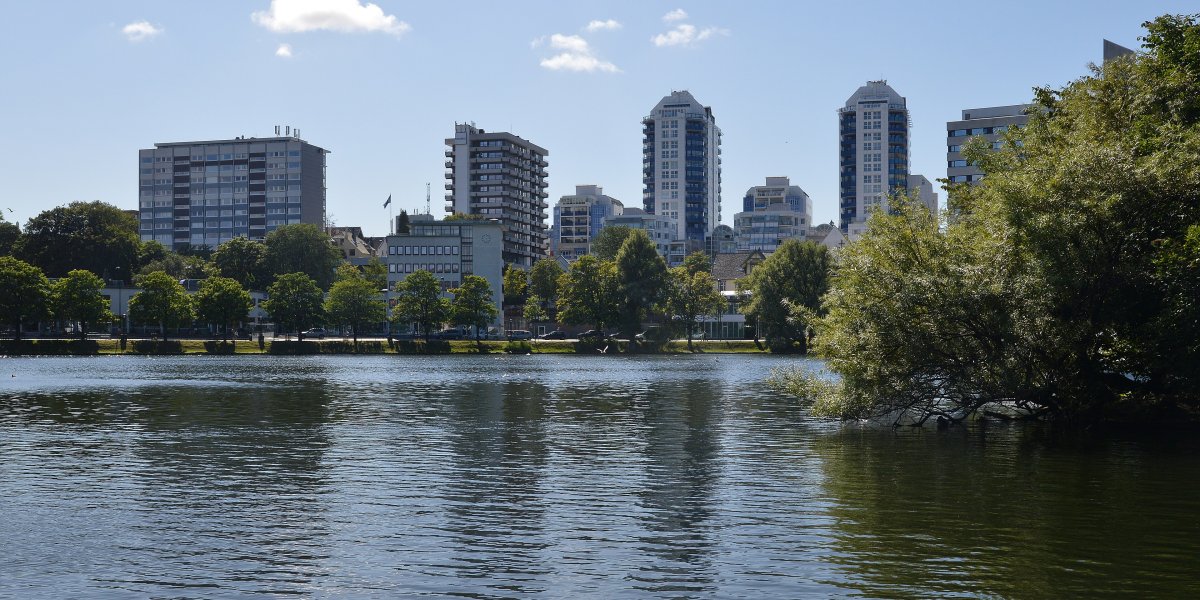
City Guide
Stavanger
Noruega · Best time to visit: May-Sep.
Day-by-day plan
Choose your pace
Duración del viaje
08:00
Landmark
Catch the 07:00 Pulpit Rock shuttle from Stavanger Byterminalen (ticket booked the night before) — 40 minutes through the Ryfast sub-sea tunnel to the trailhead. Start climbing immediately; you want to reach the 604-metre granite plateau before the 11:00 tour-bus crowds. The last ridge opens without warning onto a flat slab hanging straight over Lysefjord, and the drop at your toes is the reason people fly to Norway.
Tip: Wear real hiking shoes — the trail is a bouldery scramble and keeps snow patches into early June. Stepping onto the plateau before 09:45 means you photograph the cliff edge with nobody in frame; by 10:30 there is a literal queue for the rock.
Open in Google Maps →13:45
Food
The shuttle drops you back at Byterminalen — walk 5 minutes south along Vågen harbour to the glass-fronted Fisketorget at the water's edge. Order fiskesuppe (creamy Stavanger fish soup, 165 NOK) at the counter and a rekesmørbrød (fresh-shrimp open sandwich, 195 NOK), then eat on the waterside benches watching the wooden sailboats.
Tip: Skip the pre-wrapped sushi at the front. The fiskesuppe is made fresh twice a day from the morning catch — ask the counter what fish is in today's pot. Cash is not needed; everywhere in Norway takes card.
Open in Google Maps →14:45
Neighborhood
Cross the small harbour footbridge and climb 4 minutes west up Øvre Strandgate into Gamle Stavanger — 173 white clapboard houses from the 1700s, the largest preserved wooden settlement in Northern Europe. Wander the cobbled lanes slowly; the mid-afternoon sun strikes the west-facing facades full-on, which is exactly when the white planks and red geraniums read cleanest on camera.
Tip: Øvre Strandgate 20-28 is the stretch every postcard is shot on. For a people-free photo, cut one block uphill to Nedre Blåsenborg — same 18th-century timber, a tenth of the tourists, and you can see the harbour framed at the end of the lane.
Open in Google Maps →16:15
Landmark
Walk 12 minutes back east around the north quay of Vågen to Kjeringholmen. You are here for the building itself — stacked steel drums and glass cylinders cantilevered straight over the fjord, an honest translation of an offshore oil platform into architecture. The outdoor Geopark behind it, built entirely from retired rig parts, is a free sculpture playground that locals' kids actually use.
Tip: The cleanest architecture frame is from the wooden pier on the east side — you get the drums, the mirror-black fjord, and a historic wooden schooner moored below in one shot. Skip the 180 NOK interior ticket; a layover day is better spent outside.
Open in Google Maps →17:15
Neighborhood
Walk 8 minutes south-east from the museum, past the 1850s Valberg watchtower, onto Øvre Holmegate. The whole street was hand-painted in saturated pastels by a local hairdresser tired of Stavanger's white-and-grey uniform — pink, mustard, mint, cobalt, lavender, block after block. The low late-afternoon sun hits the west-facing side first, and the colour blocks stack into a single gradient when you frame them correctly.
Tip: Stand at the Skagenkaien (south-west) end and shoot straight down the street — the pastels compress into a single rainbow band. Avoid 18:00-18:30 when cruise passengers arrive en masse and stand in the middle of the road for selfies.
Open in Google Maps →19:00
Food
2 minutes' walk from Fargegaten to Breitorget square. Sven Erik Renaa is the Michelin-starred chef who put Stavanger on Norway's food map, and the Matbar is his open-kitchen casual room — same produce, half the formality. Order the fiskedagen (catch of the day, 345 NOK) and the burrata with smoked trout roe (210 NOK), plus a glass of Riesling; this is where Stavanger eats when it wants to eat well without reservation theatre.
Tip: Book online by 15:00 — the Matbar is small and the 19:00 slot goes fast. Counter seats facing the kitchen are walk-in first-come; arrive at 18:50. Avoid every restaurant on Skagenkaien (Dickens, Hansen Hjørnet, the neon-lit 'fjord seafood' platters) — cruise-ship menus at 1.5× the price, and the shellfish is often frozen; locals never eat on that strip.
Open in Google Maps →Saltar al día
06:30
Landmark
Depart Fiskepiren terminal in Stavanger harbor at 06:30 on the Go Fjords catamaran-and-bus combo; the boat slices through Lysefjord at dawn before a 30-minute bus winds uphill to Preikestolhytta trailhead. From there an 8-km round-trip gains 500 m over glacier-polished granite to a 604-meter cliff plateau with no railing — the single image Norway sells the world, and standing on it silences everyone who arrives. Go this early because after 09:00 the plateau hosts 2,000 other phones; you want the 20 minutes of near-solitude at the edge before the wave hits.
Tip: Book the 06:30 Go Fjords combo at Fiskepiren the day before — the 08:00 option puts you on the rock mid-swarm. Carry 1.5L water and trainers; the 'waterproof hiking boots' sold at the trailhead shop are sold to tourists and unnecessary in dry summer.
Open in Google Maps →15:30
Food
Five-minute walk along the quay from the bus drop-off back at Fiskepiren — the working fish market's small indoor counter is where trawler sons fillet everything the morning's boats landed. Order the fiskesuppe (fish soup, 195 NOK / 18€) thick with halibut, salmon, and shrimp, plus a slice of smoked mackerel on rye; budget 20-25€. Counter seating only — this is where Stavanger locals eat while the cruise crowd is still stuck on buses.
Tip: Order from the blackboard above the counter, not the laminated English menu — the blackboard changes by what the trawlers landed that morning. Skip the souvenir dried-cod packets at the till; stockfish costs half the price at any Coop supermarket.
Open in Google Maps →16:45
Religious
Two-minute uphill walk from the fish market up Kirkegata — Norway's only medieval cathedral still in daily service appears above the rooftops the moment you turn the corner. Consecrated in 1125 and reopened in 2025 after six years of restoration, the Gothic east choir, baroque oak pulpit, and gold-painted ceiling vaults now glow as they did in 1272. Arrive this hour for the low-angle western light through the rose window and nearly empty pews before the 18:00 closing.
Tip: Stand directly beneath the baroque pulpit and look straight up — the 17th-century painter hid Stavanger merchants' faces among the saints on the ceiling panels. A detail the audio guide skips entirely.
Open in Google Maps →17:45
Neighborhood
Walk six minutes west across the Torgterrassen footbridge — 173 white wooden cottages appear on the far hillside, like a doll's town dropped into pine forest. These are still-lived-in 1780s gables with geranium window boxes and cobblestones polished smooth by two centuries of fishermen's boots — one of Northern Europe's largest intact timber neighborhoods. Late afternoon is when the cottage windows start to glow from within and residents emerge with watering cans, so the place feels alive rather than staged for visitors.
Tip: Øvre Strandgate is the postcard street everyone shoots, but slip one block uphill to Nedre Strandgate — the crooked gables and window geraniums are just as beautiful with half the tourists and the sun angle at this hour is better.
Open in Google Maps →18:45
Neighborhood
Cross back over the inner-harbor footbridge (8 minutes) and turn right off Nygata — a single painted block explodes in candy pink, mint green, and Aegean blue. A 2005 mural project by hair-salon owner Tom Kjørsvik transformed one beige 1980s block into what is now the most-Instagrammed corner of western Norway. The low evening sun hits the east-facing façades at their most saturated — five minutes is enough, the rest of the street is gift shops.
Tip: The Bøker og Børst courtyard at the far end is the only seating locals actually use — coffee is 45 NOK here versus 85 NOK at the storefront cafés pushing menus on the pavement.
Open in Google Maps →19:45
Food
Four-minute walk back along the harbor to Skagenkaien 16 — the 1770 black-tarred timber warehouse is the last on the harborfront strip. Stavanger's oldest operating restaurant, serving in the same low-beamed captain's hall where cod was auctioned 250 years ago; order the pan-fried halibut with brown butter and almond (395 NOK / 37€) and a shot of Linie Aquavit (95 NOK / 9€) — the bottle has crossed the equator twice in oak casks on its way here. Budget 55-70€ per person; this is the dinner that seals the day.
Tip: Reserve the harbor-window table online 48h ahead — walk-ins land in the back room facing the kitchen. Pitfall warning: the Skagenkaien strip has three restaurants with sidewalk hawkers and English picture menus — those are the tourist traps charging 500 NOK for microwaved salmon; Linie Aquavit alone is half the price at Sjøhuset compared to the picture-menu places.
Open in Google Maps →10:00
Museum
Start at Kjeringholmen quay on the harbor's east tip — the offshore-rig-shaped steel-and-glass building is a 10-minute walk from the center along the waterfront promenade. Be at the door at 09:55 — the 10:00 opening lets you slide down the full-scale escape chute before the 11:30 queue and step into actual helicopter cockpits and drilling heads the size of delivery vans. The museum tells, honestly and vividly, the story of how oil turned Europe's poorest fishing nation into its richest in one generation.
Tip: The escape-chute slide queues up after 11:30 — do it the minute you enter, then watch the 20-minute cinema film second. The free helicopter-cockpit simulator is in the far-right corner behind the drilling rig and is usually empty.
Open in Google Maps →12:15
Food
Leave the museum and walk five minutes south along the harbor past the fish market's back entrance — Renaa's modern bistro occupies a limestone cellar on Breitorget square. The casual sibling of Stavanger's only Michelin-starred kitchen; order the reindeer tartare with juniper (225 NOK / 21€) and the smoked-mackerel flatbread (185 NOK / 17€), or commit to the three-course lunch menu (395 NOK / 37€). Budget 30-40€ — lunch here runs at roughly half the price of the evening flagship next door.
Tip: Walk in at 12:00 for a counter seat facing the open kitchen — after 12:30 the Equinor executives arrive and reservations rule. The lunch blackboard changes daily and beats the printed menu every time.
Open in Google Maps →13:30
Landmark
Three-minute climb up Valberggata's cobbles from the bistro — the square 1853 stone tower crowns the city's highest point. Built as a fire watch after the great fire of 1860, it is now the only place in Stavanger where the full arc of old town, modern refinery skyline, and Lysefjord horizon appears in a single turn. The wood-paneled watchman's room at the top is unchanged since 1893.
Tip: Climb the inner spiral staircase slowly — every third step is marked with the watchman's initials from 1893-1922. The southwest window frames the best harbor-and-old-town composition of the trip.
Open in Google Maps →14:30
Museum
Walk eight minutes west from the tower back toward Gamle Stavanger — the red-brick 1890s cannery sits at Øvre Strandgate 88a at the top of the old wooden town. Before oil, Stavanger ran on sardines — half the world's canned fish shipped from these tarred wooden streets, and this restored factory still fires its original brick smoke oven. The pre-oil story that frames everything you saw at the Petroleum Museum this morning.
Tip: The adjoining print museum 'Iddis' holds the original sardine-tin label archive — ask the curator to show you drawer 12, the 'mermaid' labels pulled in 1938 for being too provocative. On Sundays the brick oven smokes real mackerel and you'll be offered a warm slice on rye.
Open in Google Maps →16:00
Landmark
Walk back to the cathedral stop (10 min) and catch bus 16 to Madlamark (15-min ride, 47 NOK), then a 5-minute downhill walk to the Hafrsfjord shore. Three 10-meter bronze swords planted in raw granite mark the 872 AD battle in which Harald Fairhair united Norway's kingdoms — the tallest sword is Harald's, the other two his defeated rivals. Arrive at 16:30 because the blades face due west over open water; golden hour hits them head-on and Hafrsfjord turns molten copper.
Tip: The pebble beach to the right of the monument is where locals picnic with beer — no cafés, no gift shops, no parking fee. Sunset over open Hafrsfjord from here is Stavanger's best free show; cruise tours never come out this late.
Open in Google Maps →19:30
Food
Bus 16 back to Breitorget (15 minutes), then a four-minute walk east to Skagen 26 — the ochre 1872 warehouse above the harbor is impossible to miss. Stavanger's most-loved heritage restaurant, named for the 19th-century steamship expediter who signed bills of lading in this exact room; order the pan-fried monkfish with chanterelles (395 NOK / 37€) or the bacalao Stavanger-style (325 NOK / 30€) and a glass of Norwegian cider. Budget 55-70€; the upstairs captain's room has the harbor view that closes the trip.
Tip: Reserve 48h ahead and ask for 'upstairs kaptein's rom' for the harbor window table. Pitfall warning: along Øvre Holmegate three restaurants push rigid picture menus with English-speaking touts on the pavement — those charge 500 NOK for microwaved salmon; the only dinners worth the money in central Stavanger are N.B. Sørensen's, Renaa, and Sjøhuset Skagen.
Open in Google Maps →
Trip builder
Plan this trip around Stavanger
Turn this guide into a bookable rail itinerary with FlipEarth.
Keep exploring
Related cities
More in the same country
FAQ
Frequently asked questions
How many days do you need in Stavanger?
Most travelers enjoy Stavanger in 1 days, with enough time for headline sights and a slower meal or museum stop.
What's the best time to visit Stavanger?
The easiest season for most travelers is May-Sep, especially if you want good weather and manageable crowds.
What's the daily budget for Stavanger?
A practical starting point is about €120 per person per day before hotels, then adjust based on museums, dining, and transport.
What are the must-see attractions in Stavanger?
A good first shortlist for Stavanger includes Preikestolen (Pulpit Rock), Norwegian Petroleum Museum (Exterior).