City Guide
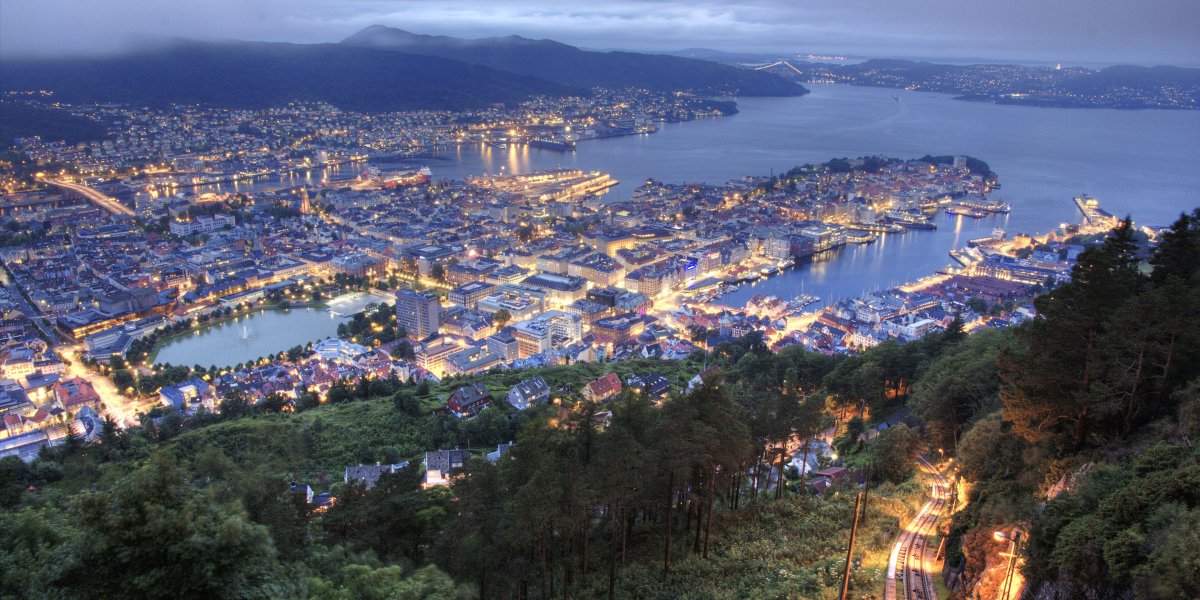
Bergen
Noruega · Best time to visit: Jun-Aug.
Day-by-day plan
Choose your pace
Duración del viaje
09:00
Landmark
Start your day at the mouth of Vågen harbor where this 13th-century royal fortress guards the entrance — the oldest and best-preserved medieval fortification in Norway. Walk the grassy ramparts above the sea for a sweeping view of the harbor, cruise terminal, and the mountains beyond. The medieval stone walls of Håkon's Hall and the Rosenkrantz Tower rising side by side are Bergen's most dramatic opening scene.
Tip: The best photo is from the harbor-facing ramparts looking south — you'll get Håkon's Hall, the Rosenkrantz Tower, and the colorful Bryggen facades all in one frame. Arrive at 09:00 when the grounds are completely empty; by 10:30, cruise-ship groups start flooding in.
Open in Google Maps →10:15
Neighborhood
Exit the fortress south and the UNESCO-listed Bryggen wharf appears immediately — a 5-minute stroll along the waterfront. These leaning, candy-colored wooden merchant houses have survived fires, wars, and six centuries of North Sea weather. But the real magic isn't the famous facades — it's the narrow timber alleyways behind them, where crooked passages lead past artisan workshops and centuries of soot-stained wood that no restoration has touched.
Tip: Skip the souvenir shops lining the waterfront facade. Instead, duck into the three narrow alleyways behind the buildings — these leaning timber corridors are the authentic medieval Bryggen. For the classic full-facade photo, cross to the Fish Market side of the harbor and shoot north; mid-morning light hits the painted fronts most evenly before harsh noon sun washes out the colors.
Open in Google Maps →12:00
Food
Continue south along the harbor from Bryggen — the Fish Market's modern glass pavilion sits right at the tip of the quay, a 3-minute walk. This has been Bergen's living room since the 1200s. Head to the outdoor stalls in summer for the freshest catch at honest prices. Point at the glistening pile of hand-peeled shrimp and they'll build you a towering rekesmørbrød (open shrimp sandwich, ~110 NOK/€10) on the spot, or grab a steaming bowl of fiskesuppe (creamy fish soup with crusty bread, ~160 NOK/€14) from the stall nearest the water.
Tip: Stick to the outdoor stalls in summer — the indoor market charges tourist-inflated prices for the same product. If you see a stall with a queue of Norwegians, join it. The shrimp sandwich is the move: sweet, briny, and piled absurdly high. Grab a bench facing the harbor and eat with the seagulls circling — this is the Bergen lunch.
Open in Google Maps →13:00
Landmark
From the Fish Market, walk 3 minutes east and slightly uphill to the red Fløibanen funicular station — you can see the track climbing the mountainside from across the square. The 6-minute ride lifts you 320 meters above the city, and when the doors open at the top, Bergen's defining panorama hits you all at once: the entire harbor, Bryggen's colored roofs, seven surrounding mountains, and islands dissolving into the North Sea. Walk the easy gravel path to Skomakerdiket lake (15 minutes) for a quieter viewpoint with forest reflections.
Tip: Buy tickets on the Fløibanen app before you arrive — the ticket-counter queue wastes 20 minutes on busy days. The main viewing platform gets crowded; walk 5 minutes left along the ridge to find a small wooden bench that frames the harbor perfectly with no one in your shot. If you have the legs, walk down via the signposted forest trail (30 minutes, gentle switchbacks) — it's beautiful and saves the return fare.
Open in Google Maps →15:30
Park
Take the funicular back down — or arrive on foot if you walked the forest trail. From the lower station, stroll south through Torgallmenningen, Bergen's grand main square and pedestrian boulevard, for 8 minutes until the octagonal lake appears on your left, framed by the KODE art museums and mature trees. Circle the lake on the paved path in 15 minutes — the central fountain, waterside sculptures, and reflections of Mount Fløyen behind you make this Bergen's most peaceful postcard. After a morning of power-walking, let the city's calm center bring you back to earth.
Tip: The best photo is from the lake's southern shore looking north — you get the fountain, the KODE buildings, and Mount Fløyen in one layered frame. Late afternoon light is ideal. If it starts raining (it's Bergen — it will), duck under the covered colonnade on the lake's western side or step into the KODE 4 lobby for free.
Open in Google Maps →19:00
Food
From the western end of the lake, walk 5 minutes north along Christies gate, then turn left onto Vaskerelven — Pingvinen's unassuming wooden door is at number 14, easy to miss if you're not looking. This is Bergen's beloved neighborhood pub-restaurant where locals come for husmannskost — traditional Norwegian comfort food done with zero pretension and maximum soul. Order the fiskekaker (golden pan-fried fish cakes with creamy mashed peas and crispy bacon, ~195 NOK/€17) or the kjøttkaker (Norwegian meatballs in brown gravy, ~205 NOK/€18). A local craft beer adds ~95 NOK/€8.
Tip: Pingvinen doesn't take reservations — arrive by 18:45 or face a 30-minute wait. If the booths are full, grab a spot at the long communal table; that's where the best conversations with locals happen. Tourist trap warning: avoid the waterfront restaurants along Bryggen's front row — they charge double for reheated seafood aimed at cruise passengers. Three blocks inland is where Bergen actually eats.
Open in Google Maps →Saltar al día
09:00
Landmark
From the city center, walk 5 minutes east to the Fløibanen lower station at Vetrlidsallmenningen — the red funicular cars are visible from the street. The 6-minute ride climbs to 320 meters, revealing Bergen's full panorama: the harbor, Bryggen's terracotta rooftops, and islands fading into the North Sea. Walk the easy gravel path to Skomakerdiket lake (15 minutes each way), then ride back down.
Tip: Board right at 09:00 when the funicular starts — by 10:30, cruise ship passengers flood the queue and waits hit 30+ minutes. Stand on the left side going up for the harbor view. Walk down via Fjellveien (40 minutes) only if you have strong knees; the funicular saves energy for the rest of the day.
Open in Google Maps →11:15
Landmark
From the Fløibanen lower station, walk 5 minutes north along the harbor — the row of colorful wooden gables appears ahead like a postcard coming to life. These UNESCO-listed Hanseatic trading houses date to the 14th century and are Bergen's defining image. Walk the photogenic main wharf front, then slip into the narrow wooden passageways behind where artists' studios and tiny workshops hide between leaning timber walls.
Tip: The best photo angle is from the Fish Market side of the harbor looking north — morning light hits the facades directly. Don't just stay on the front; the real atmosphere is in the tight alleys behind Bryggen where the buildings lean so close you can touch both walls.
Open in Google Maps →12:30
Food
Walk 3 minutes south along the harbor from Bryggen to the glass-roofed market building at the water's edge. Skip the outdoor tourist stalls and head inside where local vendors sell the freshest catch. Order the fiskesuppe (creamy fish soup with salmon, cod, and shrimp, 165 NOK/€14) and add a plate of hand-peeled fresh shrimp (250g for 110 NOK/€10) — peel them yourself at the counter like the locals do.
Tip: The indoor section has better prices and quality than the outdoor stands targeting cruise passengers. Arrive by 12:30 to grab a counter seat; by 13:00 it's standing room only. Budget 200–280 NOK (€17–24) for a satisfying seafood lunch.
Open in Google Maps →13:45
Museum
Exit the Fish Market toward Bryggen and walk 2 minutes north — the museum entrance is at the base of the wharf, partly underground. Built directly atop Bergen's medieval archaeological excavation, the museum reveals 800-year-old foundations, runic inscriptions, and the layered remains of a city that burned and rebuilt itself repeatedly. The reconstructed medieval streetscape makes the Hanseatic era viscerally real.
Tip: Pick up the free audio guide at the entrance — it transforms what looks like old timbers into a vivid narrative of medieval Bergen. The cross-section of fire layers in the excavation pit is fascinating: each stripe of charcoal represents one of Bergen's many catastrophic fires, and you can count them like tree rings.
Open in Google Maps →15:30
Landmark
Continue 5 minutes north past the end of Bryggen — the stone fortress walls appear on your left, guarding the harbor mouth. Håkonshallen, built in 1261 for King Håkon Håkonsson's coronation banquet, is one of Norway's largest medieval stone halls, its vaulted interior painstakingly rebuilt after WWII bomb damage. Climb the adjacent Rosenkrantz Tower for the best overhead view of Bryggen and the entire Vågen harbor.
Tip: The combined ticket covers both Håkonshallen and Rosenkrantz Tower — climb the tower first while your legs are fresh, as the spiral staircase is narrow and steep. The fortress grounds are free and offer Bergen's best sunset angle over Vågen. Avoid any Bryggen-area restaurant advertising a 'fish buffet' — they charge €40+ for mediocre reheated seafood aimed at cruise day-trippers.
Open in Google Maps →19:00
Food
Walk 8 minutes south along Bryggen from the fortress — look for the unicorn sign above the door in one of the historic timber buildings. 'The Unicorn' occupies a 300-year-old Bryggen house with low ceilings, crooked floors, and candlelight — the most atmospheric dinner setting in Bergen. Try the bacalao (salt cod stew, 345 NOK/€30), a Bergen staple since the Hanseatic era, or the grilled Norwegian lobster tail (395 NOK/€34).
Tip: Reserve at least 2 days ahead and request the upstairs room — the low timber ceiling and harbor glow through the windows make it Bergen's most memorable table. Start with the lobster soup (185 NOK/€16). Budget 500–750 NOK (€44–65) per person with a drink.
Open in Google Maps →09:00
Religious
From the city center, walk 5 minutes north toward Bryggen — the twin Romanesque towers of Bergen's oldest building rise modestly beside the wharf. Dating to around 1130, its interior holds a 15th-century triptych altar and an exuberant Baroque pulpit carved with angels and flowers — among Norway's finest church art. This was the Hanseatic merchants' church for 400 years; their coats of arms still mark the pews.
Tip: Visit right at opening for near-silence and extraordinary acoustics — if you're lucky, the organist may be practicing. The church is intimate; 30–45 minutes covers everything, including the medieval stone carvings on the exterior south wall that most visitors walk right past.
Open in Google Maps →10:00
Museum
From Mariakirken, walk 10 minutes south down Torgallmenningen, Bergen's main pedestrian boulevard — the grand square opens up with local café life, and Lille Lungegårdsvannet lake appears ahead with the museum on its west bank. KODE 3 holds the crown jewels of Norwegian art: Edvard Munch's moody Bergen-period paintings, J.C. Dahl's Romantic landscapes that defined how Norway sees itself, and Nikolai Astrup's luminous Jølster valley scenes.
Tip: Head straight to the Munch room on the second floor before guided groups arrive at 11:00. The Nikolai Astrup gallery is the hidden gem — his midsummer night paintings are almost unknown outside Norway but rival anything in Oslo's National Museum. One ticket covers all four KODE buildings, but KODE 3 alone justifies the price. Closed Mondays.
Open in Google Maps →12:00
Food
Exit KODE 3, turn right, and walk 3 minutes west along Rasmus Meyers allé to Vaskerelven — Pingvinen is on the corner, marked by a penguin sign. This beloved neighborhood pub is where Bergen locals eat husmannskost — proper Norwegian home cooking. Order the kjøttkaker (hand-rolled meatballs in brown gravy with mashed rutabaga, 215 NOK/€19) or the raspeballer (western Norway potato dumplings with salted lamb, 225 NOK/€20) — a regional tradition you won't find elsewhere.
Tip: Pingvinen doesn't take reservations — arrive at 12:00 sharp to beat the 12:30 local lunch rush. Sit at the bar counter if tables are full; the atmosphere is better there. Ask for the dagsrett (daily special, ~195 NOK) — it's often the best value and the most authentically Norwegian thing on the menu.
Open in Google Maps →13:15
Park
From Pingvinen, walk 3 minutes east back toward the lake and enter Byparken from the south side near the fountain. Bergen's octagonal city lake is a serene pocket amid the compact center — walk the full perimeter in 15 minutes past century-old trees and the bandstand. On clear days, Mount Fløyen's reflection in the still water is a perfect bookend to yesterday's summit view.
Tip: The best reflection photo of Fløyen in the lake is from the south bank between 13:00–14:00 when the sun is behind you. The benches on the west side are the most peaceful — this is Bergen's living room, where office workers and students gather on any dry afternoon.
Open in Google Maps →14:15
Neighborhood
From the lake's west side, follow Christies gate and Haugeveien west for 15 minutes through one of Bergen's loveliest residential streets — pastel-painted wooden houses with white trim, many from the 1800s, with tiny front gardens spilling over with flowers in summer. Nordnes Park at the peninsula's tip opens to a wide panorama across Byfjorden, with ferries crossing below and islands stretching to the horizon.
Tip: Walk along Strangehagen on the north side of the peninsula for the most atmospheric stretch — centuries-old houses leaning toward the sea with glimpses of the harbor between them. In summer, Nordnes Sjøbad (heated seawater pool on the fjord's edge) is the most Norwegian experience you can have — bring a towel if you dare.
Open in Google Maps →19:00
Food
Walk 15 minutes east from Nordnes along the harbor path back toward the city lake — Lysverket is inside the KODE 4 building on Rasmus Meyers allé. This modern Nordic restaurant reimagines Norwegian ingredients with precision and restraint: start with the Bergen fish cake reimagined (195 NOK/€17), then the catch of the day with fermented vegetables (345 NOK/€30). The wine list leans natural and interesting.
Tip: Reserve in advance for a window table overlooking the park — this is your Bergen farewell dinner, modern Norway at its most confident. The bar menu offers smaller plates from 145 NOK if you want a lighter meal before an early flight. Budget 550–800 NOK (€48–70) per person. Steer clear of any harbor restaurant advertising 'whale steak specials' — overpriced, ethically questionable, and not something Norwegians actually eat.
Open in Google Maps →
Trip builder
Plan this trip around Bergen
Turn this guide into a bookable rail itinerary with FlipEarth.
Keep exploring
Related cities
More in the same country
FAQ
Frequently asked questions
How many days do you need in Bergen?
Most travelers enjoy Bergen in 1 days, with enough time for headline sights and a slower meal or museum stop.
What's the best time to visit Bergen?
The easiest season for most travelers is Jun-Aug, especially if you want good weather and manageable crowds.
What's the daily budget for Bergen?
A practical starting point is about €75 per person per day before hotels, then adjust based on museums, dining, and transport.
What are the must-see attractions in Bergen?
A good first shortlist for Bergen includes Bergenhus Fortress, Fløibanen Funicular & Mount Fløyen.